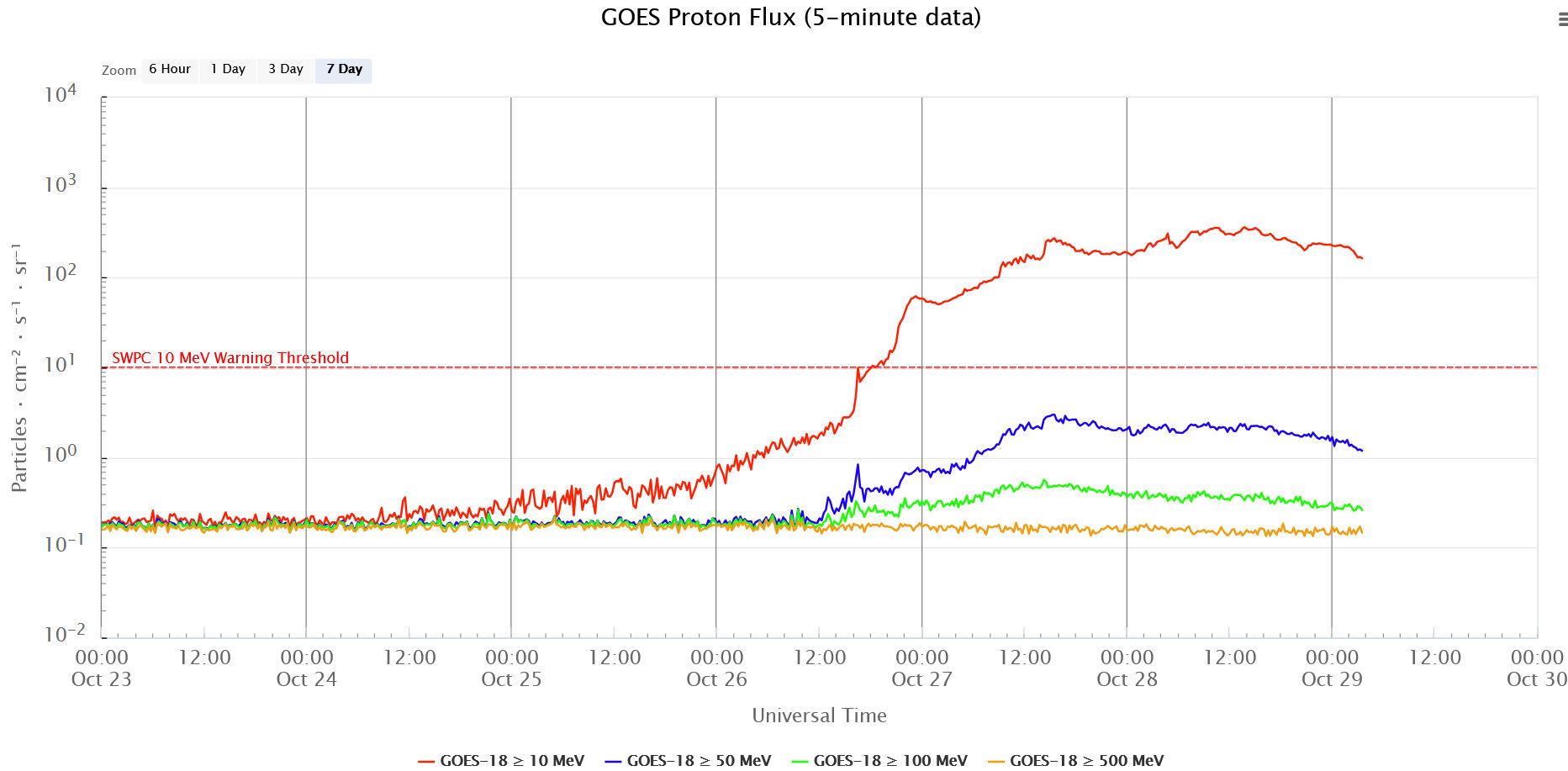
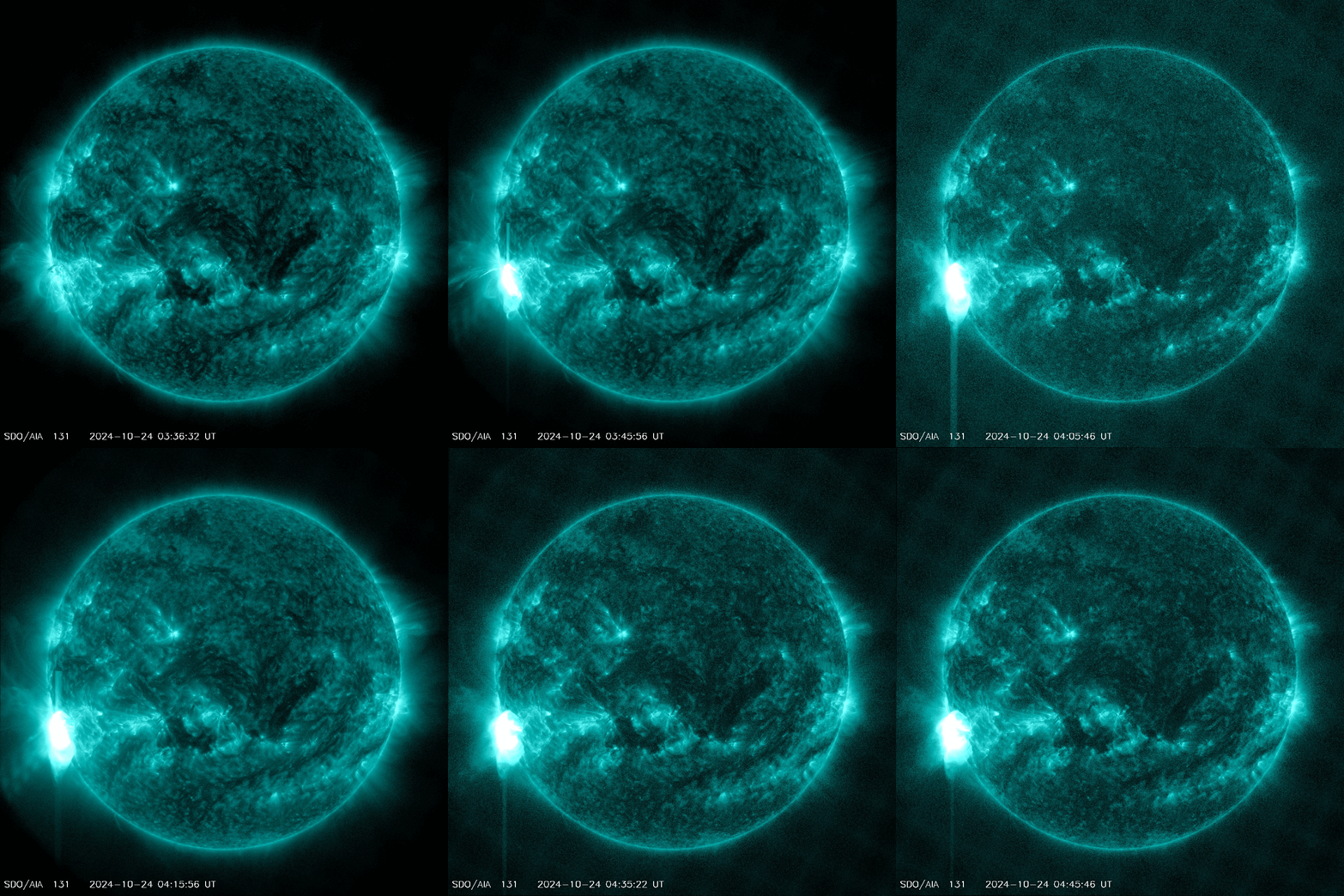
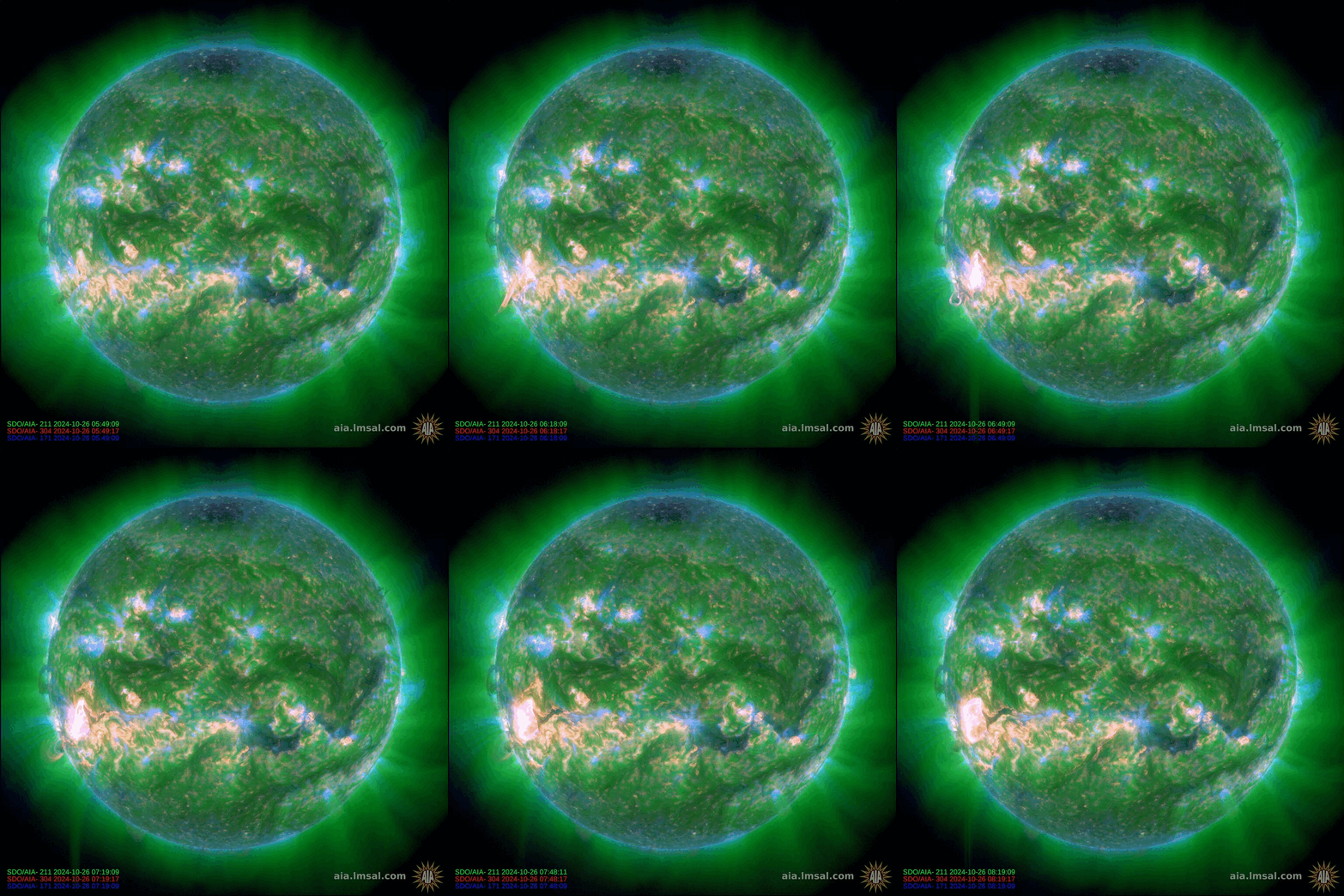
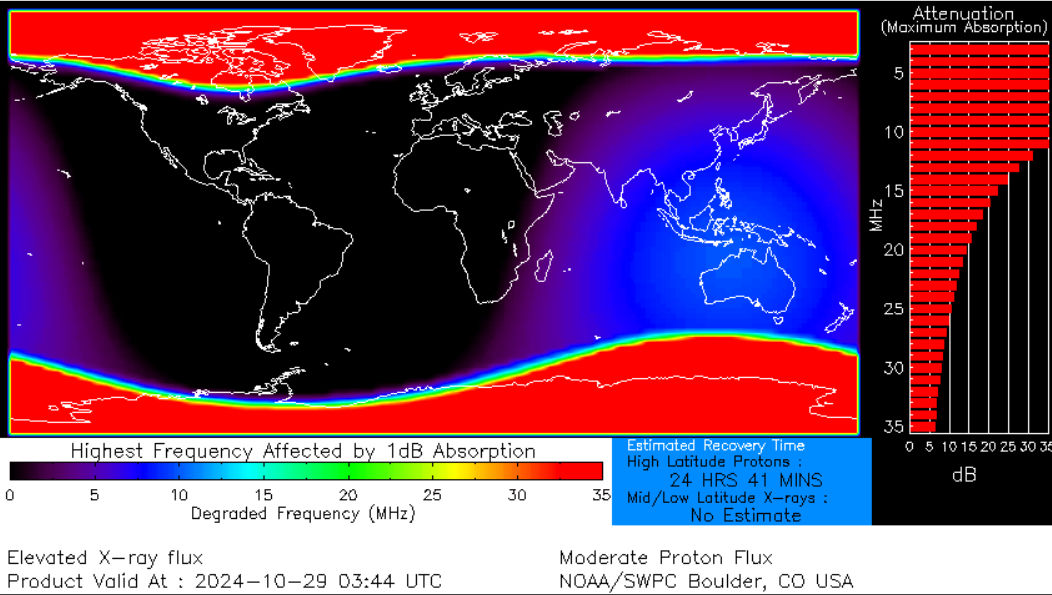
PROTONS ARE RAINING DOWN ON EARTH: For the 3rd day in a row, energetic protons are raining down on Earth. It's an S2-class radiation storm. The protons were accelerated by X-class solar flares on Oct. 24th and 26th. As a result of the storm, a shortwave radio blackout is underway inside the Arctic Circle, and cameras on spacecraft are being fogged. Indeed, most of the speckles in the SOHO coronagraph movie highlighted below are solar protons hitting the camera. This could continue for at least another 24 hours. Radiation storm alerts: SMS Text

GIANTS ON THE SUN: "Today we have three big things on the sun: A gigantic string of big and active sunspots, a large sunspot just coming into view, and a magnificent solar prominence," reports Maximilian-Vlad Teodorescu of the Institute of Space Science in Magurele, Romania. He photographed them all on Oct. 29th:
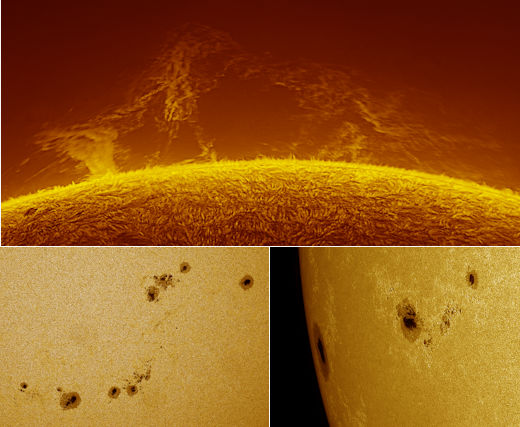
"All are far above the usual size of sunspots and prominences," says Teodorescu. "What a wonderful solar maximum!"
Three of the sunspots Teodorescu photographed pose a threat for very strong solar flares: 3869, 3872, 3874 have 'beta-gamma-delta' magnetic fields in which opposite polarities are bumping together in dangerous proximity. NOAA forcasters estimate a 75% chance of M-class solar flares and a 30% chance of X-flares during the next 24 hours. Solar flare alerts: SMS Text
Realtime Space Weather Photo Gallery
Free: Spaceweather.com Newsletter
THE SUN JUST SWALLOWED A COMET: The solar system has one less comet. Comet ATLAS (C/2024 S1) melted away yesterday when it passed within 0.008 AU of the sun. Coronagraphs onboard the Solar and Heliospheric Observatory witnessed the final moments:
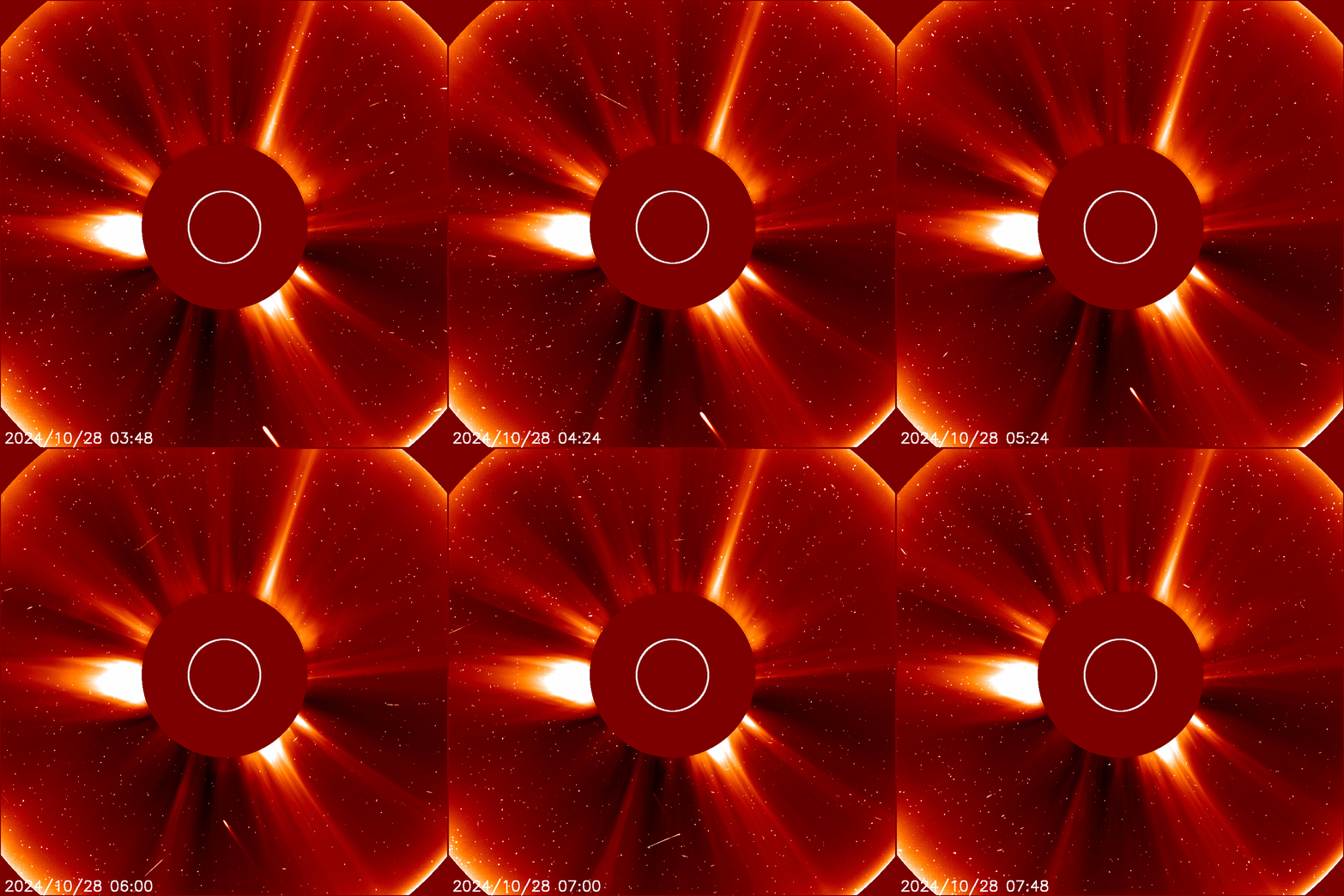
In the movie, an opaque disk covers the sun, blocking its glare to produce an artificial eclipse. This allowed SOHO's digital cameras to see the comet only 550,000 km from the surface of the sun.
Comet ATLAS is a Kreutz sungrazer, a family of comets which are fragments from the breakup of a single giant comet ~1000 years ago. SOHO has discovered thousands of them, almost all disintegrating near the sun.
The end of Comet ATLAS is a disapointment. When it first appeared in September, an outburst brightened the comet, making it appear larger than average Kreutz fragments. Many astronomers hoped it would survive the sun and put on a magnificent display like Kreutz Comet Ikeya-Seki did in 1965. Maybe next time.
Realtime Comet Photo Gallery
Free: Spaceweather.com Newsletter
THE GEOMAGNETIC MOONCAT: This cat has experienced a geomagnetic storm. Multiple CMEs hit Earth's magnetic field during the weekend of August 10-11. Students of Earth to Sky Calculus launched a cosmic ray balloon into the resulting severe geomagnetic storm. The Geomagnetic Mooncat went along for the ride:
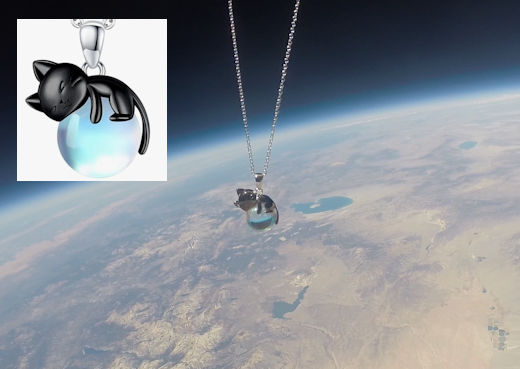
You can have it for $199.95. Supported by a sterling silver frame, the black cat is curled around a genuine blue moonstone. It floated through the stratosphere for almost 3 hours during the storm, gathering radiation data for the students' monitoring program. The Mooncat comes with a greeting card showing the pendant in flight and explaining the radiation experiment.
The students of Earth to Sky Calculus are selling space jewelry to support their cosmic ray ballooning program. Don't wait for Christmas--get yours now!
Far Out Gifts: Earth to Sky Store
All sales support hands-on STEM education
Realtime Aurora Photo Gallery
Free: Spaceweather.com Newsletter