GEOMAGNETIC STORM WARNING (G1): Minor G1-class geomagnetic storms are underway this weekend as Earth moves through the magnetized tail of a CME that struck on Nov. 7th. Bright auroras are dancing around the Arctic Circle, with some lights descending as far south as New York, Washington and Minnesota. Aurora alerts: SMS Text

STRONG SOLAR FLARE AND PUNY CME: Sunspot AR3889 erupted today, producing an M9.4-class solar flare and a shortwave radio blackout over the South Atlantic Ocean. The explosion was just percentage points from category X. NASA's Solar Dynamics Observatory recorded the extreme ultraviolet flash:
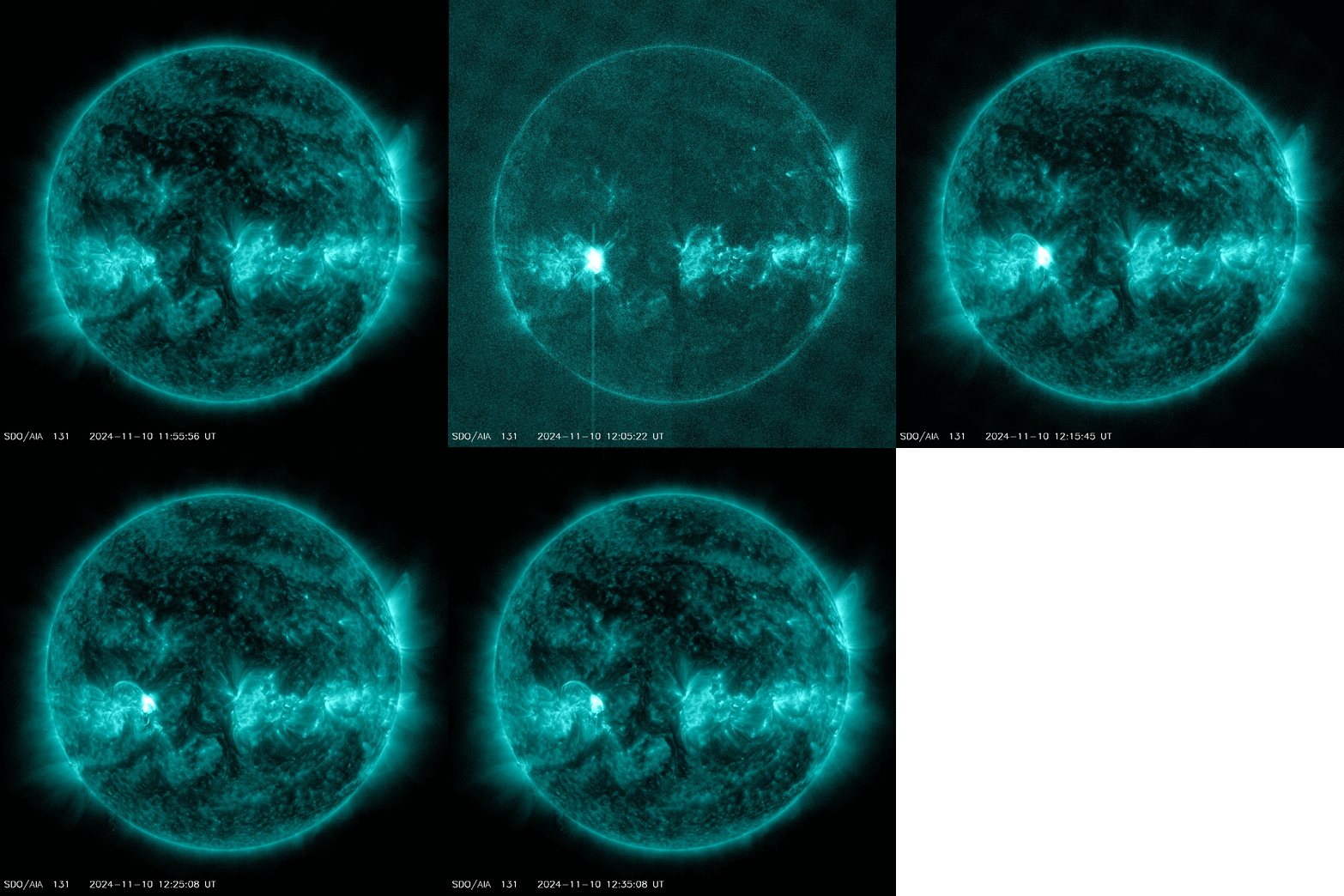
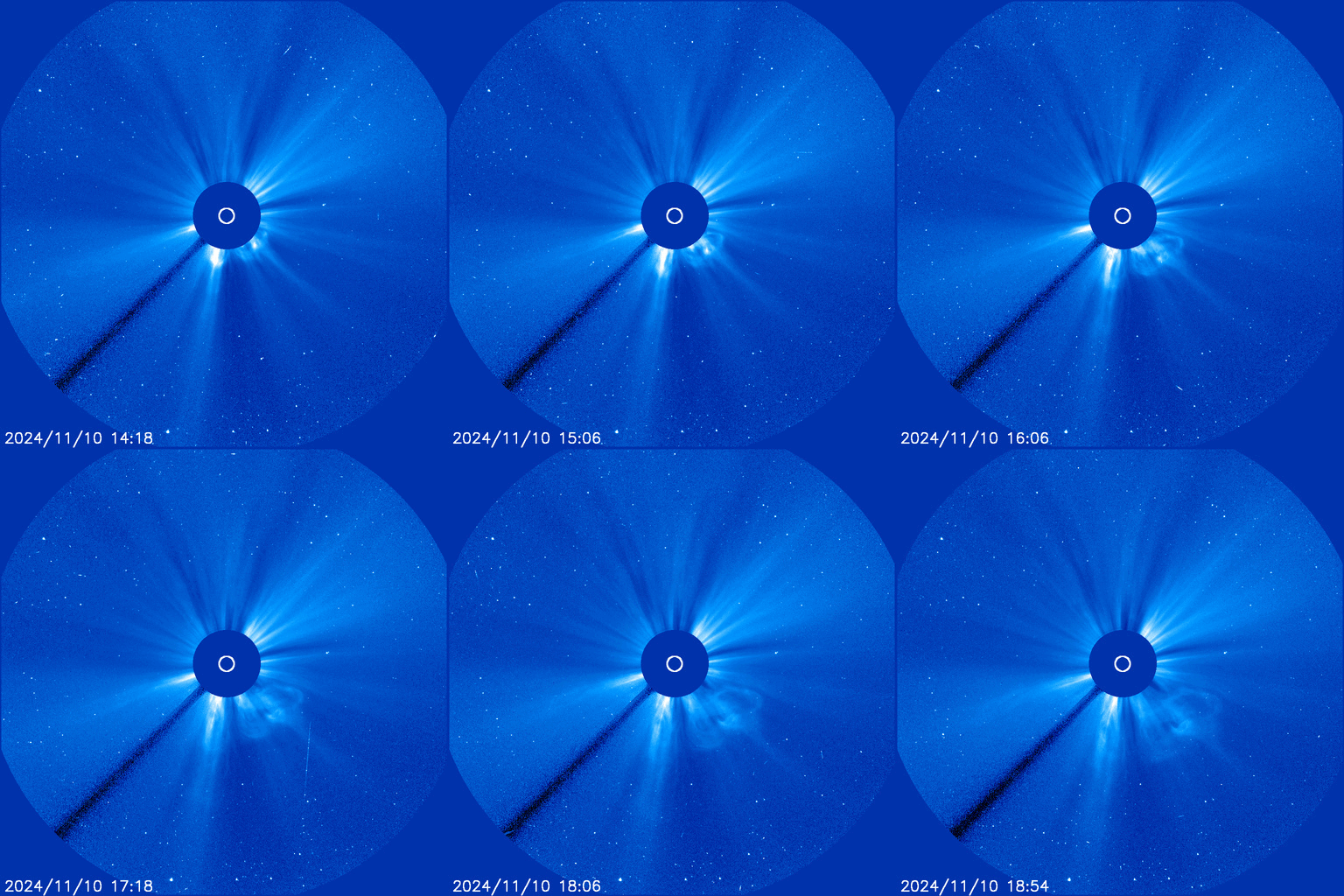
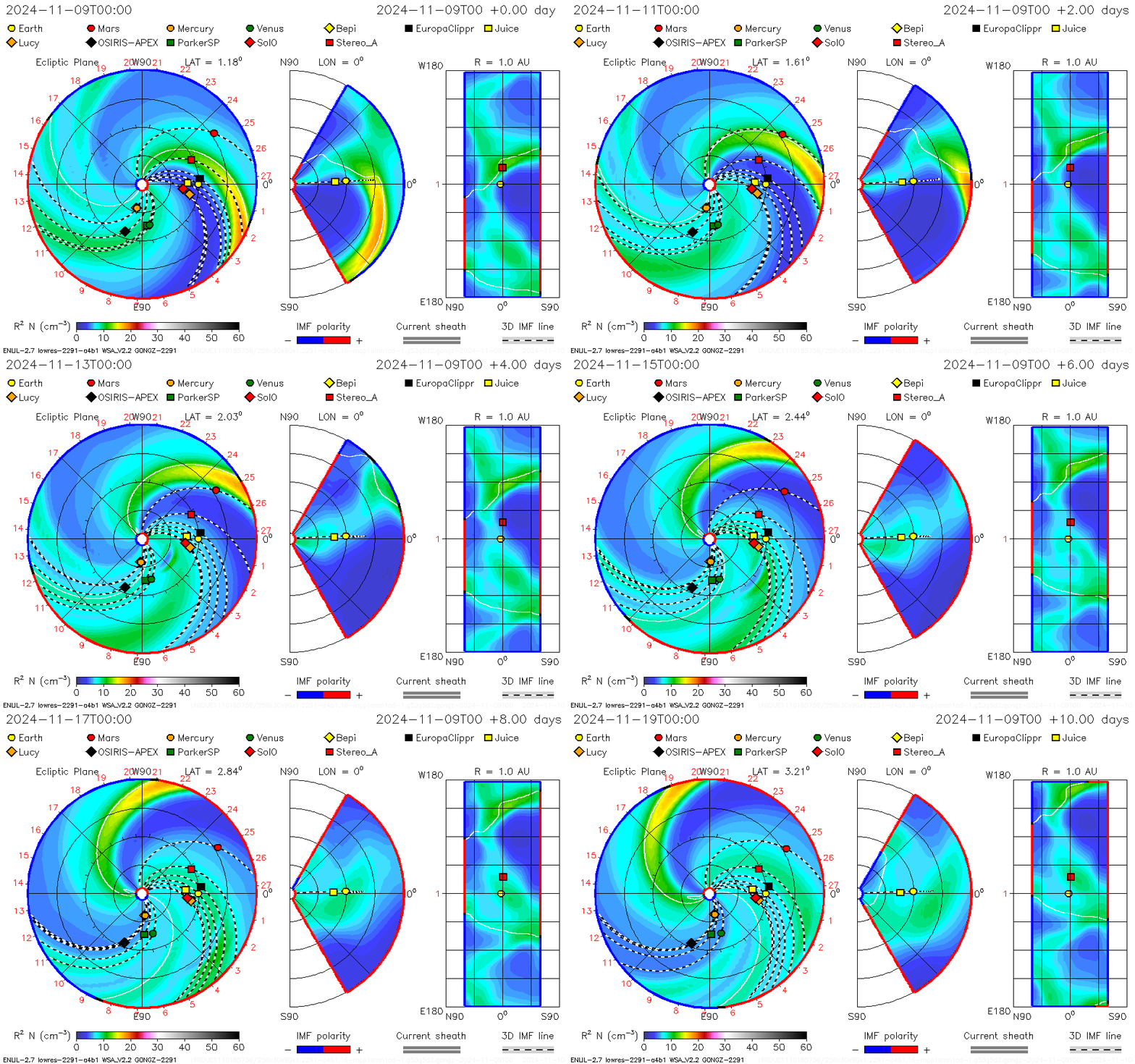
New data from SOHO coronagraphs confirm that the explosion hurled a CME into space. Although the flare was strong, the CME looks faint and puny. It will graze Earth on Nov. 13th, according to a NASA model. At most, the impact could spark a minor G1-class geomagnetic storm. Solar flare alerts: SMS Text
Realtime Space Weather Photo Gallery
Free: Spaceweather.com Newsletter
AFTERGLOW OF A CME: A CME hit Earth on Nov. 7th. The impact was weak and did not immediately cause a geomagnetic storm. The afterglow, however, was out of this world:
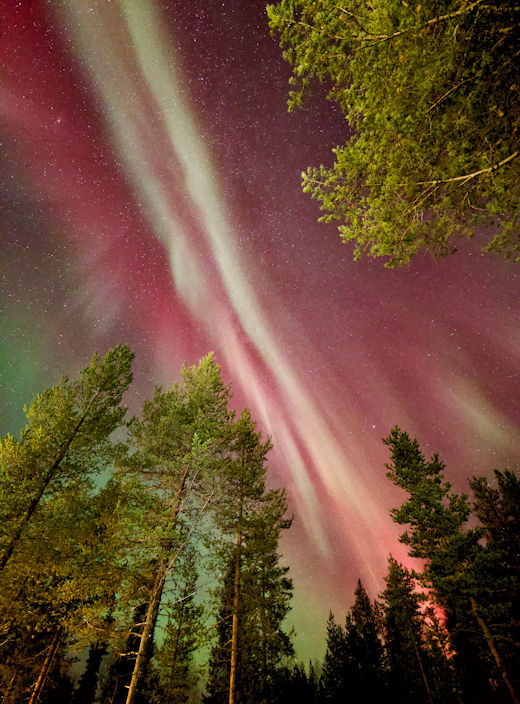
Yrjö Benson of Ylläsjärvi, Finland, took this picture on Nov. 8th. "The auroras were spectacular here 110 km north of the Arctic Circle," he says. "This beautiful reddish-yellowish aurora rose from the west at 21.08 Finnish time and continued all the way up to zenith."
The auroras Benson photographed appeared more than 24 hours after the CME arrived. This is surprisingly common. CMEs often fail to cause geomagnetic activity when they first arrive. Instead, the action is delayed until Earth enters the CME's tail. South-pointing magnetic fields in the tail can cancel Earth's north-pointing planetary magnetic field; we call this "a crack in Earth's magnetosphere." Solar wind flows through the gap to fuel the afterglow.
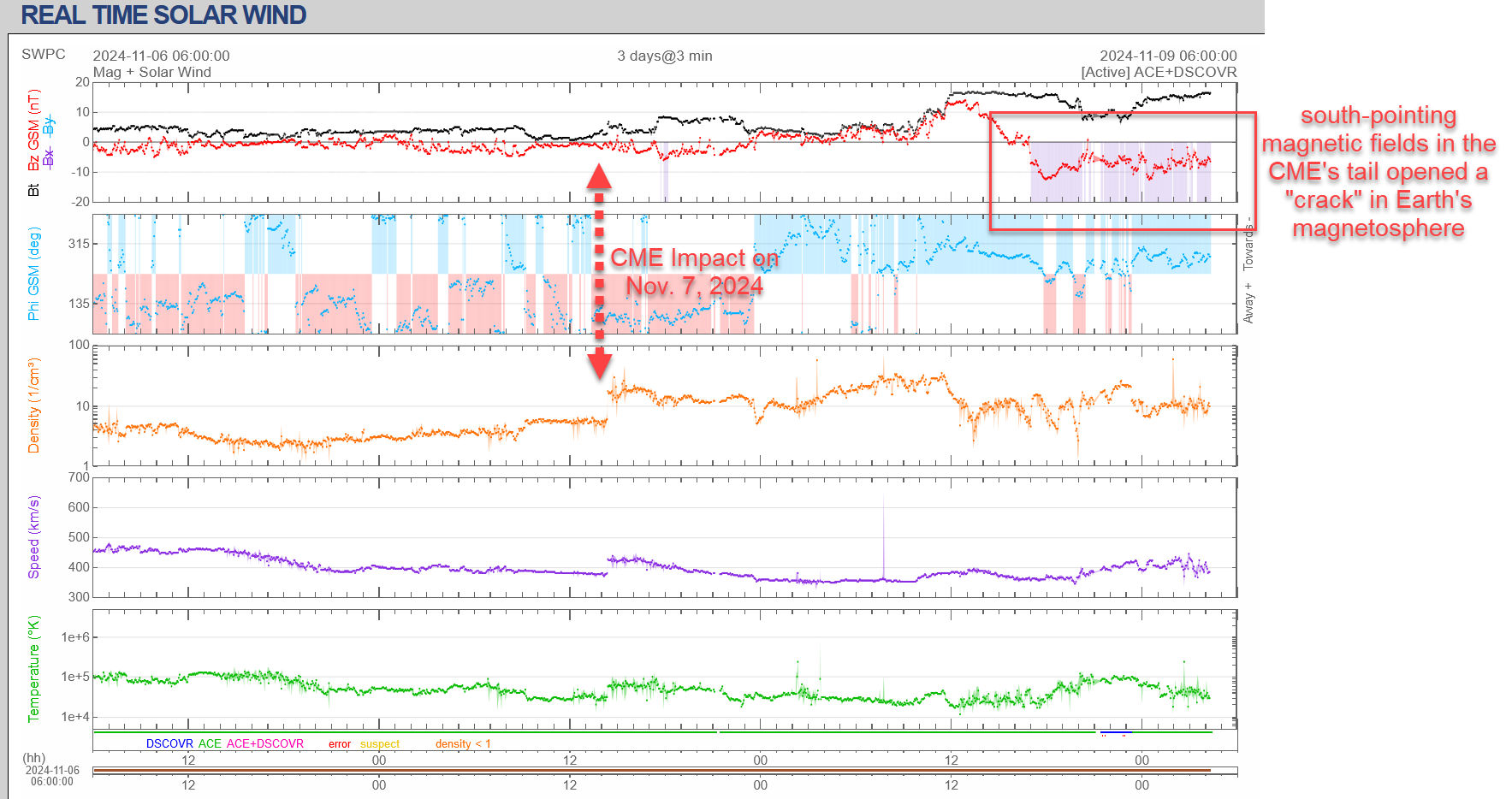
So, the next time a CME strikes, be patient. The auroras could take a while. Would you like a text message when cracks form? They're sent to subscribers of the Space Weather Alert Pro Plan.
more images: from Alan C Tough of Elgin, Moray, Scotland; from Thomas Spence of Tofte, Minnesota; from Carlos Garcia flying over eastern Washington State, USA;
Realtime Aurora Photo Gallery
Free: Spaceweather.com Newsletter
14K ROSE GOLD BUTTERFLY LOCKET: Are you looking for a far-out gift? Consider the 14K Rose Gold Butterfly Locket. On Oct 11, 2024, it flew to the stratosphere onboard a cosmic ray research balloon, reaching an altitude 109,003 feet above the Sierra Nevada mountains of California:

You can have it for $149.95. Made of 14K rose gold and engraved with dozens of butterflies, the locket floated in the stratosphere for 3 hours while radiation sensors inside the payload gathered data for the students' radiation monitoring project. It comes with a greeting card showing the pendant in flight and telling the story of its journey to the edge of space and back again.
The students of Earth to Sky Calculus are selling space jewelry to support their cosmic ray ballooning program. Don't wait for Christmas--get yours now!
Far Out Gifts: Earth to Sky Store
All sales support hands-on STEM education
Realtime Comet Photo Gallery
Free: Spaceweather.com Newsletter
Realtime Space Weather Photo Gallery
Free: Spaceweather.com Newsletter