CHANCE OF X-FLARES TODAY: Yesterday, sunspot AR3889 almost produced an X-class solar flare (see below). Today, it gets a second chance. The sunspot has an unstable delta-class magnetic field that poses a threat for strong explosions. NOAA forecasters estimate a 30% chance of X-flares on Nov. 11th. Solar flare alerts: SMS Text
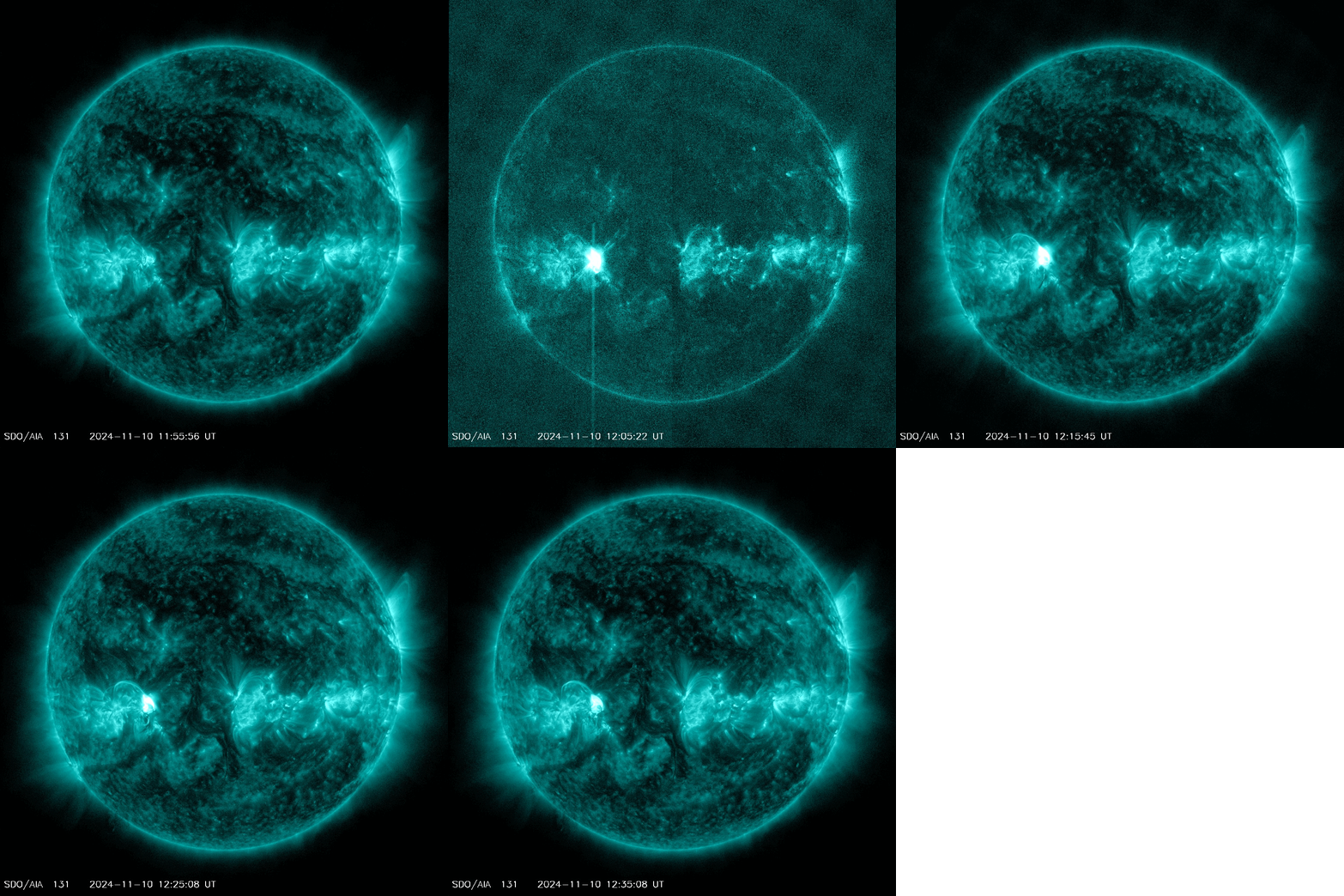
STRONG SOLAR FLARE AND PUNY CME: Sunspot AR3889 erupted on Nov. 10th (1206 UTC), producing an M9.4-class solar flare and a shortwave radio blackout over the South Atlantic Ocean. The explosion was just percentage points from category X. NASA's Solar Dynamics Observatory recorded the extreme ultraviolet flash:
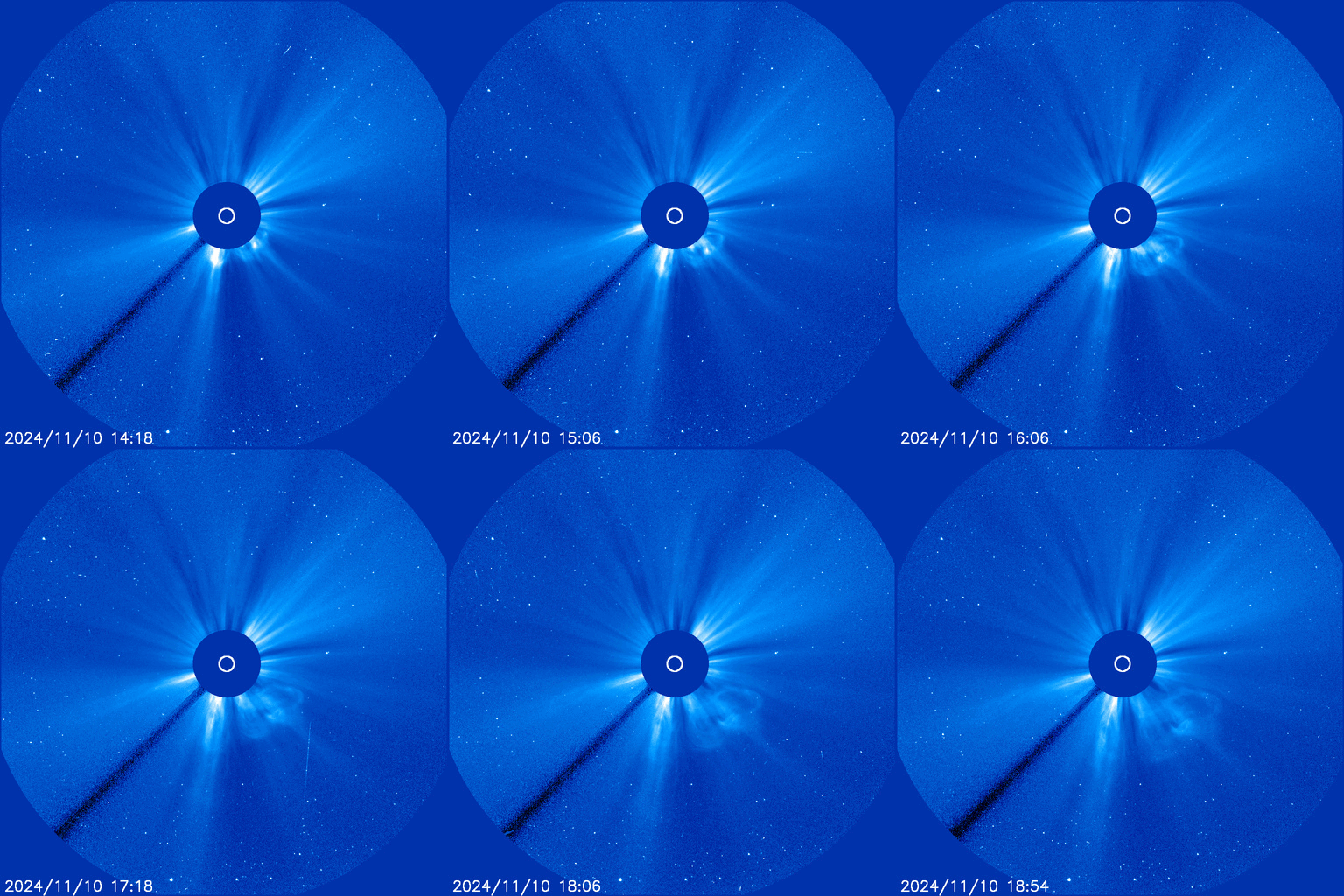
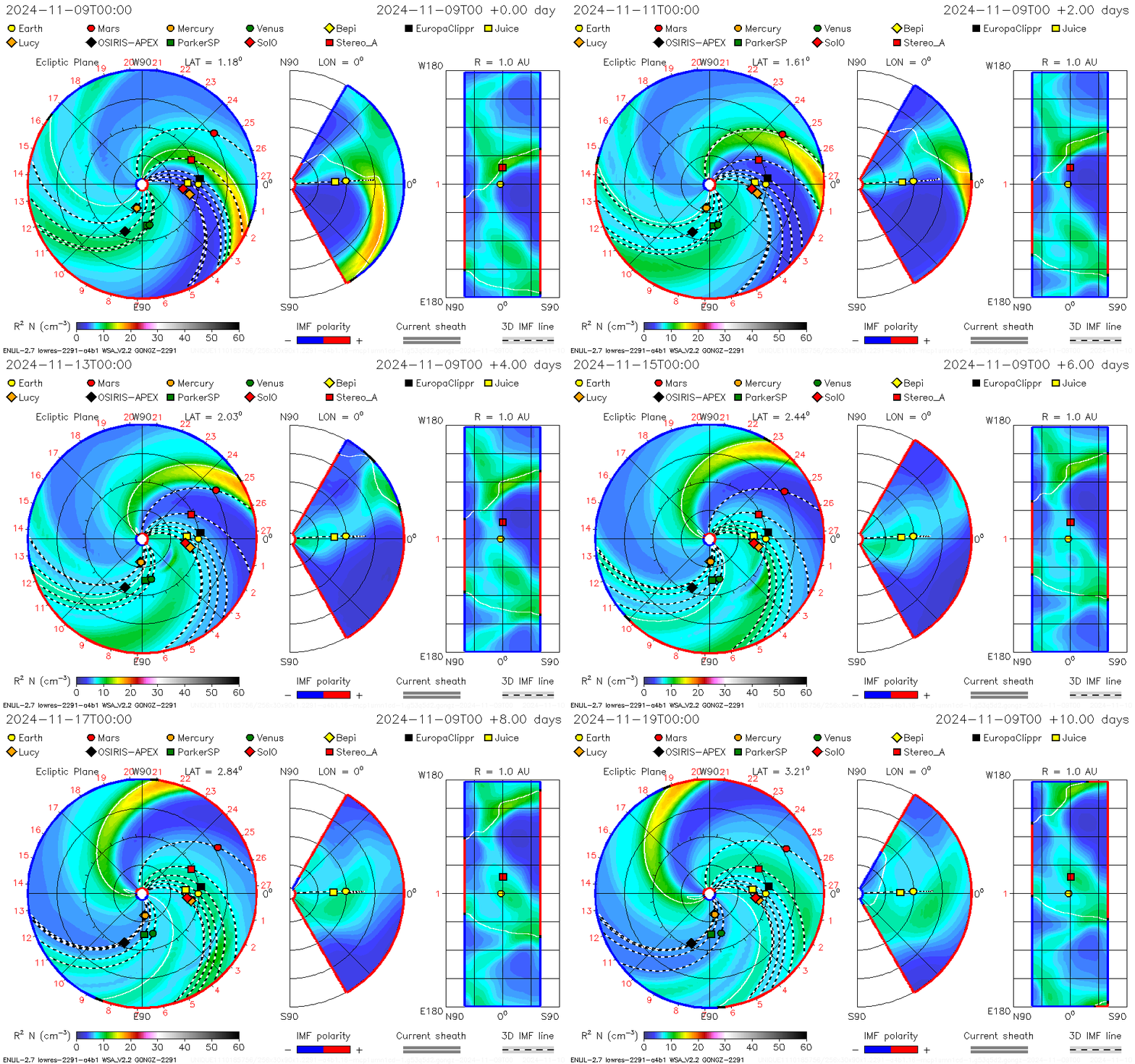
Data from SOHO coronagraphs confirm that the explosion hurled a CME into space. Although the flare was strong, the CME looks faint and puny. It will graze Earth on Nov. 13th, according to a NASA model. At most, the impact could spark a minor G1-class geomagnetic storm with photographic auroras at high latitudes. CME impact alerts: SMS Text
Realtime Space Weather Photo Gallery
Free: Spaceweather.com Newsletter
PRO TRICK FOR SEEING AURORAS: There was no geomagnetic storm on Nov. 8th. Nevertheless, Jessica Fridrich saw some beautiful auroras over Binghamton, New York:
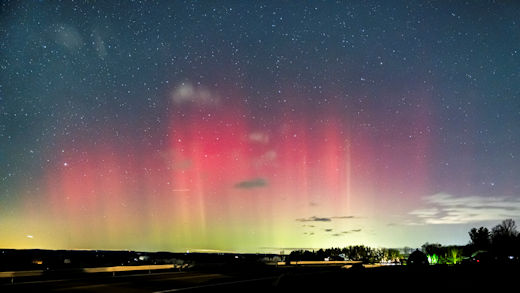
She used a pro trick to do it. "It felt silly to go out shoot auroras with no active storm (the planetary K index was only 3.78), but the sustained negative Bz gave me a hope," she explains.
"Sustained negative Bz" -- that's the pro trick. When magnetic fields in the solar wind turn south (i.e., negative Bz) auroras can appear at mid-latitudes even without a geomagnetic storm. In fact, watching Bz (pronounced "B sub Z") is the very best way to catch mid-latitude auroras.
It works like this: South-pointing magnetic fields in the solar wind (or inside a CME) cancel Earth's north-pointing magnetic field, forming "portals" or "cracks." Solar wind flows through the gaps to fuel auroras.
So how do you know when Bz is negative? Simple. Sign up for the Pro Plan of our Space Weather Alert system. You will receive instant text alerts for episodes of sustained negative Bz.
Realtime Aurora Photo Gallery
Free: Spaceweather.com Newsletter
14K ROSE GOLD BUTTERFLY LOCKET: Are you looking for a far-out gift? Consider the 14K Rose Gold Butterfly Locket. On Oct 11, 2024, it flew to the stratosphere onboard a cosmic ray research balloon, reaching an altitude 109,003 feet above the Sierra Nevada mountains of California:

You can have it for $149.95. Made of 14K rose gold and engraved with dozens of butterflies, the locket floated in the stratosphere for 3 hours while radiation sensors inside the payload gathered data for the students' radiation monitoring project. It comes with a greeting card showing the pendant in flight and telling the story of its journey to the edge of space and back again.
The students of Earth to Sky Calculus are selling space jewelry to support their cosmic ray ballooning program. Don't wait for Christmas--get yours now!
Far Out Gifts: Earth to Sky Store
All sales support hands-on STEM education
Realtime Comet Photo Gallery
Free: Spaceweather.com Newsletter
Realtime Space Weather Photo Gallery
Free: Spaceweather.com Newsletter