THE SUNSPOT THAT REFUSES TO EXPLODE: There should be an X-flare today, but it probably won't happen. Sunspot AR3889 has been threatening to explode for more than a week; it has an unstable delta-class magnetic field that harbors energy for significant flares. For some reason, the sunspot refuses to blow. Calm before the storm? Solar flare alerts: SMS Text
A RARE SINE WAVE IN THE MAGNETOSPHERE: Imagine you're at a hard rock concert. Waves of heavy metal crash against your eardrums, you can barely hear a thing, when, suddenly, the delicate trill of a flute cuts through the cacophony.
Something like that happened to Stuart Green of Lancashire UK during the severe geomagnetic storm of Oct. 10, 2024. "My backyard magnetogram was a riot," says Green. "But when I took a closer look, there was a delicate wave riding on top of the 'noise.'"
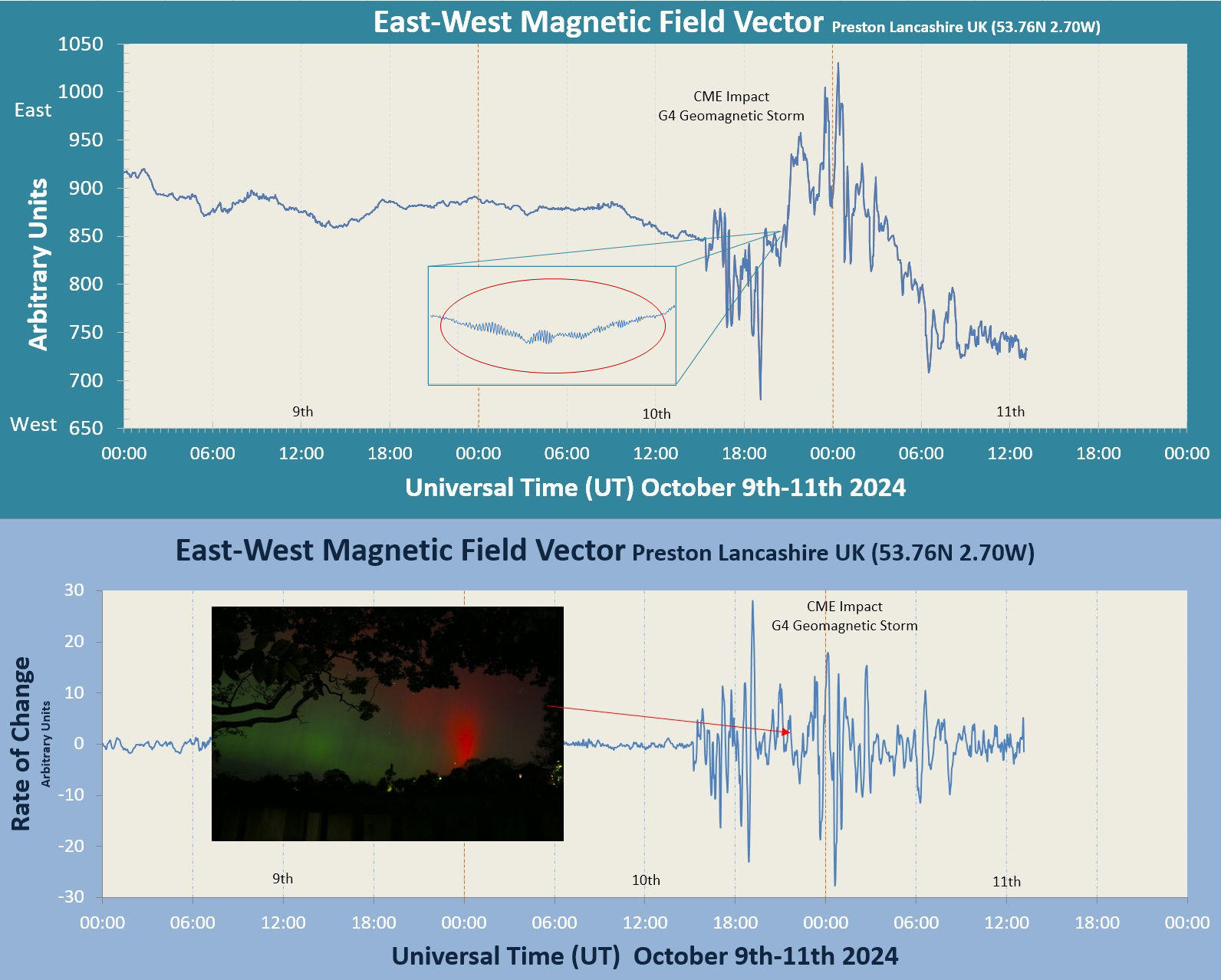
Green detected a rare "pulsation continuous"--or "Pc wave" for short. This is research jargon meaning, essentially, a pure sine wave in the magnetosphere. Pc waves are classified into 5 types depending on their frequency. Green's specimens are Pc1 and Pc2.
Usually, Pc waves are recorded only during periods of extreme quiet. They are delicate and hard to detect. Capturing one during riotous geomagnetic activity is extremely unusual. It is a testament to the sensitivity of Green's research-grade (albeit homemade) magnetometer--and the degree to which every mode of the magnetosphere was simultaneously activated by the Oct. 10th storm.
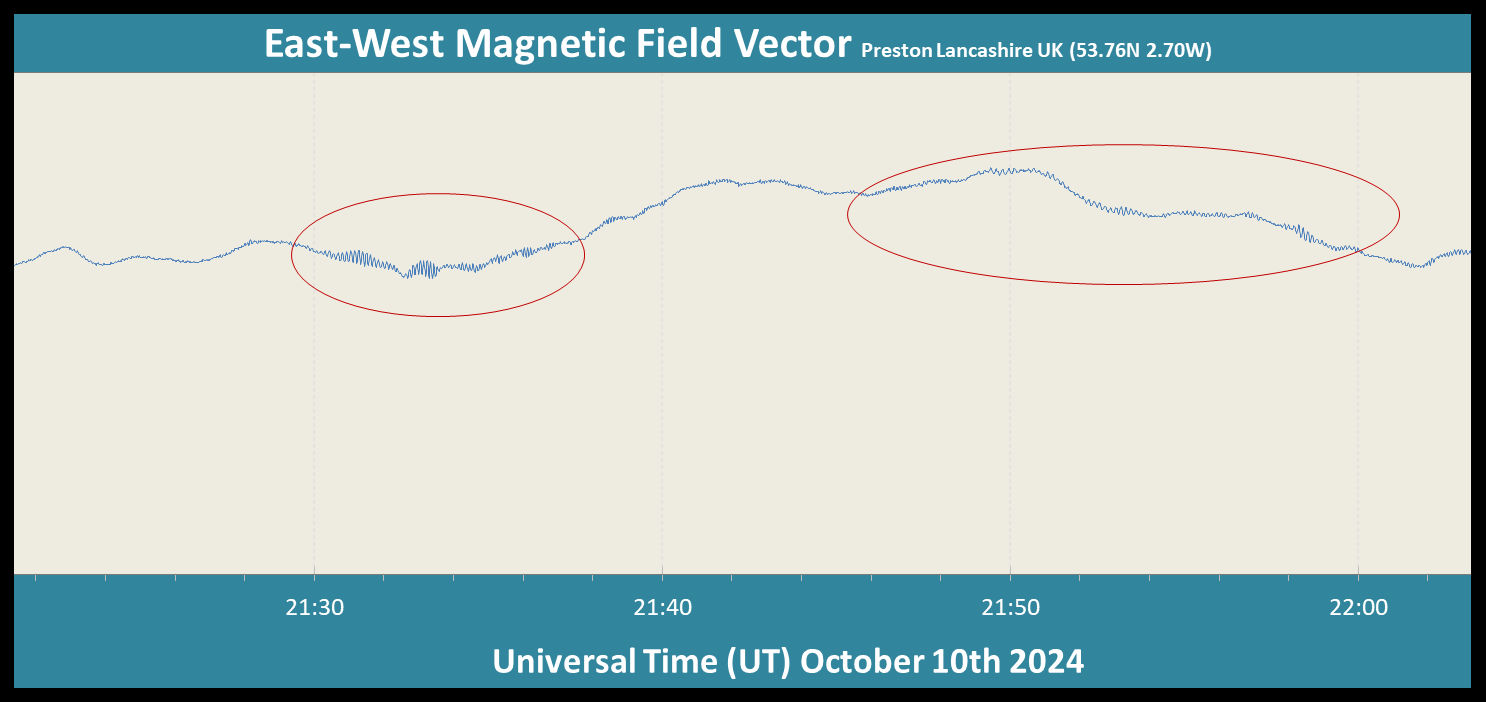
Zooming into Green's data shows the 7-to-8 second regularity of the waves
So what? These particular waves matter because they can help satellites survive severe space storms. Fast Pc1 and Pc2 waves scatter "killer electrons" out of the Van Allen radiation belts, making the region safer for satellites that orbit through the belts when they are supercharged by solar activity.
Would you like to monitor the magnetosphere for rare waves? Stuart Green's backyard magnetometer is a great DIY project. Here are his instructions.
Realtime Space Weather Photo Gallery
Free: Spaceweather.com Newsletter
"I LOVE YOU MORE" MOONSTONE PENDANT: Are you looking for a far-out gift? Nothing says "I love you" like a moonstone from space. This one hitched a ride on an Earth to Sky Calculus cosmic ray research balloon, floating 112,201 feet above the Sierra Nevada mountains of central California:
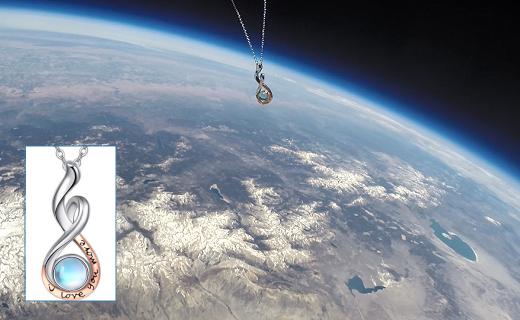
You can have it for $142.95. The students are selling these sterling silver infinity-wrapped moonstone pendants to support their ballooning program. Engraved with "I Love You More," it makes a romantic anniversary or birthday gift. Each one comes with a greeting card showing the moonstone in flight and telling the story of its trip to the stratosphere and back again.
Far Out Gifts: Earth to Sky Store
All sales support hands-on STEM education
Realtime Comet Photo Gallery
Free: Spaceweather.com Newsletter
Realtime Aurora Photo Gallery
Free: Spaceweather.com Newsletter