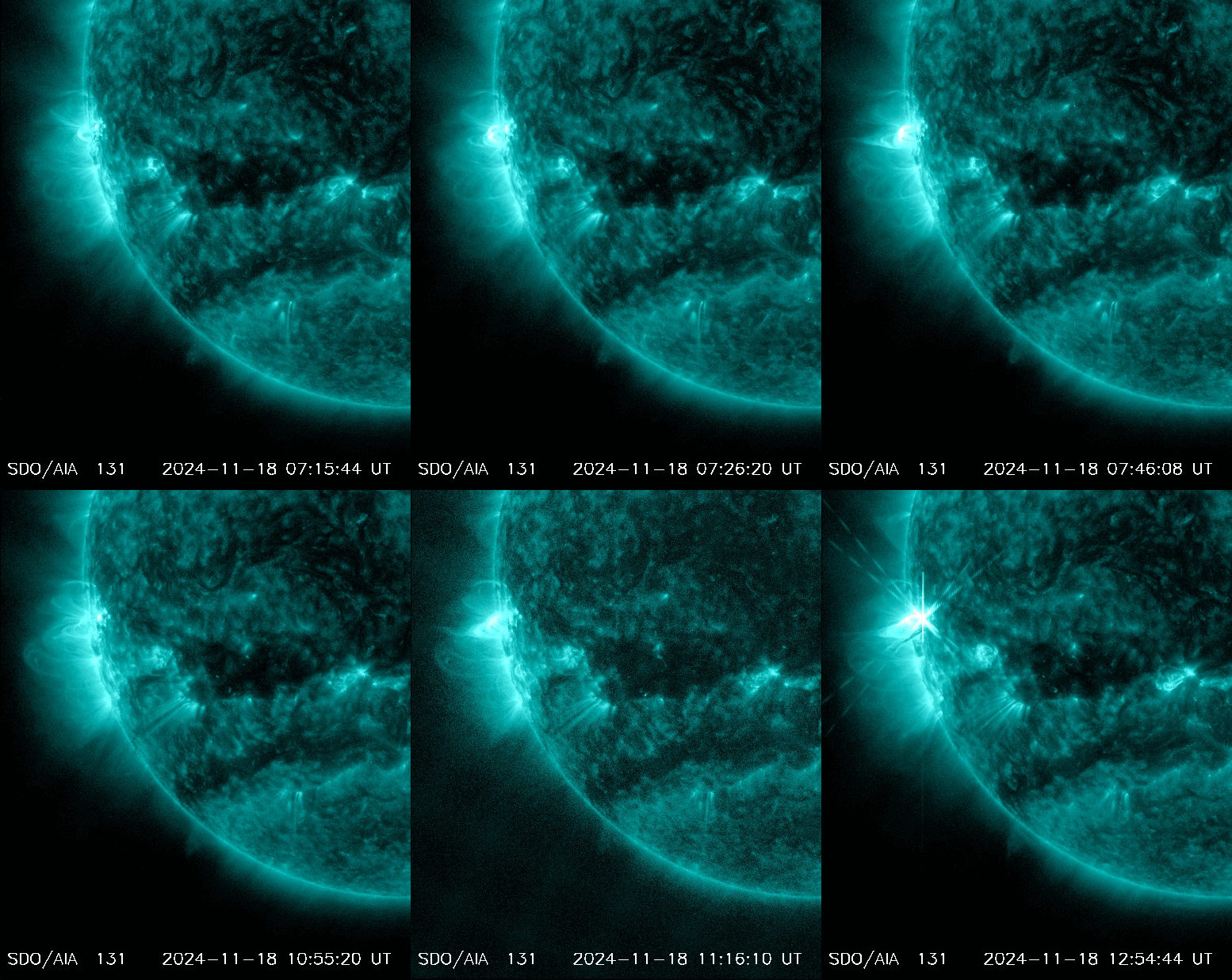
A NEW SOURCE OF SOLAR FLARES: The quiet didn't last long. A new unnumbered sunspot emerging over the sun's is crackling with M-class solar flares. Here is a sample of this morning's action. The sunspot is turning toward Earth, so future explosions will be increasingly geoeffective if it remains active. Solar flare alerts: SMS Text
ACID CLOUDS IN THE STRATOSPHERE: The season for polar stratospheric clouds (PSCs) is about to begin. NASA climate models show the temperature of the north polar stratosphere rapidly dropping. It is only days away from reaching the cold threshold for Type I PSCs:
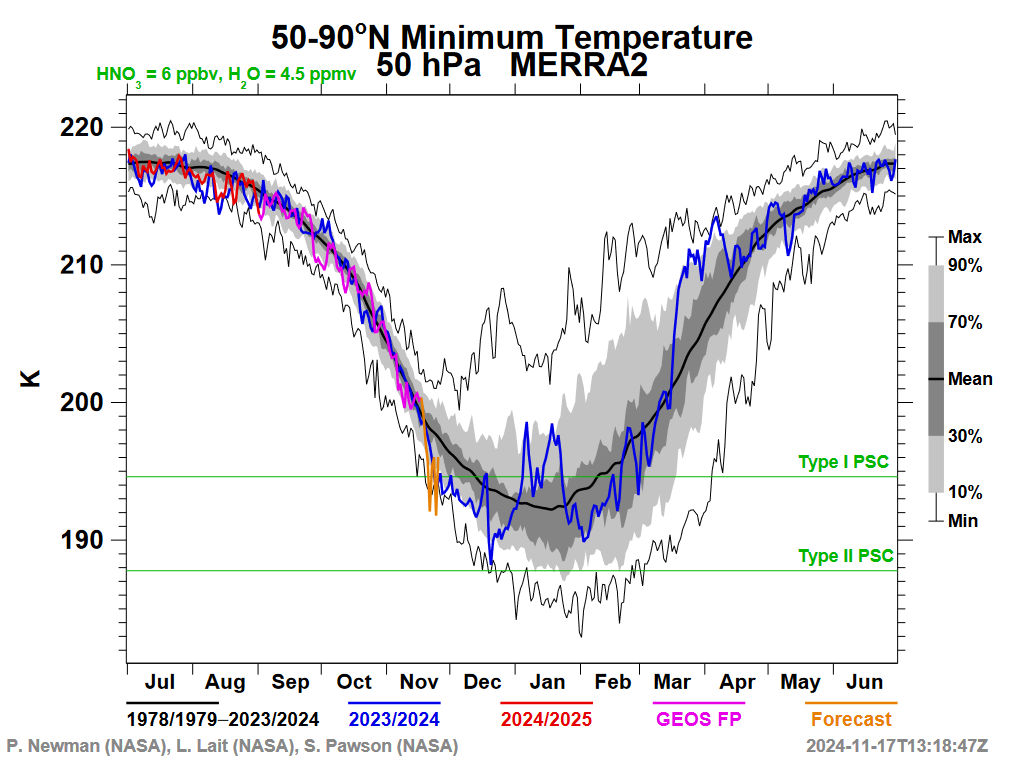
Normally, the stratosphere has no clouds at all. It is like a vacuum up there, drier than the driest deserts on Earth. Only when the temperature drops to a staggeringly low -78°C (195 K) can widely-spaced molecules in the stratosphere gather to form clouds.
If NASA's forecast is correct, clouds could start forming this week inside the Arctic Circle. The first clouds will be Type I PSCs. These are made of water, nitric acid, and sometimes sulfuric acid. Type I PSCs are bad news: They destroy ozone. The presence of Type I clouds over a region can lead to the formation of an ozone hole.
As winter deepens, Type II clouds could form as well; they require temperatures as low as -85°C (188 K). Type II clouds are not so bad. Made of pure water ice, they are benign and colorful. Witnesses who see them usually agree that they are the most beautiful clouds on Earth.
These photos show apparitions of Type I and Type II clouds during the winter of 2023-24:
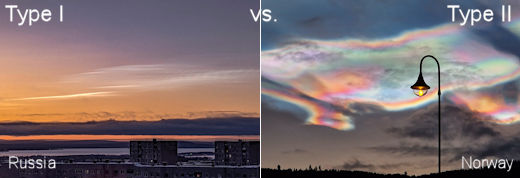
Type I clouds are pale and filamentary, often likened to noctilucent clouds. Type II clouds are a jaw-dropping riot of color with no real comparison among other clouds. If you live inside the Arctic Circle, keep an eye out for PSCs (especially Type I) in the weeks ahead. And submit your photos here!
Realtime Space Weather Photo Gallery
Free: Spaceweather.com Newsletter
"I LOVE YOU MORE" MOONSTONE PENDANT: Are you looking for a far-out gift? Nothing says "I love you" like a moonstone from space. This one hitched a ride on an Earth to Sky Calculus cosmic ray research balloon, floating 112,201 feet above the Sierra Nevada mountains of central California:
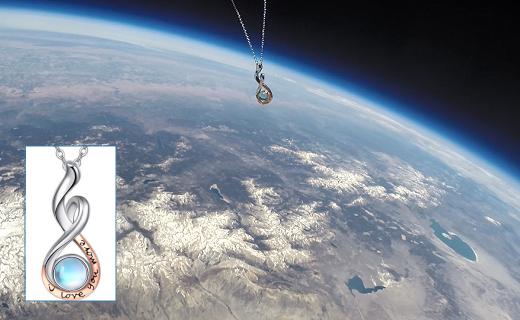
You can have it for $142.95. The students are selling these sterling silver infinity-wrapped moonstone pendants to support their ballooning program. Engraved with "I Love You More," it makes a romantic anniversary or birthday gift. Each one comes with a greeting card showing the moonstone in flight and telling the story of its trip to the stratosphere and back again.
Far Out Gifts: Earth to Sky Store
All sales support hands-on STEM education
Realtime Comet Photo Gallery
Free: Spaceweather.com Newsletter
Realtime Aurora Photo Gallery
Free: Spaceweather.com Newsletter