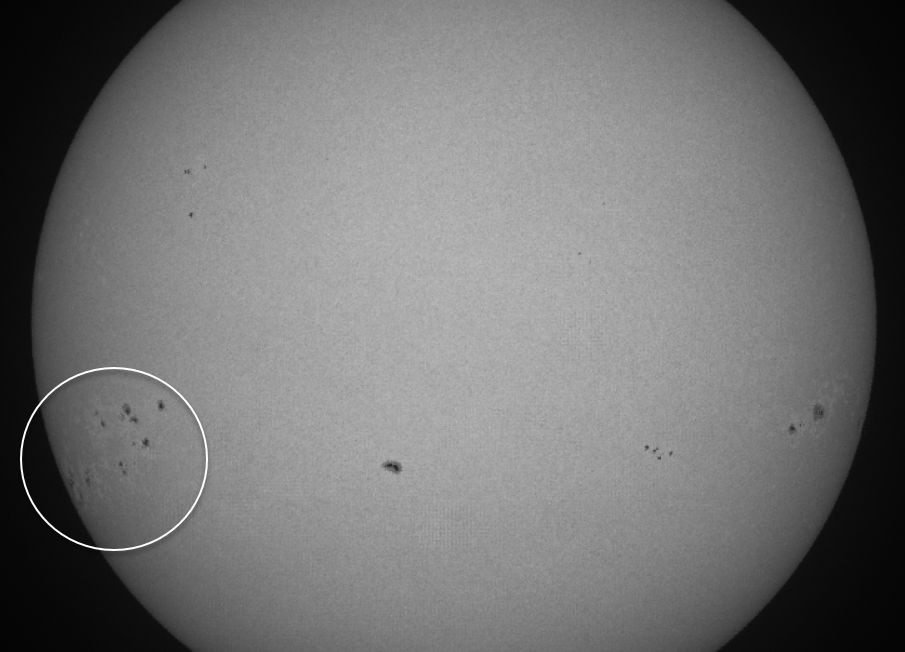
BIG SUNSPOT ALERT: A large and complicated group of sunspots has just emerged over the sun's southeastern limb. The group includes at least 15 dark cores and sprawls across more than 250,000 km of the sun's surface. Amateur astronomers, point your solar telescopes here. Solar flare alerts: SMS Text
MERCURY'S TAIL HAS RETURNED: Space weather affects some planets more than others. It's really hard on Mercury. The solar wind scours Mercury's rocky surface at point-blank range, creating a "sodium tail" occasionally visible from Earth. David Marshall of Christ Church, Barbados, saw it on Dec. 20th:
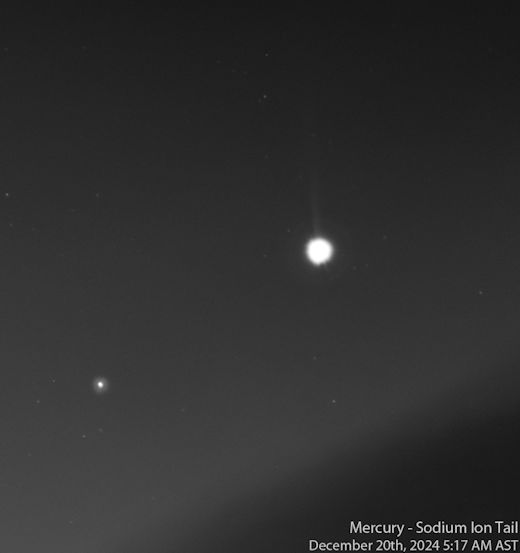
"It's back! Mercury's sodium ion tail is approximately 1 degree long in this image and is expected to become more prominent over the next couple of days," says Marshall.
First predicted in the 1980s, Mercury’s tail was discovered in 2001. It is a yellow-orange tail of sodium-rich gas more than 24 million kilometers long.
Mercury's tail brightens and dims as it orbits the sun. The predictable pattern is shown in this movie from NASA’s MESSENGER spacecraft, which spent years observing Mercury’s tail from close range:
For reasons having to do with the Doppler shift of sodium absorption lines in the solar spectrum, Mercury’s tail is most luminous when the planet is ±16 days from perihelion (closest approach to the sun). The most recent perihelion was Dec. 7th.
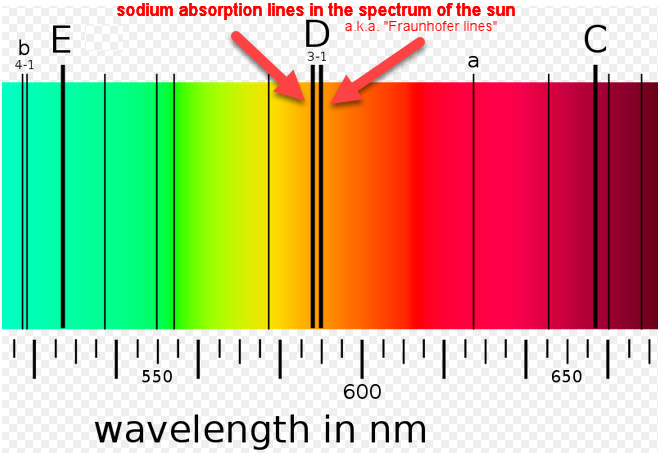
This means the tail will reach peak brightness on Dec. 23rd. Astronomers who wish to photograph the plume must wake up before dawn. Mercury is currently a bright "morning star" (magnitude –0.3) low in the southeast about 60 to 45 minutes before sunrise.
Observing tip: A 589 nanometer filter tuned to the yellow glow of sodium greatly enhances the visibility of Mercury's tail.
Realtime Space Weather Photo Gallery
Free: Spaceweather.com Newsletter
CHRISTMAS GIFTS FROM THE EDGE OF SPACE: Christmas is coming. Are you looking for a far-out gift? Check out the Earth to Sky Store. It's filled with unique items that have flown to the edge of space onboard cosmic ray research balloons.
Carried aloft by giant helium balloons, these unique gifts have flown above 99.7% of Earth's atmosphere, experiencing space-like blasts of cosmic rays, extreme cold, and a wild ride parachuting back to Earth after the balloon explodes. Even Amazon doesn't carry items this far out.
Don't forget to enter coupon code "BLACKCAT" at checkout for a 10% holiday discount.
Far Out Gifts: Earth to Sky Store
All sales support hands-on STEM education
Realtime Comet Photo Gallery
Free: Spaceweather.com Newsletter
Realtime Aurora Photo Gallery
Free: Spaceweather.com Newsletter