GEOMAGNETIC STORM WATCH: NOAA forecasters say a G1-class geomagnetic storm is possible today when a CME hurled into space by an M8.9-class solar flare on Dec. 23rd strikes Earth. This is a low-probability forecast. The CME was directed mostly south of Earth, so a miss is as likely as a hit. However, if it does strike, high-latitude sky watchers could see some out-of-this-world Christmas lights. CME impact alerts: SMS Text

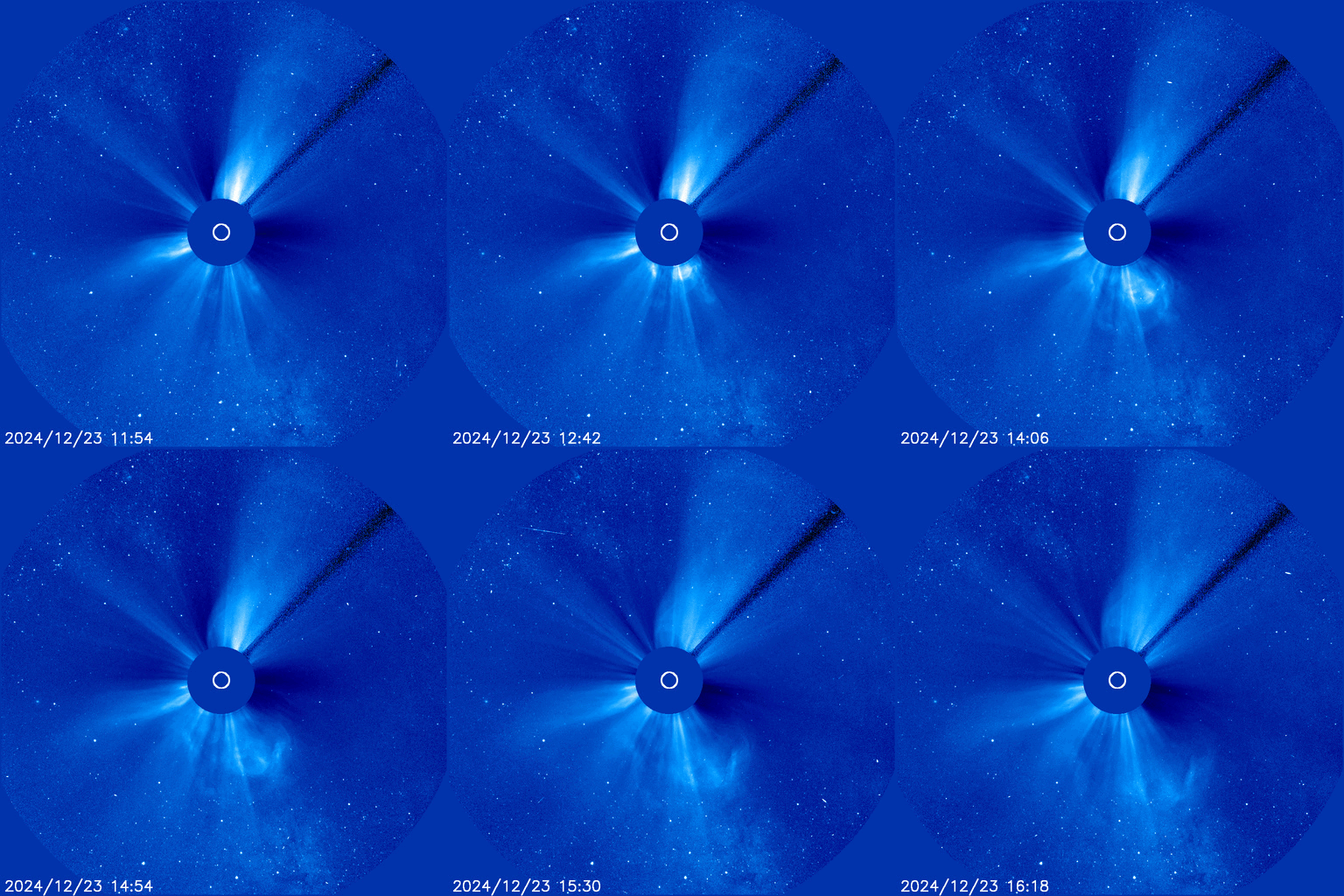
CHRISTMAS FLARE AND CME (UPDATED): Christmas began with a bang. At 0449 UT on Dec. 25th, active sunspot 3932 produced a strong M4.9-class solar flare. NOAA's GOES-16 satellite recorded the extreme ultraviolet flash:

Soon after the flare, the US Air Force reported a Type II solar radio burst. This is a natural type of radio emission caused by shock waves inside CMEs. The drift rate of the Type II radio burst suggests that a CME will soon emerge from the blast site traveling a little faster than 1,000 km/s.
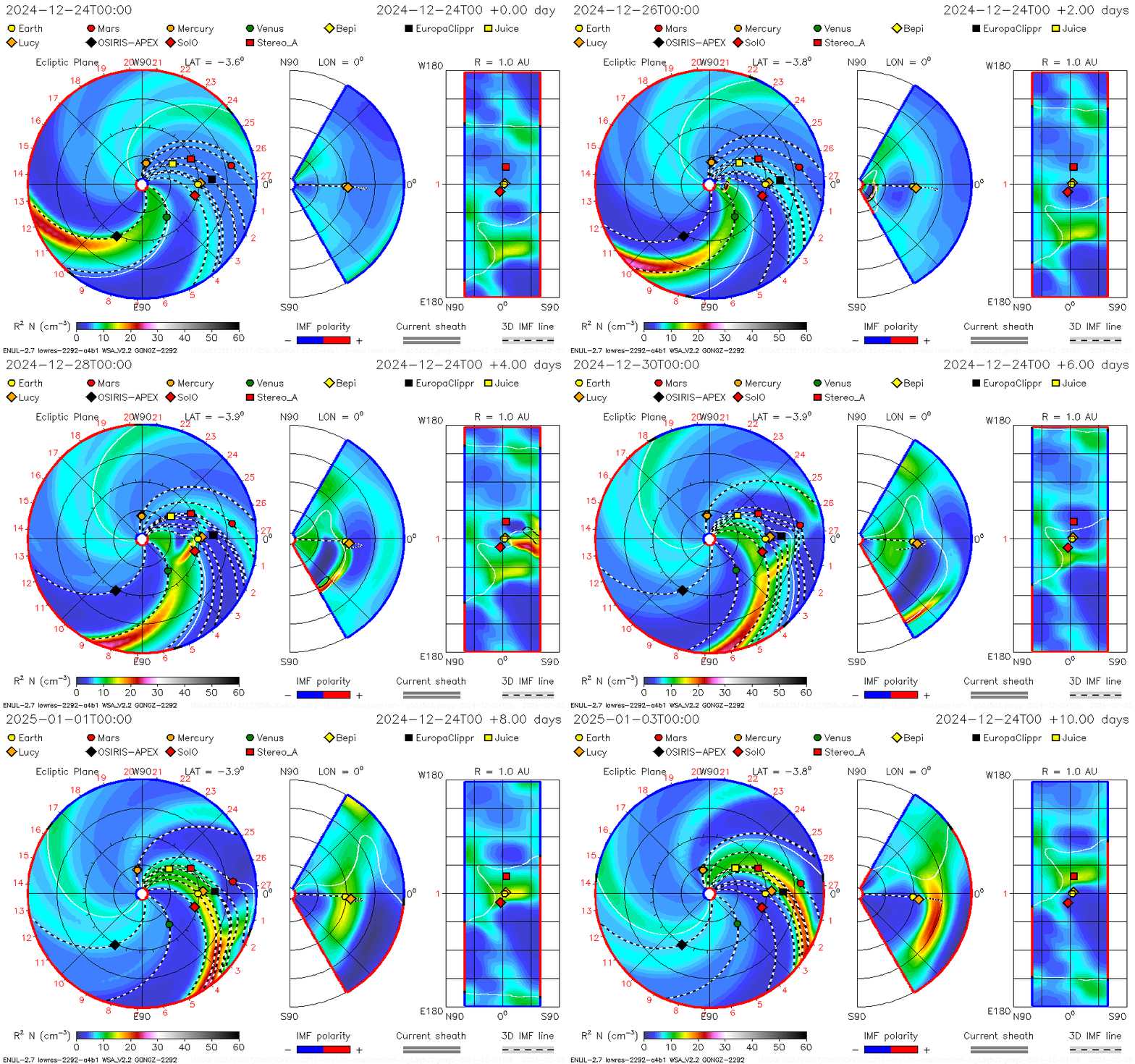
Update: SOHO coronagraphs did indeed detect a CME emerging from the blast site, however it was faint and unimpressive. The bulk of the CME appears to be heading south of Earth with a glancing blow possible on Dec. 28th, according to a NASA model. CME impact alerts: SMS Text
Realtime Space Weather Photo Gallery
Free: Spaceweather.com Newsletter
POLAR STRATOSPHERIC CLOUD SIGHTINGS: It's still *very* cold in the polar stratosphere. Jónína Óskarsdóttir just saw visible evidence of the low temperature floating over Fáskrúðsfjörður, Iceland:
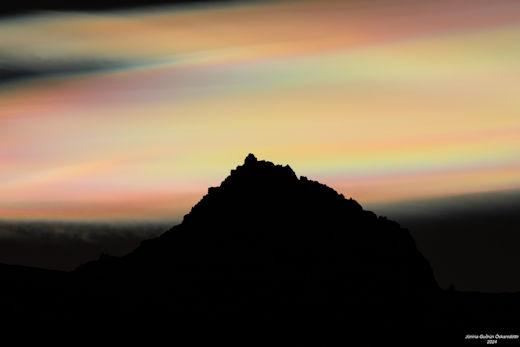
"These amazing light and beautiful polar stratospheric clouds (PSCS) appeared behind Mt. Jökultindur on Dec. 23rd," says Óskarsdóttir.
PSCs are a very rare type of cloud. They form in the Arctic stratosphere for a few days each year, usually near the winter solstice when the temperature drops to a staggeringly low -85 C. Sunlight touching the ice crystals inside PSCs cause them to blossom with pastel color.
Although PSCs normally appear only a few times each winter, sky watchers have been seeing them regularly since Dec. 10th, when they were first noticed over Norway. This means the polar cold spell is lasting longer than usual. Until further notice, Arctic photographers should remain alert for PSCs and, please, submit your photos here.
more images: from Tomas of Perthshire, Scotland; from Lesley Robertson of Black Isle, Scotland
Realtime Space Weather Photo Gallery
Free: Spaceweather.com Newsletter
CHRISTMAS GIFTS FROM THE EDGE OF SPACE: Christmas is here! Are you looking for a far-out gift? Check out the Earth to Sky Store. It's filled with unique items that have flown to the edge of space onboard cosmic ray research balloons.
Carried aloft by giant helium balloons, these unique gifts have flown above 99.7% of Earth's atmosphere, experiencing space-like blasts of cosmic rays, extreme cold, and a wild ride parachuting back to Earth after the balloon explodes. Even Amazon doesn't carry items this far out.
Don't forget to enter coupon code "BLACKCAT" at checkout for a 10% holiday discount.
Far Out Gifts: Earth to Sky Store
All sales support hands-on STEM education
Realtime Comet Photo Gallery
Free: Spaceweather.com Newsletter
Realtime Aurora Photo Gallery
Free: Spaceweather.com Newsletter