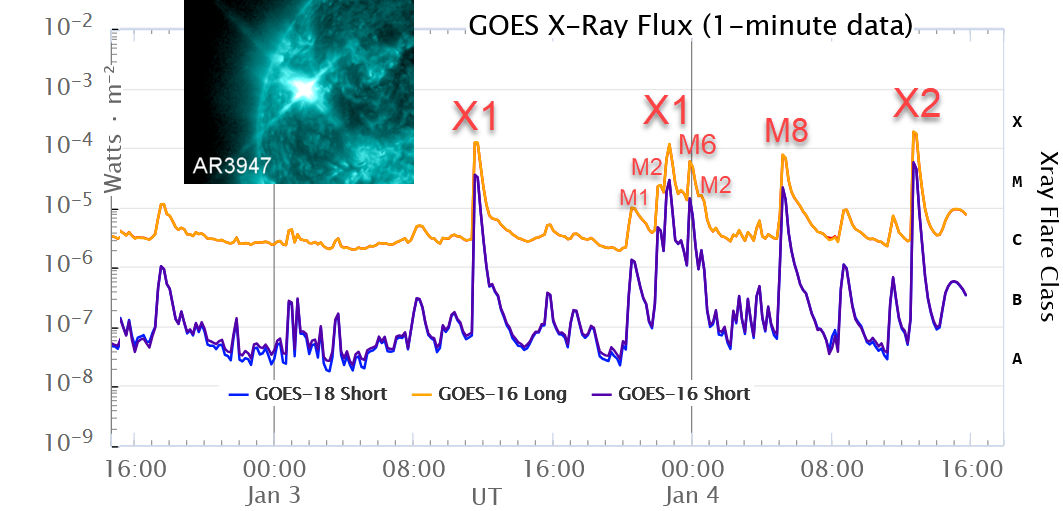
WHAT HAPPENED TO THE CMEs? Since Jan. 3rd, sunspot AR3947 has produced three X-flares and dozens of M-class solar flares. All that activity yielded zero significant CMEs. What happened? Flares and CMEs are two different aspects of exploding sunspots; they don't always happen at the same time. Dozens of flares with zero CMEs is a little unusual, but not unprecedented. The opposite can happen, too. AR3947 might suddenly start producing CMEs with no significant flares. It would certainly improve the aurora forecast. Solar flare alerts: SMS Text.
A BRIGHT COMET IS FALLING TOWARD THE SUN: Next week, Comet ATLAS (C/2024 G3) could outshine the planet Venus. It's falling toward the sun for a very close encounter (0.09 AU) on Jan. 13th. "If, by some miracle, the comet survives the intense thermal stress, it could become visible to the naked eye for observers in the southern hemisphere," says Lionel Majzik, who sends this picture from Chile:
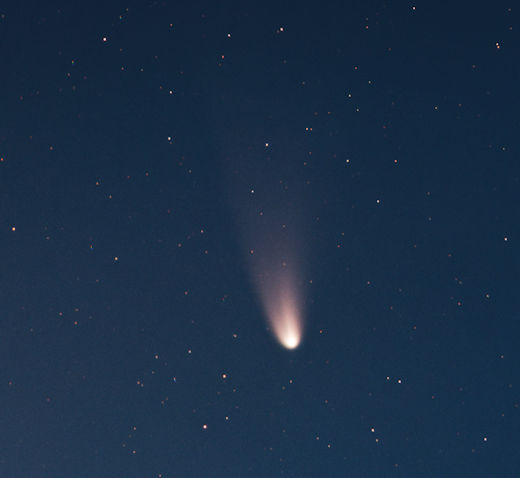
"I photographed the comet at sunrise on Dec. 31st," says Majzik. "It was only about 6 degrees above the horizon. A fan-shaped prominent dust tail could be seen in the waxing glow of the rising sun."
Three days after Majzik's photo, Comet ATLAS experienced an outburst, abruptly brightening by +2 magnitudes. Many astronomers feared it might be breaking apart. However, Nick James of the British Astronomical Association thinks it might be okay.
"The sudden jump in brightness on Jan. 2nd, first reported by Terry Lovejoy, was significant," says James. "This could have been an early sign of disintegration, but since then the comet is still brightening. It looks as if this outburst has not been fatal."
Indeed, James himself photographed the comet apparently intact on Jan 4th:
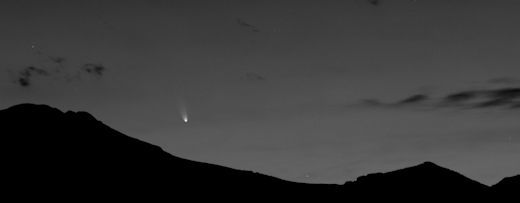
"This is a dawn photo from Rio Hurtado, Chile," says James. "The comet was only 16 degrees from the sun, easy to photograph despite being very low in the morning sky"
The big day is Jan. 13th, when the comet swoops only 0.09 AU from the sun. If current trends hold, its magnitude should increase to around -5 (twice as bright as Venus). "It might even be visible in the daytime sky, but the sun will be only 5 degrees away," notes James. "Observing with the sun so nearby is dangerous and should only be attempted with great care."
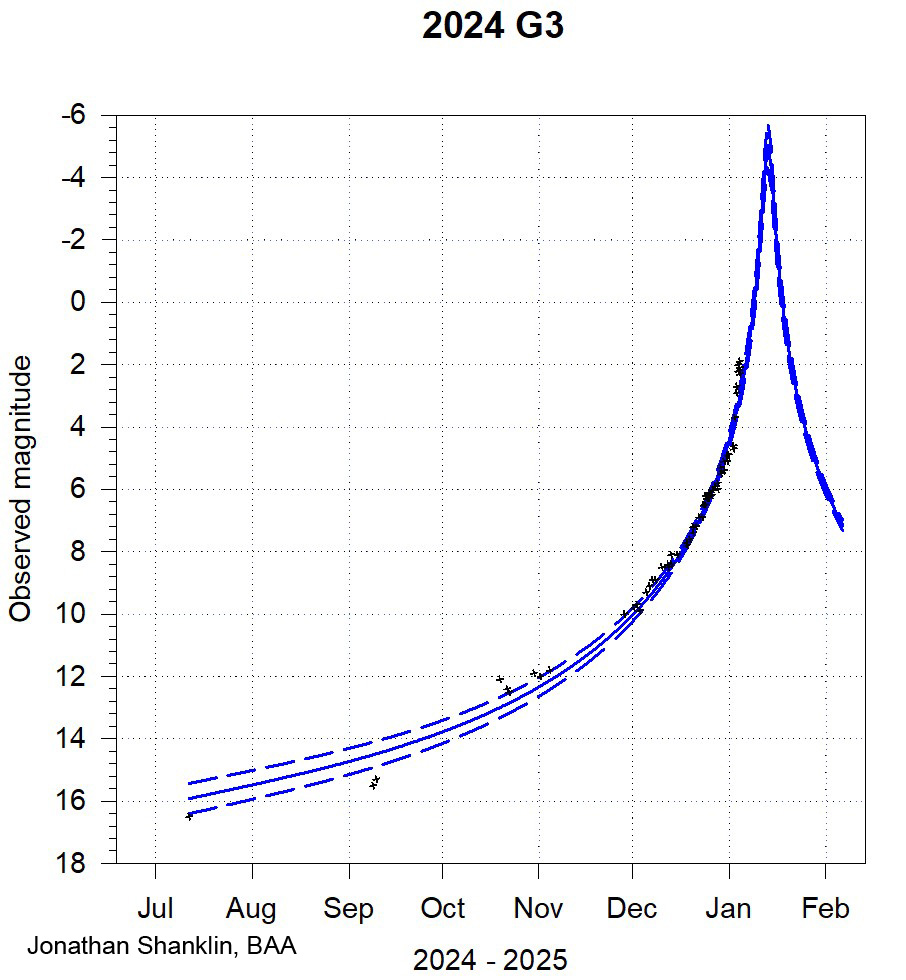
SOHO coronagraphs will pick up the comet starting Jan. 11th. That will give us a preview of what to expect two days later. Until then, read "Prospects for C/2024 G3 (ATLAS)" by Nick James for observing tips--and stay tuned!
more images: from Michael Mattiazzo of Swan Hill, Australia; from Alan C Tough using a remote telescope in Rio Hurtado Valley, Chile
Realtime Space Weather Photo Gallery
Free: Spaceweather.com Newsletter
GIFTS FROM THE EDGE OF SPACE: A New Year of balloon launches is beginning, and we need to buy helium! You can help by puchasing a gift from the Earth to Sky Store. It's filled with unique items that have flown to the edge of space onboard cosmic ray research balloons.

These unique gifts have flown above 99.7% of Earth's atmosphere, experiencing space-like blasts of cosmic rays, extreme cold, and a wild ride parachuting back to Earth after the balloon explodes. Even Amazon doesn't carry items this far out.
Don't forget to enter coupon code "SOLARMAX2025" at checkout for a 15% holiday discount. All profits support STEM space weather research.
Far Out Gifts: Earth to Sky Store
All sales support hands-on STEM education
Realtime Comet Photo Gallery
Free: Spaceweather.com Newsletter
Realtime Aurora Photo Gallery
Free: Spaceweather.com Newsletter