DECREASING CHANCE OF FLARES: Previously-active sunspot AR3947 is starting to decay, and could soon lose its delta-class magnetic field. This means the chance of strong flares is decreasing. NOAA has downgraded the odds of an X-flare today to only 15%. Solar flare alerts: SMS Text.
EVENING PLANETS--AND WHY MARS IS ABOUT TO VANISH: When the sun goes down tonight, step out out and look ... in any direction. There are bright planets all across the sky. Alan Dyer captured the display in this Jan. 6th photo from rural Alberta, Canada:
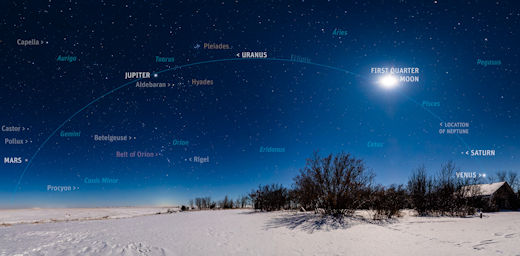
"This month there has been a lot of media hype about a 'planet alignment' — well, here it is," says Dyer. "Four of the naked eye planets are above the horizon at once. Only Mercury is missing."
Venus, Jupiter and Mars, in particular, are *really* bright--all brighter than the brightest star in the night sky, Sirius, which is also visible. It's an impressive string of lights.
Mars, however, is about to vanish. "If you can see only one celestial event this January, see this one," says the Astronomical League:
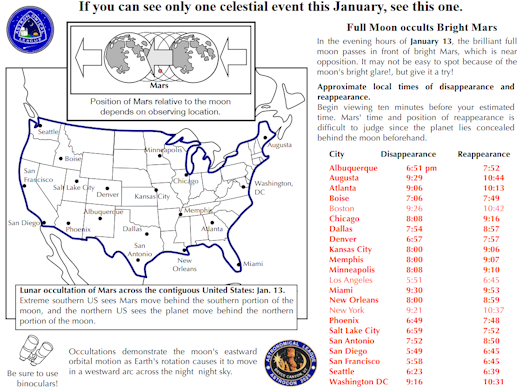
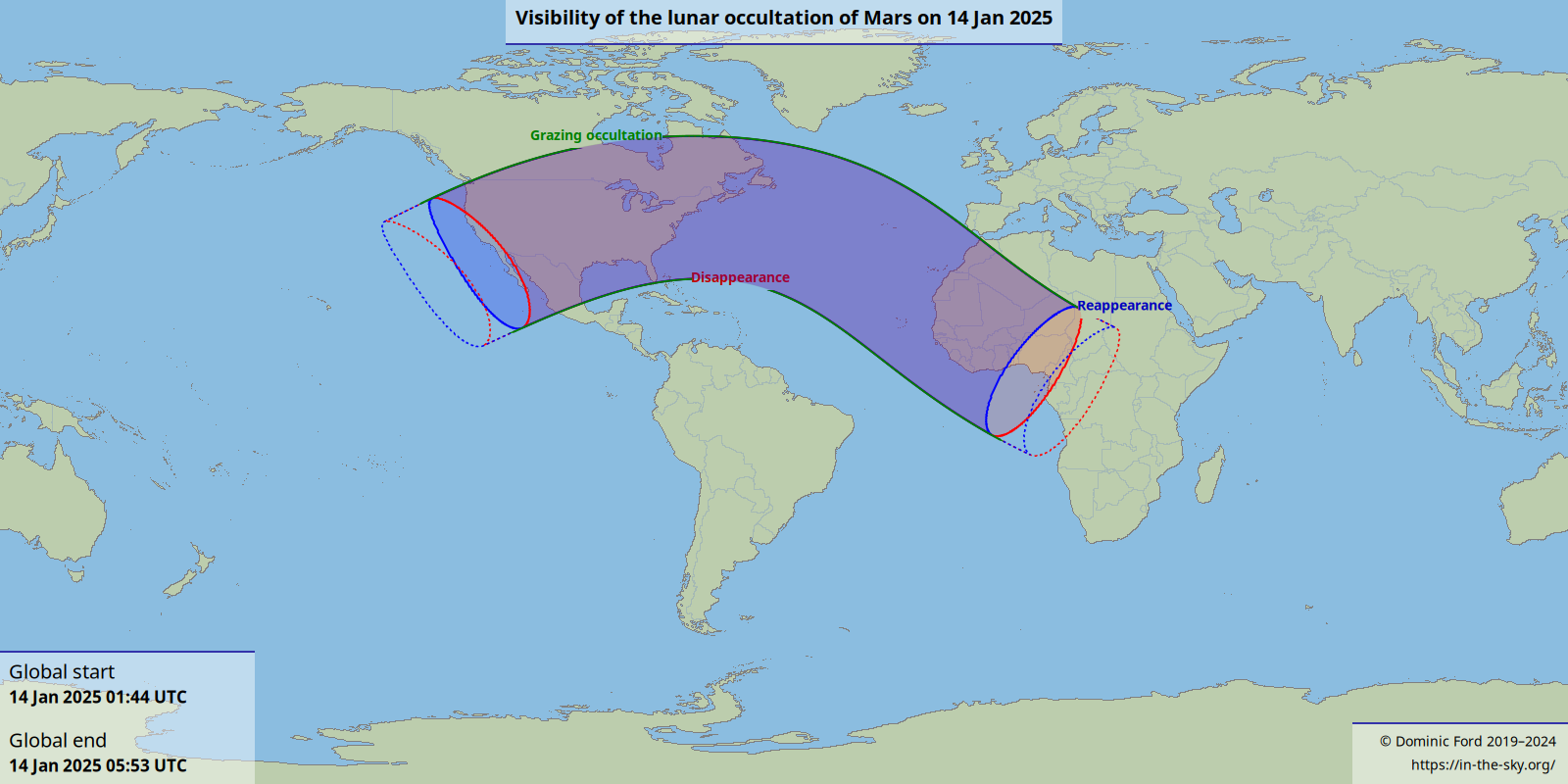
On Jan. 13th, the Full Moon will pass directly in front of Mars. This is no ordinary lunar occultation. Mars is close to opposition (its closest point to Earth), so it is unusually red and bright. Even when Mars is half hidden by the glaring edge of the Full Moon, it will still be visible through binoculars and telescopes, setting the stage for amazing photo-ops.
The "path of totality" for this occultation stretches across North America. Most observers can see Mars pop in and out of view around dinnertime on Monday night. Check this infographic from the Astronomical League for a detailed timetable.
Realtime Space Weather Photo Gallery
Free: Spaceweather.com Newsletter
PLANET CAT IS BACK! There's a story behind this cat. Keep reading for the full story. The Planet Cat Pendant is a far-out gift for the cat-lover in your life: The sterling silver jewelry touched space on Nov. 17, 2022, when it hitched a ride onboard an Earth to Sky Calculus cosmic ray research balloon.
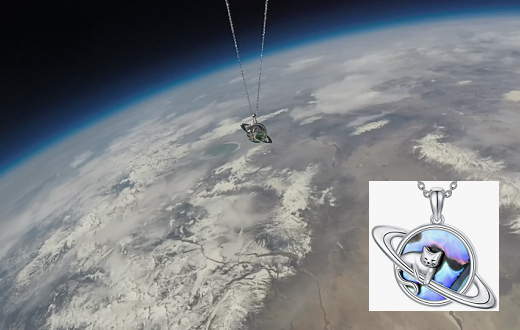
You can have it for $199.95. The students of Earth to Sky Calculus are selling space pendants to support their cosmic ray ballooning program. Each one comes with a greeting card showing the pendant in flight and telling the story of its journey to the stratosphere and back again.
And now for the story: We launched this balloon on Nov. 17, 2022, more than two years ago. When the payload parachuted back to Earth, it veered off course, landing unexpectedly on Saline Peak, a rugged mountain in Death Valley National Park. The payload remained in that spot for 2 winters and 2 summers, subjected to episodes of deep snow, hurricane-force winds, and scorching 100+ degree F temperatures. Severe weather and technical terrain prevented us from recovering the payload until Jan. 5, 2024. The payload and parachute were severely bleached by sustained exposure to the Death Valley sun, but the instrumentation is completely intact. All the radiation sensors and cameras still work, and the Planet Cat Pendent, which was shadowed by the payload, looks awesome.
Far Out Gifts: Earth to Sky Store
All sales support hands-on STEM education
Realtime Aurora Photo Gallery
Free: Spaceweather.com Newsletter
Realtime Comet Photo Gallery
Free: Spaceweather.com Newsletter