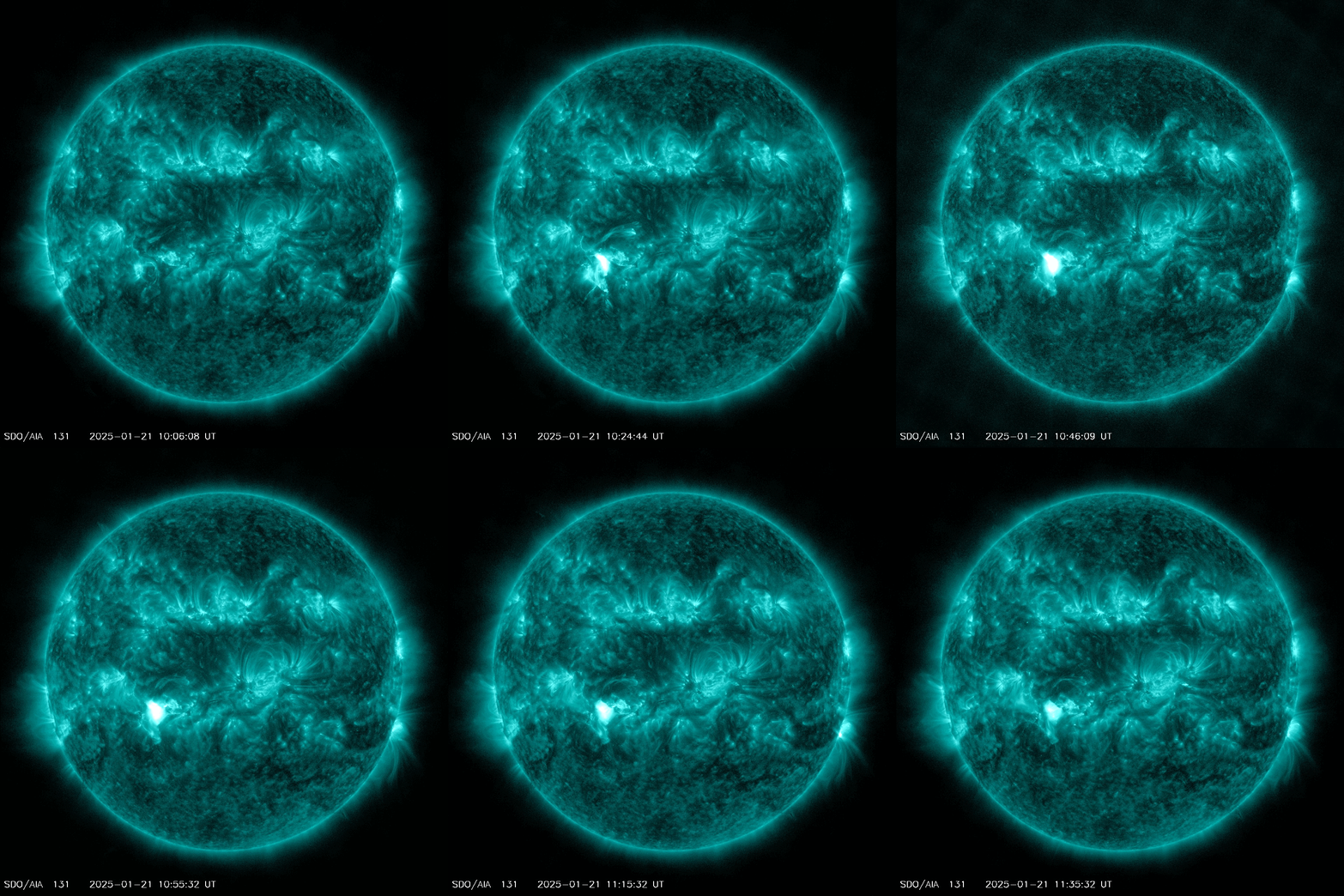
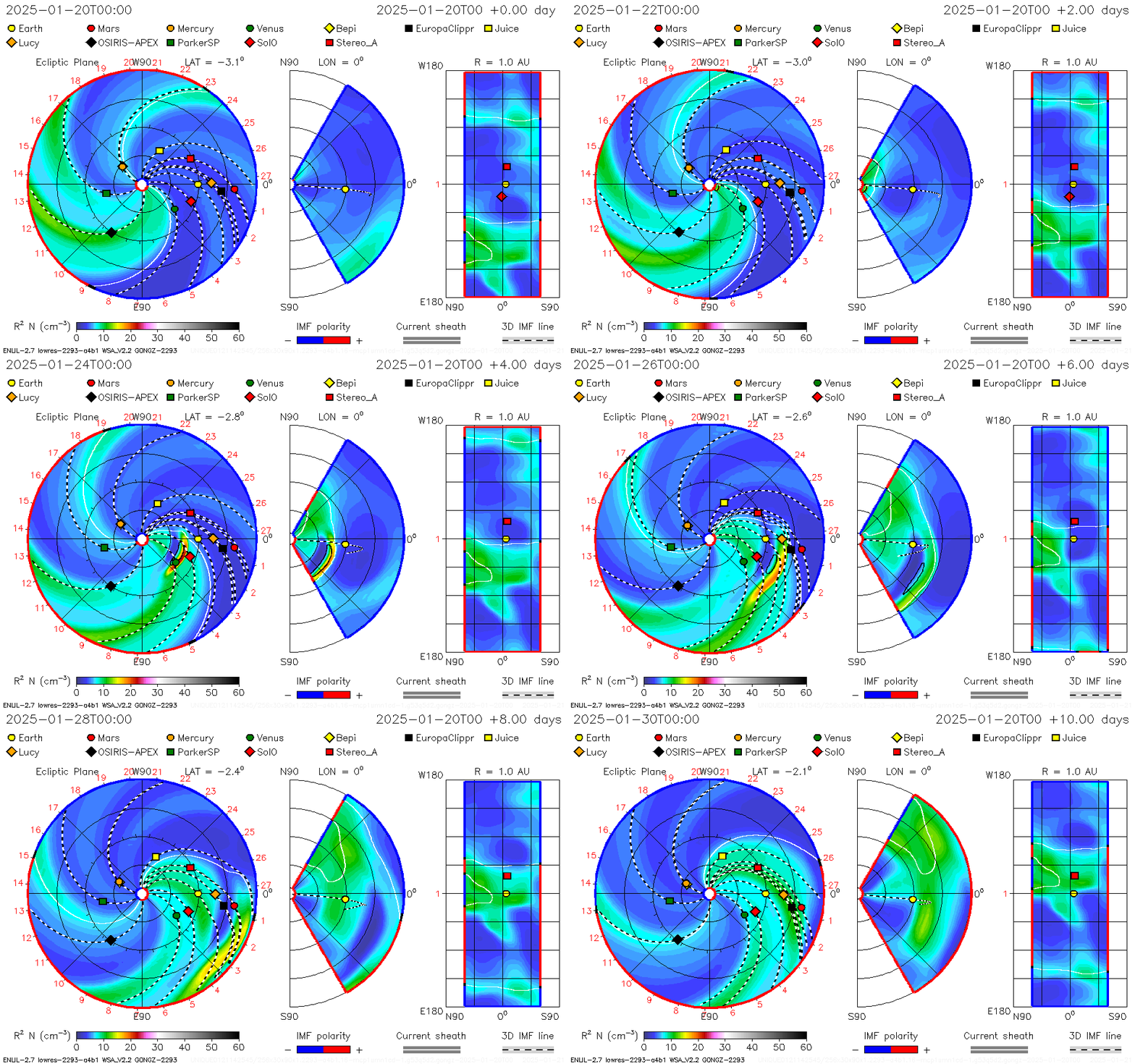
POSSIBLE EARTH-DIRECTED CME: Previously mild-mannered sunspot 3967 erupted this morning, producing a beautiful solar flare (category M3) and a potentially Earth-directed CME. NASA models show it grazing our planet on Jan. 24th. This could cause a minor G1-class geomagnetic storm. CME impact alerts: SMS Text.

THE MAGNIFICENT TAIL OF COMET ATLAS: Comet ATLAS (C/2024 G3) lost its head. The nucleus disintegrated two days ago, overstressed by a close encounter with the sun. Fortunately, the tail is still magnificent:
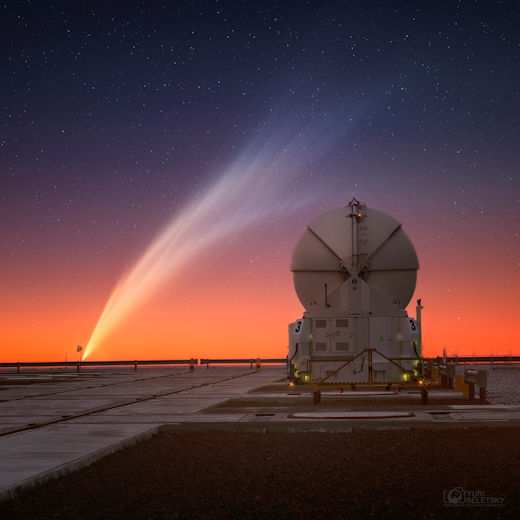
Yuri Beletsky photographed the comet at sunset from Europe's Paranal observatory in Chile. Although the head is no longer bright, the naked-eye tail stretched beautifully over one of the observatory's auxilary telescopes. A similar "headless wonder" appeared in Dec. 2011 after Comet Lovejoy (C/2011 W3) flew too close to the sun. Spaceweather.com archives: Dec, 20, 21, 22, 2011.
The tail of Comet ATLAS is so big, it wraps around the sky to the northern hemisphere. Last night, Nick James of the British Astronomical Association photographed it from the Canary Islands:
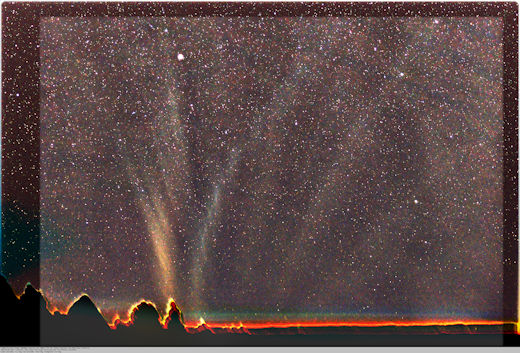
"With the help of Nicolas Lefaudeux I've processed my images from last night which show the extensive dust tail with the comet's head 7 degrees below the horizon as seen from 28N," says James. "The image is a stack of 41 five-second exposures with a Sony A7s iii camera. The field of view is 20x14 deg and the tail stretches to the top of the frame, so 21 deg from the head of the comet, although it is very faint by then."
"I convinced myself that I could see the lower, brighter part of the tail with the naked eye as faint striations similar in brightness to the zodiacal light but this is probably uncertain," he adds. "I imaged the comet itself around 20 mins after sunset but it was much fainter than the night before."
Realtime Comet ATLAS Photo Gallery
Free: Spaceweather.com Newsletter
"I LOVE YOU MORE" MOONSTONE PENDANT: Valentine's Day is coming! Nothing says "I love you" like a moonstone from space. This one hitched a ride on an Earth to Sky Calculus cosmic ray research balloon, floating 112,201 feet above the Sierra Nevada mountains of central California:
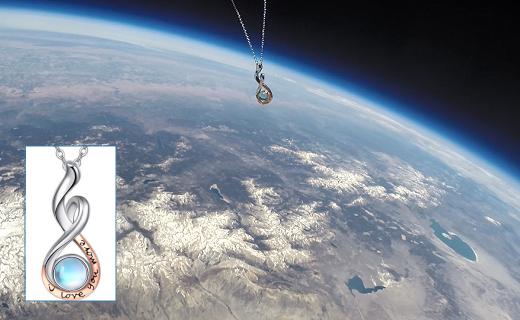
You can have it for $162.95. The students are selling these sterling silver infinity-wrapped moonstone pendants to support their ballooning program. Engraved with "I Love You More," it makes a romantic Valentine's gift. Each one comes with a greeting card showing the moonstone in flight and telling the story of its trip to the stratosphere and back again.
Far Out Gifts: Earth to Sky Store
All sales support hands-on STEM education
Realtime Aurora Photo Gallery
Free: Spaceweather.com Newsletter
Realtime Space Weather Photo Gallery
Free: Spaceweather.com Newsletter