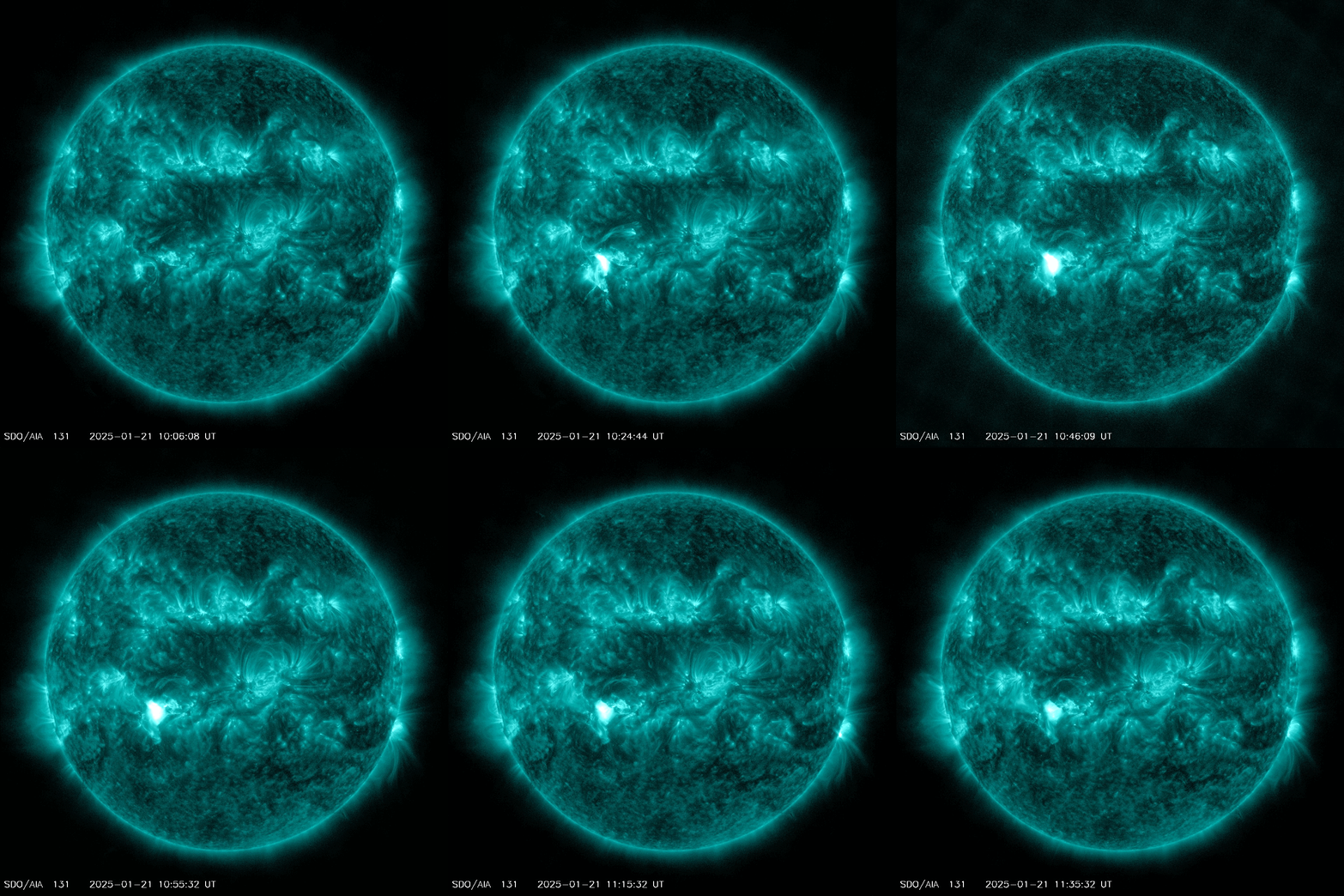
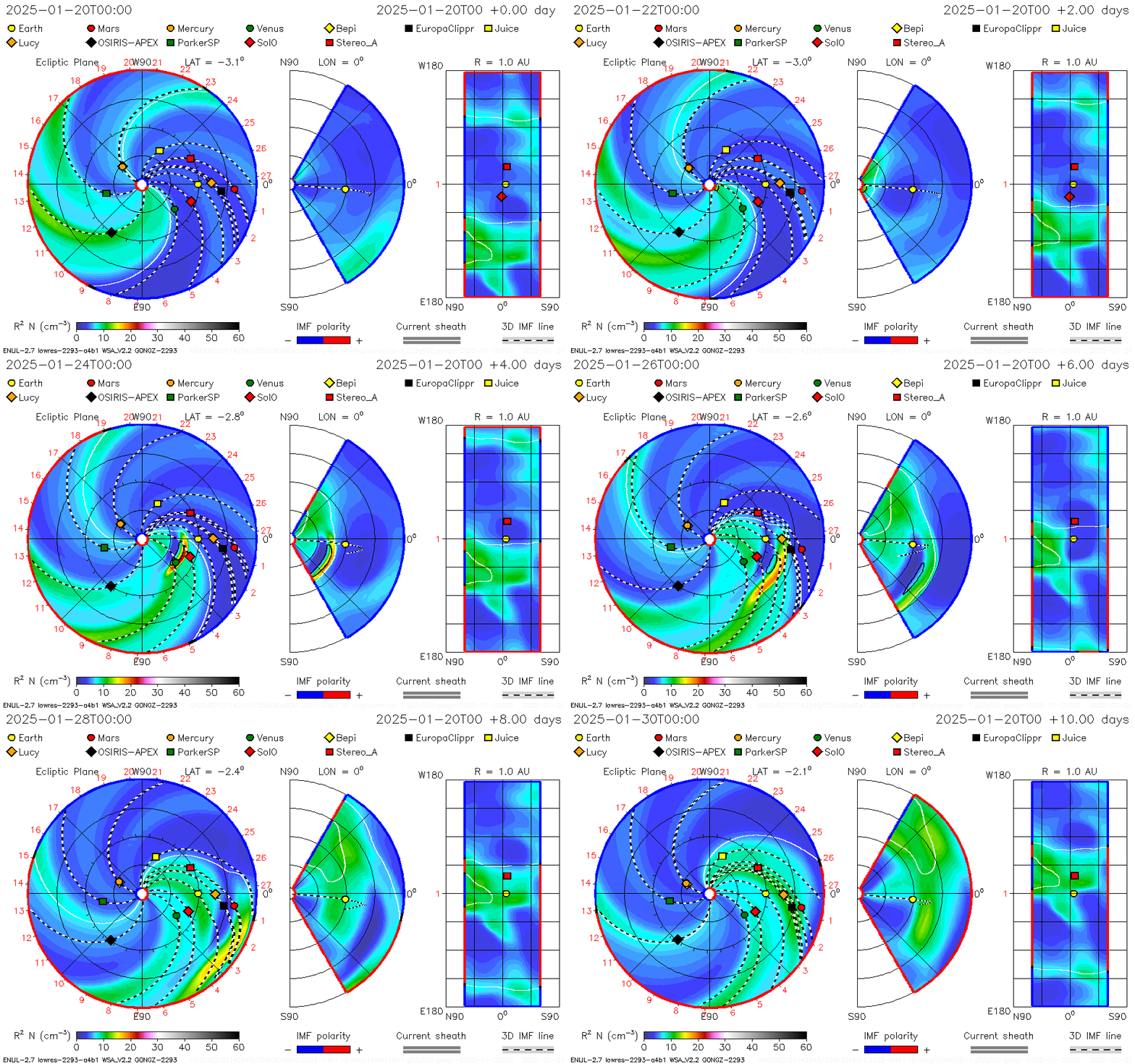
A CME IS COMING: Previously mild-mannered sunspot 3967 erupted on Jan. 21st, producing a beautiful solar flare (category M3) and an Earth-directed CME. NASA models show it grazing our planet on Jan. 24th. The CME's arrival could cause a minor G1-class geomagnetic storm. CME impact alerts: SMS Text.

COMET ATLAS IS A "HEADLESS WONDER": The nucleus of Comet ATLAS (C/2024 G3) disintegrated three days ago, overstressed by a close encounter with the sun. No nucleus, no problem. The comet's tail is still magnificent. Raymond Pickard sends this picture from the Bathurst Observatory in Australia:
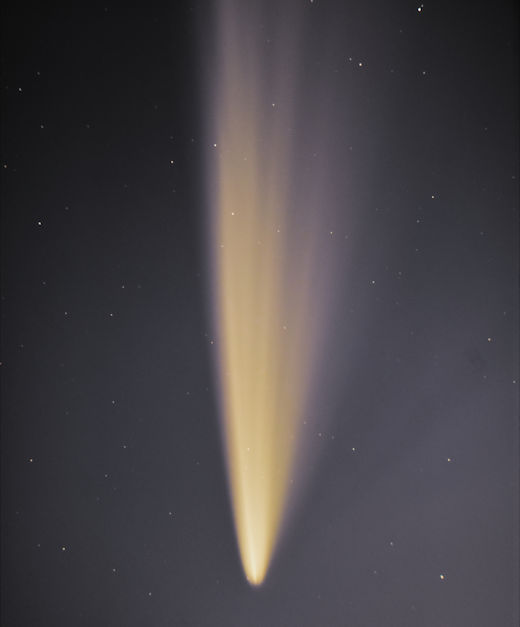
"As the comet's nucleus has broken up, a lot of material has been put into the tail," says Pickard. "Note the bright streak in the coma (head) of the comet. This is the debris from the breakup spreading out."
Lots of people are seeing the comet's tail with their naked eye. "I could see a full 16 degrees of tail by eye," reports Ian Cooper of Glen Oroua, Manawatu, New Zealand. It shows up at sunset just after the twilight fades to cobalt blue.
No modern astronomy experience would be complete without interference from Starlink. So here it is. Eduardo Schaberger Poupeau caught a swarm of Starlink satellites photobombing the comet over Rafaela, Provincia de Santa Fe, Argentina:
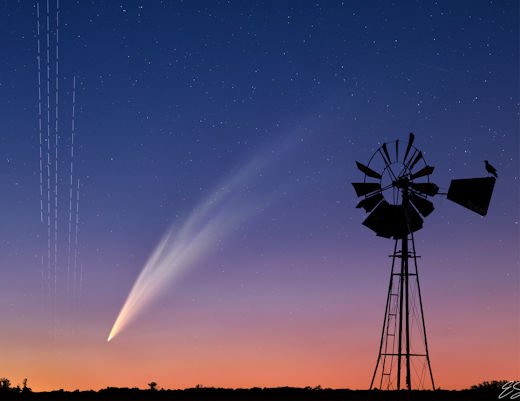
"The scene is enriched by elements deeply rooted in our region: an old, weathered windmill missing some of its blades, serving as a perch for a "Carancho" (Caracara plancus - Southern Caracara), a characteristic bird of the central Argentine plains," says Poupeau. "To the left, as a nod to modern times, the streaks of a Starlink satellite train cross the sky, adding an unexpected contrast between nature and technology."
All of this beauty is currently confined to the Southern Hemisphere. The comet left northern skies earlier this week, and only a ghost of its tail is visible from positive latitudes. Stay tuned for more photos from the south.
Realtime Comet ATLAS Photo Gallery
Free: Spaceweather.com Newsletter
18K GOLD TOTAL ECLIPSE LOCKET: Valentine's Day is coming! If you need a romantic gift, consider the 18K Gold Total Eclipse Locket. The students of Earth to Sky Calculus launched it to the stratosphere during a total eclipse of the sun on April 8, 2024. Floating more than 118,110 feet above Texas onboard a cosmic ray research balloon, the locket spent 3 minutes and 45 seconds wrapped in the Moon's shadow:

You can have it for $199.95. The 18K gold-plated locket is inscribed with the words "I love you to the Moon and back," and opens to hold a personal photo or other small item. It comes with a greeting card showing the locket in flight and telling the story of its journey to the edge of space during the total eclipse.
Far Out Gifts: Earth to Sky Store
All sales support hands-on STEM education
Realtime Aurora Photo Gallery
Free: Spaceweather.com Newsletter
Realtime Space Weather Photo Gallery
Free: Spaceweather.com Newsletter