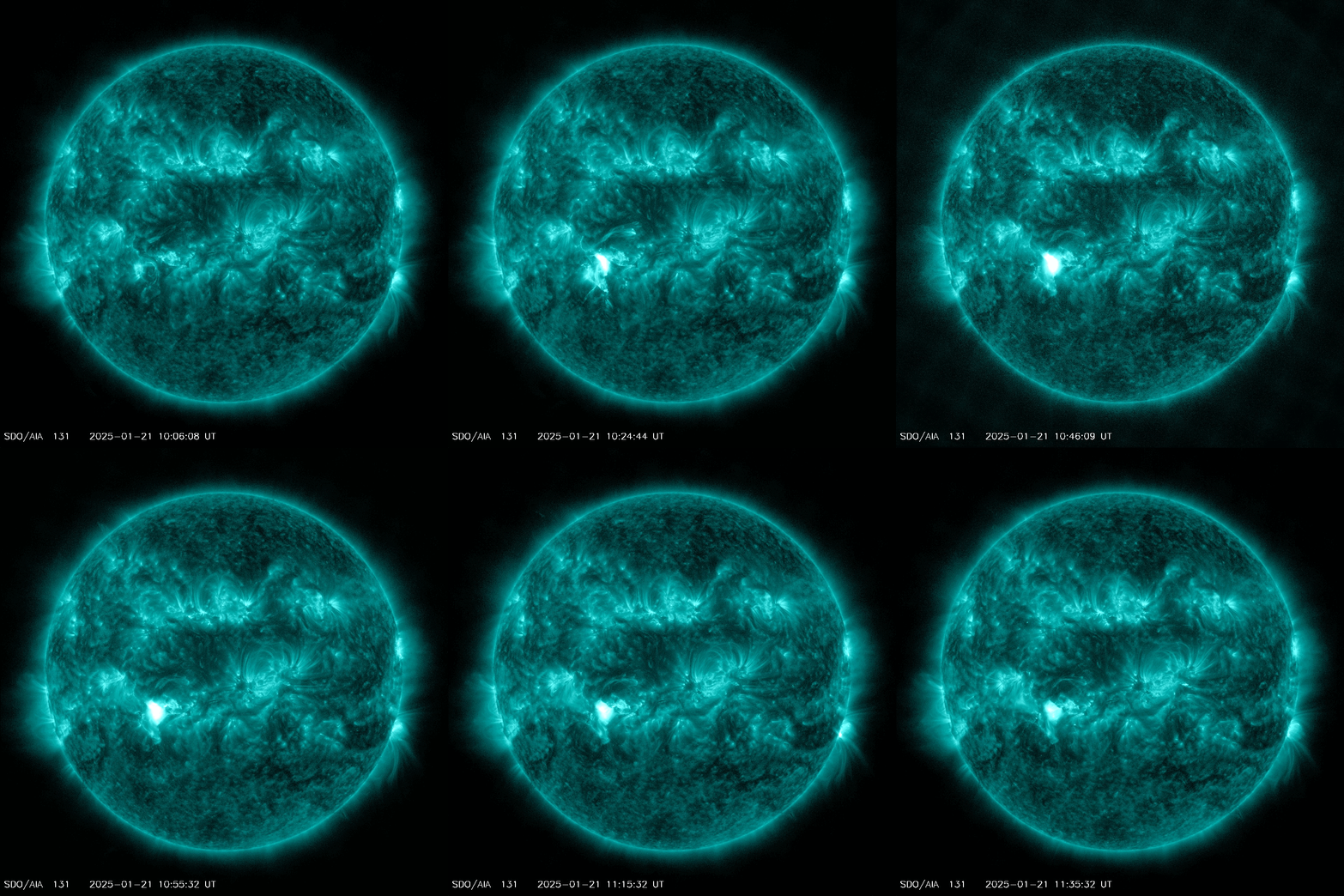
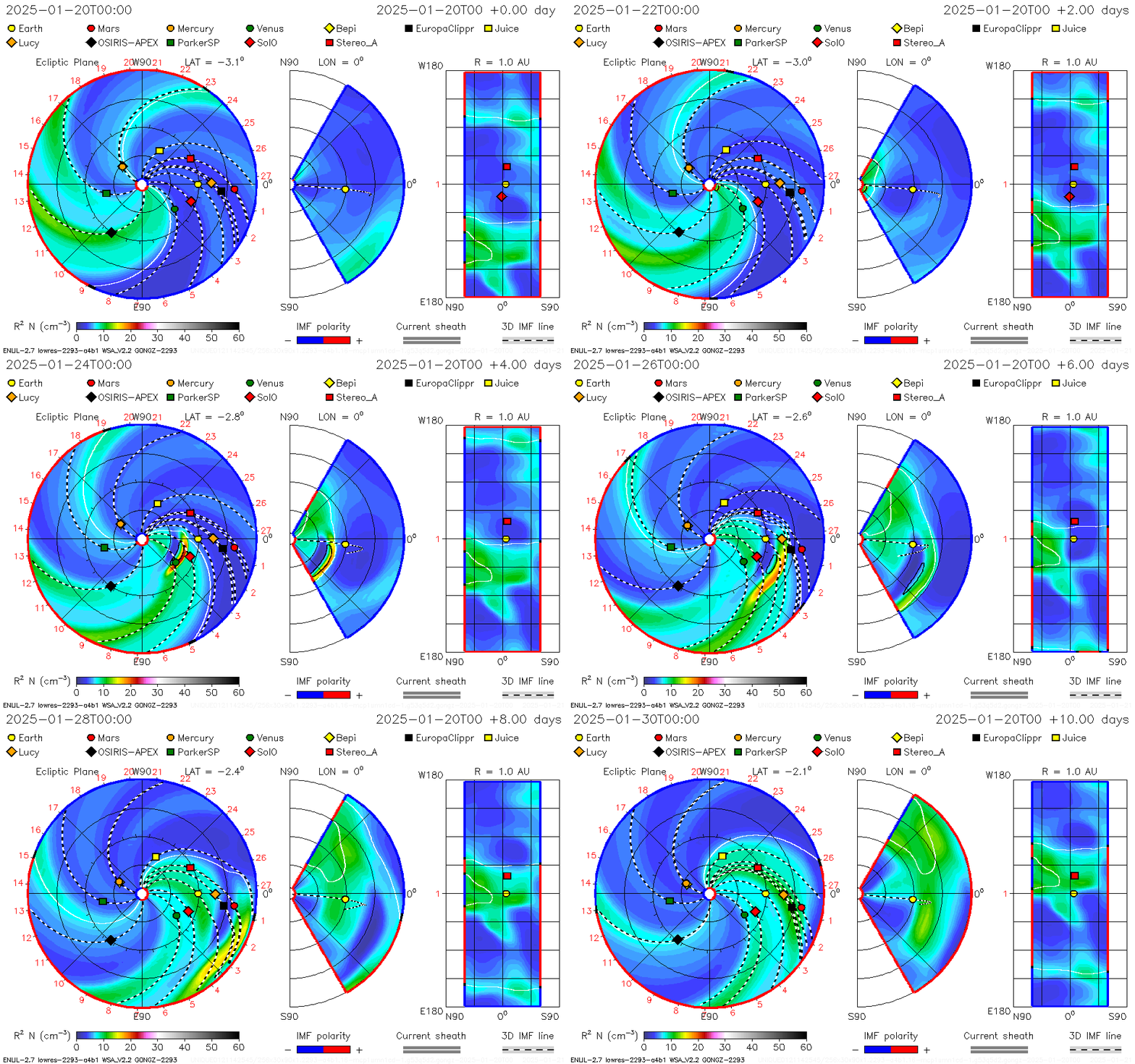
A CME IS COMING: Sunspot 3967 erupted on Jan. 21st, producing a beautiful solar flare (category M3) and an Earth-directed CME. NASA models show it grazing our planet on Jan. 24th. The CME's arrival could cause a minor G1-class geomagnetic storm. CME impact alerts: SMS Text.

WHEN A GREEN FLASH IS NOT A FLASH: Usually, a green flash from the setting sun lasts no more than a split second. Blink and you'll miss it. Something very different happened in Antarctica on Jan. 5th. "To my amazement, I witnessed a nearly 20-second-long green flash," says Tim Martin. He photographed the steady emerald ray from the National Geographic's Resolution in the Weddell sea:
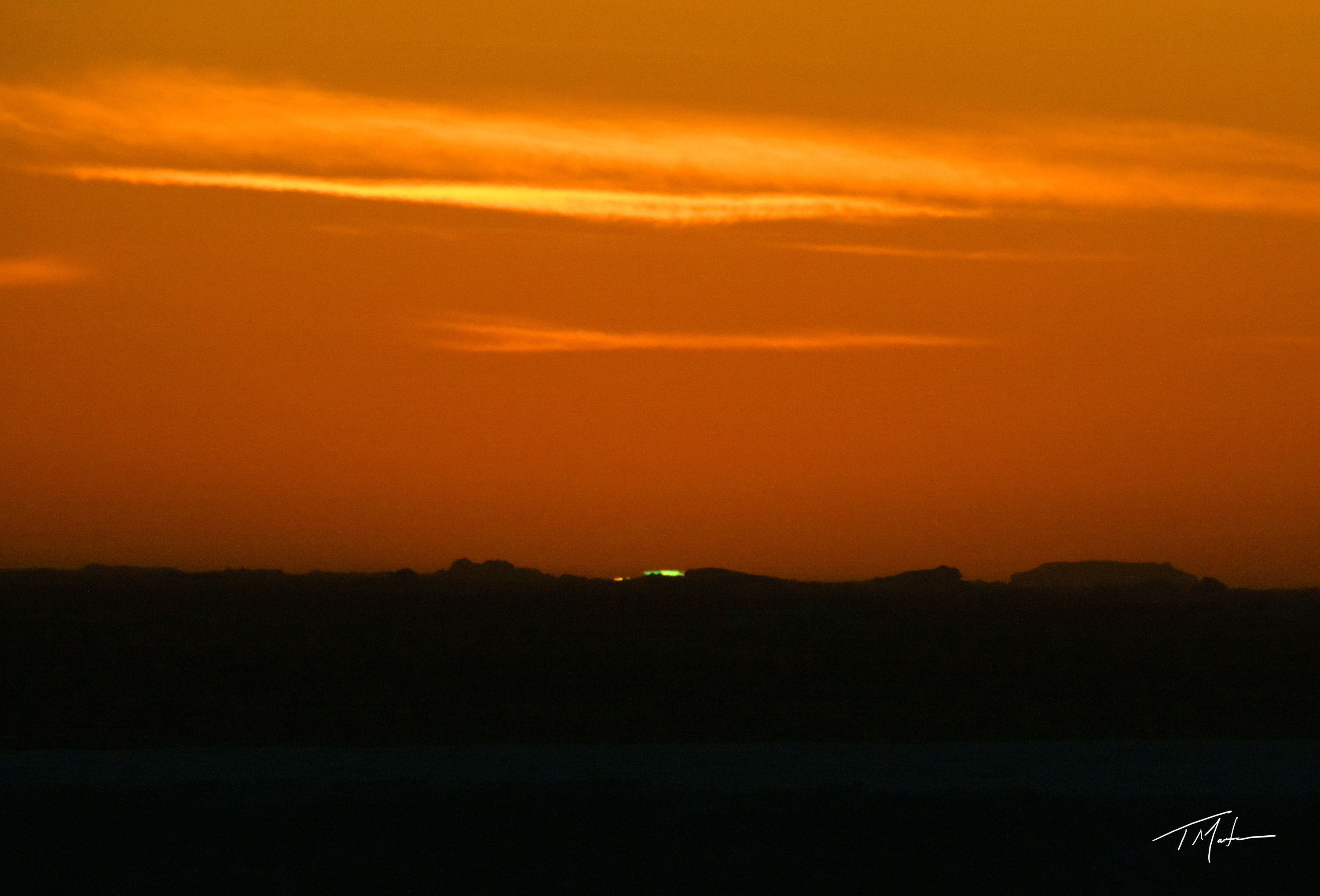
"I was able to photograph it, look visually, then photograph it again and again..." says Martin. "I am curious if others have documented extended green flashes in the polar regions?"
Indeed they have. For instance, Admiral Richard Byrd's expedition in 1929 watched a series of green flashes from the setting sun that, taken together, lasted 35 minutes. The display went on so long that members of the expedition had time to climb up a radio tower at their base in order to keep the top of the setting sun in view.
Green flashes are a mirage. When the sun sets, the atmosphere acts like a prism, splitting the solar disk into red, green, and blue components. Green flashes happen when a mirage magnifies that normal atmospheric refraction, transforming the green into a startling flash.
In Antarctica, the process is extended in part by the fact that polar sunrises and sunsets happen much more slowly than they do at lower latitudes. A slow sunset naturally translates into a slow "flash." But that's not the full story. In a study of Admiral Byrd's 35 minute flash, researcher James A. Locke found that "the length of the observation cannot be explained solely by the slowness of the setting rate of the sun." Extreme refraction and/or unusually intense mirages may play a role, too.
Realtime Space Weather Photo Gallery
Free: Spaceweather.com Newsletter
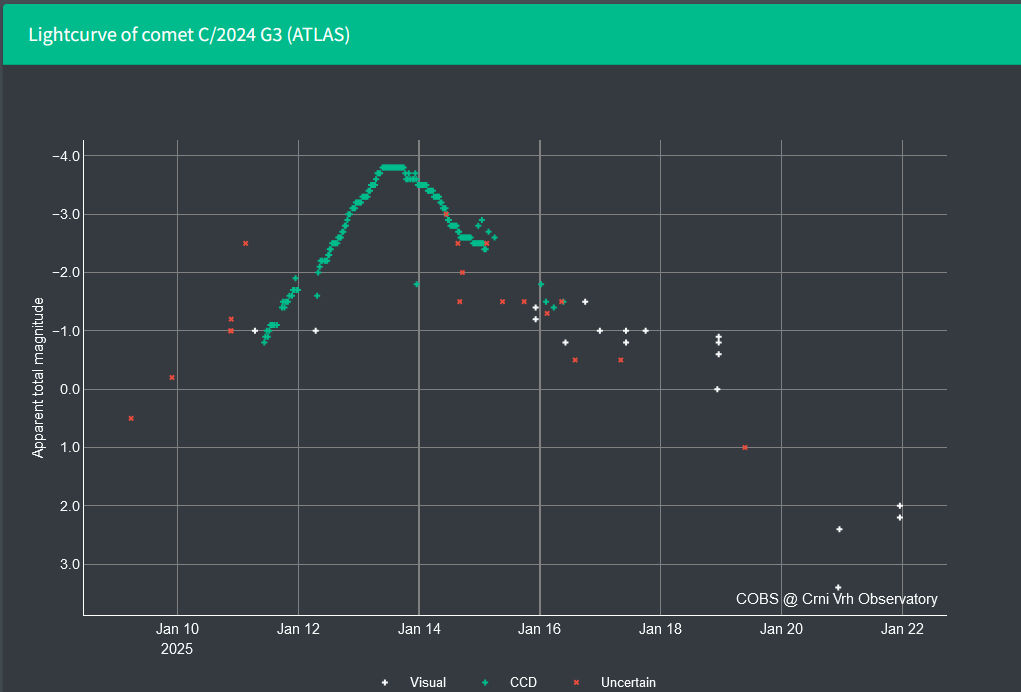
COMET ATLAS SIGHTINGS: Although Comet ATLAS (C/2024 G3) continues to fade, it is still a wonderful sight in the evening skies of the southern hemisphere. "On Jan. 23rd, I saw it with my naked eye, and it looked great with binoculars," reports Shane Ocean, who sends this photo from Whitsundays, Australia:
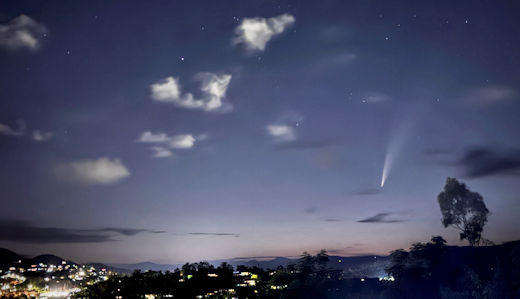
"This photo is a 10-second exposure with my iPhone Pro 15," says Ocean.
Astronomers say the comet is now a 3rd magnitude object. That's a far cry from its magnitude -4 peak when it passed by the sun on Jan. 13th, but still a naked-eye object and an easy target for modern cell-phone cameras. If you live in the southern hemisphere, step outside at sunset and take a look.
Realtime Comet ATLAS Photo Gallery
Free: Spaceweather.com Newsletter
18K GOLD TOTAL ECLIPSE LOCKET: Valentine's Day is coming! If you need a romantic gift, consider the 18K Gold Total Eclipse Locket. The students of Earth to Sky Calculus launched it to the stratosphere during a total eclipse of the sun on April 8, 2024. Floating more than 118,110 feet above Texas onboard a cosmic ray research balloon, the locket spent 3 minutes and 45 seconds wrapped in the Moon's shadow:
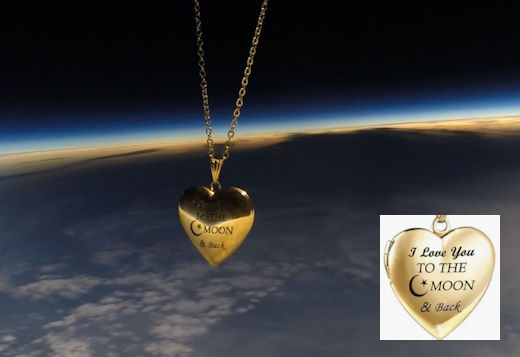
You can have it for $199.95. The 18K gold-plated locket is inscribed with the words "I love you to the Moon and back," and opens to hold a personal photo or other small item. It comes with a greeting card showing the locket in flight and telling the story of its journey to the edge of space during the total eclipse.
Far Out Gifts: Earth to Sky Store
All sales support hands-on STEM education
Realtime Aurora Photo Gallery
Free: Spaceweather.com Newsletter
Realtime Space Weather Photo Gallery
Free: Spaceweather.com Newsletter