GEOMAGETIC STORM WATCH--AGAIN: A new CME is heading for Earth, maybe. The storm cloud was hurled into space by a dramatic filament eruption on Jan. 26th. Most of the CME will sail south of our planet, but NOAA forecasters believe it could graze Earth as it passes by. If so, a G1-class geomagnetic storm could occur on Jan. 29th. CME impact alerts: SMS Text.

A HOLE IN THE SUN'S ATMOSPHERE: A large hole has opened in the sun's atmosphere, and it spewing a stream of solar wind toward Earth. NASA's Solar Dynamics Observatory photographed the structure, which stretches almost 800,00 km wide:
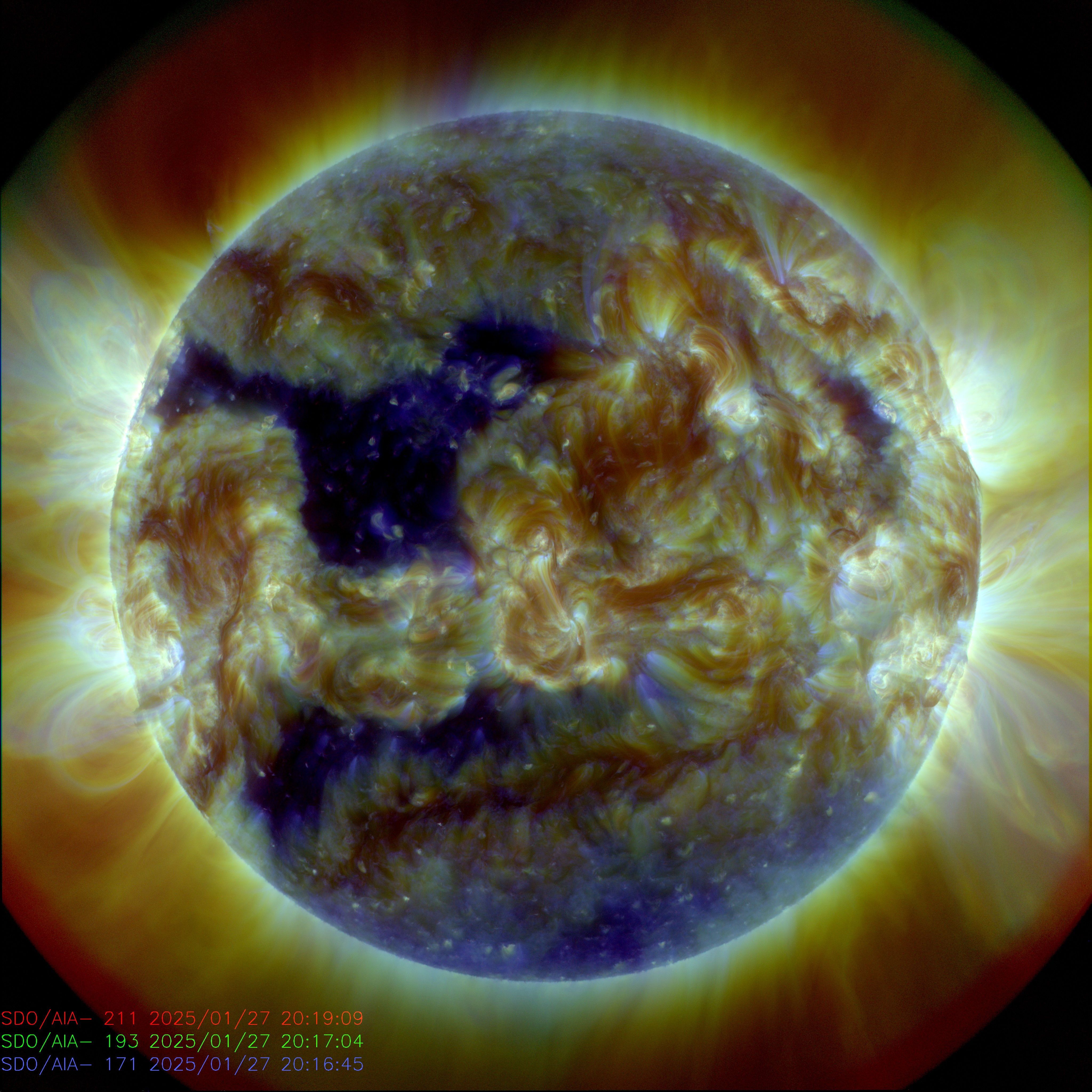
Above: An extreme ultraviolet image of the sun from NASA's Solar Dynamics Observatory
Researchers call this a "coronal hole"--a region in the sun's atmosphere where magnetic fields have opened up, allowing solar wind to escape. The hole looks dark because hot glowing gas normally contained there is missing. The gaseous material is on its way to Earth.
Blowing faster than 500 km/s, the solar wind is due to arrive Jan. 31st. Its impact could spark G1 (Minor) to G2-class (Moderate) geomagnetic storms. Aurora alerts: SMS Text.

Realtime Aurora Photo Gallery
Free: Spaceweather.com Newsletter
IT IS *STILL* VISIBLE TO THE NAKED EYE: Two full weeks after Comet ATLAS (C/2024 G3) buzzed the sun and puffed itself up with solar heat, it is *still* visible to the naked eye. Ian Griffin sends this Jan. 27th photo from the South Island of New Zealand:
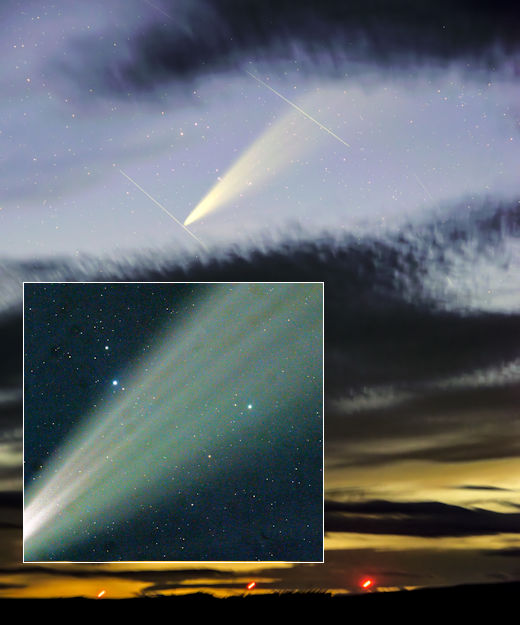
"After a week of clouds, I managed to find a spot with clear sky," says Griffin. "As darkness fell I was rewarded by a remarkable view of the comet in the sunset sky. It was well worth the wait! "
Inset above is a close-up view of the comet's richly-structured tail. The long streaks are called "synchrones." They are streamers of gas and (mostly) dust created by fractures and outbursts in the comet's core. As regular readers know, the comet's nucleus disintegrated more than a week ago. Synchrones are the visible aftermath of that breakup.
Realtime Comet ATLAS Photo Gallery
Free: Spaceweather.com Newsletter
STRING OF HEARTS SNOOPY SCULPTURE: Valentine's Day is only 3 weeks away. Are you looking for a fun, romantic gift? Consider the String of Hearts Snoopy Sculpture. Here is the hand-painted figurine floating 112,505 feet above Earth's surface on Jan. 30, 2024:
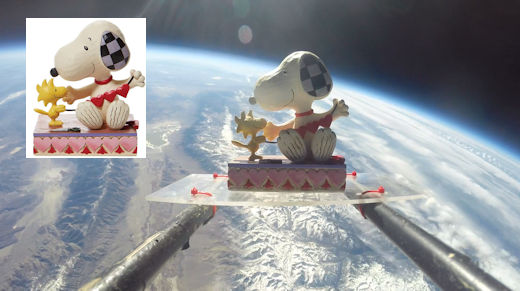
You can have it for $142.95. The students of Earth to Sky Calculus launched this stone resin sculpture to the stratosphere onboard a cosmic ray research balloon. It spent more than 2 hours floating at the top of Earth's atmosphere while cosmic ray sensors gathered data for the student's atmospheric radiation monitoring program.
This unique Valentine's gift comes with a greeting card showing the sculpture in flight and telling the story of its journey to the edges of space. All sales support hands-on STEM education and research.
Far Out Gifts: Earth to Sky Store
All sales support hands-on STEM education
Realtime Aurora Photo Gallery
Free: Spaceweather.com Newsletter
Realtime Space Weather Photo Gallery
Free: Spaceweather.com Newsletter