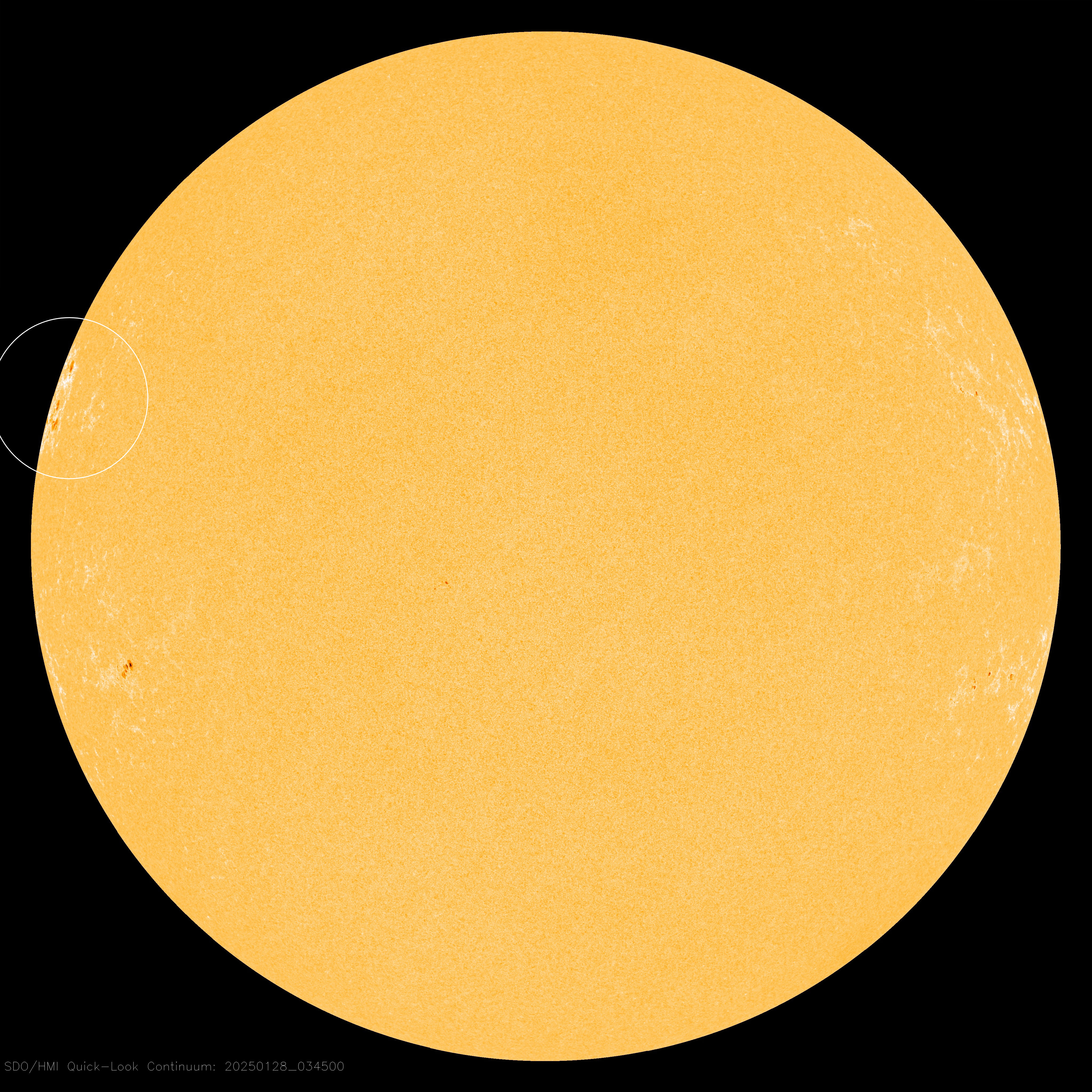
SPOTLESS ALERT CANCELED: Briefly on Jan. 27th, the sun flirted with spotlessness, a blank solar disk that hasn't been seen in more than 3 years. Spotless alert canceled. A big new sunspot group is emerging over the sun's northeastern limb. Astronomers with solar telescopes should point their optics here. CME impact alerts: SMS Text.
POLAR STRATOSPHERIC CLOUDS: Something interesting is happening in the polar stratosphere. A 40-year cold spell is underway, and the temperature contimues to drop. We know its cold because the stratosphere is starting to fill with colorful clouds, like these photographed yesterday by Liselotte Kahns of Nr. Lyngby, Vendsyssel, Denmark:
"These Type II polar stratospheric clouds appeared shortly just before sunset here in Denmark on Jan. 27th," says Kahns. "They are just so incredibly spectacular. I feel privileged :-)"
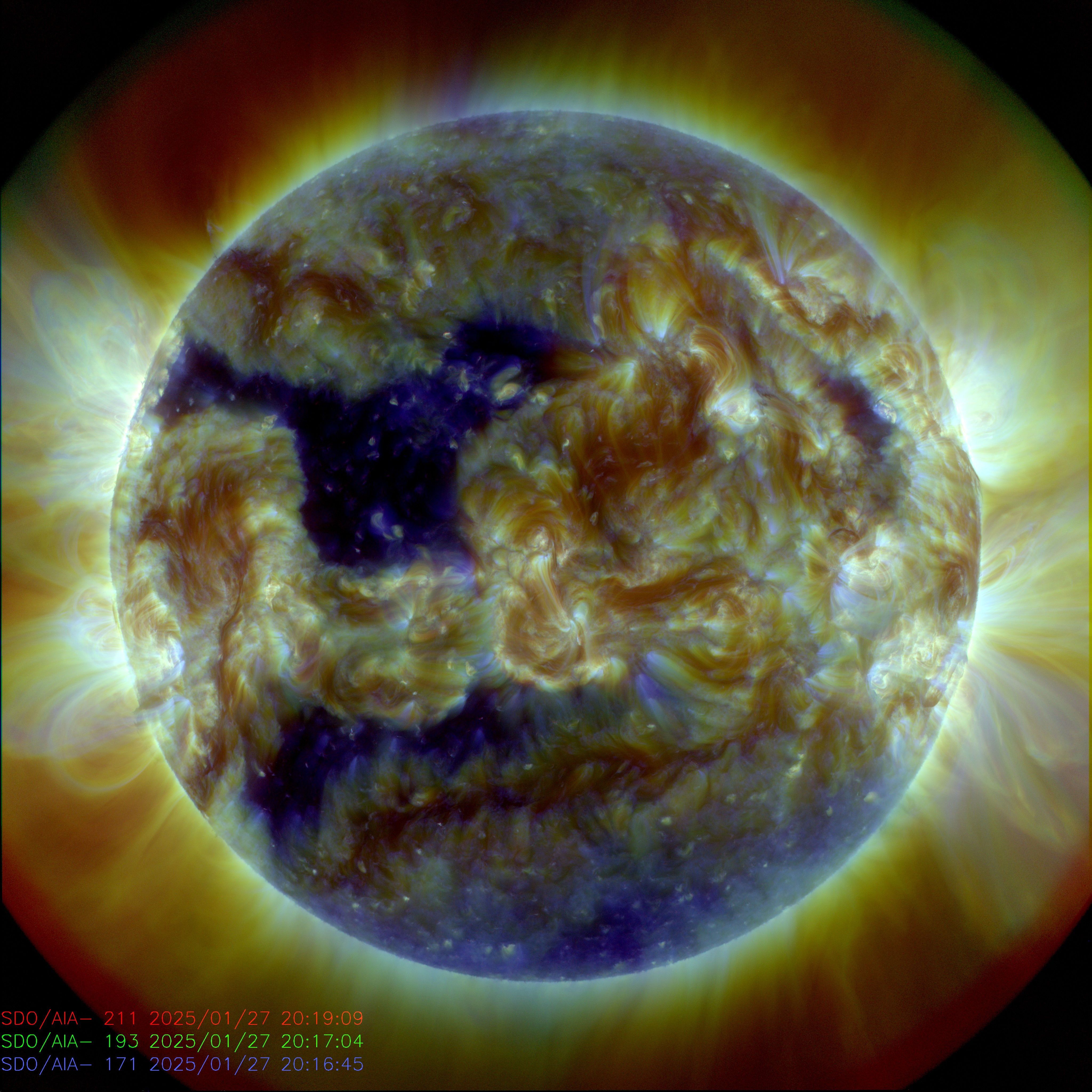
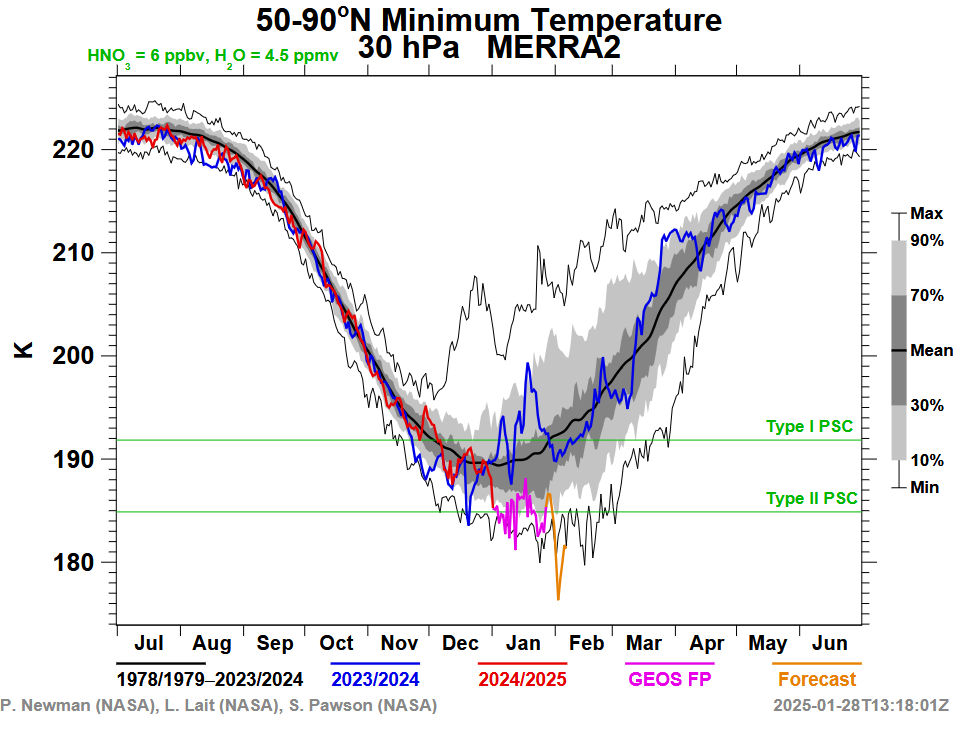
Polar stratospheric clouds (PSCs) are rare. Normally, the stratosphere has no clouds at all. When the temperature drops to -85 C (188 K), however, water molecules can get together to form ice crystals even in the very dry stratosphere. High-altitude sunlight touching those crystals creates a blossom of pastel color.
According to NASA's MERRA2 climate model, temperatures in the polar stratosphere are about to drop to their lowest levels since before 1978. This could cause a major outbreak of polar stratospheric clouds, visible around the Arctic Circle and beyond. If you see a PSC, please take a picture and submit your images here.
Realtime PSC Photo Gallery
Free: Spaceweather.com Newsletter
IT IS *STILL* VISIBLE TO THE NAKED EYE: Two full weeks after Comet ATLAS (C/2024 G3) buzzed the sun and puffed itself up with solar heat, it is *still* visible to the naked eye. Ian Griffin sends this Jan. 27th photo from the South Island of New Zealand:
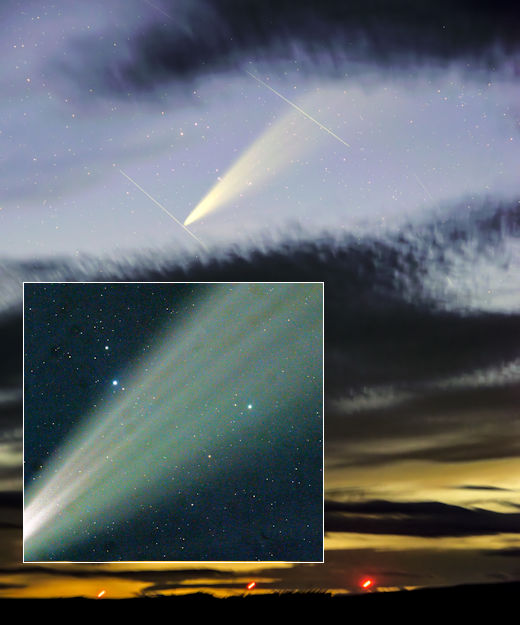
"After a week of clouds, I managed to find a spot with clear sky," says Griffin. "As darkness fell I was rewarded by a remarkable view of the comet in the sunset sky. It was well worth the wait! "
Inset above is a close-up view of the comet's richly-structured tail. The long streaks are called "synchrones." They are streamers of gas and dust created by fractures and outbursts in the comet's core. As regular readers know, the comet's nucleus disintegrated more than a week ago. Synchrones are the visible aftermath of that breakup.
Realtime Comet ATLAS Photo Gallery
Free: Spaceweather.com Newsletter
HIGH TEA CUP: This is the perfect cup for high tea. 118,633 feet high, to be exact. On Jan. 24, 2025, the students of Earth to Sky Calculus launched it to the stratosphere onboard a cosmic ray research balloon:
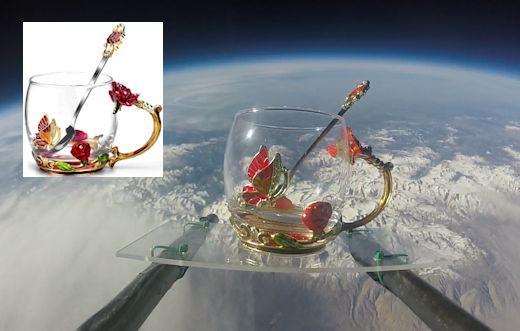
You can have it for $114.95. The crystal glass cup is decorated with a 3D butterfly and a red rose. There's a matching teaspoon, too! This marvelous Valentine's Day gift comes with a greeting card showing the cup in flight and telling the story of its journey to the stratosphere and back.
Far Out Gifts: Earth to Sky Store
All sales support hands-on STEM education
Realtime Aurora Photo Gallery
Free: Spaceweather.com Newsletter
Realtime Space Weather Photo Gallery
Free: Spaceweather.com Newsletter