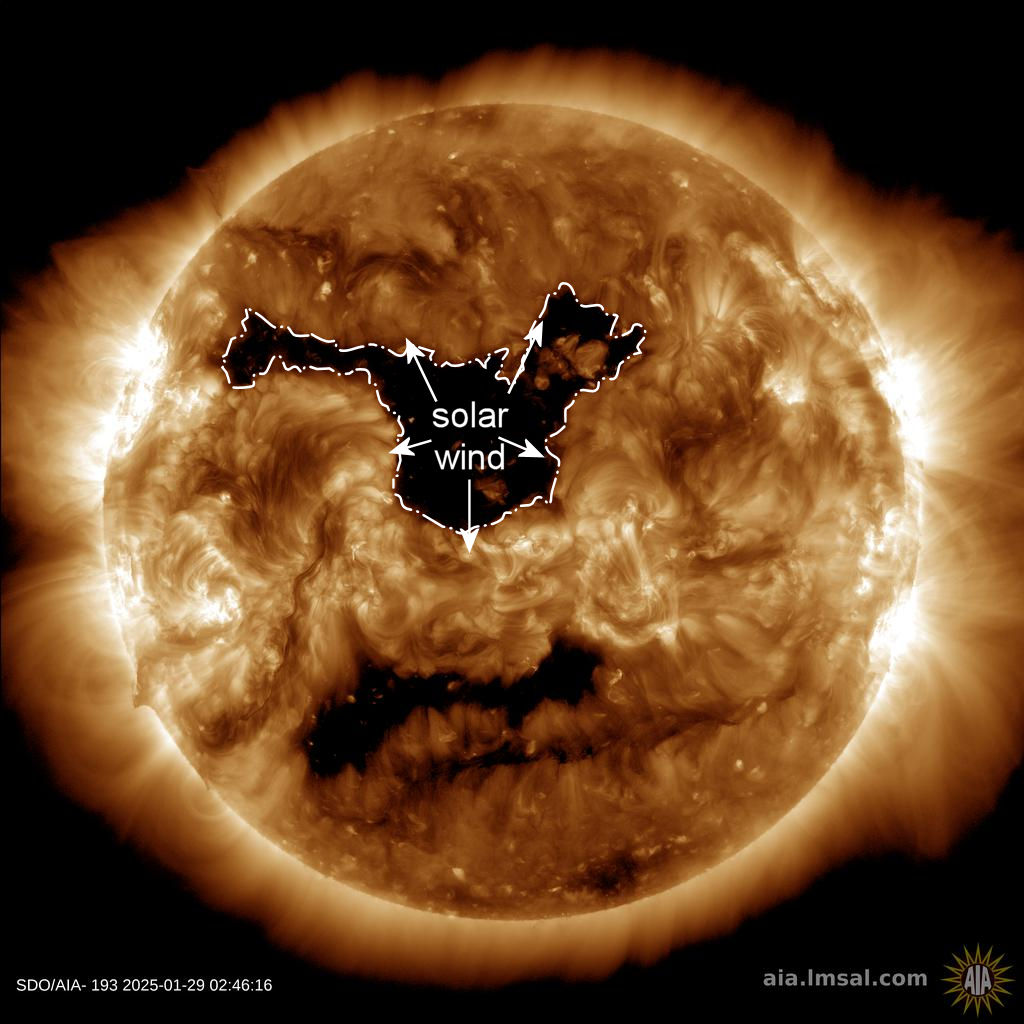
A HOLE IN THE SUN'S ATMOSPHERE: A large hole in the sun's atmosphere is directly facing Earth and blowing a stream of solar wind in our direction. Estimated time of arrival: Jan. 31st or Feb. 1st. Minor G1-class geomagnetic storms are possible when the gaseous material reaches Earth. CME impact alerts: SMS Text.

POLAR STRATOSPHERIC CLOUDS: Something interesting is happening in the polar stratosphere. A 40-year cold spell is underway, and the temperature contimues to drop. We know its cold because the stratosphere is starting to fill with colorful clouds. They look like this:
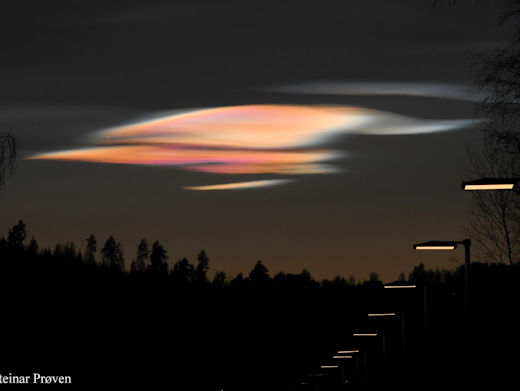
These are Type II polar stratospheric clouds (PSCs) photographed by Per Steinar Prøven of Brumunddal, Norway. "We have been seeing them day and night," he says.
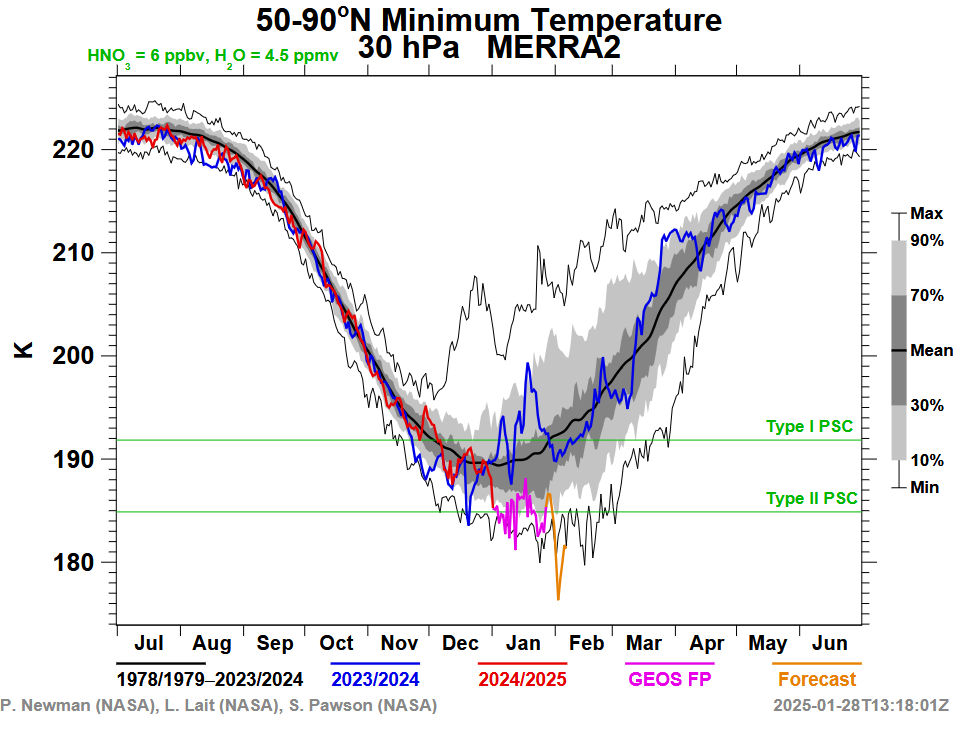
Polar stratospheric clouds are rare. Normally, the stratosphere has no clouds at all. When the temperature drops to -85 C (188 K), however, water molecules can get together to form ice crystals even in the very dry stratosphere. High-altitude sunlight touching those crystals creates a blossom of pastel color.
According to NASA's MERRA2 climate model, temperatures in the polar stratosphere are about to drop to their lowest levels since before 1978. This could cause a major outbreak of polar stratospheric clouds, visible around the Arctic Circle and beyond. If you see a PSC, please take a picture and submit your images here.
Realtime PSC Photo Gallery
Free: Spaceweather.com Newsletter
A DOUBLE-SPACECRAFT MOVIE OF COMET ATLAS: Comet ATLAS (C/2024 G3) is so large, it took two spacecraft to photograph it. Spaceweather.com reader Fred Deters stitched together images from Europe's Solar and Heliospheric Observatory (right) and NASA's STEREO-A spacecraft (left) to show the comet's close encounter with the sun in mid-January:
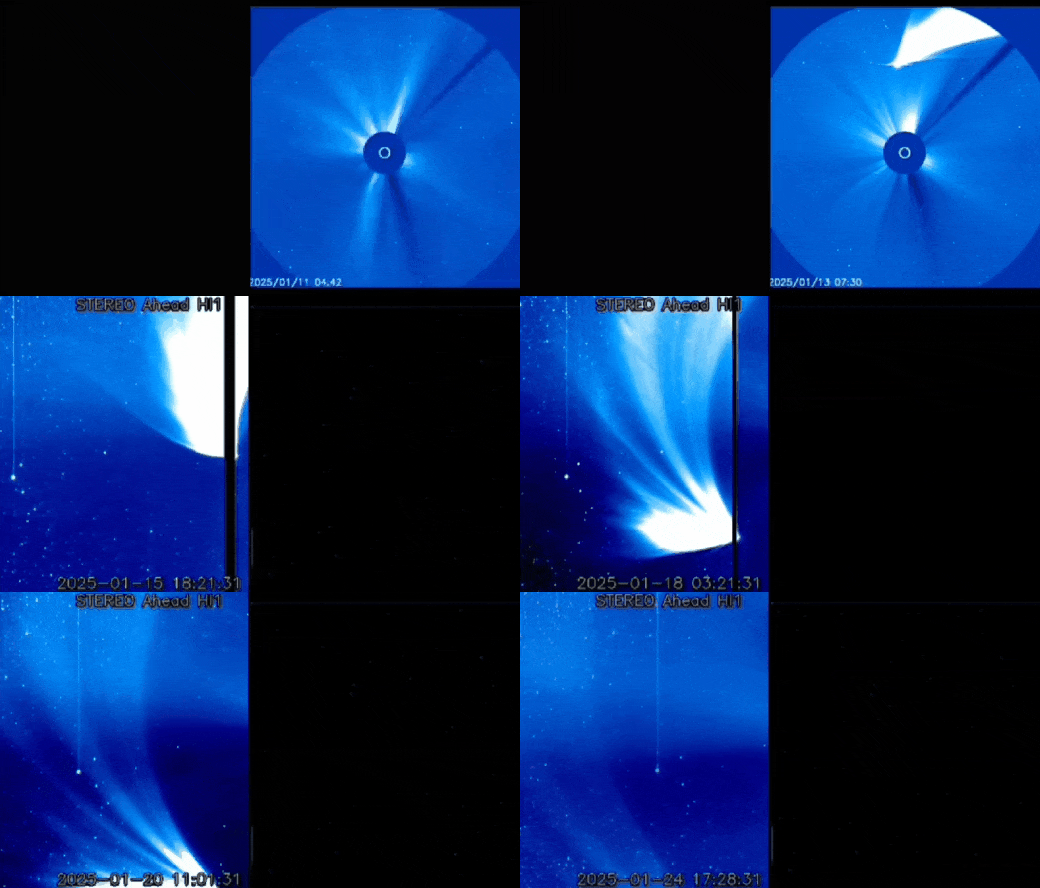
In this composite movie, the comet passes only 0.09 AU from the sun on Jan. 13th and then disintegrates. Long streaks in the STEREO-A movie (left) are called "synchrones." They are streamers of gas and dust created by fractures and outbursts in the comet's core. Synchrones are the visible aftermath of the comet's breakup.
Although its nucleus fell apart more than a week ago, the comet is still visible in the southern hemisphere as a naked-eye "headless wonder." Browse our realtime photo gallery for the latest images.
Realtime Comet ATLAS Photo Gallery
Free: Spaceweather.com Newsletter
HIGH TEA CUP: This is the perfect cup for high tea. 118,633 feet high, to be exact. On Jan. 24, 2025, the students of Earth to Sky Calculus launched it to the stratosphere onboard a cosmic ray research balloon:
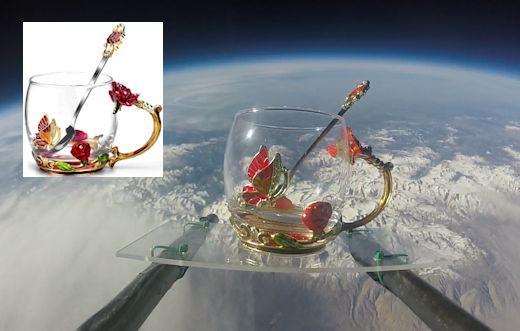
You can have it for $114.95. The crystal glass cup is decorated with a 3D butterfly and a red rose. There's a matching teaspoon, too! This marvelous Valentine's Day gift comes with a greeting card showing the cup in flight and telling the story of its journey to the stratosphere and back.
Far Out Gifts: Earth to Sky Store
All sales support hands-on STEM education
Realtime Aurora Photo Gallery
Free: Spaceweather.com Newsletter
Realtime Space Weather Photo Gallery
Free: Spaceweather.com Newsletter