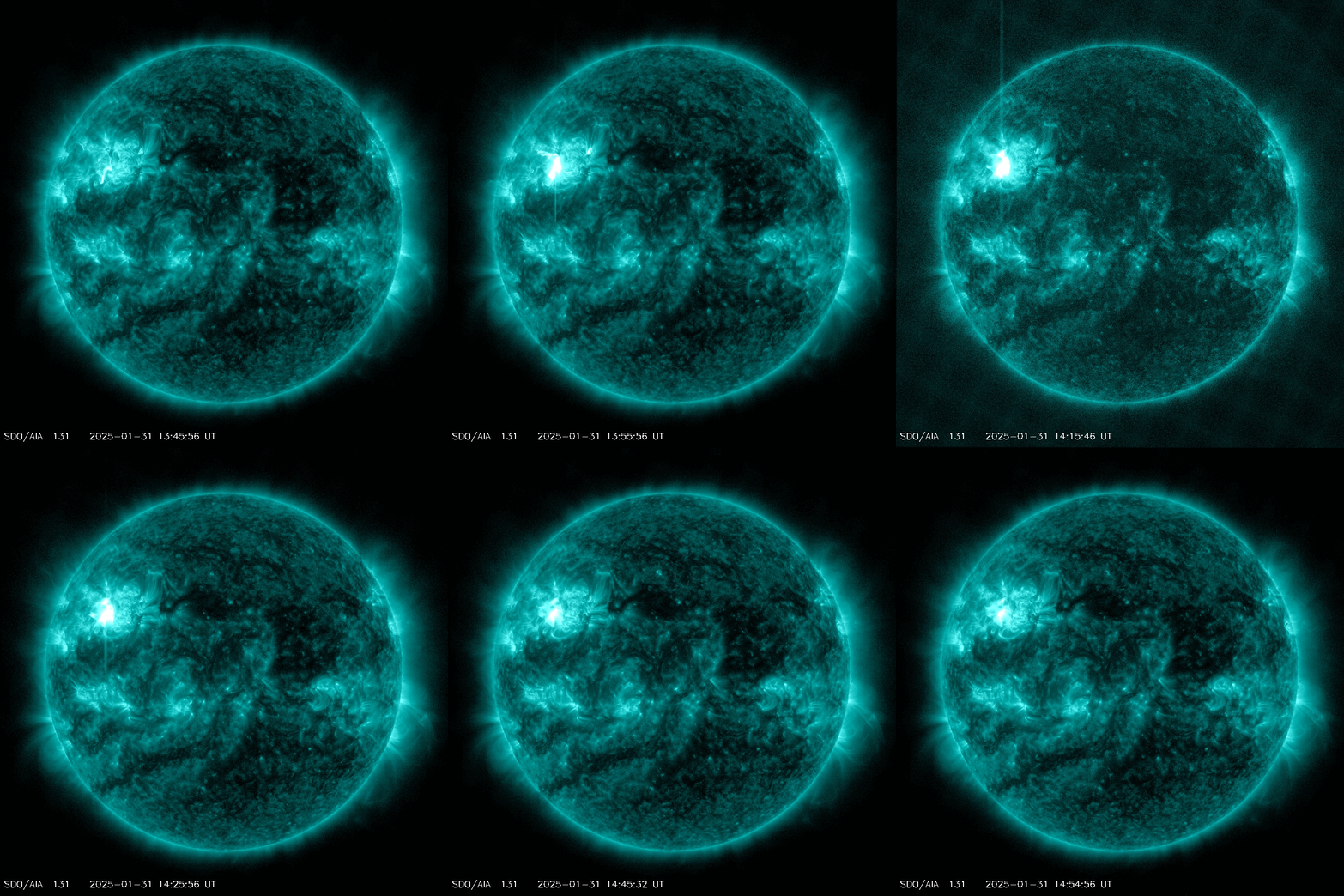
ALMOST-X CLASS SOLAR FLARE (UPDATED): Giant sunspot AR3976 unleashed an M6.7-class solar flare yesterday (Jan 31st @ 1406 UTC), almost reaching category X. The explosion caused a shortwave radio blackout over South America and hurled a CME into space. New SOHO coronagraph images suggest that the CME will miss Earth by a narrow margin on Feb. 3rd. Solar flare alerts: SMS Text.
VENUS-MOON CONJUNCTION-TONIGHT: When the sun goes down tonight, step outside and look west. You might be something like this:
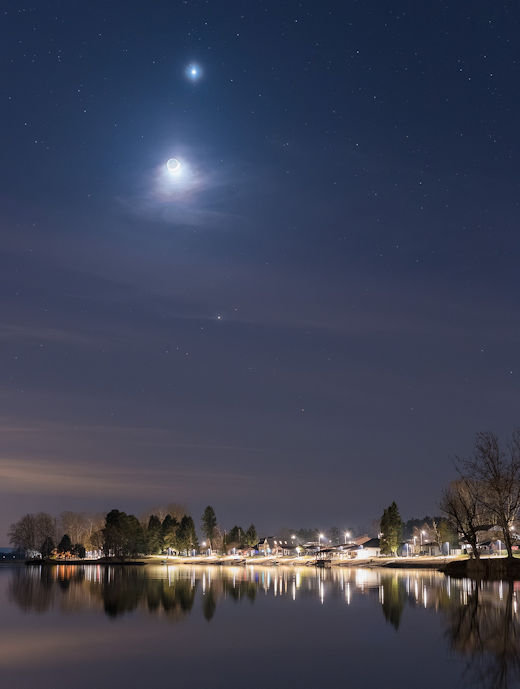
"It's a beautiful conjunction of Venus and the Moon on the first evening of February," says photographer Marko Posavec of Lake Šoderica, Croatia.
Try to catch them before the sky fades completely black. The sight of a crescent Moon with Earthside and Venus framed by twilight blue is truly out of this world.
more images: from P-M Hedén of Vallentuna, Sweden; from Les Brooks of East Shore Village, Durham, UK; from Patricio Leon of Santiago, Chile
Realtime Space Weather Photo Gallery
Free: Spaceweather.com Newsletter
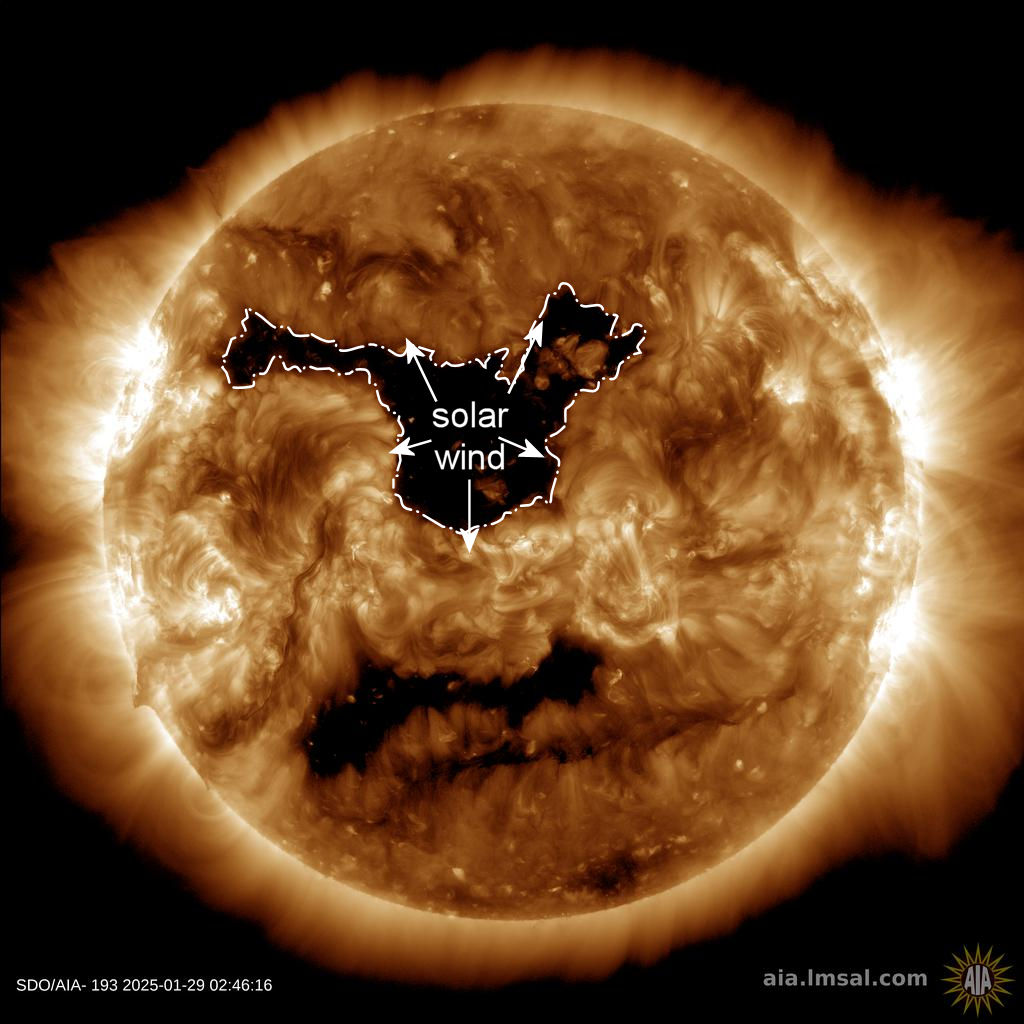
SOLAR WIND SPARKS WEEKEND AURORAS: Earth is entering a stream of solar wind flowing from a large hole in the sun's atmosphere. First contact with the stream on Jan. 31st sparked "a nice display of auroras over Minnesota," reports Thomas Spence, who took this picture near the shore of Lake Superior:
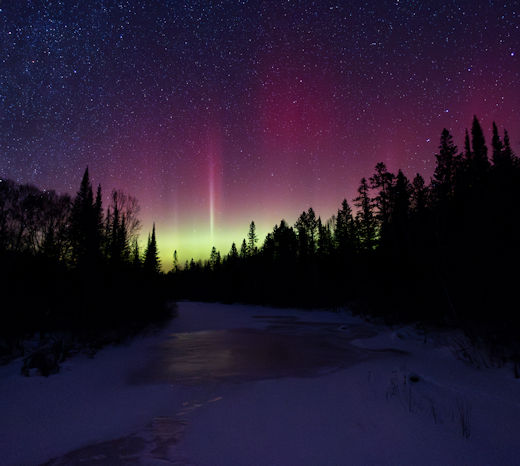
"It's a cold night in the Superior National Forest," says Spence, "only 8 degrees and windy, but clear and beautiful with the red aurora pillars overhead."
Auroras could intensify this weekend as Earth moves deeper into the solar wind stream. NOAA forecasters are predicting a G1-class geomagnetic storm on Saturday, Feb. 1st. If the storm materializes, auroras could spread across Scandinavia, Canada, and northern-tier US states from Maine to Washington. Aurora alerts: SMS Text.

Realtime Aurora Photo Gallery
Free: Spaceweather.com Newsletter
24K SPACE ROSE FOR VALENTINE'S DAY: On Jan. 24, 2025, the students of Earth to Sky Calculus launched a cosmic ray balloon to the stratosphere. This 24K Space Rose went along for the ride:
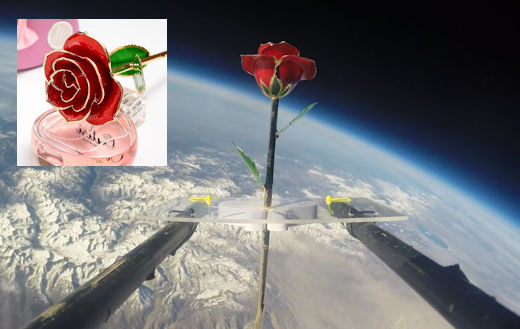
You can have it for $127.75. At the apex of the flight, the gold-dipped and gilded bloom was 115,823 feet above the Sierra Nevada mountains of central California, touching the edge of space. It comes with a greeting card showing the flower in flight, and telling the story of its journey to the stratosphere and back again.
Far Out Gifts: Earth to Sky Store
All sales support hands-on STEM education
Realtime Aurora Photo Gallery
Free: Spaceweather.com Newsletter
Realtime Comet ATLAS Photo Gallery
Free: Spaceweather.com Newsletter