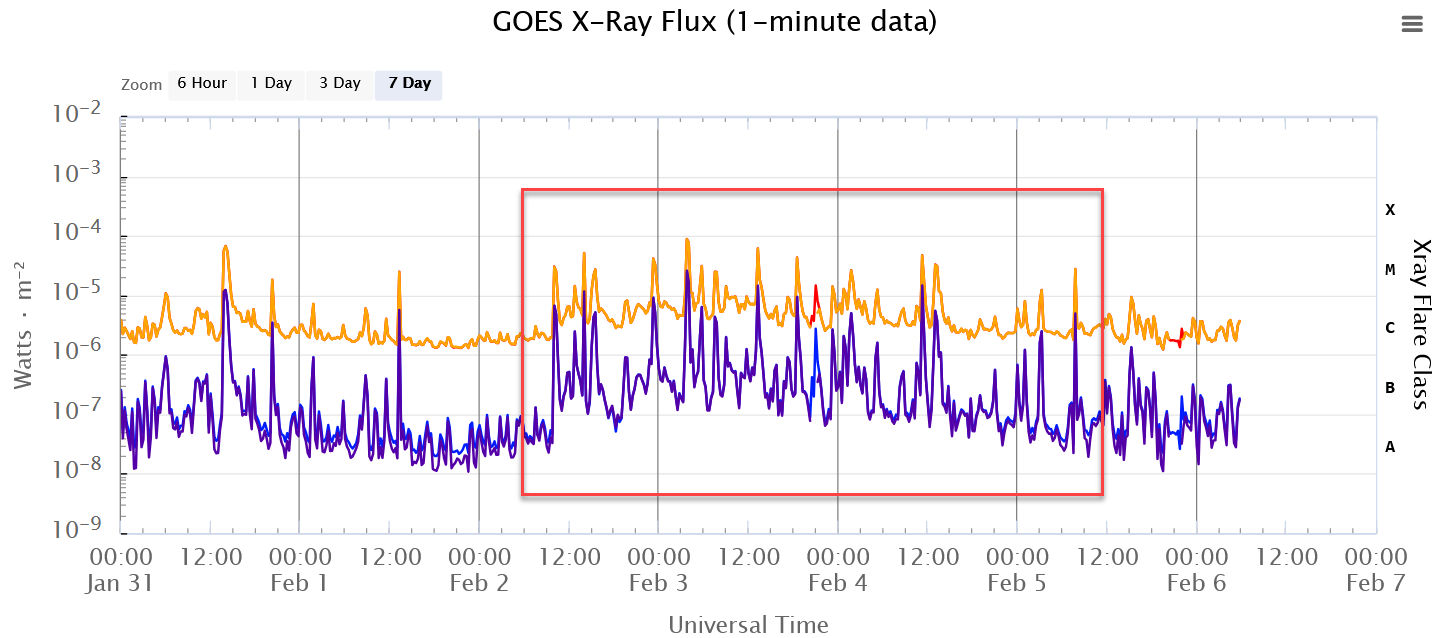
AS PREDICTED, A SOLAR FLARE: Sunspot 3981 erupted again today, producing an M7-class solar flare (1104 UT). This adds to an impressive talley of more than 20 M-class flares this week. The latest flare hurled a CME into space. First-look images from SOHO coronagraphs suggest that it will miss Earth, sailing high above our planet. This conclusion is preliminary, however, so stay tuned for updates. Solar flare alerts: SMS Text.
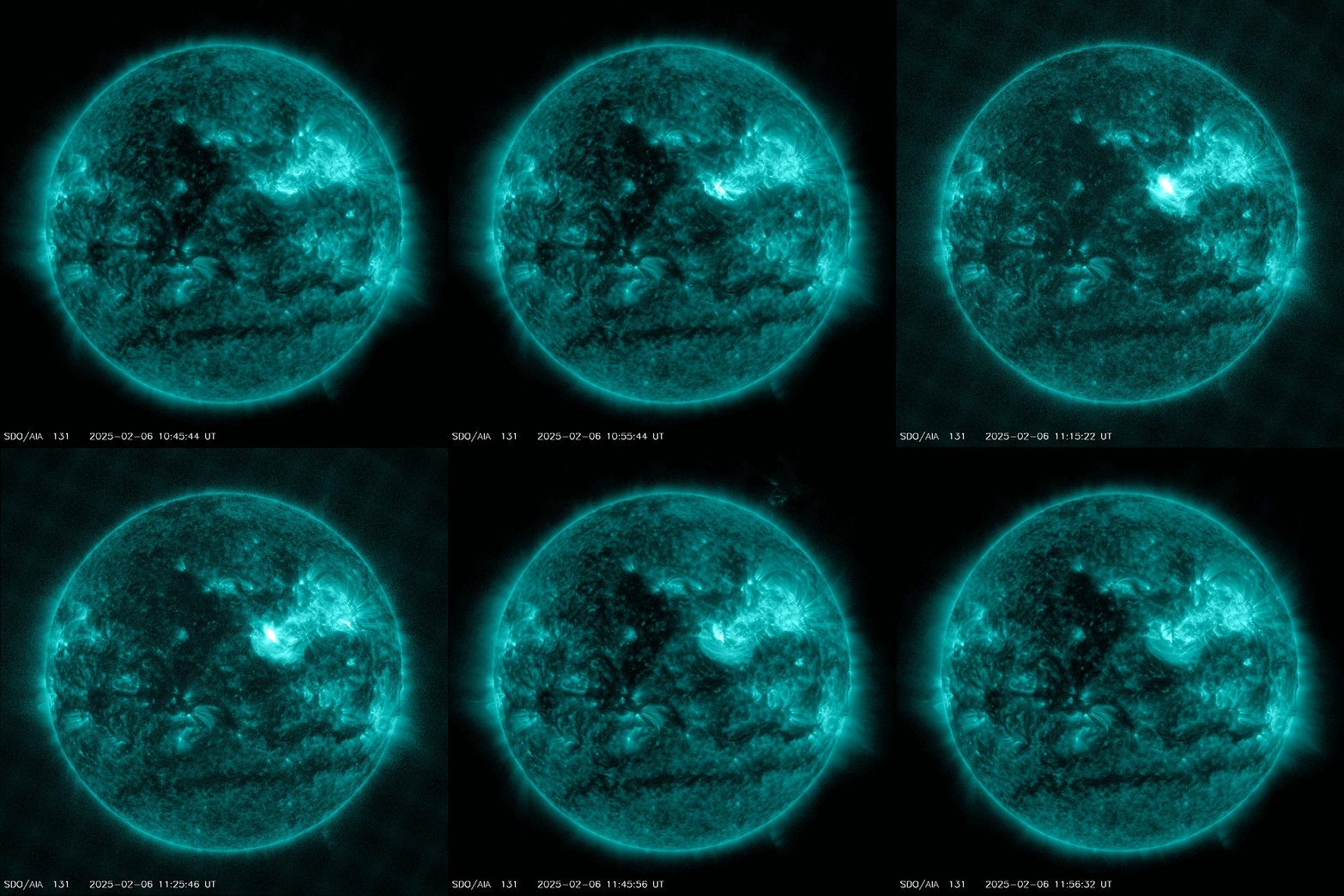
An extreme UV movie of today's M7-class solar flare. Credit: NASA/SDO
'UNPRECEDENTED' STARLINK REENTRIES: What goes up, must come down--which could be a problem when you're launching thousands of satellites. Since 2018, SpaceX has placed more than 7,000 Starlink satellites into Earth orbit, and now they are starting to come down. In January alone, more than 120 Starlinks deorbited, creating a shower of fireballs.
"The sustained rate of daily reentries is unprecedented," says Jonathan McDowell, an astronomer at the Harvard Center for Astrophysics who tracks satellites. "They are retiring and incinerating about 4 or 5 Starlinks every day."
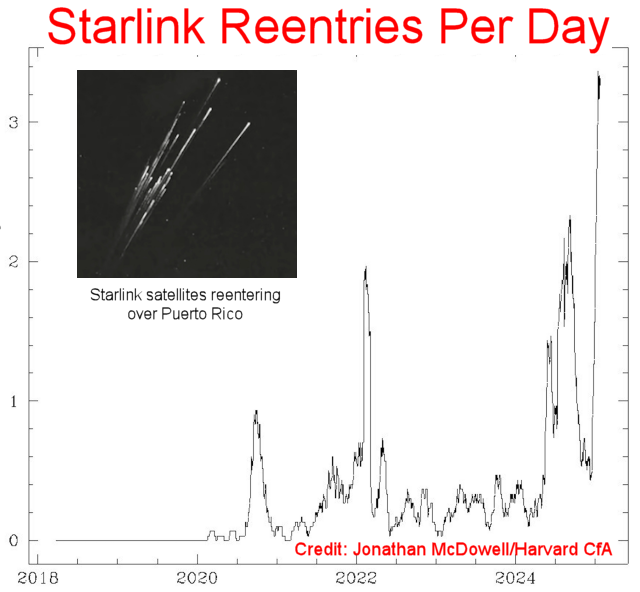
Planners have long known this would happen. First generation (Gen1) Starlink satellites are being retired to make way for newer models. "More than 500 of the 4700 Gen1 Starlinks have now reentered," says McDowell.
When Starlinks reenter, they disintegrate before hitting the ground, adding metallic vapors to the atmosphere. A study published in 2023 found evidence of the lingering devris. In February 2023, NASA flew a WB-57 aircraft 60,000 feet over Alaska to collect aerosols. 10% of the particles contained aluminum and other metals from the "burn-up" of satellites.
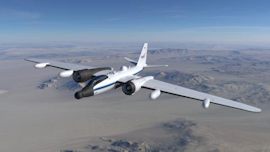 Right: NASA's WB-57 high altitude airplane. [more]
What we're observing is a giant uncontrolled experiment in atmospheric chemistry. The demise of just one Gen1 Starlink satellite produces about 30 kilograms (66 pounds) of aluminum oxide, a compound that eats away at the ozone layer. A new study finds these oxides have increased 8-fold between 2016 and 2022, and the recent surge is increasing the pollution even more.
On the bright side, each reentry produces a beautiful fireball--and the odds are increasing that you'll see one. Visit the Aerospace Corporation for reentry predictions, and submit your photos here.
Realtime Space Weather Photo Gallery
Free: Spaceweather.com Newsletter
24K SPACE ROSE FOR VALENTINE'S DAY: On Jan. 24, 2025, the students of Earth to Sky Calculus launched a cosmic ray balloon to the stratosphere. This 24K Space Rose went along for the ride:
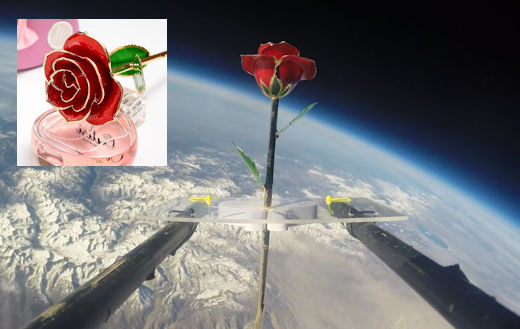
You can have it for $127.75. At the apex of the flight, the gold-dipped and gilded bloom was 115,823 feet above the Sierra Nevada mountains of central California, touching the edge of space. It comes with a greeting card showing the flower in flight, and telling the story of its journey to the stratosphere and back again.
Far Out Gifts: Earth to Sky Store
All sales support hands-on STEM education
Realtime Aurora Photo Gallery
Free: Spaceweather.com Newsletter
Realtime Comet ATLAS Photo Gallery
Free: Spaceweather.com Newsletter