GLANCING-BLOW CME: A CME that left the sun on Feb. 15th might graze Earth's magnetic field tomorrow. A near-miss is just as likely. Either way, minor G1-class geomagnetic storms are possible on Feb. 18th as a result of the close encounter. CME impact alerts: SMS Text.

VENUS IS A MUST-SEE CRESCENT: When the sun goes down tonight, step outside and look southwest. Venus is beaming beautifully through the twilight. The view is even better through a telescope:
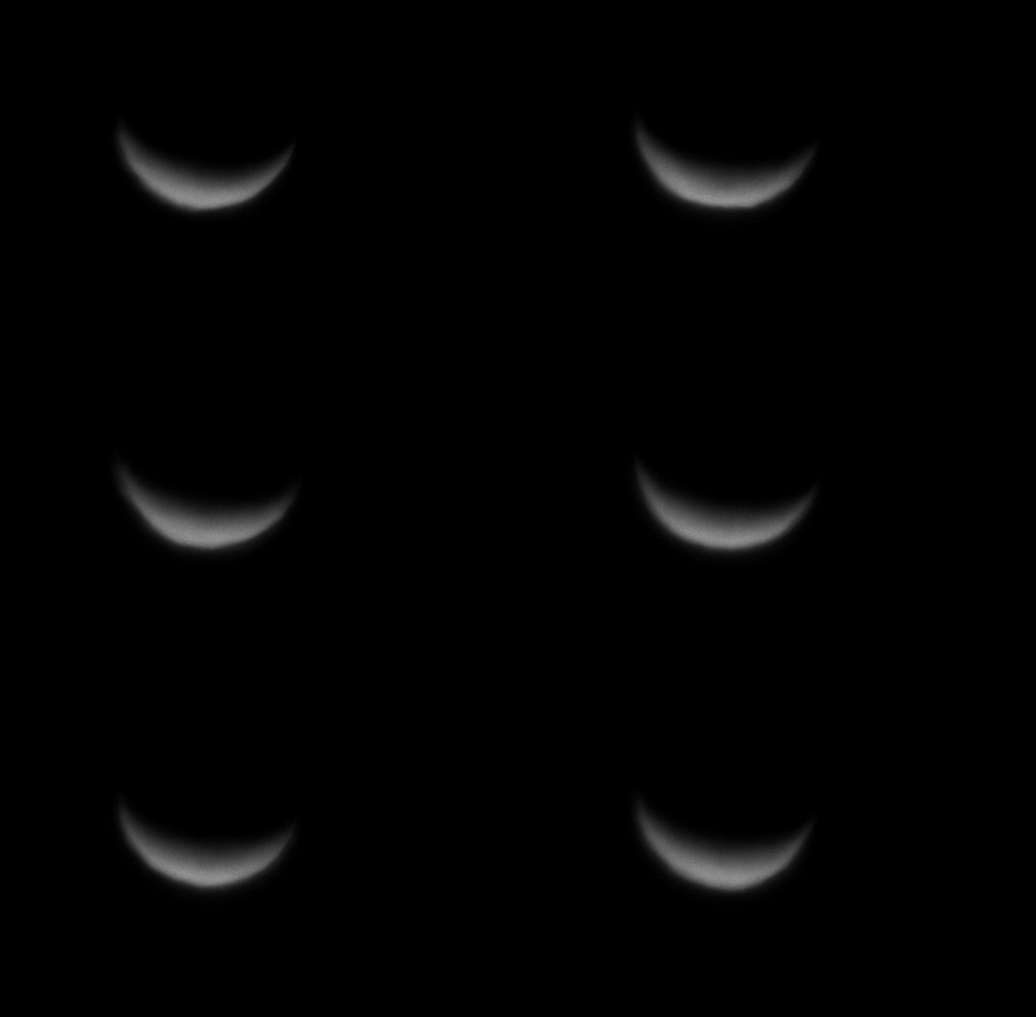
"This is how Venus looked on Feb. 16th through my 18 cm Cassegrain," says Raffaello Lena of Rome, Italy. "The planet's slender form shimmered in the turbulent atmosphere as I watched it through the eyepiece."
Like the Moon, Venus has phases, and at the moment it is a crescent. Even binoculars can reveal the planet's curved shape. On March 22nd, Venus will be "New" (think "New Moon" in miniature). Between now and then the crescent will become increasingly thin and a must-see target for backyard optics. Take a look!
more images: from Paolo Palma of Naples, Italy; from Wim Holwerda of Oosterhout, Netherlands;
Realtime Venus Photo Gallery
Free: Spaceweather.com Newsletter
THE CRESCENT VENUS PENDANT: Are you looking for a far-out gift? Consider the Crescent Venus Pendant. This one flew to the stratosphere onboard a cosmic ray research balloon on Jan. 8th:
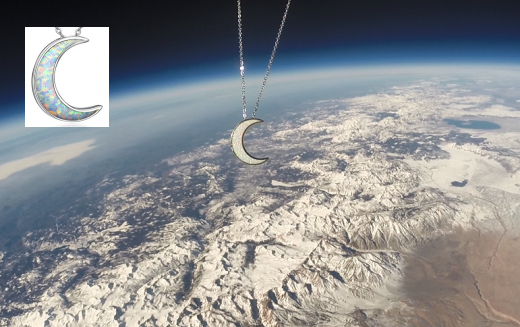
You can have it for $142.95. The opal crescent is framed by sterling silver with a matching hypoallergenic chain. Coincidentally, the 14% phase of the pendant almost perfectly matches the actual phase of Venus right now. It comes with a greeting card showing the pendant in flight and telling the story of its journey to the stratosphere and back again.
Far Out Gifts: Earth to Sky Store
All sales support hands-on STEM education
Realtime Aurora Photo Gallery
Free: Spaceweather.com Newsletter
Realtime Space Weather Photo Gallery
Free: Spaceweather.com Newsletter