SLIGHT CHANCE OF STORMS TODAY: A CME that left the sun on Feb. 15th might graze Earth's magnetic field today. This is a low-confidence forecast. A near-miss is just as likely as a hit. Minor G1-class geomagnetic storms are possible if the CME makes contact. CME impact alerts: SMS Text.

ASTEROID 2024 YR4 UPDATE: The odds just increased again. Asteroid 2024 YR4 now has a 2.6% chance of hitting Earth on Dec. 22, 2032, up from 2.2% a week ago, and 1.3% in January. Current probabilities are based on 368 observations spanning 54 days. This growing arc of data is improving our knowledge of the asteroid's orbit and, so far, steadily increasing the odds of a strike.
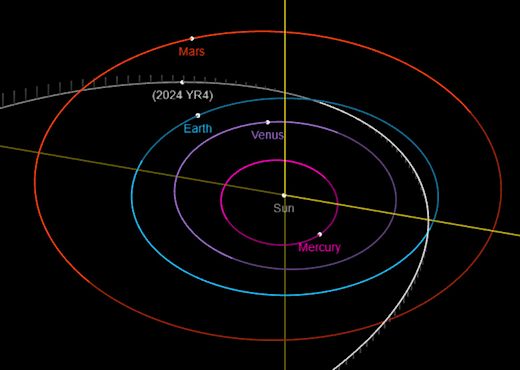
Click to view and play with an interactive orbit of asteroid 2024 YR4
That was the bad news. The good news is, even if it hits, 2024 YR4 will not wipe us out. With an estimated diameter of 40 to 70 meters, it is only a few times larger than the Chelyabinsk meteor that hit Russia in 2013. That space rock exploded in the atmosphere, creating shock waves that shattered glass windows and injured hundreds of people (mainly from broken glass). The estimated size of 2024 YR4 reminds researchers even more of the Tunguska impactor, which leveled a forest in Russia in 1908. You wouldn't want to be at ground zero, but Earth would survive.
The risk profile of 2024 YR4 is unusual. Often we see sensational headlines predicting some newly-discovered asteroid might hit Earth. These are space rocks with huge error bars on their orbits because they haven't been tracked for very long. As soon as more data are collected, the odds of impact go down. For 2024 YR4, however, the odds are still going up, which makes it interesting.
Reminder: There's still a 97.4% chance of a miss. Stay tuned for updates.
Realtime Space Weather Photo Gallery
Free: Spaceweather.com Newsletter
STERLING SILVER MOONCAT: This cat has experienced a severe geomagnetic storm. A CME hit Earth's magnetic field during on Sept. 16th. The students of Earth to Sky Calculus quickly immediately launched a cosmic ray balloon with the Sterling Silver Mooncat hitching a ride:
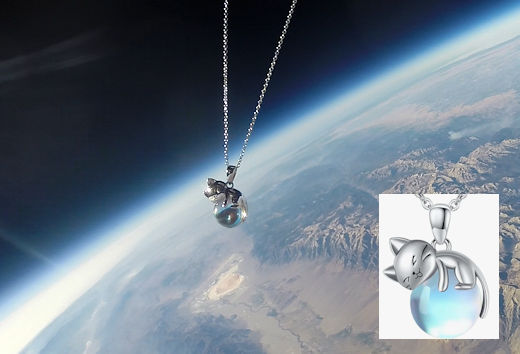
You can have it for $199.95. Curled around a genuine blue moonstone the sterling silver cat floated through the stratosphere for almost 3 hours during the storm, gathering radiation data for the students' monitoring program. The Mooncat comes with a greeting card showing the pendant in flight and explaining the radiation experiment.
The students of Earth to Sky Calculus are selling space jewelry to support their cosmic ray ballooning program. Don't wait for Christmas--get yours now!
Far Out Gifts: Earth to Sky Store
All sales support hands-on STEM education
Realtime Aurora Photo Gallery
Free: Spaceweather.com Newsletter
Realtime Space Weather Photo Gallery
Free: Spaceweather.com Newsletter