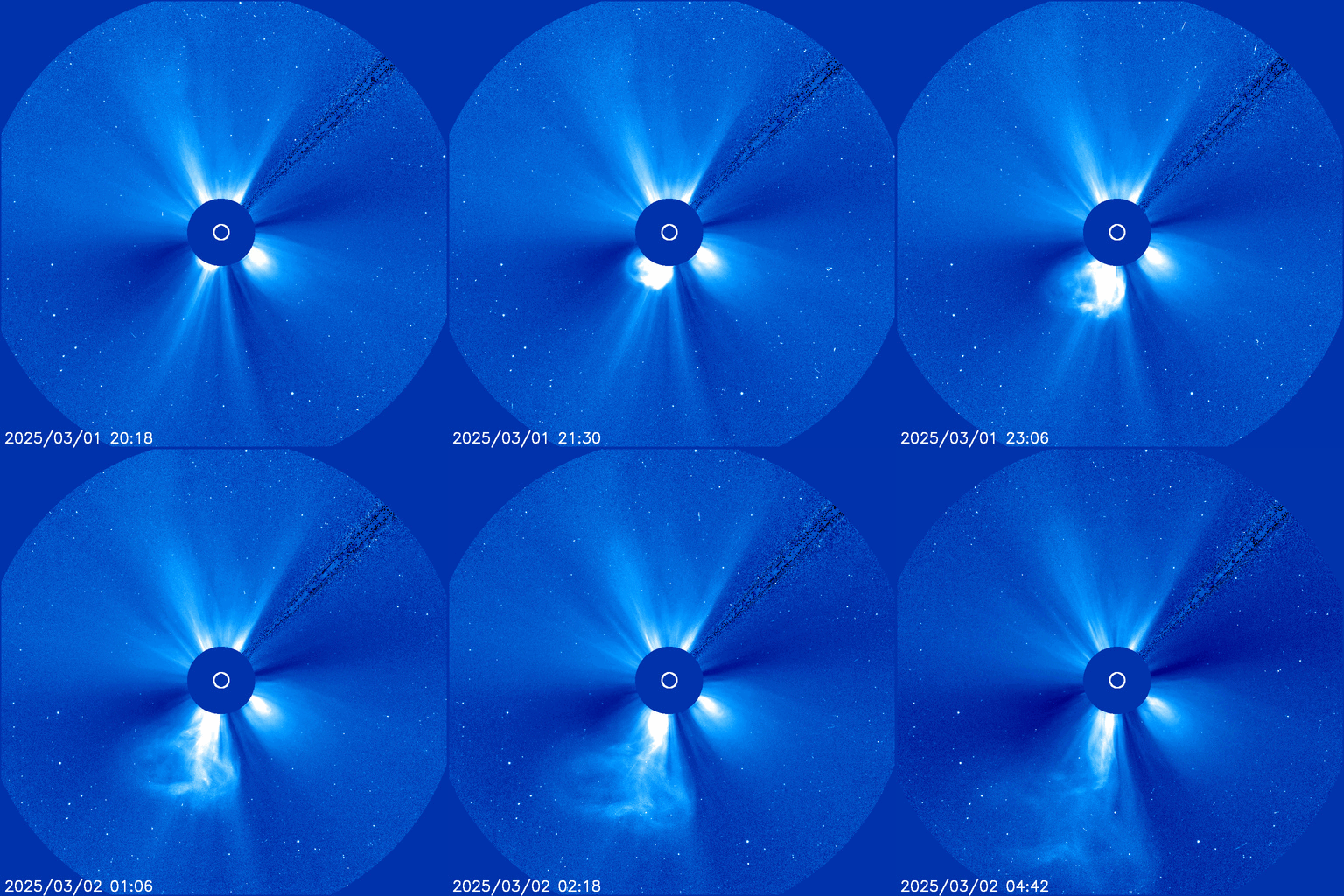
A CME IS COMING: On Mar. 1st, a magnetic filament on the sun erupted and hurled a CME into space. NOAA forecasters say it will graze Earth on March 4th or 5th, potentially sparking a G1-class geomagnetic storm. High latitude sky watchers should be alert for auroras if/when the CME arrives. CME impact alerts: SMS Text.

NOW IS THE BEST TIME TO LOOK AT VENUS: Like the Moon, Venus has phases. At the moment, both are slender crescents. Juan Jose Ortiz photographed them yesterday in the evening sky over Metepec, Mexico:
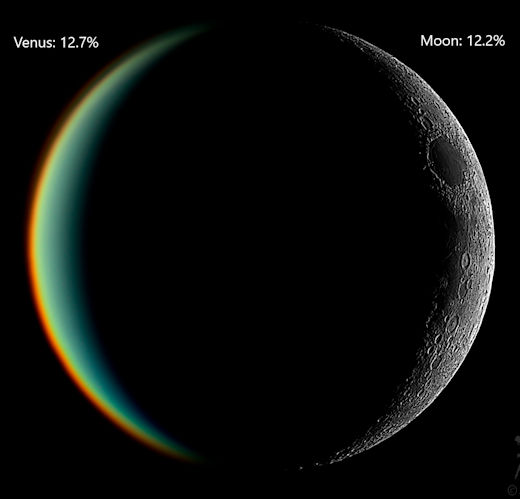
"Last night, the Moon and Venus had approximately the same percentage of illumination (12-13%)," says Ortiz. "The symmetrical shape of the Moon and Venus inspired me to make this composite image, which exaggerates the size of Venus for effect."
Now is a special time for observing Venus. On Mar. 22nd, Venus will pass almost directly between Earth and the sun--an event astronomers call "inferior solar conjunction." Between now and then, the planet will narrow, becoming an increasingly-thin crescent as it turns its night side toward Earth. Nothing is prettier than the Goddess of Love in crescent form.
Maximilian Teodorescu sends this picture from the Institute of Space Science in Magurele, Romania:
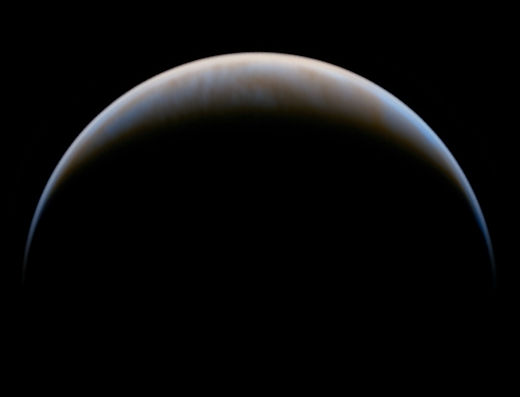
Yes, that's really Venus. "To see the planet's clouds, I used a UV filter on my 355mm (14-inch) Newtonian telescope," says Teodorescu. "The planet is getting very thin as it approaches inferior conjunction."
Indeed, now may be the best time for observing Venus. The planet is easy to find high in the southwestern sky at sunset, and you have plenty of time to set up a telescope (even a small one will work!) before Venus follows the sun below the horizon. Finding Venus will be more of a challenge near March 22nd when it is dangerously close to the sun. Go outside after sunset and take a look!
Realtime Venus Photo Gallery
Free: Spaceweather.com Newsletter
"ALWAYS & FOREVER" GOLDEN SAPPHIRE PENDANT: Are you looking for an unforgettable gift? Consider the Golden Sapphire Space Pendent. On Feb. 20, 2025, the students of Earth to Sky Calculus launched it to the stratosphere onboard a cosmic ray research balloon:

You can have it for $199.95. Engraved with the words "I love you always and forever", this 18K gold-plated sterling silver pendant features a heart-shaped sapphire crystal surrounded by a ring of glittering 5A cubic zirconia nuggets. It is a visually striking premium pendant that makes a once-in-a-lifetime anniversary or birthday gift.
The students are selling space pendants to pay the helium bill for their cosmic ray ballooning program. Each one comes with a greeting card showing the jewelry in flight and telling the story of its trip to the stratosphere and back again.
Far Out Gifts: Earth to Sky Store
All sales support hands-on STEM education
Realtime Space Weather Photo Gallery
Free: Spaceweather.com Newsletter
Realtime Aurora Photo Gallery
Free: Spaceweather.com Newsletter