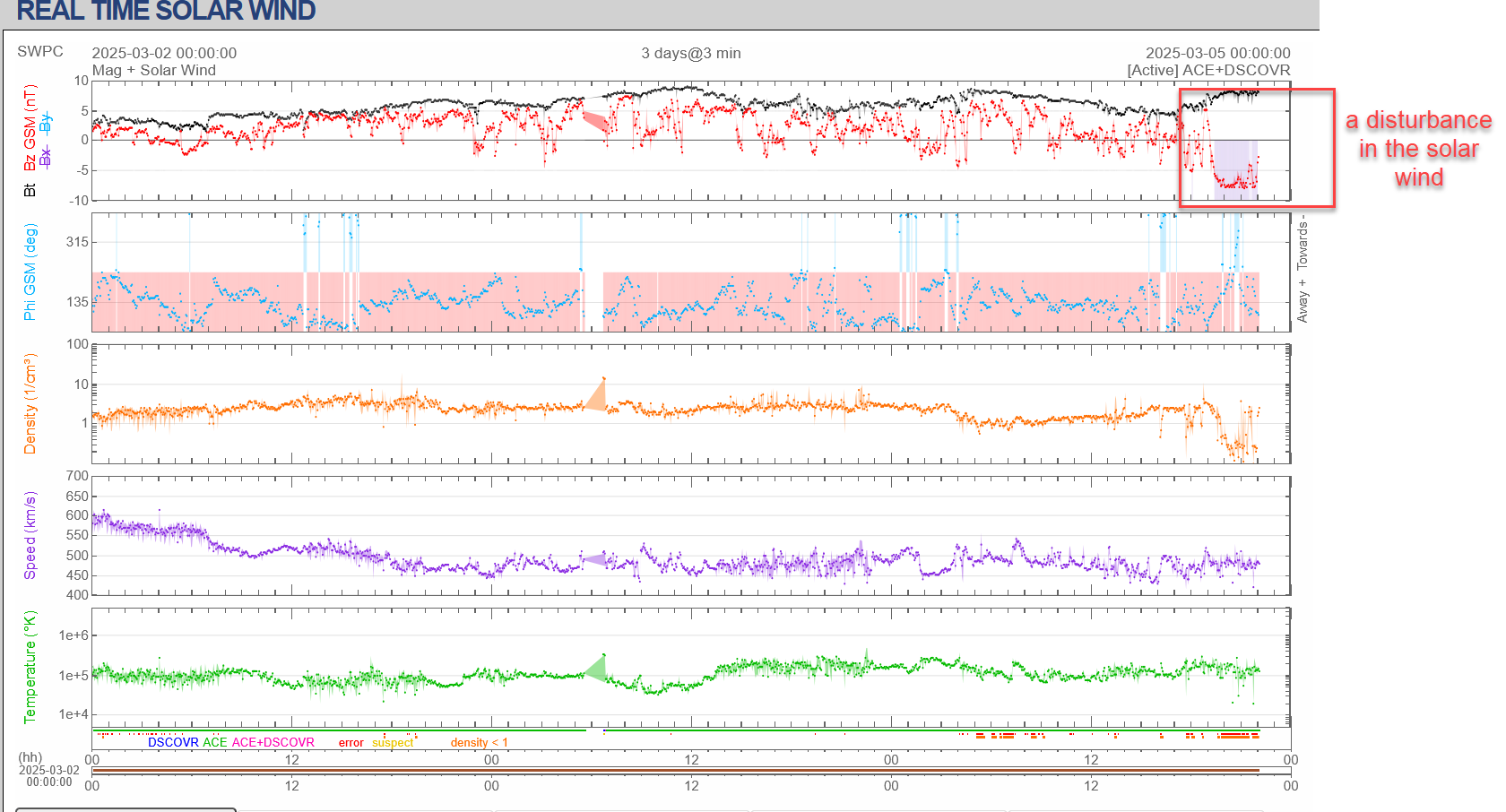
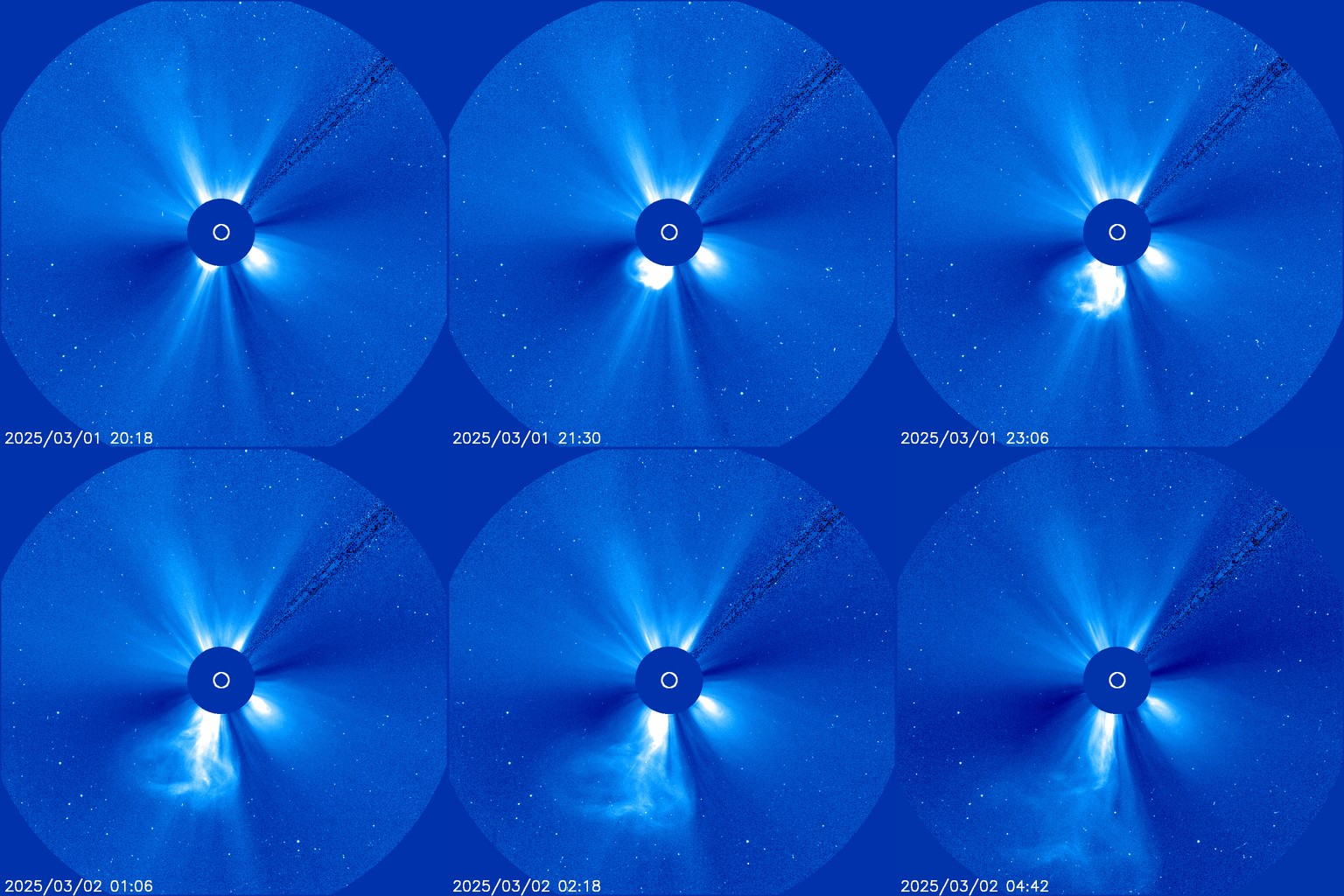
THE CME HAS ARRIVED: A solar wind disturbance detected by NOAA's DSCOVR spacecraft suggests that a CME just passed near Earth. It was not a direct hit, but the CME's expanding wake (experienced by us as ripples in the solar wind) might still produce a minor G1-class geomagnetic storm on March 4-5. Aurora alerts: SMS Text.

GIANT LIGHTNING UNDERFOOT: Can lightning reach space? This tremendous bolt from the Gulf of Mexico on Nov. 19, 2024, almost made it:
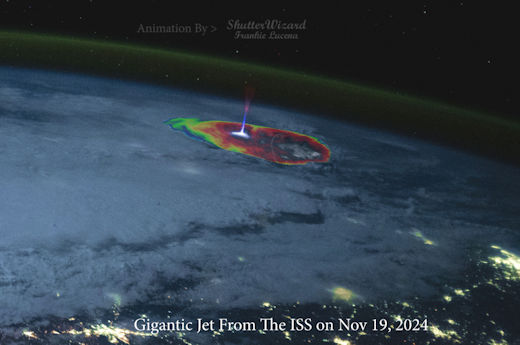
Astronauts onboard the ISS took the photo while orbiting over a phalanx of severe thunderstorms in the southeastern USA. Most of the lightning went down, but this Gigantic Jet shot up to the ionosphere 50 miles high.
Puerto Rican sprite chaser Frankie Lucena noticed the rare bolt while he was browsing NASA's Gateway to Astronaut Photography of Earth. To investigate further, he superimposed an IR weather satellite image supplied by Alex Boreham of Florida Tech University. "The area where the Gigantic Jet fired up coincided with some very strong updraft," he notes.
Sometimes called "Earth's tallest lightning," Gigantic Jets were discovered near Taiwan and Puerto Rico less than 25 years ago. Very few have been photographed from above. They seem to love storms over water and are famous for surprising passengers onboard commercial aircraft. Researchers still don't fully understand what causes Gigantic Jets; linking them to thermal hot spots and updrafts as Lucena has done is an important contribution.
Realtime Gigantic Jet Photo Gallery
Free: Spaceweather.com Newsletter
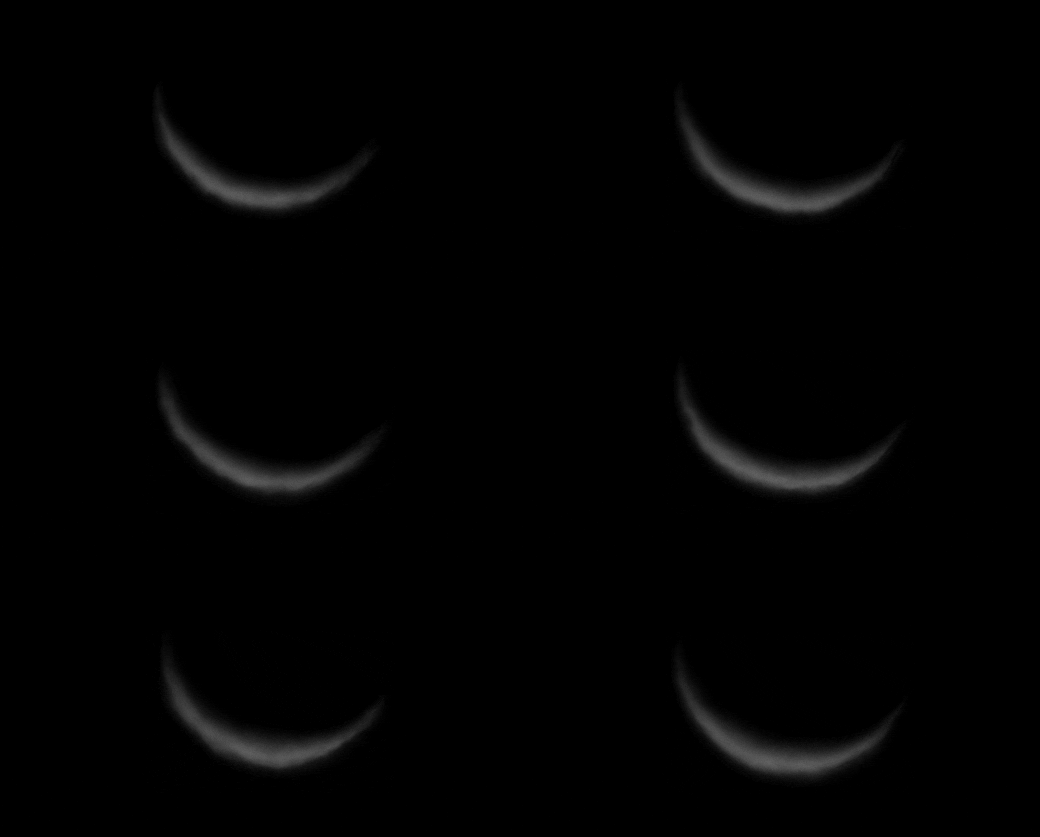
NOW IS THE BEST TIME TO LOOK AT VENUS: Like the Moon, Venus has phases. At the moment, both are slender crescents. Juan Jose Ortiz photographed them yesterday in the evening sky over Metepec, Mexico:
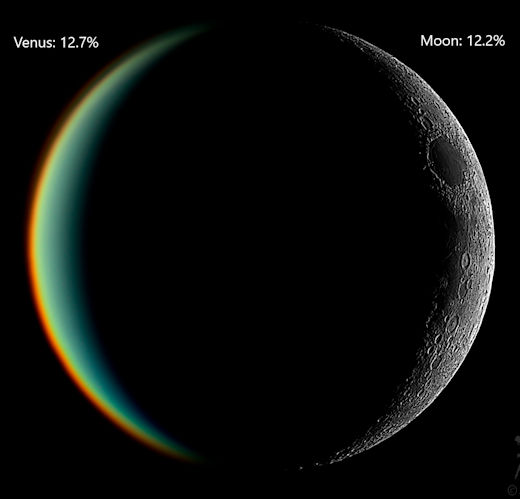
"Last night, the Moon and Venus had approximately the same percentage of illumination (12-13%)," says Ortiz. "The symmetrical shape of the Moon and Venus inspired me to make this composite image, which exaggerates the size of Venus for effect."
Now is a special time for observing Venus. On Mar. 22nd, Venus will pass almost directly between Earth and the sun--an event astronomers call "inferior solar conjunction." Between now and then, the planet will narrow, becoming an increasingly-thin crescent as it turns its night side toward Earth. Nothing is prettier than the Goddess of Love in crescent form.
Last night in Rome, Italian photographer Raffaello Lena video recorded Venus shimmering in deep twilight:
"This was the view through my 18 cm (7-inch) telescope," says Lena. "Venus is so thin, it now bends and shimmers in the turbulent air as it nears the horizon."
In fact, now may be the best time for observing Venus. The planet is easy to find high in the southwestern sky at sunset, and you have plenty of time to set up a telescope (even a small one will work!) before Venus follows the sun below the horizon. Finding Venus will be more of a challenge near March 22nd when it is dangerously close to the sun. Go outside after sunset and take a look!
Realtime Venus Photo Gallery
Free: Spaceweather.com Newsletter
SO LONG AND THANKS FOR ALL THE FISH: It's the nightlight for fans of Douglas Adams and the Hitchhiker's Guide to the Galaxy: So Long and Thanks for All the Fish. This glowing dolphin crystal ball flew to the stratosphere onboard a cosmic ray research balloon,reaching an altitude of 113,845 feet:
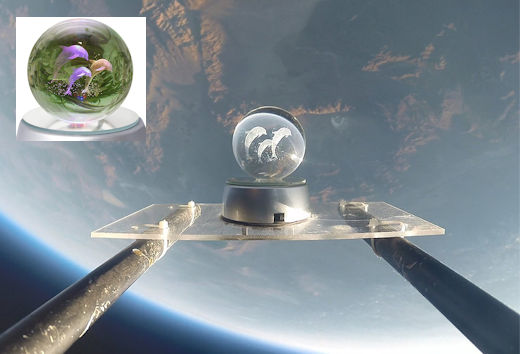
You can have it for $119.95. The students are selling this and other edge of space gifts to support their cosmic ray monitoring program.The crystal sphere comes with a unique gift card showing the dolphins in flight. Also included is a multi-colored LED illuminated stand, which turns the globe into a night light.
Far Out Gifts: Earth to Sky Store
All sales support hands-on STEM education
Realtime Space Weather Photo Gallery
Free: Spaceweather.com Newsletter
Realtime Aurora Photo Gallery
Free: Spaceweather.com Newsletter