CO-ROTATING INTERACTION REGION: A co-rotating interaction region (CIR) hit Earth on March 8th, setting the stage for a possible G1-class geomagnetic storm. CIRs are transition zones between fast- and slow-moving streams of solar wind. They contain magnetic fields and shock waves akin to those of CMEs. Aurora alerts: SMS Text.

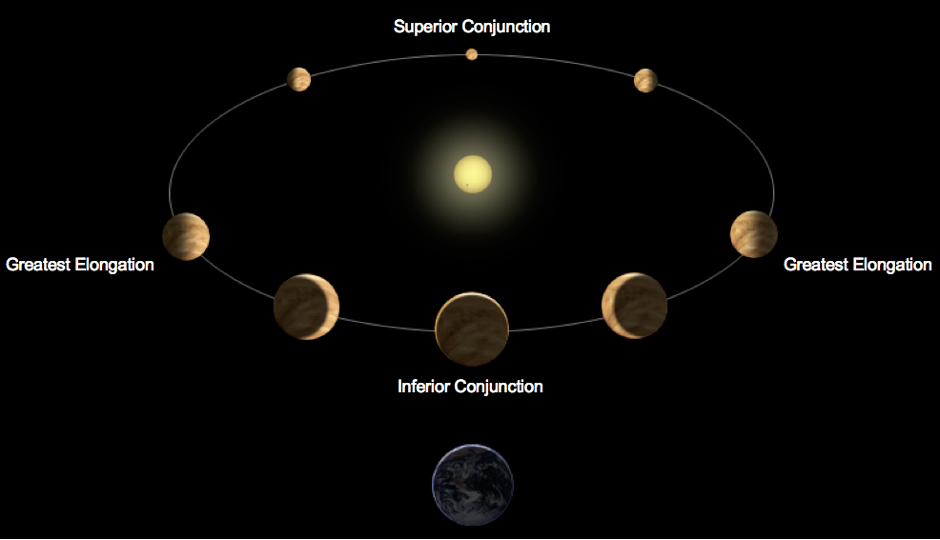
THE HOT NIGHT SIDE OF VENUS: Venus is approaching the sun for an inferior conjunction on March 22nd. Between now and then, Venus will be turning its night side toward Earth. You might suppose the night side of Venus would be dark, but astronomers are seeing it. Maximilian-Vlad Teodorescu sends this picture from the Institute of Space Science in Romania:
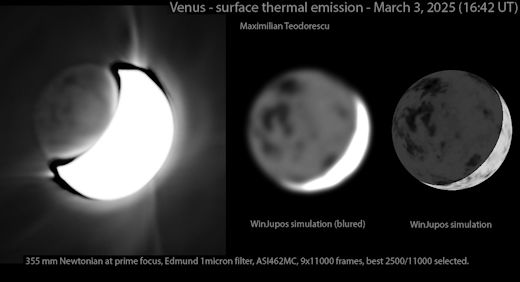
These images of Venus may remind some readers of a crescent Moon with Earthshine. There's a big difference, though. The night side of the Moon shines with light reflected from Earth. The night side of Venus, however, produces its own light. It's glowing because it is incredibly hot.
"I used a 1 μm infrared filter," explains Teodorescu. "That allows me to photograph Venus's thermal emission."
Ten years ago, Japan's Akatsuki spacecraft (also known as the "Venus Climate Orbiter") used infrared cameras to map the surface of Venus. According to the data, the average surface temperature is 698 K (800 F), hot enough to melt lead. Here is a global map from Akatsuki:
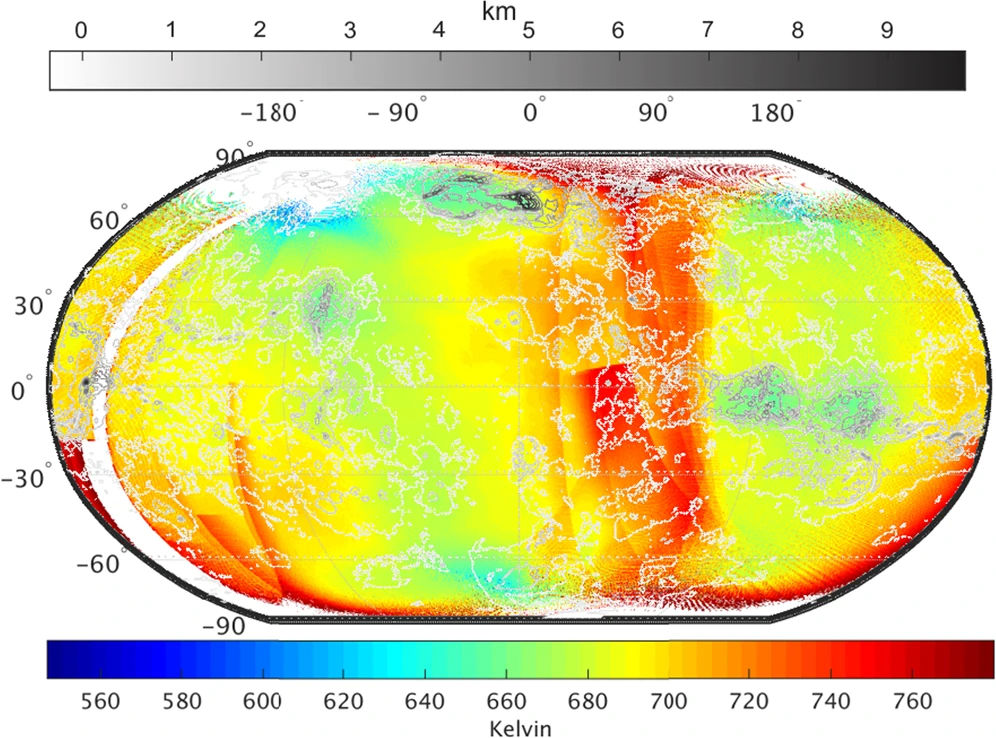
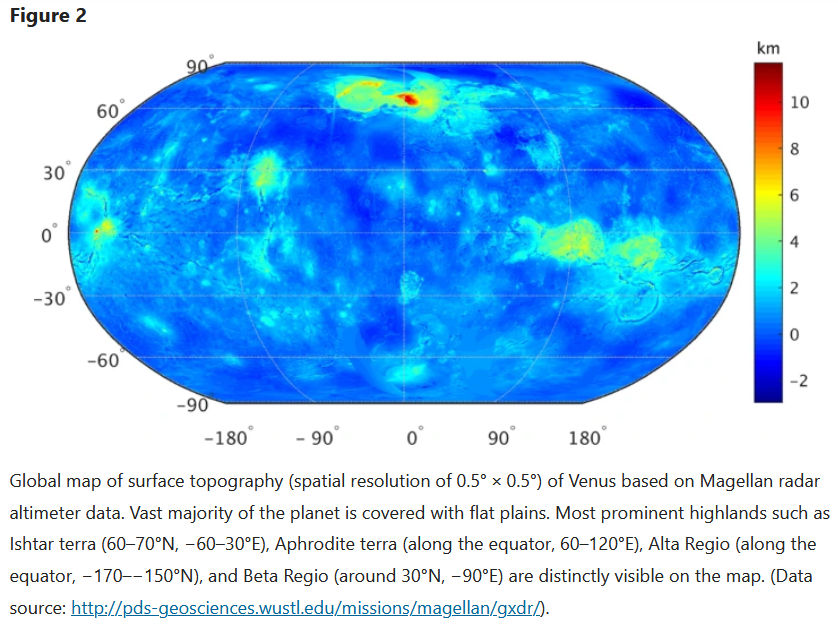
In this map, colors represent temperature. The white contours trace altitude measured by a radar on the Magellan spacecraft. High places are cooler; low places are warmer. Some of these cool regions (Ishtar terra, Aphrodite terra, Alta Regio, and Beta Regio) also appear in Teodorescu's image.
Amateur astronomers with infrared filters are encouraged to check out Venus this month. The night side is hot stuff.
more images: from Philip Smith of Manorville, NY; from Frank J Melillo of Holtsville, NY
Realtime Venus Photo Gallery
Free: Spaceweather.com Newsletter
THE GALACTIC CENTER PENDANT: "A timeless pull, no force can splinter. Our love burns bright at the galactic center." This poem is printed on a card that comes with the Galactic Center Pendant. Made of handcrafted glass, the pendent flew to the stratosphere onboard a cosmic ray research balloon, floating 96,785 feet above Earth's surface:
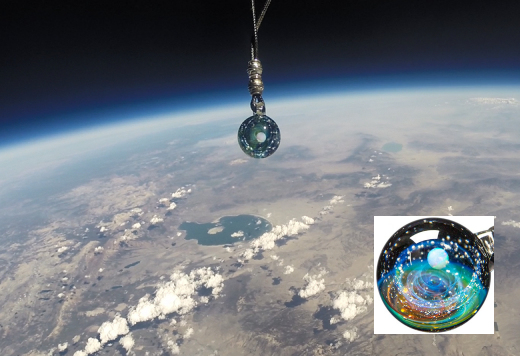
You can have it for $169.95. At the pendant's core is a nugget of blue opal surrounded by a swirl of air-bubble stars. It comes with a greeting card picturing the pendant in flight and telling the story of its journey to the edge of space and back--poetry included!
Far Out Gifts: Earth to Sky Store
All sales support hands-on STEM education
Realtime Space Weather Photo Gallery
Free: Spaceweather.com Newsletter
Realtime Aurora Photo Gallery
Free: Spaceweather.com Newsletter