THE SEVERE STORM IS SUBSIDING: For much of the past 24 hours, Earth's magnetic field has been reverberating from the impact of a CME on April 15th. It was a Cannibal CME, so it did an extra-good job sparking geomagnetic storms. For a brief time on April 16th, the storm became severe (category G4) with Northern Lights sighted as far south as France. The storm is subsiding now to category G1/G2, which could still produce high-latitude auroras on April 17th. Aurora alerts: SMS Text



AURORAS SIGHTED IN BOTH HEMISPHERES: New Zealand astronomer Ian Griffin was trying to sleep when the geomagnetic storm began. "I woke up early, disturbed by the light of the nearly full Moon, and saw the auroras out my bedroom window," says Griffin. "I dressed quickly and hot-footed it to a local beauty spot called Hoopers Inlet on the Otago Peninsula."
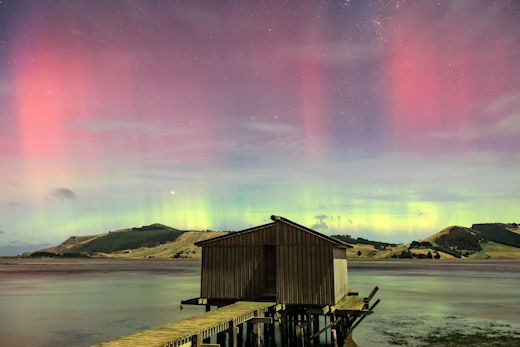
"Despite the bright moonlight, bright auroral rays were visible to the south between 3 am and dawn and my camera captured some lovely red hues," says Griffin. "Now I just have to keep awake for the day job! What a night!"
In 2002, NASA did an important aurora experiment. They flew two spacecraft over the poles--one north and one south--to observe auroras simultaneously at opposite ends of the Earth. The results: Northern and Southern Lights appear at the same time and are *almost* mirror images of each other.
It comes as no surprise, therefore, that auroras were also dancing half a world away from New Zealand in the northern hemisphere. Marek Nikodem sends this picture from Szubin, Poland:
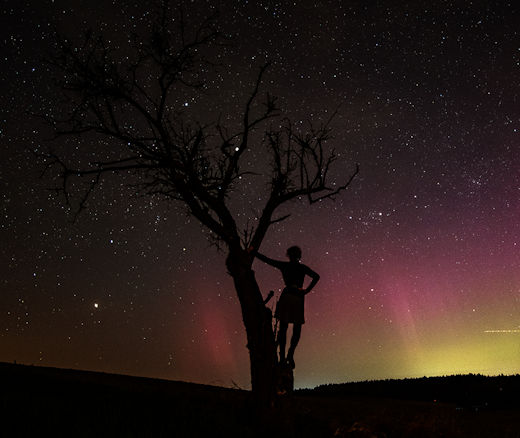
"Here in Poland, the aurora is a relatively rare phenomenon," says Nikodem. "Taking advantage of the good weather, I went out of town with my girlfriend to see the show. An hour before midnight, the aurora was at its most spectacular."
Photos of the storm are still arriving. Browse the gallery to see the latest:
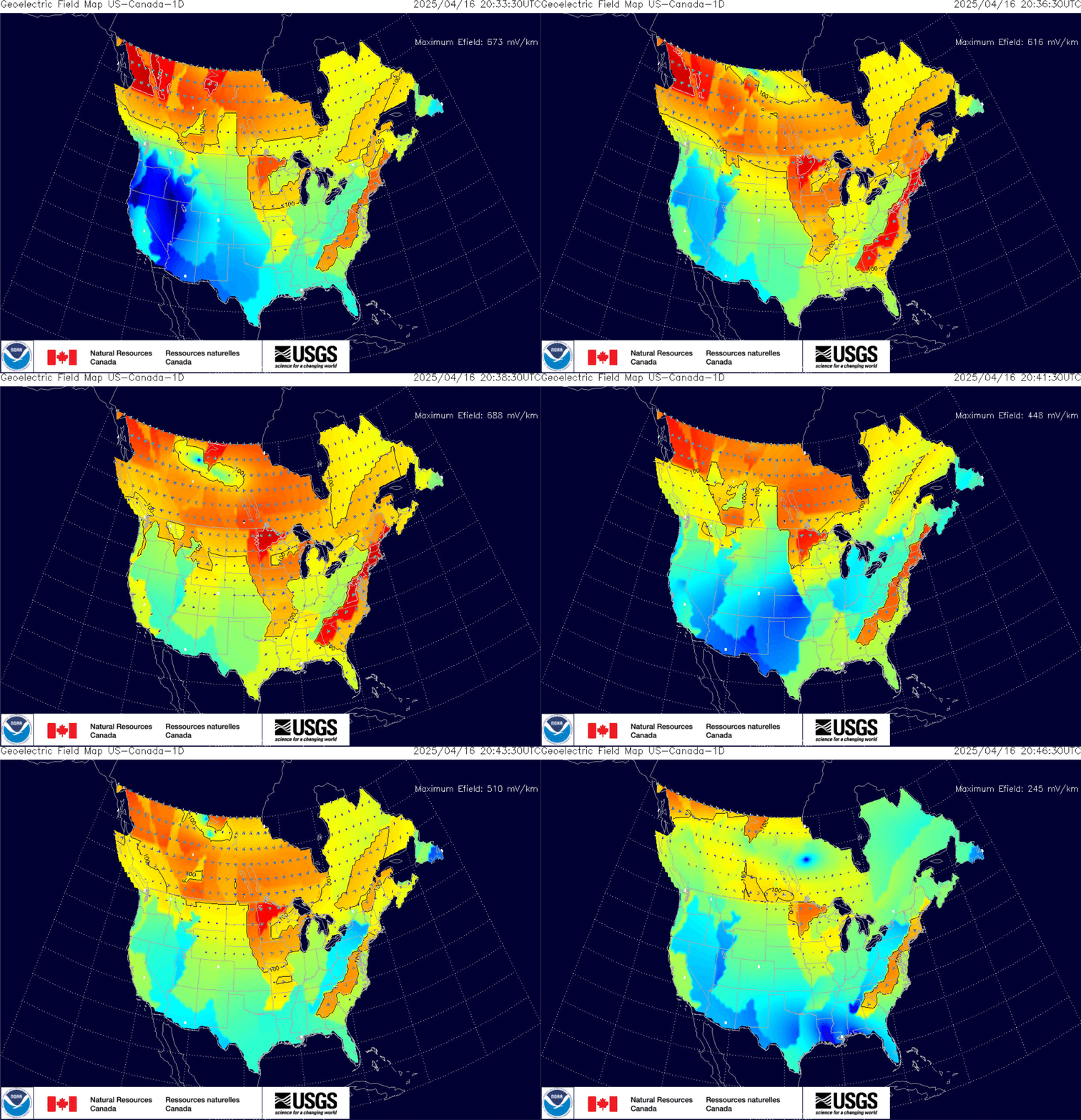
Realtime Aurora Photo Gallery
Free: Spaceweather.com Newsletter
TOMATO SEEDS FROM SPACE: Spring has arrived, which means it's time to plant your space garden. These tomato seeds have flown to the edge of space onboard an Earth to Sky Calculus cosmic ray research balloon:
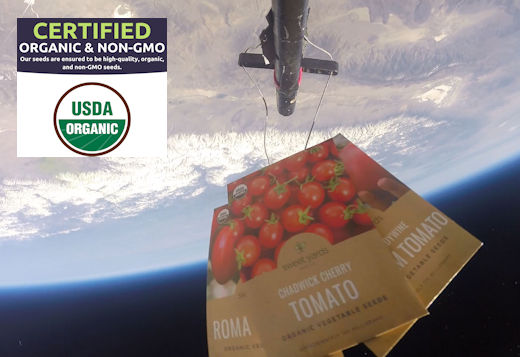
You can have a full packet for $49.95. Space seeds make a great DIY science project. During the flight, they spent more than 3 hours floating through the stratosphere, exposed to temperatures as low as -62 C and cosmic ray fluxes 100x Earth-normal. Each space-flown packet comes with an identical control packet, which remained on Earth during the flight. Plant them side by side to discover the difference space travel makes.
Far Out Gifts: Earth to Sky Store
All sales support hands-on STEM education
Realtime Space Weather Photo Gallery
Free: Spaceweather.com Newsletter
Realtime Comet Photo Gallery
Free: Spaceweather.com Newsletter