GEOMAGNETIC STORM WATCH (G2): Moderate (G2) geomagnetic storms are possible on April 22-23 when a co-rotating interaction region (CIR) is expected to hit Earth's magnetic field. CIRs are transition zones between fast- and slow-moving streams of solar wind; they contain enhanced magnetic fields akin to those of CMEs. Sky watchers across Canada and northern-tier US states from New York to Washington should be alert for auroras. Aurora alerts: SMS Text.

A LARGE HOLE IN THE SUN'S ATMOSPHERE: A large hole in the sun's atmosphere is facing Earth and spewing a stream of fast-moving solar wind directly toward our planet. NASA's Solar Dynamics Observatory photographed the opening, which stretches almost a million kilometers across the sun's southern hemisphere:
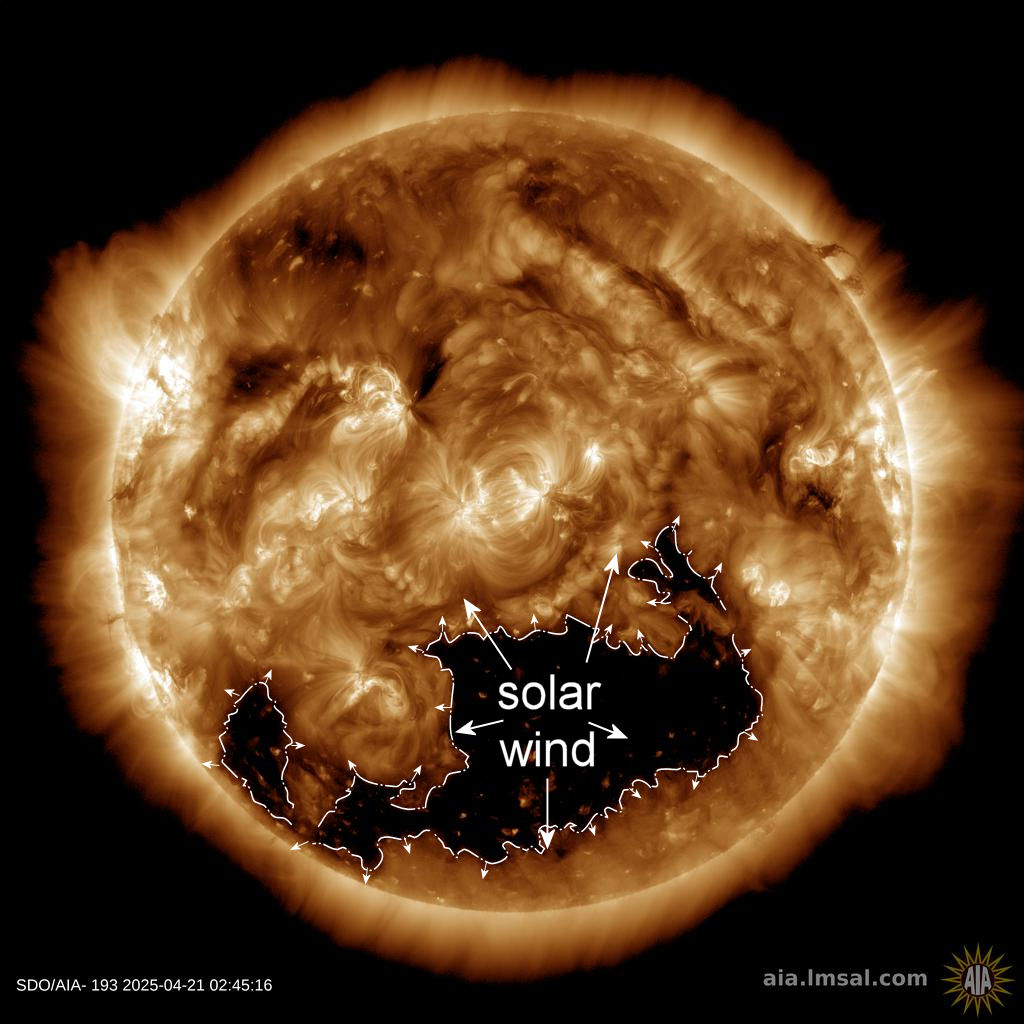
This is a "coronal hole"--a vast region in the sun's atmosphere where magnetic fields have opened up, allowing solar wind to escape. The hole looks dark because hot gas normally contained there is missing. It's on its way to Earth.
At the top of the page, we predicted a CIR (co-rotating interaction region) would hit Earth on on April 22nd. This giant hole is the driving force behind it. Fast solar wind flowing from the hole is compressing slower-moving solar wind in front of it, creating CME-like shock waves and magnetic fields that comprise the CIR.
G2-class geomagnetic storms are likely when the CIR reaches Earth. Sign up for Space Weather Alerts to receive an instant text message when the storm begins.
Realtime Space Weather Photo Gallery
Free: Spaceweather.com Newsletter
MIRACLE SHOT OF A GREEN FLASH: Green flashes from the setting sun typically last no more than a single second. "What are the odds?" wonders astronomer Petr Horálek, who caught the silhouette of a jet airplane under at least two green flashes during that brief sliver of time:
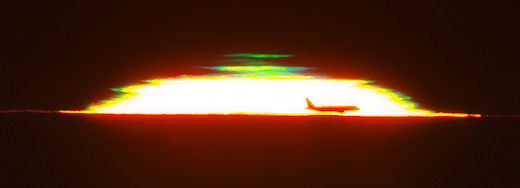
"Yesterday evening, when photographing the sunset from the Vicuña region of Chile, I was incredibly lucky with one shot," says Horálek. "An airplane landing at La Serena airport flew just in front of the sun while multiple green flashes were underway. It all took just a fragment of a second."
Many more green flashes may be found in our photo gallery. Take your time:
Realtime Green Flash Photo Gallery
Free: Spaceweather.com Newsletter
CONSTELLATION CAT CRYSTAL NIGHT LIGHT: It's the most far-out feline night light ever--the Constellation Cat. On March 21, 2025, the students of Earth to Sky Calculus launched it to the stratosphere onboard a giant helium balloon.
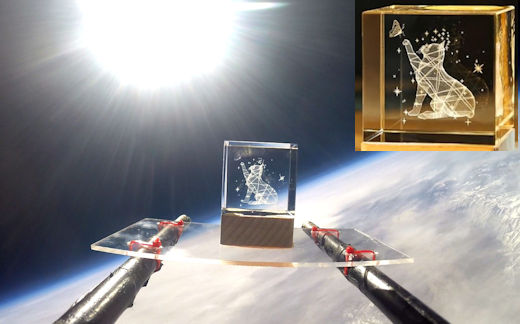
You can have it for $129.95. Outlined by stars in the style of an astronomical constellation, the laser-etched cat comes with an LED stand that produces a soothing glow for your bedside table. Also included: A unique greeting card shows the cat in flight and tells the story of its journey to the edge of space.

Far Out Gifts: Earth to Sky Store
All sales support hands-on STEM education
Realtime Aurora Photo Gallery
Free: Spaceweather.com Newsletter
Realtime Comet Photo Gallery
Free: Spaceweather.com Newsletter