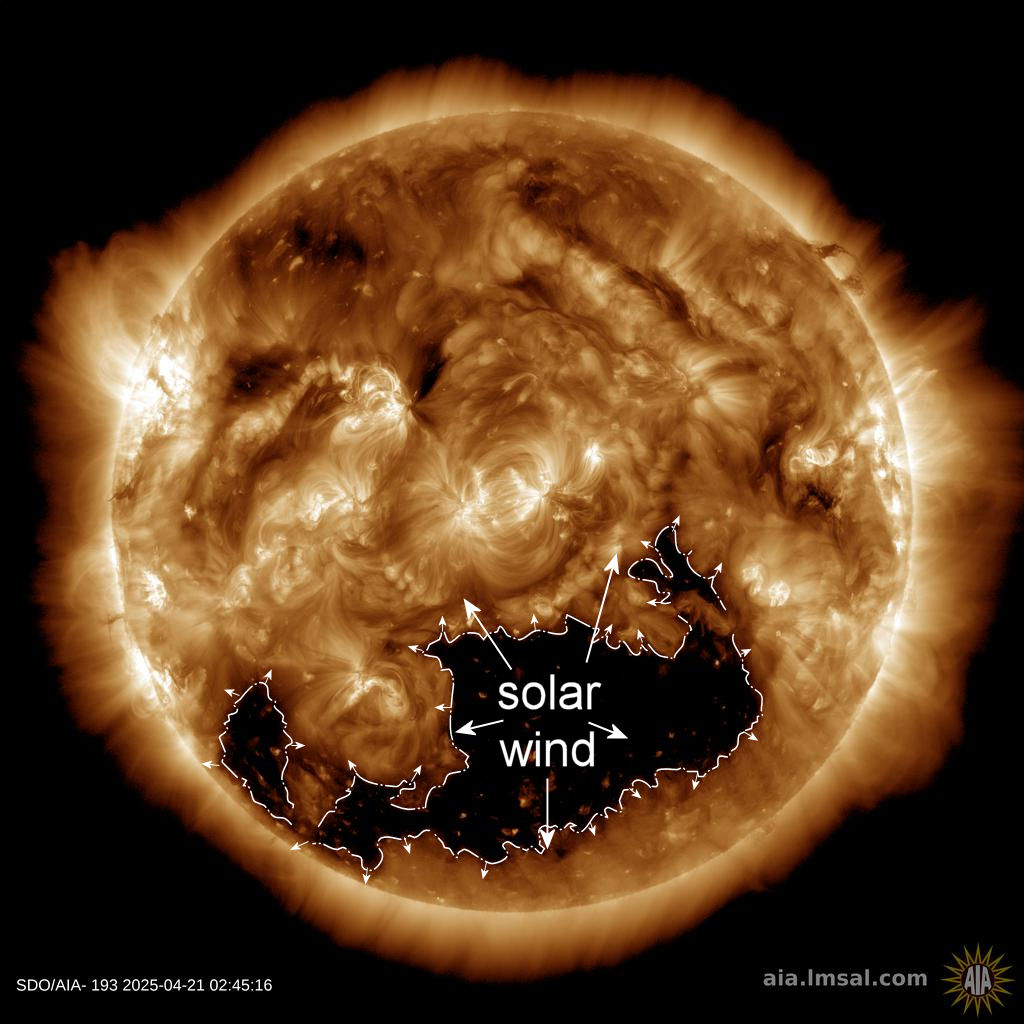
THE SOLAR WIND HAS ARRIVED: A stream of solar wind flowing from a large hole in the sun's atmosphere is buffeting Earth's magnetosphere, setting the stage for possible geomagnetic storms. NOAA forecasters predict a G2-class event on April 22nd. Sky watchers across Canada and northern-tier US states from New York to Washington should be alert for auroras. Aurora alerts: SMS Text.

The solar wind sparked these "tie dye" auroras over Fairbanks, Alaska:
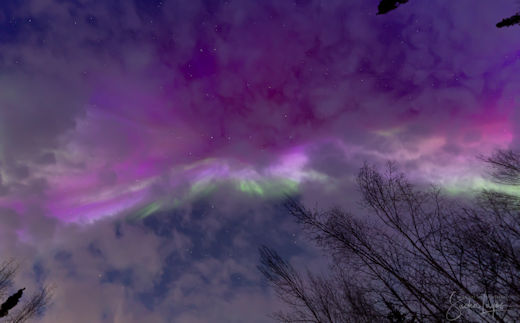
"The twilight skies of spring bring about some of the most beautiful pink and purple colors," says photographer Sacha Layos. "We are nearly out of skies dark enough for aurora. If this was the end of the season, it was a great one!"
Realtime Aurora Photo Gallery
Free: Spaceweather.com Newsletter
SPACEX JUST PUNCHED A HOLE IN THE IONOSPHERE: A Falcon 9 rocket lifted off from Cape Canaveral last night (April 21) on a rideshare mission called "Bandwagon-3." In Puerto Rico, Frankie Lucena watched the rocket fly overhead and, then, punch a hole in the ionosphere:
"There's a red glow inside the broad cone of the exhaust," points out Lucena. "That's the ionospheric hole."
If you use GPS, you have experience with the ionosphere. Radio signals passing through the ionosphere can be bent and distorted, causing errors in GPS navigation when the ionosphere is disturbed. Lucena witnessed a significant disturbance.
Water spraying from the Falcon 9 rocket's engine quenched local ionization by as much as 70%, essentially erasing the ionosphere along the rocket’s path. The resulting "hole" was ~100 km long. For reasons having to do with chemistry, ionospheric holes emit a red glow (630 nm) similar to the aurora borealis.
Once rare, ionospheric holes are increasingly common. Ham radio operators may notice them when shortwave signals fail to skip over the horizon. Newly-formed holes can also cause sudden GPS errors. On the bright side, these effects are temporary; re-ionization occurs as soon as the sun comes up again.
Readers, did you see a red glow from last night’s SpaceX launch? Submit your photos here.
more images: from Joe Wheelock of McDonald Observatory, Texas; from David Dickinson of Youngsville, North Carolina; from Dr. Gilbert Plumer of Rockledge, Florida
Realtime Space Weather Photo Gallery
Free: Spaceweather.com Newsletter
CONSTELLATION CAT CRYSTAL NIGHT LIGHT: It's the most far-out feline night light ever--the Constellation Cat. On March 21, 2025, the students of Earth to Sky Calculus launched it to the stratosphere onboard a giant helium balloon.
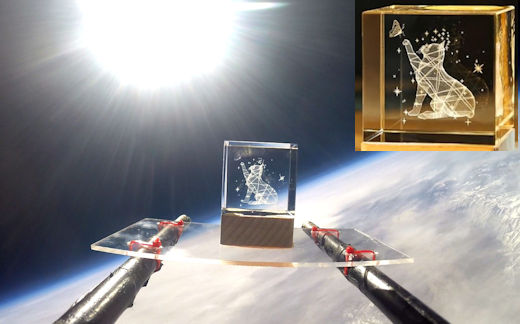
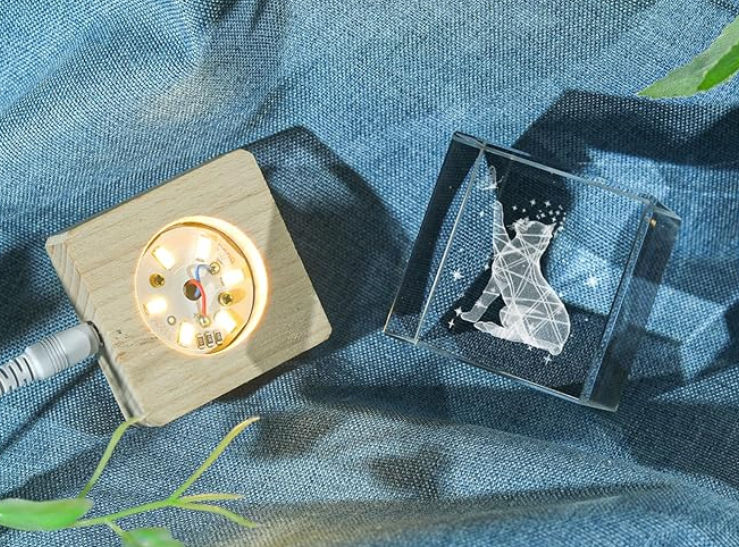
You can have it for $129.95. Outlined by stars in the style of an astronomical constellation, the laser-etched cat comes with an LED stand that produces a soothing glow for your bedside table. Also included: A unique greeting card shows the cat in flight and tells the story of its journey to the edge of space.
Far Out Gifts: Earth to Sky Store
All sales support hands-on STEM education
Realtime Aurora Photo Gallery
Free: Spaceweather.com Newsletter
Realtime Comet Photo Gallery
Free: Spaceweather.com Newsletter