ONE YEAR AGO--AN HISTORIC GEOMAGNETIC STORM: Do you remember where you were one year ago today? Wherever it was, there were probably auroras overhead. On May 10-11, 2024, an extreme geomagnetic storm sparked auroras over all seven continents and almost every country on Earth. Sightings in the South Pacific and Africa confirm the event was a true Great Storm.
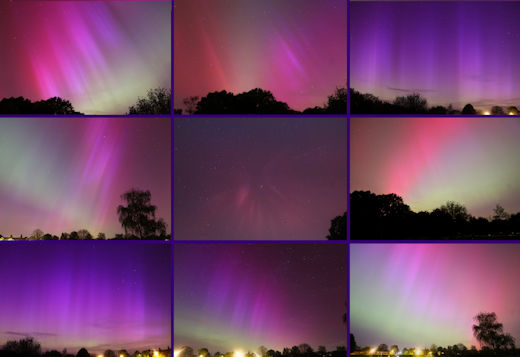
"I shall remember that night for as long as I have the mental capacity to do so," says Jason Evans, who created this montage of his favorite photos from Hiltingbury, UK:
Did you miss the show? Revisit the event using the Space Weather Time Machine: May 9, May 10, May 11, and May 12, 2024.
THE MYSTERIOUS WILSON EFFECT: Yesterday, Dave Wilson of Inverness, Scotland, pointed his telescope at the sun and captured a phenomenon rarely seen by amateur astronomers. It's called the "Wilson effect:"
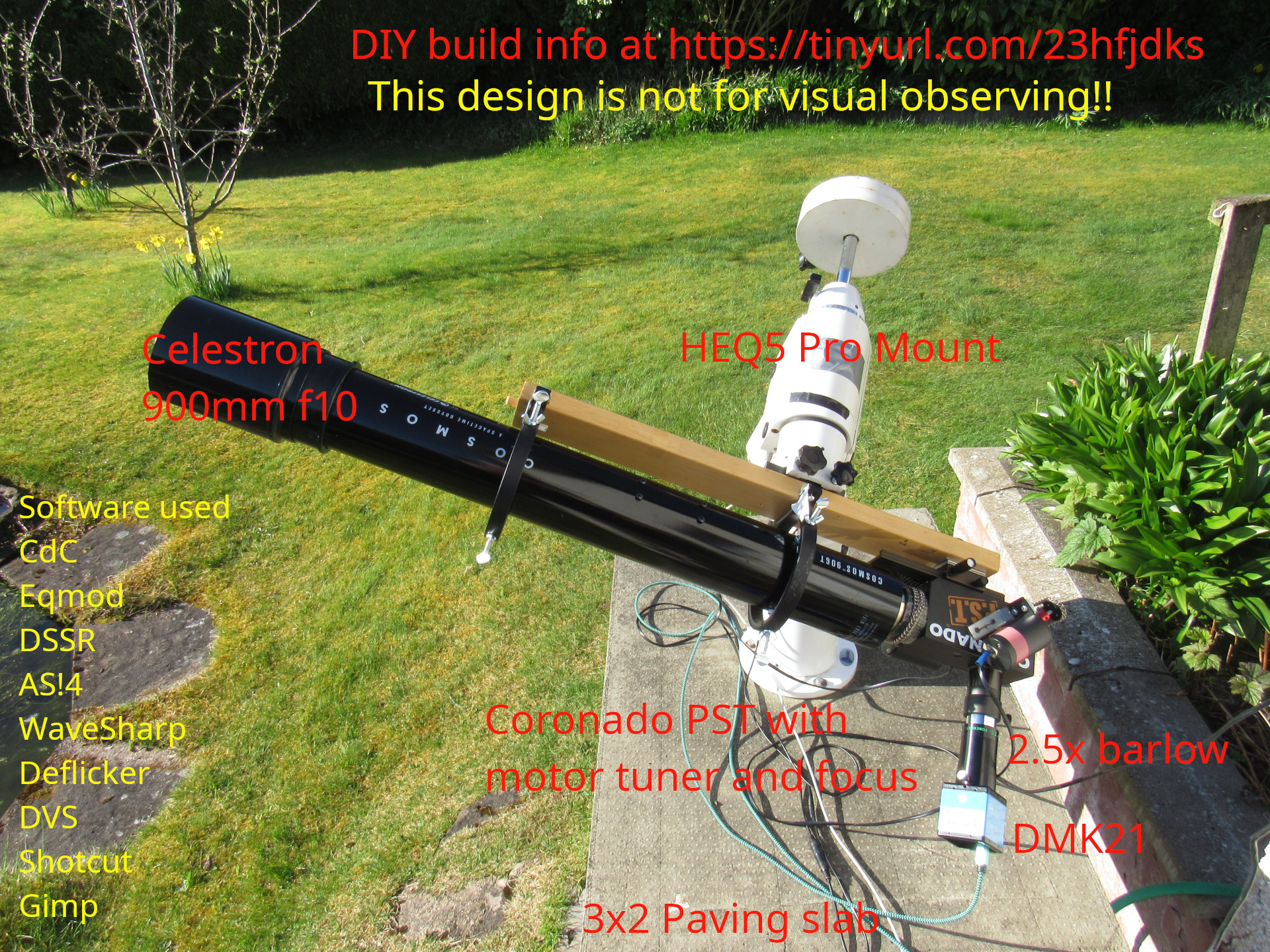

"This video shows giant sunspot 4079 approaching the western limb," says Wilson. "I think it shows the Wilson effect, which states that sunspots are actually depressions in the solar surface."
Scottish astronomer Alexander Wilson discovered the effect in 1769 during Solar Cycle 2. In daily observations, he noticed that sunspots approaching the sun's limb were foreshortened and sometimes appeared to be sunken in the middle. (The same observations proved that sunspots were features on the solar surface, not, say, dark satellites orbiting just above the sun.)
The Wilson effect has been debated for more than 250 years. Is it real? Some researchers in the 1950s argued that it was a purely psychological effect. Others retorted that so many observers couldn't be crazy; there was too much photographic evidence.
Although the cause of the Wilson effect is still debated, most modern researchers take it at face value: Sunspots are shallow depressions. One idea holds that high pressure systems trapped in the magnetic canopies of sunspots press down on the underlying core, creating a dark bowl.
Realtime Space Weather Photo Gallery
Free: Spaceweather.com Newsletter
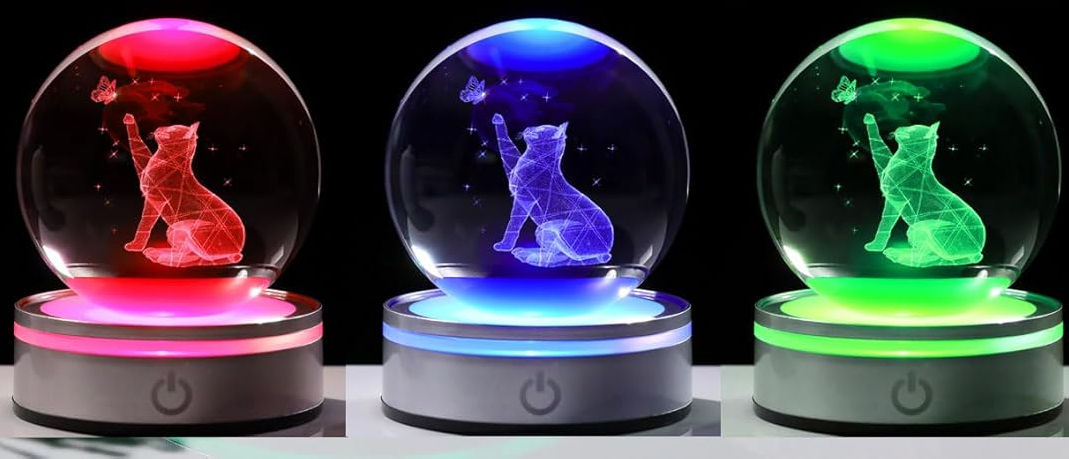
CONSTELLATION CAT NIGHT LIGHT (CRYSTAL BALL): It's the most far-out feline night light ever--the Constellation Cat Crystal Ball. On April 23, 2025, the students of Earth to Sky Calculus launched it to the stratosphere onboard a giant helium balloon.
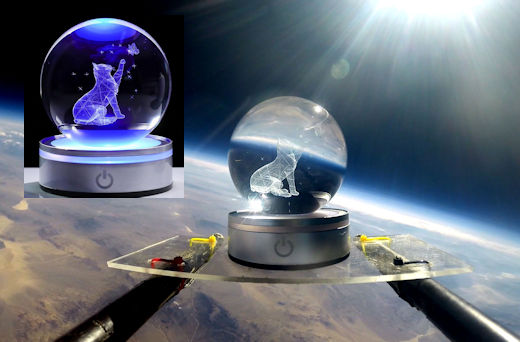
You can have it for $139.95. Outlined by stars in the style of an astronomical constellation, the laser-etched cat comes with an LED stand that produces a soothing glow for your bedside table. Also included: A unique greeting card shows the crystal ball in flight and tells the story of its journey to the edge of space.
Far Out Gifts: Earth to Sky Store
All sales support hands-on STEM education
Realtime Aurora Photo Gallery
Free: Spaceweather.com Newsletter
Realtime Comet Photo Gallery
Free: Spaceweather.com Newsletter