GLANCING-BLOW CME: A CME that left the sun 3 days ago when a magnetic filament erupted near the sun's equator could graze Earth on June 7th. NOAA forecasters predict a minor G1-class geomagnetic storm in response to the glancing blow. Aurora alerts: SMS Text

NOT ALL OF THOSE LIGHTS WERE AURORAS: Last week's severe geomagnetic storm sparked Northern Lights from Canada to the US Gulf coast. Upon closer inspection, not all of those lights were auroras. "I've never seen a streak like this before," says Ken Wegmuller of Whistler, British Columbia, who photographed the phenomenon using a Sony A7IV:
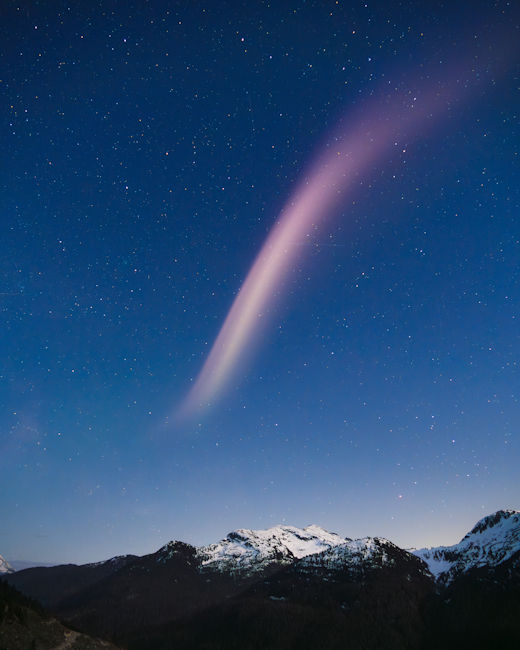
This is STEVE--short for "Strong Thermal Emission Velocity Enhancement."
Discovered by citizen scientists less than 10 years ago, STEVE looks like an aurora, but it is not. The phenomenon is caused by hot (3000°C) ribbons of gas flowing through Earth’s magnetosphere at speeds exceeding 6 km/s (13,000 mph). These ribbons produce a soft purple glow associated with nitrogen in the upper atmosphere.
Realtime STEVE Photo Gallery
Free: Spaceweather.com Newsletter
SOLAR SYSTEM STUD EARRINGS: These earrings have flown to the edge of space--and all eight planets are included! On May 21, 2025, the students of Earth to Sky Calculus launched the Solar System Stud Earrings to the stratosphere onboard a cosmic ray research balloon. At the apex of the flight, they floated 104,655 feet high:
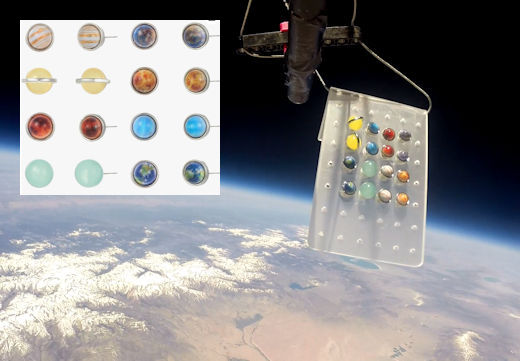
You can have the complete set for $149.95. Only Pluto is omitted from the collection; the dwarf planet was too small for human earlobes. The earrings come with a greeting card showing the studs in flight and telling the story of their journey to the stratosphere and back again.
Far Out Gifts: Earth to Sky Store
All sales support hands-on STEM education
Realtime Aurora Photo Gallery
Free: Spaceweather.com Newsletter
Realtime Space Weather Photo Gallery
Free: Spaceweather.com Newsletter
Realtime Noctilucent Cloud Photo Gallery
Free: Spaceweather.com Newsletter