ANOTHER GLANCING-BLOW CME: Minor G1-class geomagnetic storms are possible this week when another CME is expected to reach Earth. NASA models suggest a glancing blow on June 9th. High-latitude sky watchers should be alert for auroras. Aurora alerts: SMS Text


AURORAS AND NOCTILUCENT CLOUDS: Last night in Calgary, Alberta, nature photographer Harlan Thomas saw his first noctilucent clouds (NLCs) of the season. They appeared directly beneath a shimmering curtain of green auroras:
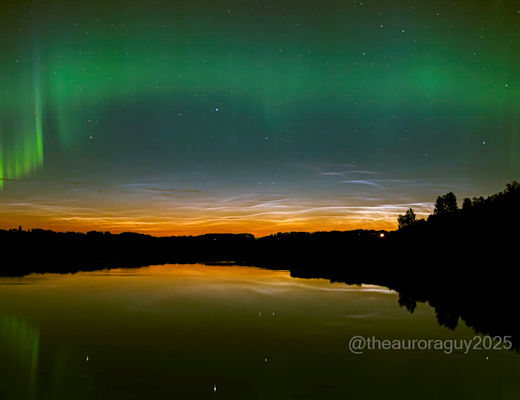
"There's nothing quite like seeing the aurora borealis and noctilucent clouds at the same time," says Thomas. "It's the perfect combination."
The auroras were caused by a glancing blow from a CME--a brief display that quickly faded. The NLCs, however, are here to stay for the summer.
NLCs are Earth’s highest clouds. Floating at the edge of space about 83 km high, they form when summertime wisps of water vapor rise up to the mesosphere, allowing water to crystallize around specks of meteor smoke. The season for bright naked-eye NLCs typically stretches from June through August, so stay tuned for more displays of electric blue.
Realtime Space Weather Photo Gallery
Free: Spaceweather.com Newsletter
SOLAR SYSTEM STUD EARRINGS: These earrings have flown to the edge of space--and all eight planets are included! On May 21, 2025, the students of Earth to Sky Calculus launched the Solar System Stud Earrings to the stratosphere onboard a cosmic ray research balloon. At the apex of the flight, they floated 104,655 feet high:
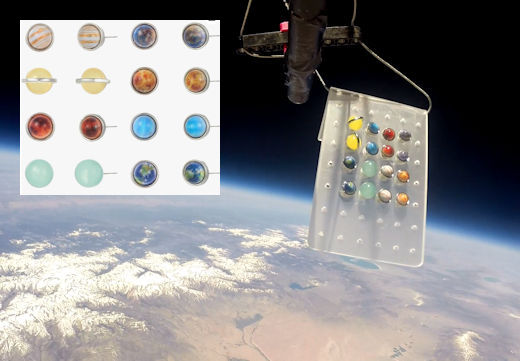
You can have the complete set for $149.95. Only Pluto is omitted from the collection; the dwarf planet was too small for human earlobes. The earrings come with a greeting card showing the studs in flight and telling the story of their journey to the stratosphere and back again.
Far Out Gifts: Earth to Sky Store
All sales support hands-on STEM education
Realtime Aurora Photo Gallery
Free: Spaceweather.com Newsletter
Realtime Noctilucent Cloud Photo Gallery
Free: Spaceweather.com Newsletter