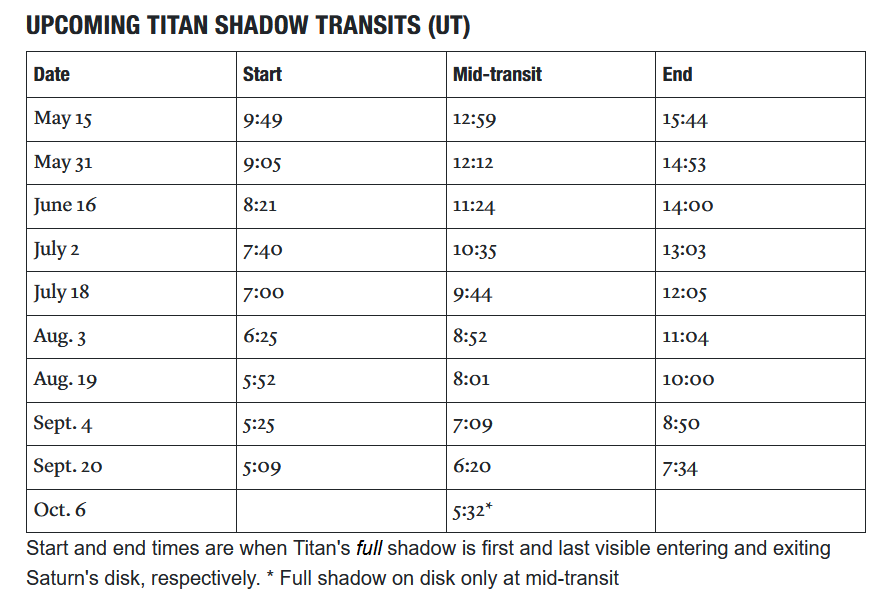
A SHADOW IS ABOUT TO FALL ACROSS SATURN: Amateur astronomers, prepare your telescopes. The shadow of Titan is about to fall across Saturn. It looks like this. The transit will occur on Sunday, Aug. 3rd, between 06:25 and 1104 UTC. Submit your photos here.
SPACE HURRICANES ARE REAL: Hurricane season just got worse. Chinese researchers have discovered a new kind of storm at the edge of space. They call it a "space hurricane."
The first known example appeared in Defense Meteorological Satellite (DMSP) images on Aug. 20, 2014. A massive swirl of charged particles appeared above the North Pole. Spinning silently, it resembled a terrestrial hurricane in shape, with spiral arms and a calm "eye" glowing with auroral light. A detailed study of this event was published in the July 2025 edition of Space Weather.
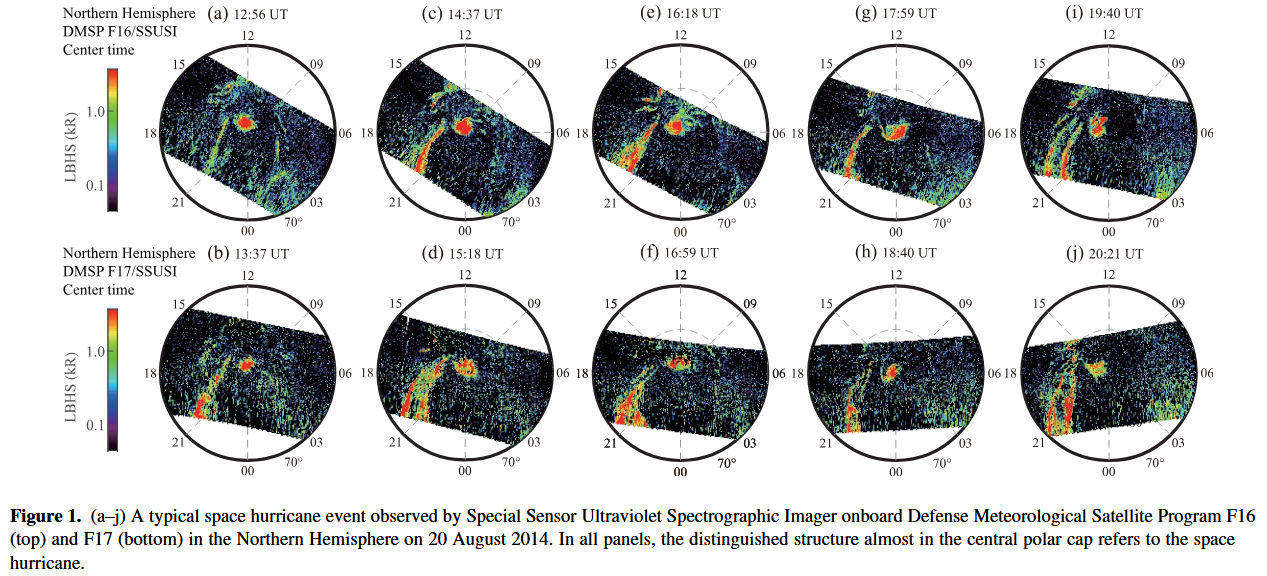
Above: A ' space hurricane' observed by DMSP satellites. Note the eye and spiral arms.
"The space hurricane formed during very quiet conditions," says lead author Sheng Lu of Shandong University. "Solar activity was low."
Most researchers had overlooked these events because they weren't linked to solar storms. This team looked for auroras under calm conditions and found something new. The DMSP F17 satellite flew through the space hurricane's center; ten minutes later, SWARM B crossed the edge. Their data confirmed the hurricane was an active electrodynamic storm, not just an auroral display.
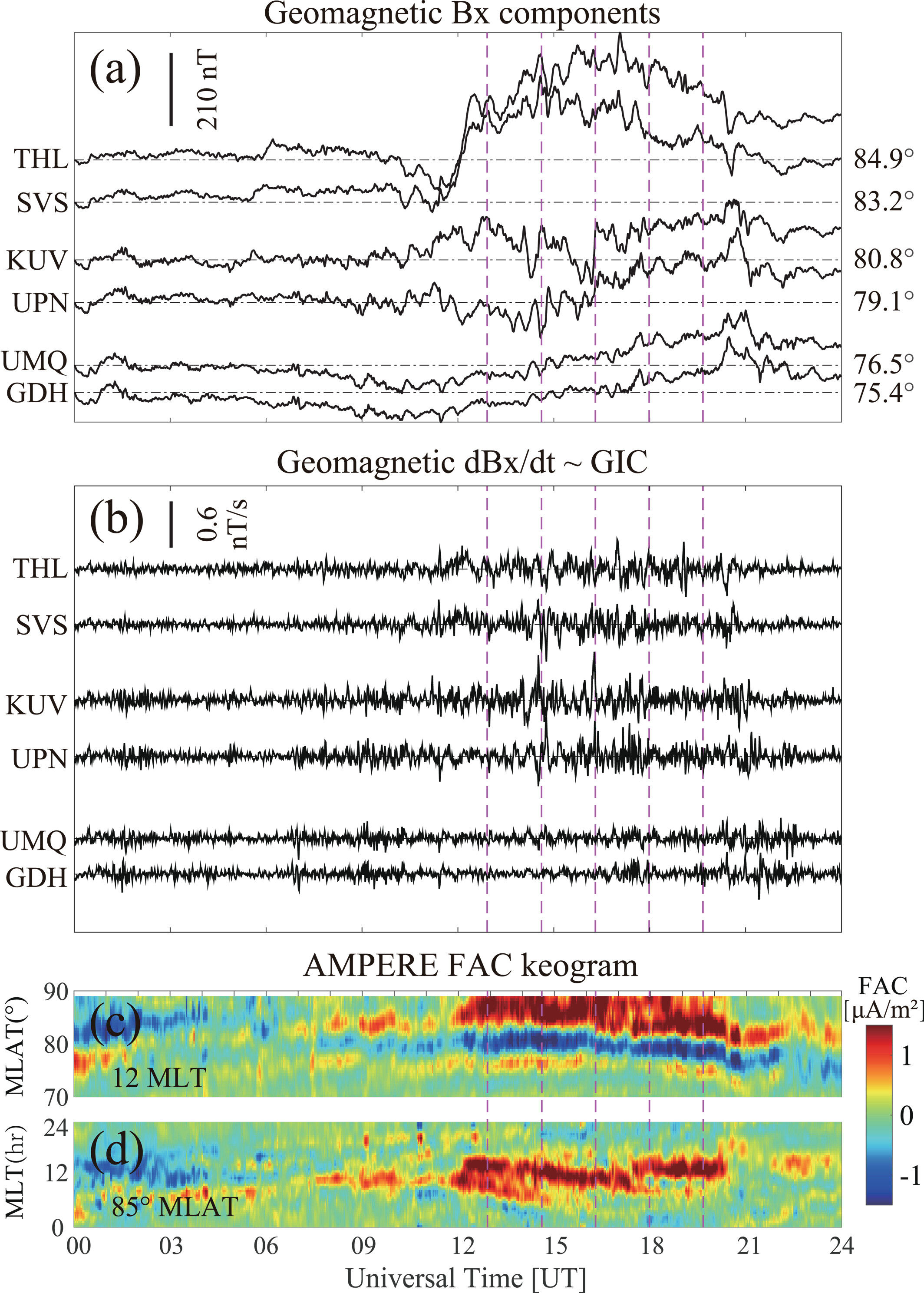
The hurricane's effects mimicked those of actual geomagnetic storms. Using GPS data from the Canadian High Arctic Ionospheric Network, the researchers found that satellite signals passing through the hurricane's edge experienced strong phase scintillations--a type of "twinkling" that can reduce GPS accuracy. Meanwhile, ground-based magnetometers in Greenland recorded sharp shifts in Earth's magnetic field as large as 400 nT--comparable to a G1-class geomagnetic storm.

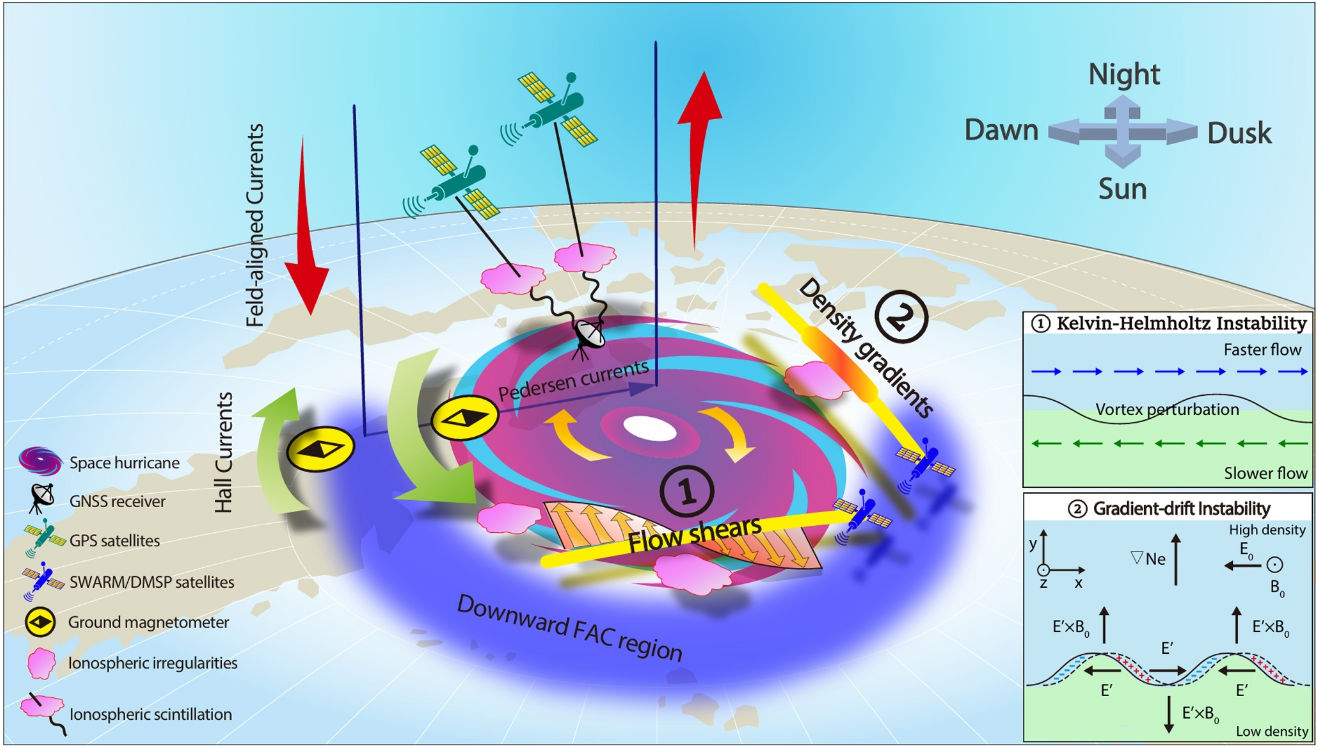
Above: The anatomy of a space hurricane. Credit: Lu et al (2025) [Expand]
Space hurricanes are stealthy, appearing when traditional metrics of space weather forecasting indicate little of interest. Note to forecasters: Not all storms come from the sun.
Want to learn more? Read the original research here.
Realtime Space Weather Photo Gallery
Free: Spaceweather.com Newsletter
NASA SPACEWALKER $1 COINS: The US Mint has just released a new set of limited edition $1 coins to honor NASA's astronaut core. Yesterday, the students of Earth to Sky Calculus launched them to the edge of space onboard a cosmic ray research balloon. Here they are, parachuting back from the stratosphere:
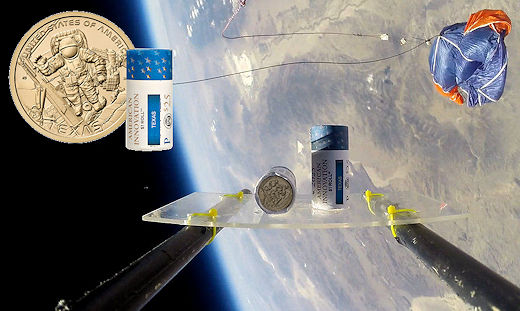
You can have a single coin for $49.95 or an entire unbroken roll for $299.95. No longer available from the US Mint, these rare coins flew 113,949 feet above the Sierra Nevada on July 31, 2025. One side shows an American astronaut conducting a spacewalk outside the International Space Station; the other side features the Statue of Liberty in profile.
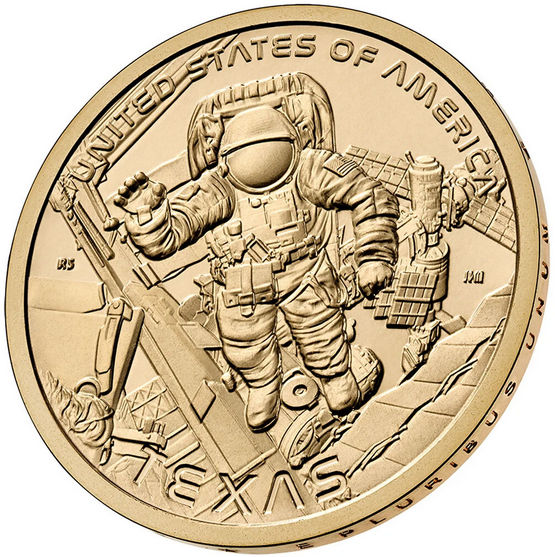
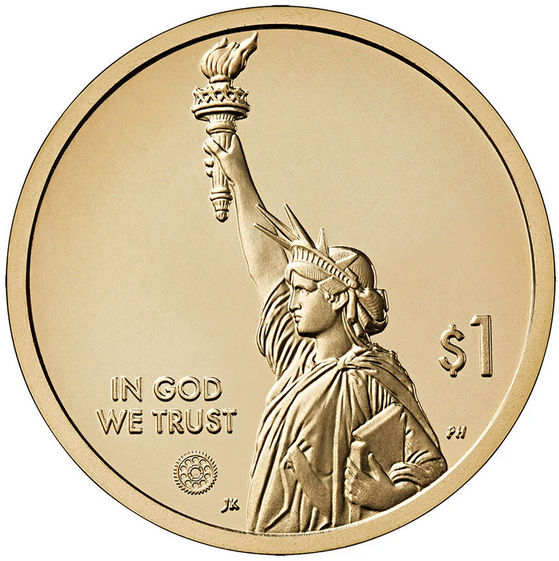
Bonus: If you need to, you can spend these coins. They're real legal tender.
The students are selling space coins to support to support their cosmic ray research program. (Helium is expensive!) Each order comes with a greeting card showing the coins in flight and telling the story of their journey to the stratosphere and back again.
Far Out Gifts: Earth to Sky Store
All sales support hands-on STEM education
Realtime Aurora Photo Gallery
Free: Spaceweather.com Newsletter
Realtime Noctilucent Cloud Photo Gallery
Free: Spaceweather.com Newsletter