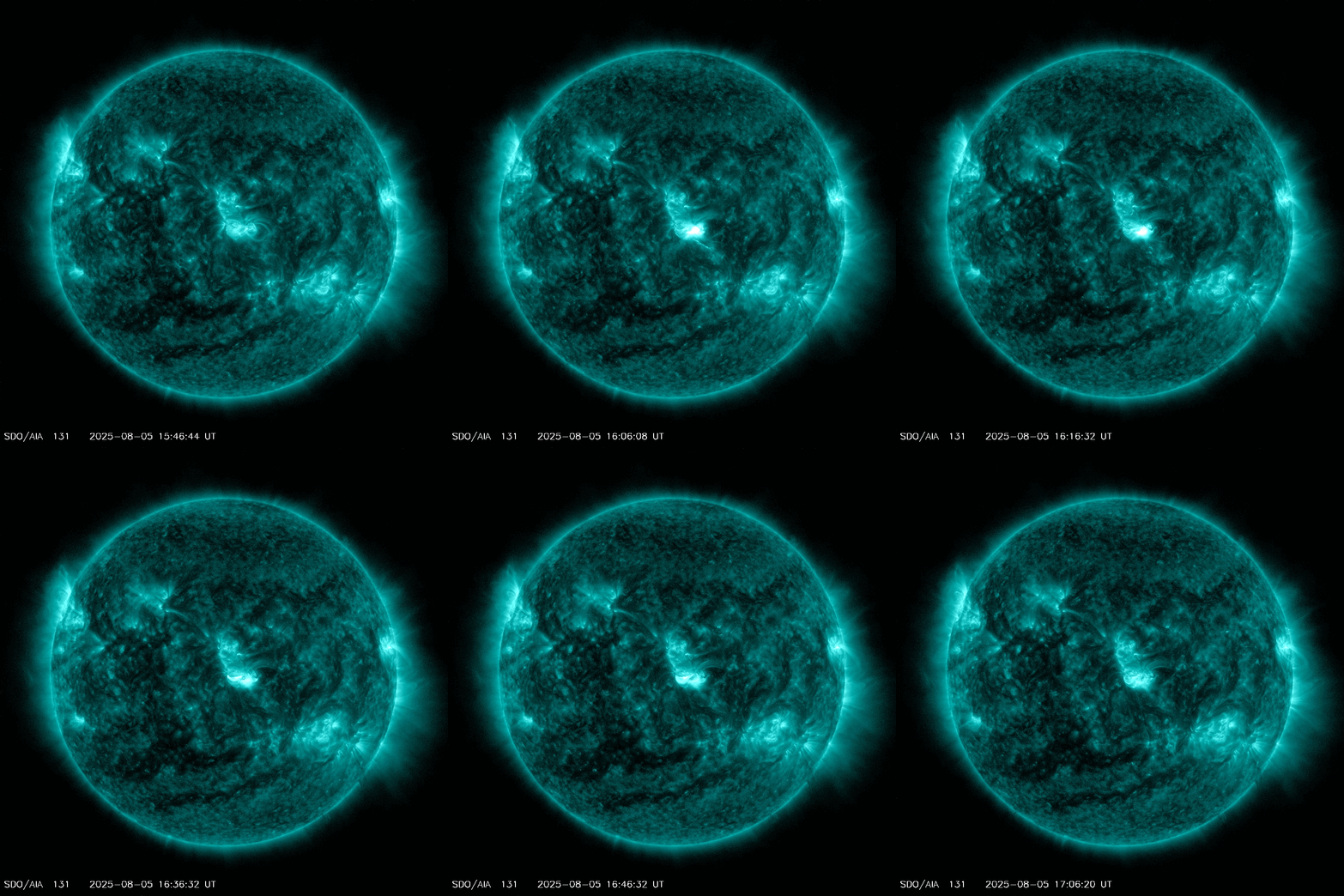
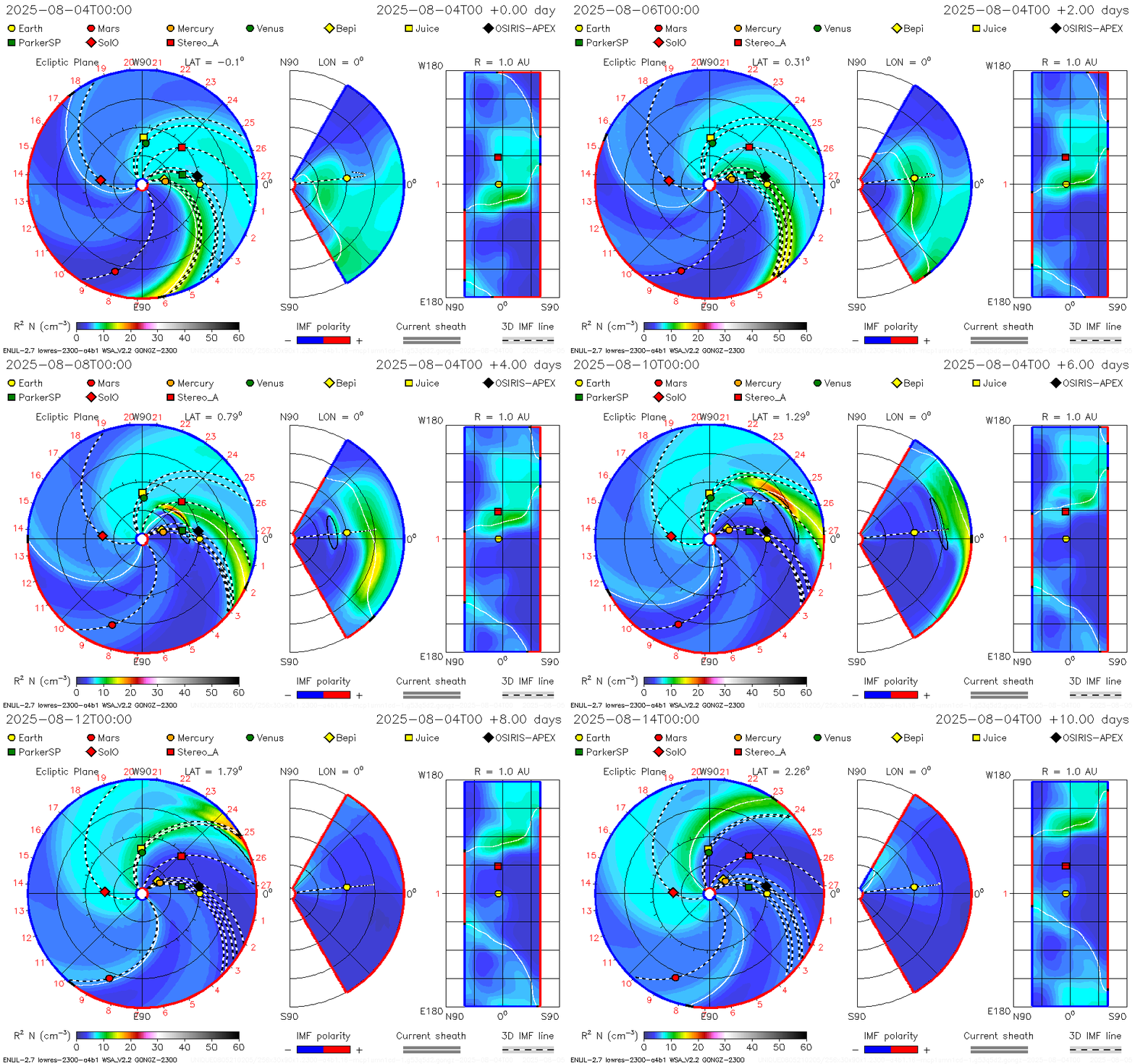
EARTH-DIRECTED CME (UPDATED): Yesterday, sunspot 4168 erupted, producing an M4.4-class solar flare (movie) and a partial-halo CME. According to a NASA model, the CME should graze Earth late on Aug. 8th. G2-class geomagnetic storms are possible when the CME arrives. CME impact alerts: SMS Text

THE GREAT STARLINK RE-ENTRY EVENT: SpaceX just conducted a giant uncontrolled experiment in atmospheric chemistry.
Earlier this year, analysts noticed something strange: Starlink satellites were falling out of the sky--a lot of them. Four to five per day were re-entering Earth's atmosphere and vaporizing in plain sight. This went on for months. Between December 2024 and July 2025, more than 525 Starlinks deorbited.
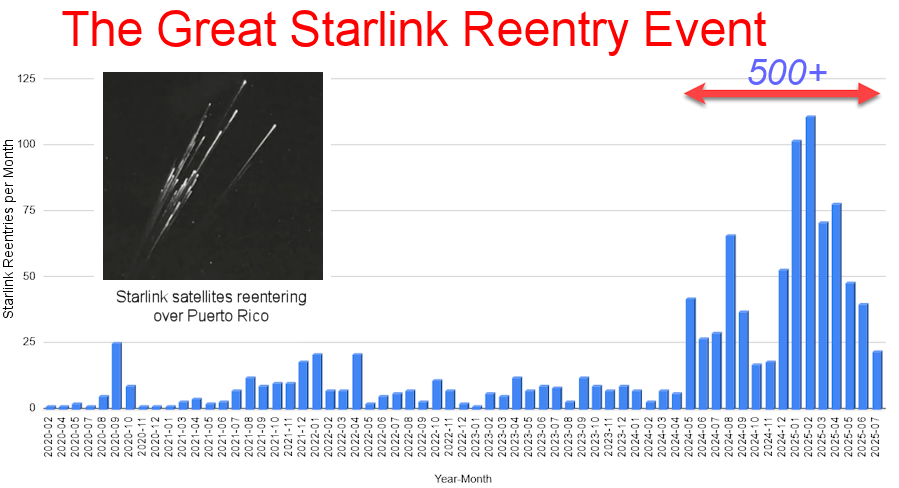
Above: The number of Starlinks deorbited each month since 2020.
What’s going on? In short: routine housecleaning. These were mostly first-generation (Gen1) satellites, deliberately retired to make room for newer models. SpaceX is currently launching up to 50 new Starlinks per week, maintaining a fleet of 8,000 satellites. Weeding out the old ones is just business as usual.
What’s not usual is the atmospheric fallout. The fiery re-entry of even one Gen1 Starlink satellite produces about 30 kilograms of aluminum oxide vapor, a compound that erodes the ozone layer. A new study finds these oxides have increased 8-fold between 2016 and 2022, and the Great Re-entry Event increases this pollution even more.
To put this into perspective: Before the first Starlink launches began in 2019, only about 40 to 50 satellites re-entered per year. SpaceX just brought down ten years' worth in only six months, adding an estimated 15,000 kilograms of aluminum oxide to the upper atmosphere.
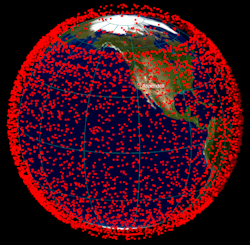 Right: A current map of Starlink satellites orbiting Earth. [more]
Even before the current surge, scientists were sounding the alarm. In February 2023, NASA flew a WB-57 aircraft over Alaska at 60,000 feet to collect stratospheric aerosols. A study published later that year found 10% of sampled particles contained aluminum and other metals from the "burn-up" of satellites.
With multiple companies racing to deploy megaconstellations, projections suggest more than 60,000 satellites could be in orbit by 2040. That means reentry debris could soon rival the natural influx of meteoroids, but with very different chemistry. Meteors are mostly rock. Satellites are mostly metal.
A simulation by NOAA scientists suggests that aluminum-rich space dust could heat the stratosphere and mesosphere by up to 1.5°C, and slow the southern polar vortex, potentially altering global weather patterns.
What happens next? We’re about to find out.
Realtime Space Weather Photo Gallery
Free: Spaceweather.com Newsletter
NASA SPACEWALKER $1 COINS: The US Mint has just released a new set of limited edition $1 coins to honor NASA's astronaut corps. On July 31st, the students of Earth to Sky Calculus launched them to the edge of space onboard a cosmic ray research balloon. Here they are, parachuting back from the stratosphere:
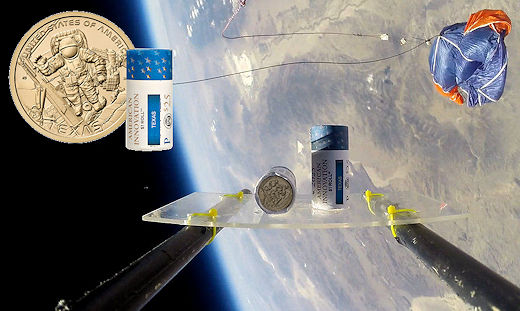
You can have a single coin for $49.95 or an entire unbroken roll for $299.95. No longer available from the US Mint, these rare coins flew 113,949 feet above the Sierra Nevada. One side shows an American astronaut conducting a spacewalk outside the International Space Station; the other side features the Statue of Liberty in profile.
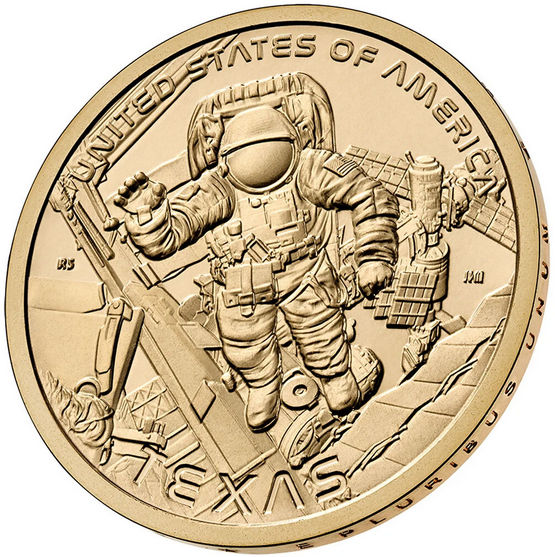

Bonus: If you need to, you can spend these coins. They're real legal tender.
The students are selling space coins to support to support their cosmic ray research program. (Helium is expensive!) Each order comes with a greeting card showing the coins in flight and telling the story of their journey to the stratosphere and back again.
Far Out Gifts: Earth to Sky Store
All sales support hands-on STEM education
Realtime Comet ATLAS Photo Gallery
Free: Spaceweather.com Newsletter
Realtime Aurora Photo Gallery
Free: Spaceweather.com Newsletter
Realtime Noctilucent Cloud Photo Gallery
Free: Spaceweather.com Newsletter