THE 'CIR' MIGHT HAVE ARRIVED: Solar wind data suggest that a co-rotating interaction region (CIR) might have hit Earth around 1200 UTC on Aug. 18th. The impact did not immediately produce a geomagnetic storm, however, minor storms may yet develop as Earth moves deeper into the CME-like sandwich of solar wind streams. HIgh-latitude sky watchers should remain alert for auroras on Aug. 19th. Aurora alerts: SMS Text
LAST CHANCE TO SEE TITAN'S SHADOW: Time is running out to witness a rare spectacle on Saturn. Since May, amateur astronomers have been spotting the shadow of Titan--Saturn's strangely Earthlike moon--as it glides across the ringed planet’s cloudtops.
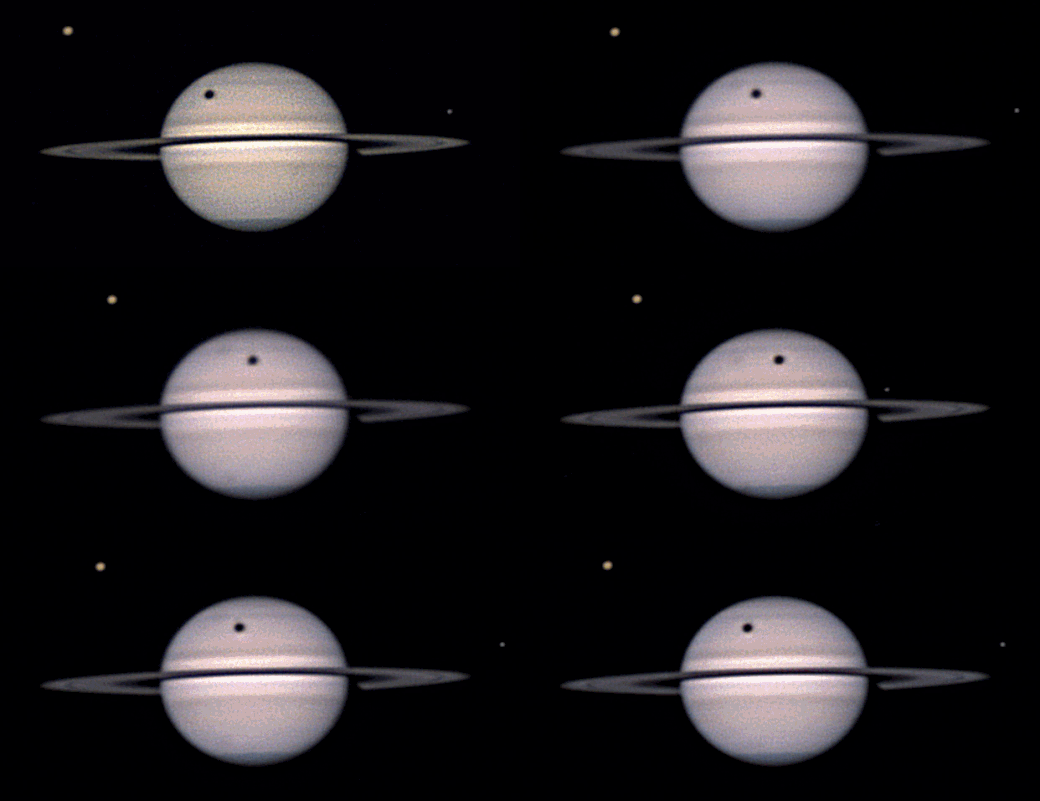
"I am very happy to have recorded this very RARE event on Aug. 3rd," says Philip Smith of Manorville, NY.
The next opportunity comes on Aug. 19th, and it will be one of the final transits of the series. After the season ends in October, observers will have to wait until the 2040s for another chance.
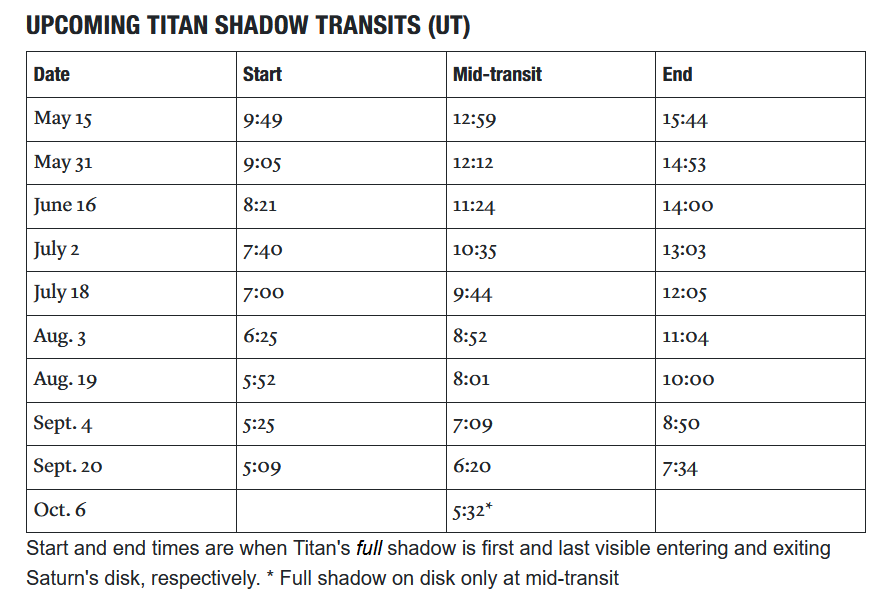
Shadow transits like these occur only during Saturn's equinoxes, when sunlight strikes the planet’s rings and moons edge-on. Among Saturn's menagerie of 274 known satellites, Titan’s shadow stands out as immense, jet black, and visible even in modest backyard telescopes.
Gregory Shanos of Longboat Key, FL, has photographed six transits in the current cycle:
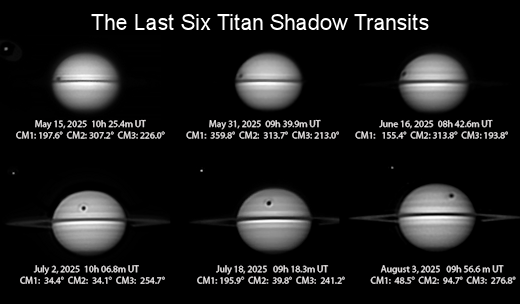
"Note how the shadow begins just above the rings in May and gets higher on the disk with each successive transit," he says. The Aug. 19th transit will be the highest yet, with a visibly elongated disk stretching toward Saturn's pole.
Every transit lasts hours. Titan’s shadow marches slowly across Saturn’s globe rather than flashing by in an instant, giving observers plenty of time to experiment with photo settings and soak in the view through the eyepiece.
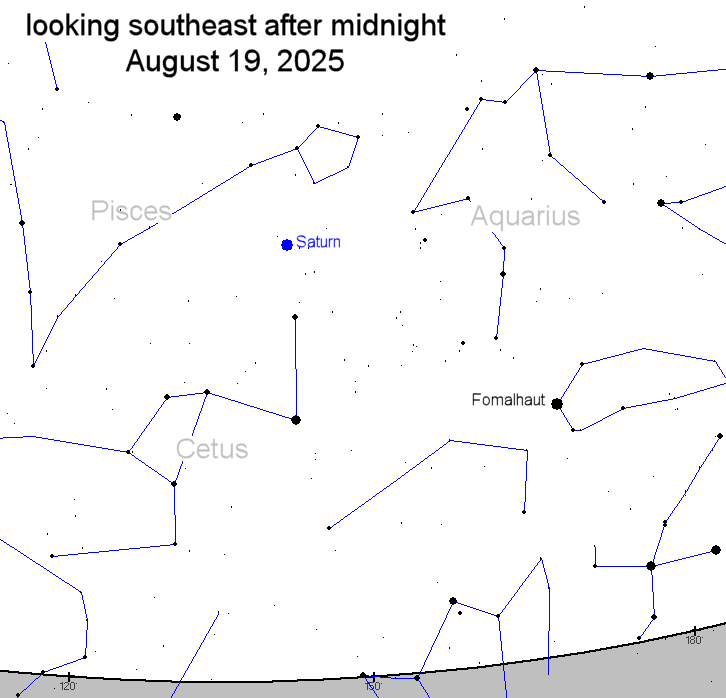
The Aug. 19th event begins at 05:52 UT (01:52 am EDT) and ends about four hours later. Saturn will be high in the southern sky, shining at magnitude +0.6 in the constellation Pisces: sky map.
Enjoy the show--it won’t be back for nearly two decades.
Realtime Space Weather Photo Gallery
Free: Spaceweather.com Newsletter
AMBER DRAGONFLY SPACE PENDANT: This dragonfly has touched space. The students of Earth to Sky Calculus launched it to the stratosphere onboard a cosmic ray research balloon, 109,228 feet above California's Sierra Nevada:
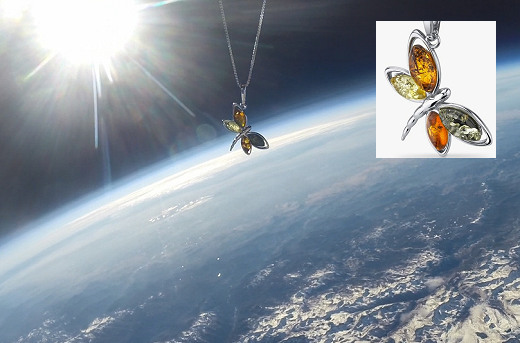
You can have it for $179.95. Made of genuine Baltic Amber with a sterling silver exoskeleton, the pendant measures 1 1/4 inch and comes with a matching 18-inch sterling silver chain. The wings of the dragonfly include four pieces of natural amber colored Cognac, Olive Green and Honey Yellow.
The students are selling space pendants to pay the helium bill for their cosmic ray ballooning program. Each one comes with a greeting card showing the jewelry in flight and telling the story of its trip to the stratosphere and back again.
Far Out Gifts: Earth to Sky Store
All sales support hands-on STEM education
Realtime Aurora Photo Gallery
Free: Spaceweather.com Newsletter
Realtime Noctilucent Cloud Photo Gallery
Free: Spaceweather.com Newsletter