STARSHIP 10 LAUNCH SCRUBBED: First, the good news: Starship 10 didn't explode. SpaceX scrubbed the launch of the world's most powerful rocket soon after propellants started flowing into its tanks. "Standing down from today’s tenth flight of Starship to allow time to troubleshoot an issue with ground systems," the company said. A date for the next attempt has not yet been announced.
THE MOON THROUGH A CORONAGRAPH: NOAA's new CCOR-1 coronagraph is doing something no coronagraph has ever done before. It can see the Moon. Yesterday, from geostationary orbit, CCOR-1 recorded the lunar disk gliding almost directly in front of the sun.
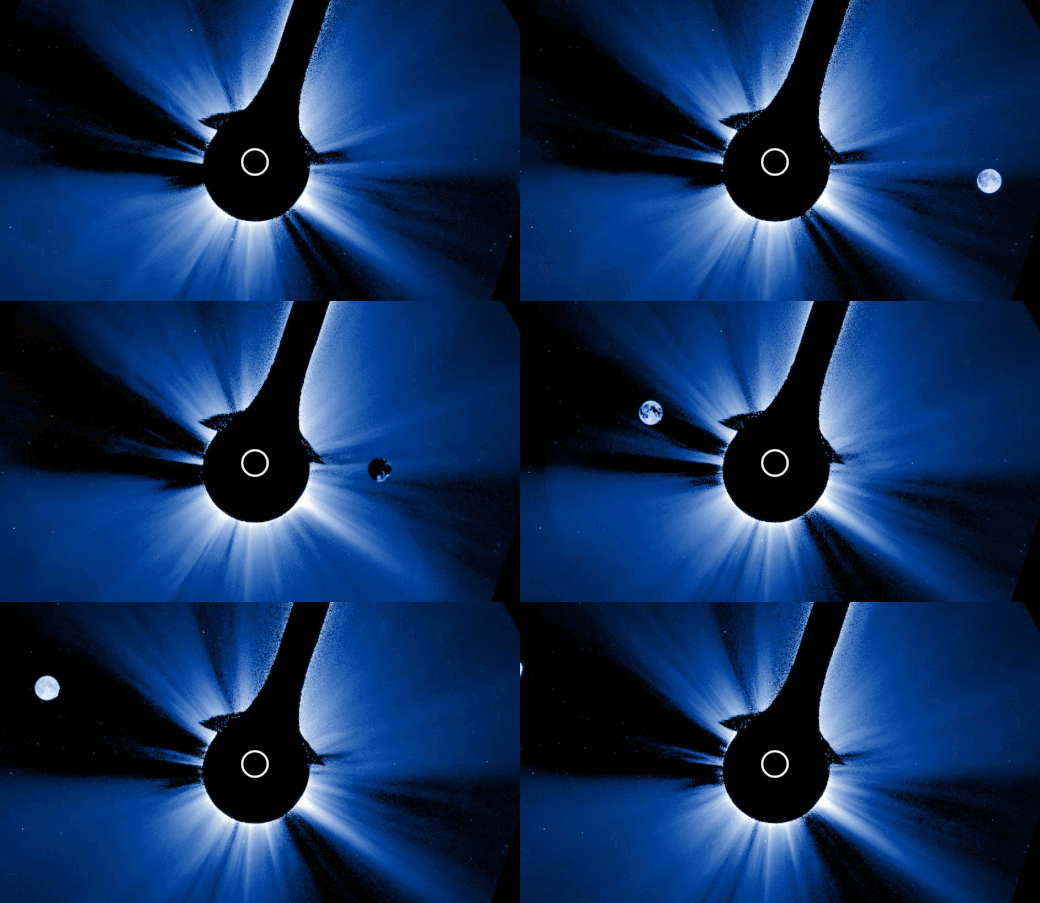
Coronagraphs are designed to make artificial eclipses, blocking the sun’s glare so coronal mass ejections (CMEs) can be observed. Unlike SOHO’s LASCO instruments, which orbit far beyond the Moon, CCOR-1 is stationed closer in, allowing the Moon to pass through its field of view once a month. It is the first coronagraph to fly in geostationary orbit around Earth.
It may surprise you to learn that the Moon in this video is not a Full Moon. It's New. It looks Full because it is illuminated by Earthshine (sunlight reflected from Earth onto the Moon). CCOR-1 is so sensitive that faint Earthline appears to be very bright.
Mark your calendar: This will happen again on Sept. 22nd.
Realtime Space Weather Photo Gallery
Free: Spaceweather.com Newsletter
LITTLE GREEN SANTA ORNAMENT: You can't buy this on Amazon: The Little Green Santa Christmas Ornamant is only available from the Earth to Sky Store. On Aug. 22, 2025, it flew to the stratosphere onboard a cosmic ray research balloon:
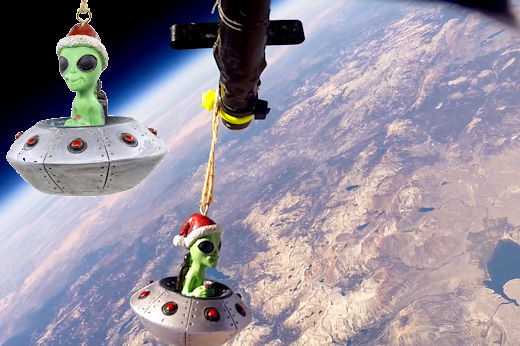
You can have it for $99.95. Hand-sculpted in the USA, this humorous ornament shows Santa arriving from the North Pole of a distant planet. Durable polyresin construction makes it lightweight enough to hang on any tree, but sturdy enough to last for many Christmases to come.
The students are selling space ornaments to pay the helium bill for their cosmic ray ballooning program. Each one comes with a greeting card showing the ornament in flight and telling the story of its trip to the stratosphere and back again.
Far Out Gifts: Earth to Sky Store
All sales support hands-on STEM education
INTERSTELLAR COMET VS. STARLINK: Before you read this news item, click here and take a look at the number of satellites orbiting Earth. There are more than 8000 Starlinks alone. When SpaceX began the Starlink internet program in 2019, astronomers expressed concern about its possible interference with astrophotography. This video of interstellar Comet 3I/ATLAS illustrates the problem:
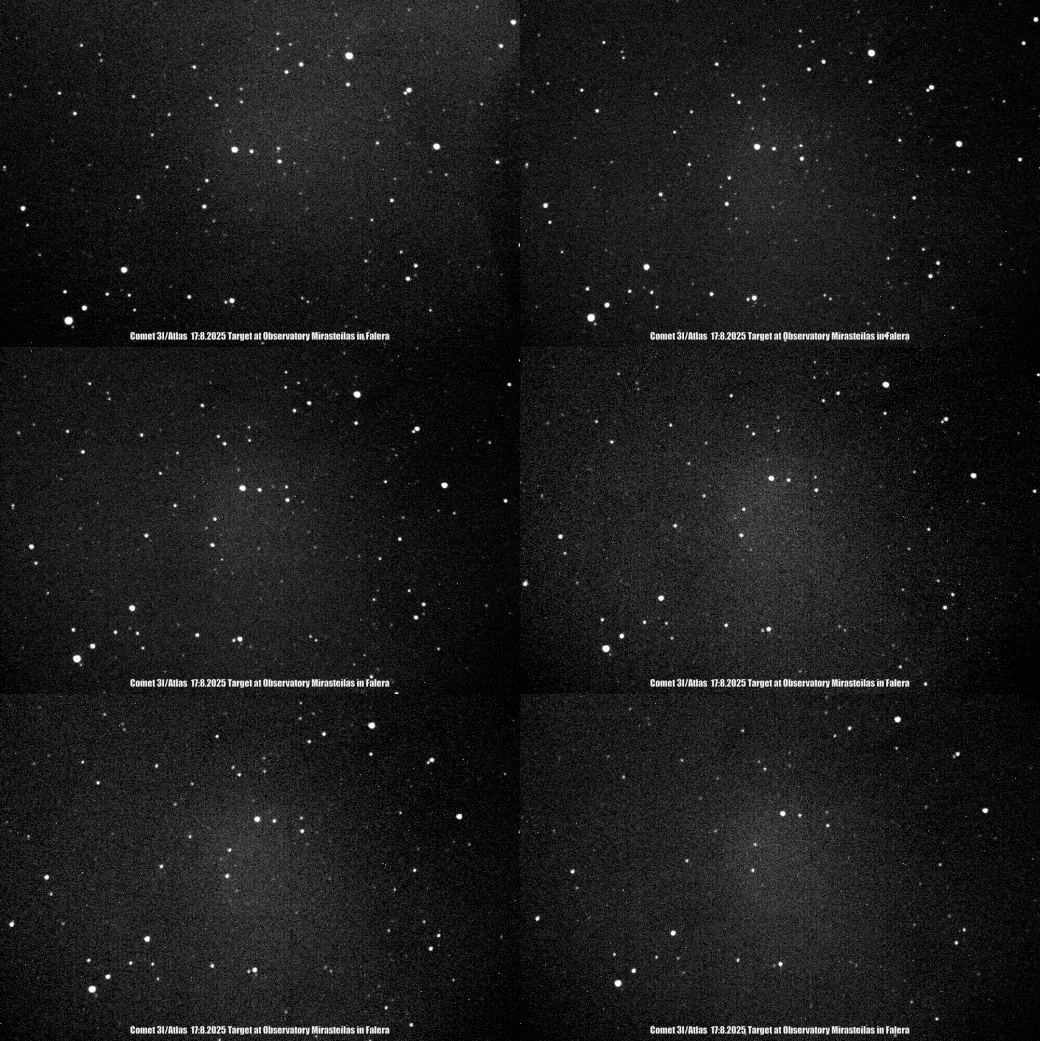
"Four satellites (#1, #2, #3, #4) passed through the field of view while I was recording the comet," says photographer Jose de Queiroz of Falera, Grisssons, Switzerland.
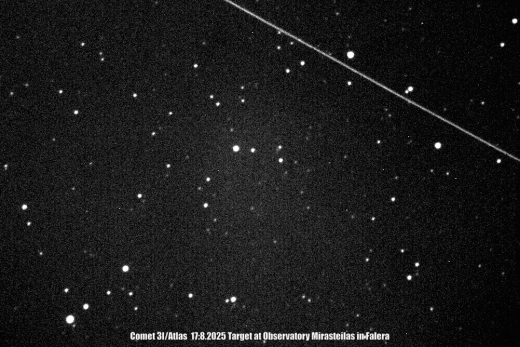
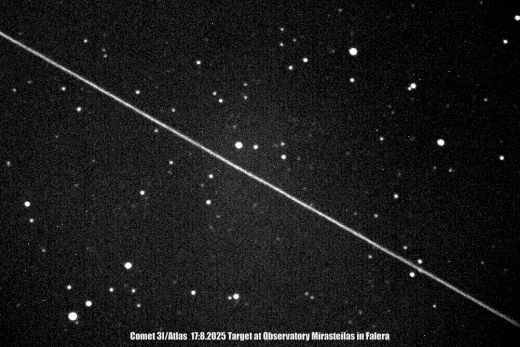
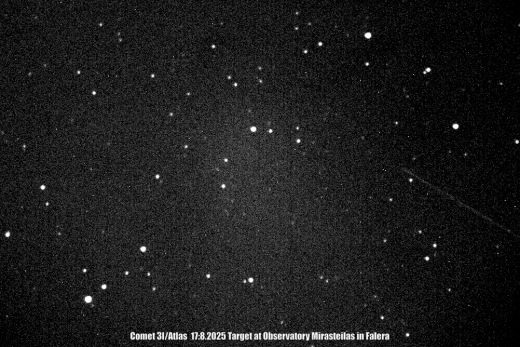
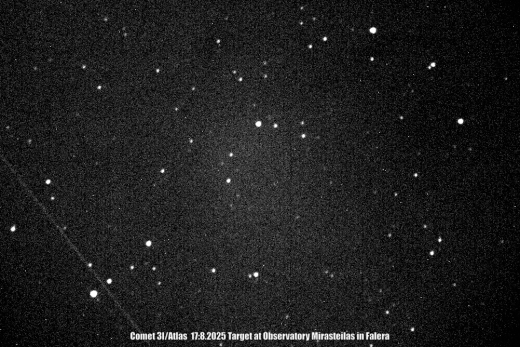
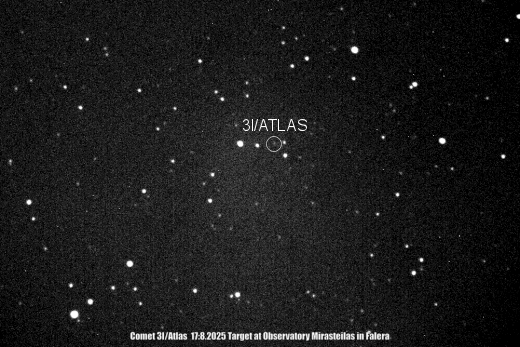
Each of the interloping satellites was dramatically brighter than the comet. (In case you can't find it, it's right here.) A transit intersecting 3I/ATLAS would overwhelm the comet's feeble light. Here's another example.
To learn more about light pollution from megaconstellations, visit the International Astronomical Union's web page on dark sky protection. There might be something you can do.
Realtime Space Weather Photo Gallery
Free: Spaceweather.com Newsletter
Realtime Aurora Photo Gallery
Free: Spaceweather.com Newsletter
Realtime Noctilucent Cloud Photo Gallery
Free: Spaceweather.com Newsletter