GEOMAGNETIC STORM WATCH: A geomagnetic storm watch is in effect on Sept. 2nd as Earth passes through the wake of a CME that struck yesterday. Category G1 (Minor) storms are likely with a chance of escalating to category G2 (Moderate) or G3 (Strong). High-latitude sky watchers should remain alert for auroras. Aurora alerts: SMS Text



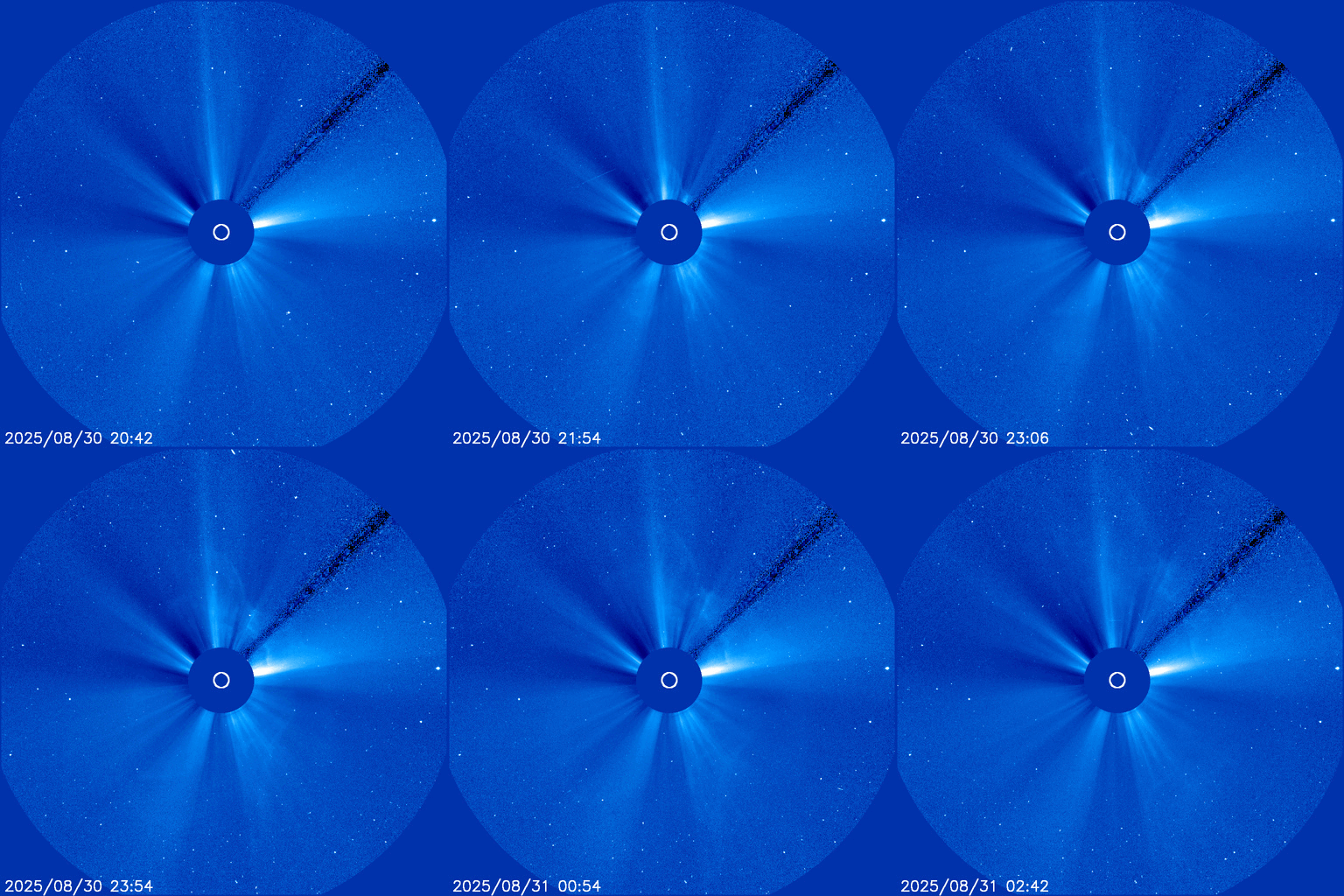
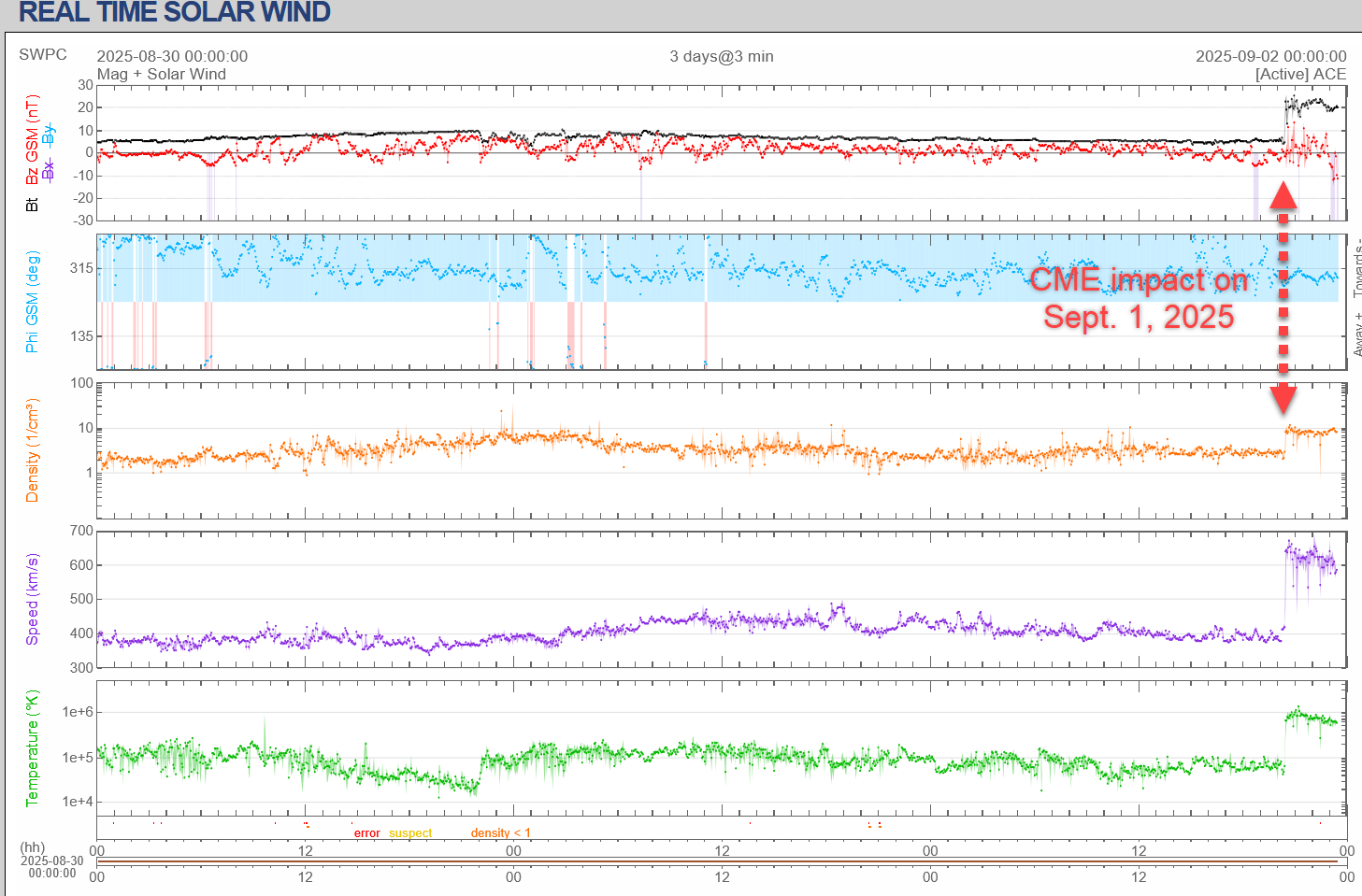
CME IMPACT SPARKS WIDESPREAD AURORAS: As predicted, a CME struck Earth's magnetic field on Sept. 1st (2100 UTC). The impact was abrupt and strong, bringing solar winds faster than 600 km/s (1.3 million mph), and a G2-class geomagnetic storm. Pilot Matt Melnyk photographed the auroras from the cockpit of a Dreamliner flying over Canada's Hudson Bay

"This was the view from 37,000 feet," says Melnyk. "Unfortunately I don't think most of Canada was able to enjoy the show due to the amount of cloud cover I saw below."
In Europe, auroras were photographed as far south as France and Spain, while in the United States they descended to Virginia. Many onlookers saw the color purple. This is a sign of nitrogen, especially ionized molecular nitrogen (N2+), which produces a blue-purple light at high altitudes when it is hit by energetic particles from the sun.
Did you see the display? Submit your photos here.
Realtime Aurora Photo Gallery
Free: Spaceweather.com Newsletter
AMBER DRAGONFLY SPACE PENDANT: This dragonfly has touched space. On Aug. 22, 2025, the students of Earth to Sky Calculus launched it to the stratosphere onboard a cosmic ray research balloon, 105,108 feet above California's Sierra Nevada mountains:

You can have it for $149.95. Made of genuine Baltic Amber with a sterling silver exoskeleton, the rich Cognac-colored pendant measures 3/4 inch and comes with a matching 18-inch sterling silver chain.
The students are selling space pendants to pay the helium bill for their cosmic ray ballooning program. Each one comes with a greeting card showing the ornament in flight and telling the story of its trip to the stratosphere and back again
Far Out Gifts: Earth to Sky Store
All sales support hands-on STEM education
RED SPRITES OVER EUROPE: You know what comes out of the bottom of a thundercloud: lightning. But do you know what comes out of the top? The answer is sprites. Sometimes when an especially fierce lightning bolt connects with the ground, a corresponding discharge leaps from the top of the cloud toward space. These "sprites" are red, fleeting, and they tend to come in bunches.
On Aug. 29th, Giacomo Venturin of Monte Tomba, Italy, photographed a bunch of sprites dancing over a storm cell 300 km away:

"The clear sky allowed me to observe several red sprites across the border in Austria," says Venturin. "This one was generated by a lightning strike that occurred not far from Klagenfurt."
Although sprites have been seen, off and on, for at least a century, most scientists did not believe they existed until after 1989 when sprites were photographed by cameras onboard the space shuttle. Now "sprite chasers" routinely photograph sprites from their own backyards. Give it a try.

Realtime Sprite Photo Gallery
Free: Spaceweather.com Newsletter
Realtime Noctilucent Cloud Photo Gallery
Free: Spaceweather.com Newsletter
Realtime Space Weather Photo Gallery
Free: Spaceweather.com Newsletter