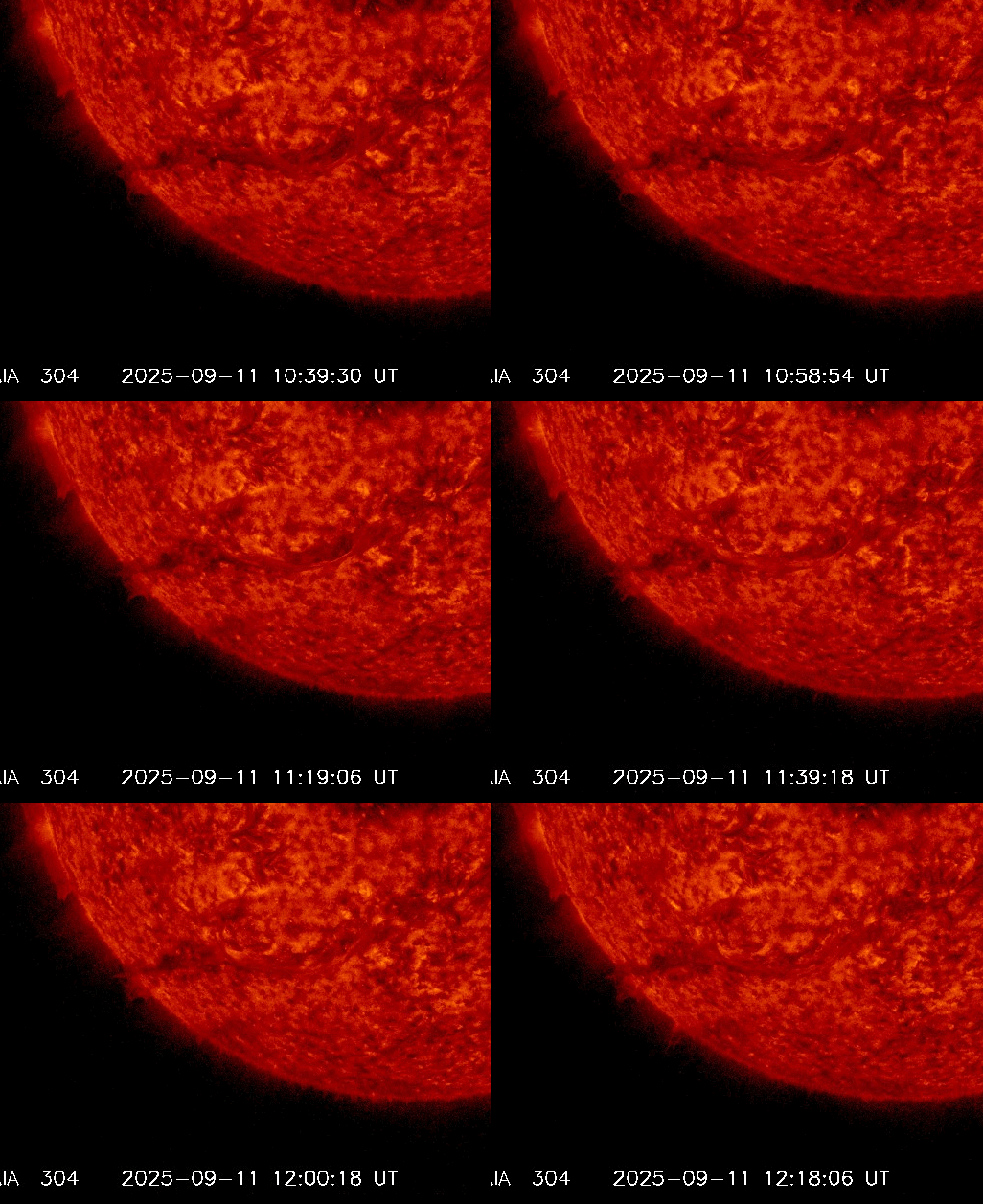
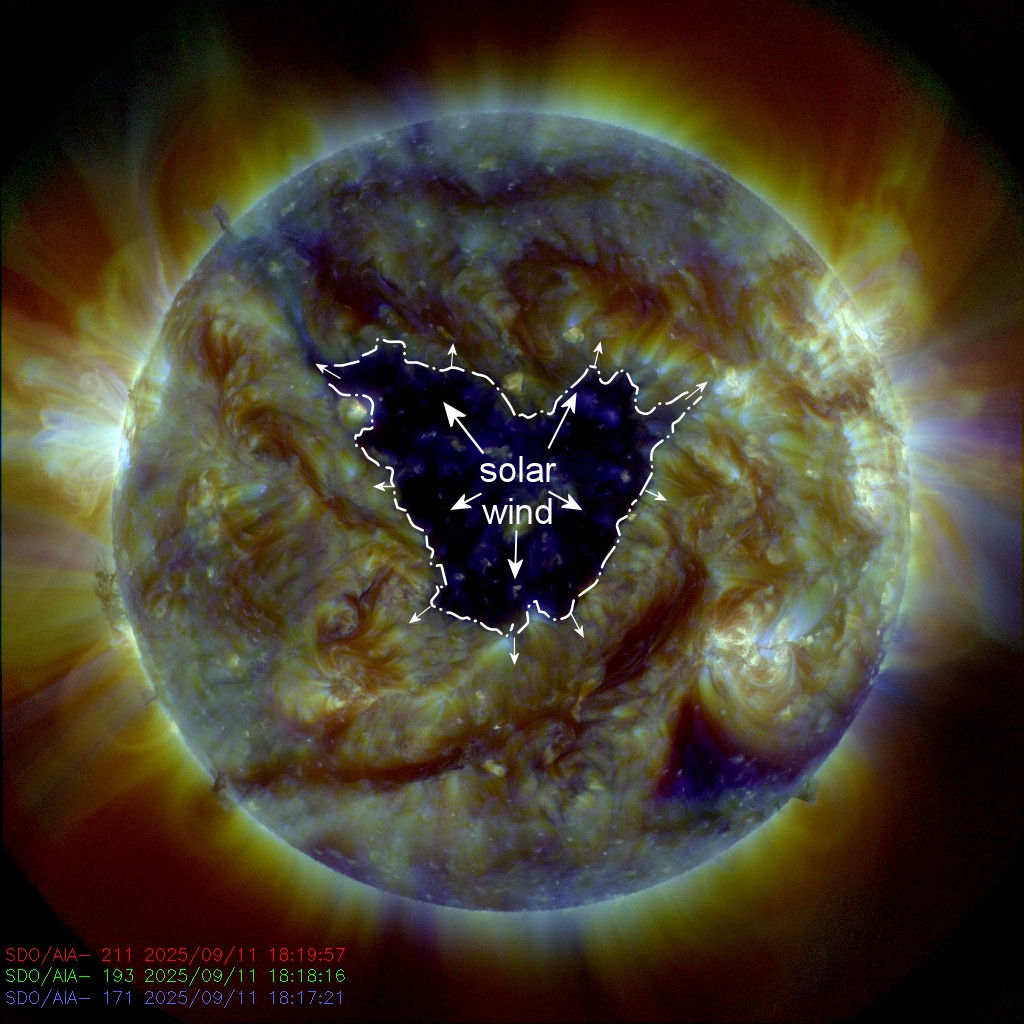
OFF-TARGET CME MIGHT GRAZE EARTH: We wouldn't call it a full-fledged eruption. On Sept. 11th, a magnetic filament in the sun's southern hemisphere fluttered--just enough to hurl a faint CME into space. The bulk of the CME will miss Earth, sailing south of our planet, but there is a chance of a glancing blow on Sept. 14th. Any impact would increase the disturbance already expected on Sept. 14th due to the Big Butterfly coronal hole. CME impact alerts: SMS Text.
BRIGHT COMET SURPRISE: A bright comet has emerged from behind the sun, surprising astronomers. Introducing, Comet SWAN25B:
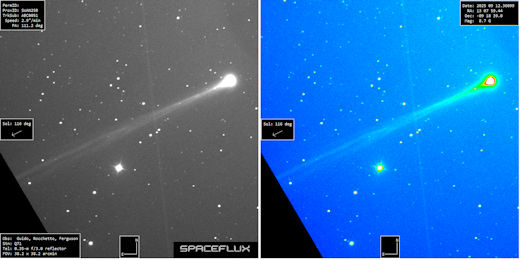
"The comet is magnitude 7.5, bright enough to see with backyard telescopes," reports Ernesto Guido. "This is our confirmation image taken just a couple hours ago via the Spaceflux network."
The comet is named after the SWAN camera onboard the Solar and Heliospheric Observatory (SOHO). Amateur astronomer Vladimir Bezugly noticed the comet in online images. SWAN is a special camera that maps hydrogen in the solar wind, which suggests this comet may be rich in the element.
This Sept. 12th photo from Michael Mattiazzo of South Australia highlights the comet's 2-degree ion tail:
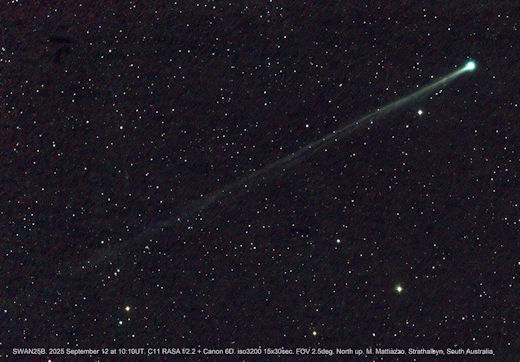
"It is probably in outburst post-perihelion," says Mattiazzo. "A similar situation occurred with comet C/2004 H6."
The comet's orbit is still being determined. Initial astrometry suggests it has already passed through perihelion (its closest approach to the sun). Next, it might make a close approach to Earth (0.25 AU) in October.
The comet's future visibility remains unknown. It might be on the verge of falling apart--or poised for a good show as it approaches our planet. Observations in the days ahead will tell us more about its prospects. For current coordinates, check the Minor Planet Center's Possible Comet Confirmation Page.
Realtime Space Weather Photo Gallery
Free: Spaceweather.com Newsletter
LASER-ETCHED CRYSTAL SPACE ROSE: This rose will last forever, and it comes from space. On Jan. 19th, the students of Earth to Sky Calculus launched the Crystal Space Rose to the stratosphere onboard a cosmic ray research balloon:
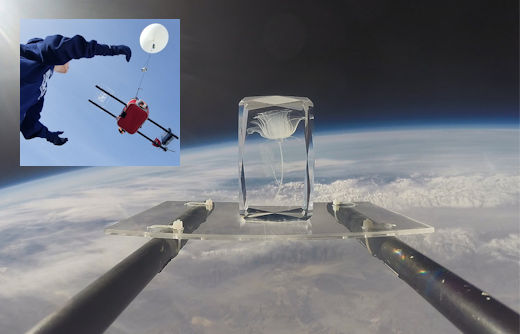
You can have it for $127.95. The bloom is laser-etched into a block of optical-quality borosilicate crystal with the words "I Love You" curving below the stem. It comes with an LED base that transforms the rose into a romantic night light.

The students are selling space roses to support their cosmic ray monitoring program. Each one comes with a greeting card showing the rose in flight and telling the story of its trip to the stratosphere and back again.
Far Out Gifts: Earth to Sky Store
All sales support hands-on STEM education
Realtime Aurora Photo Gallery
Free: Spaceweather.com Newsletter
Realtime Space Weather Photo Gallery
Free: Spaceweather.com Newsletter