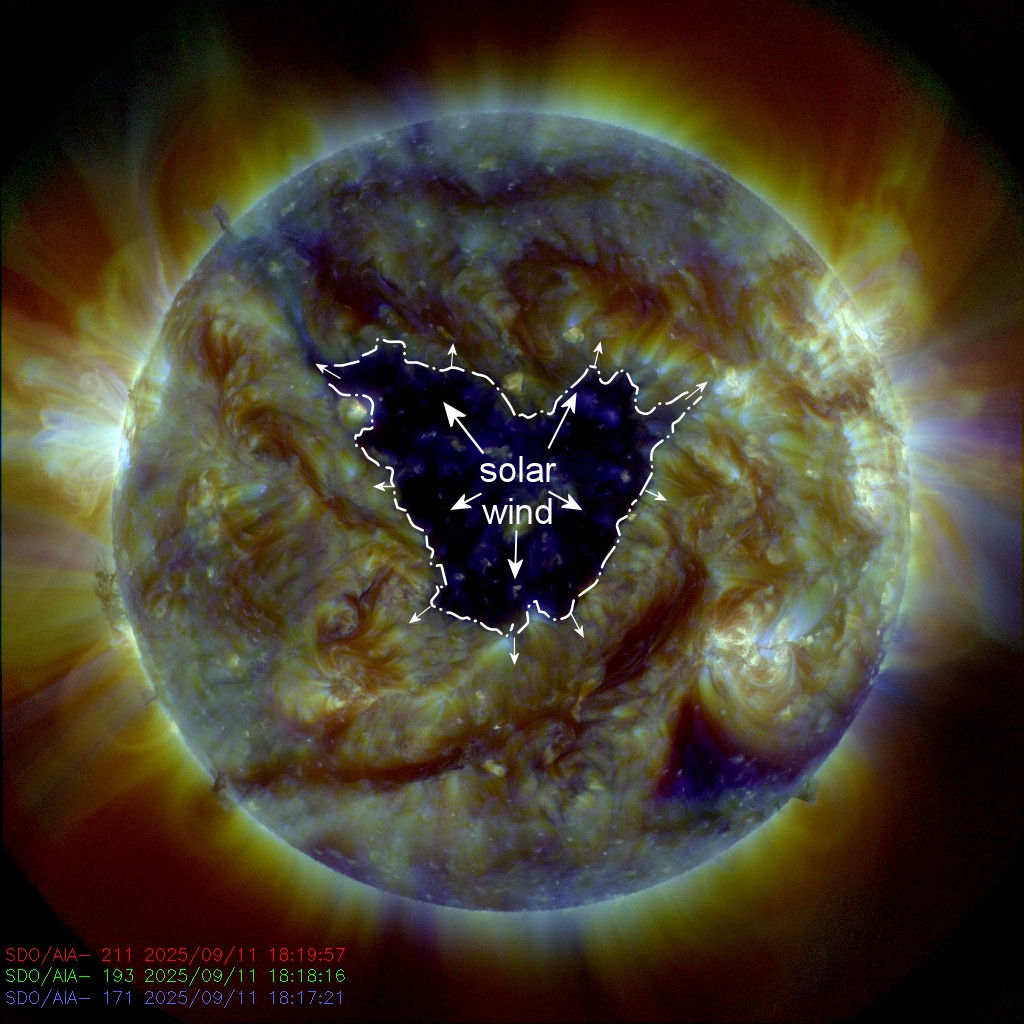
GEOMAGNETIC STORM WATCH (G1): Geomagnetic storms are possible on Sept. 14th when Earth's magnetic field could receive a one-two punch from the sun. Punch #1: A glancing blow from a faint CME. Punch #2: A stream of solar wind flowing from the Big Butterfly coronal hole. NOAA forecasters expect this to be a G1-class event with a chance of escalating to G2. Aurora alerts: SMS Text.


COMET SWAN25B UPDATE: After emerging from hiding behind the sun on Sept. 11th, Comet SWAN25B is rapidly brightening. Multiple southern hemisphere observers on Sept 13th say it is near magnitude +6--that is, about three times brighter than the day before. Gerald Rhemann and Michael Jäger send this picture from Farm Tivoli, Namibia:

"This is a 12/5/5/5 min (LRGB) exposure through a 12-inch Astrograph," says Rhemann.
The comet has a green atmosphere and a long blue ion tail collimated by the solar wind. These colors are signs of C2 (green) and CO+ (blue)--compounds commonly found in Solar System comets.
The comet's orbit is still being determined. Initial astrometry suggests it has already passed through perihelion (its closest approach to the sun). Next, it might make a close approach to Earth (0.25 AU) in October.
This weekend you can find SWAN25B in the constellation Virgo not far from Mars and Spica. It's still close to the sun, so be prepared to catch it near the horizon at sunset. Up-to-date coordinates may be found at the Minor Planet Center's Possible Comet Confirmation Page.
more images: from Filipp Romanov of Siding Spring Observatory, Australia; from Jost Jahn of Rio Hurtado, Chile; from Ray Pickard of Bathurst Observatory, Bathurst NSW, Australia
Realtime Space Weather Photo Gallery
Free: Spaceweather.com Newsletter
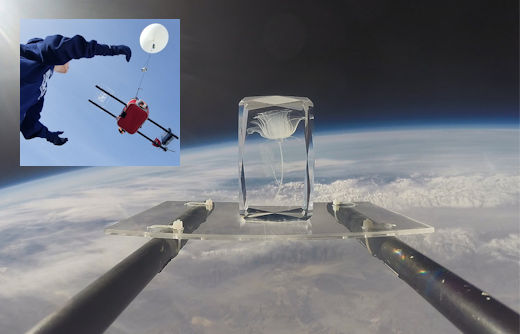
LASER-ETCHED CRYSTAL SPACE ROSE: This rose will last forever, and it comes from space. On Jan. 19th, the students of Earth to Sky Calculus launched the Crystal Space Rose to the stratosphere onboard a cosmic ray research balloon:
You can have it for $127.95. The bloom is laser-etched into a block of optical-quality borosilicate crystal with the words "I Love You" curving below the stem. It comes with an LED base that transforms the rose into a romantic night light.
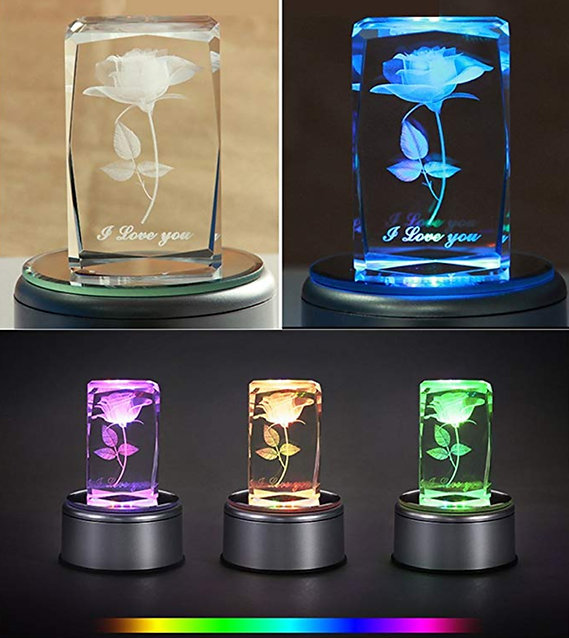
The students are selling space roses to support their cosmic ray monitoring program. Each one comes with a greeting card showing the rose in flight and telling the story of its trip to the stratosphere and back again.
Far Out Gifts: Earth to Sky Store
All sales support hands-on STEM education
Realtime Aurora Photo Gallery
Free: Spaceweather.com Newsletter
Realtime Space Weather Photo Gallery
Free: Spaceweather.com Newsletter