STRONG GEOMAGNETIC STORM: A fast-moving stream of solar wind hit Earth on Sept. 14th, sparking an unexpectedly strong G3-class geomagnetic storm. Overnight (Sept. 14-15), auroras appeared in the USA as far south as Colorado. The storm is subsiding now, but it's not over. Minor (G1) to moderate (G2) storms are possible throughout Sept. 15th. Aurora alerts: SMS Text.



"Wow, I wasn't expecting a show of this magnitude!" says Lauri Kangas, who took this picture from Amethyst Bay (Lake Superior), Ontario:

"Lots of movement and colour were visible to the naked eye, and the corona overhead was writhing like a snake! It was absolutely gorgeous," says Kangas.
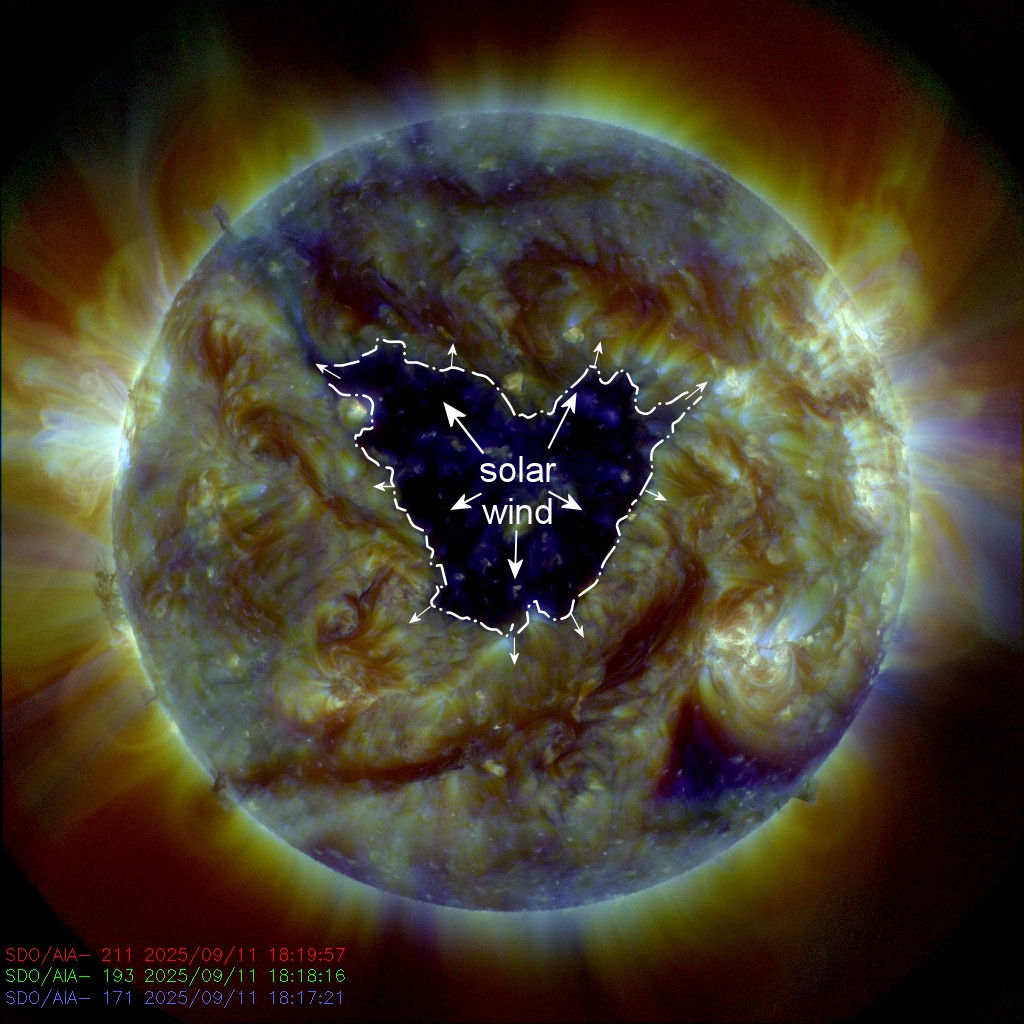
The stream of solar wind responsible for this storm is flowing from a butterfly-shaped hole in the sun's atmosphere. Normally, the stream might cause no more than a G1-class storm, but it has been amplified by the "Russell-McPherron effect," which links the magnetic fields of the sun and Earth during weeks around equinoxes.
Realtime Aurora Photo Gallery
Free: Spaceweather.com Newsletter
COMET SWAN25B AND SPICA: Looking for Comet SWAN25B? Pro tip: Point your telescope toward Spica. There's a gaseous plume below the 1st magnitude star that leads straight to the comet. On Sept. 14th, Ujvárosi Beáta followed these instructions, and this is what he saw:
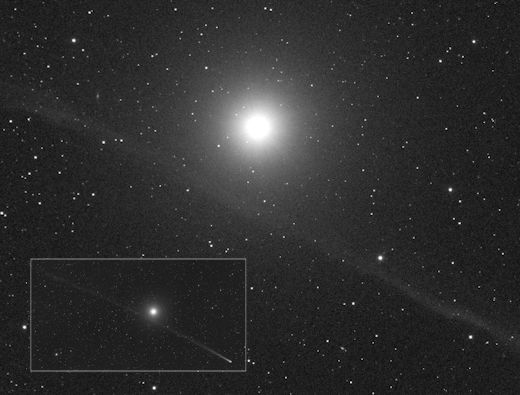
"Using a remote-controlled telescope in Namibia, I took a quick image hoping to catch all of the tail of this newly-discovered comet," says Beáta. "The FSQ106 telescope has a huge field of view (3° 54' x 2° 38'), but still, it looks like the tail is too long to fit into the image (see inset)."
Comet SWAN25B surprised astronomers last week when it emerged from hiding behind the sun. On Sept. 11th, amateur astronomer Vladimir Bezugly noticed it in online images from the Solar and Heliospheric Observatory's SWAN camera. SWAN is a special camera that maps hydrogen in the solar wind, which suggests this comet may be rich in the element.
In only a few days, the comet has tripled in brightness. It is now near 6th magnitude, at the threshold of naked-eye visibility. Only southern hemisphere observers have a good view, however; here is what it looks like from the north.
The comet's orbit is still being determined. Initial astrometry suggests it might make a close approach to Earth (0.25 AU) in mid-October. If so, the best may be yet to come. Stay tuned!
Realtime Space Weather Photo Gallery
Free: Spaceweather.com Newsletter
LASER-ETCHED CRYSTAL SPACE ROSE: This rose will last forever, and it comes from space. On Jan. 19th, the students of Earth to Sky Calculus launched the Crystal Space Rose to the stratosphere onboard a cosmic ray research balloon:
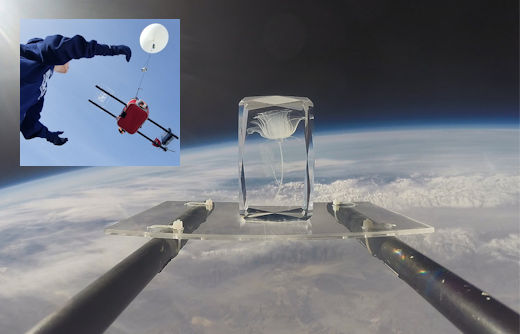
You can have it for $127.95. The bloom is laser-etched into a block of optical-quality borosilicate crystal with the words "I Love You" curving below the stem. It comes with an LED base that transforms the rose into a romantic night light.

The students are selling space roses to support their cosmic ray monitoring program. Each one comes with a greeting card showing the rose in flight and telling the story of its trip to the stratosphere and back again.
Far Out Gifts: Earth to Sky Store
All sales support hands-on STEM education
Realtime Space Weather Photo Gallery
Free: Spaceweather.com Newsletter