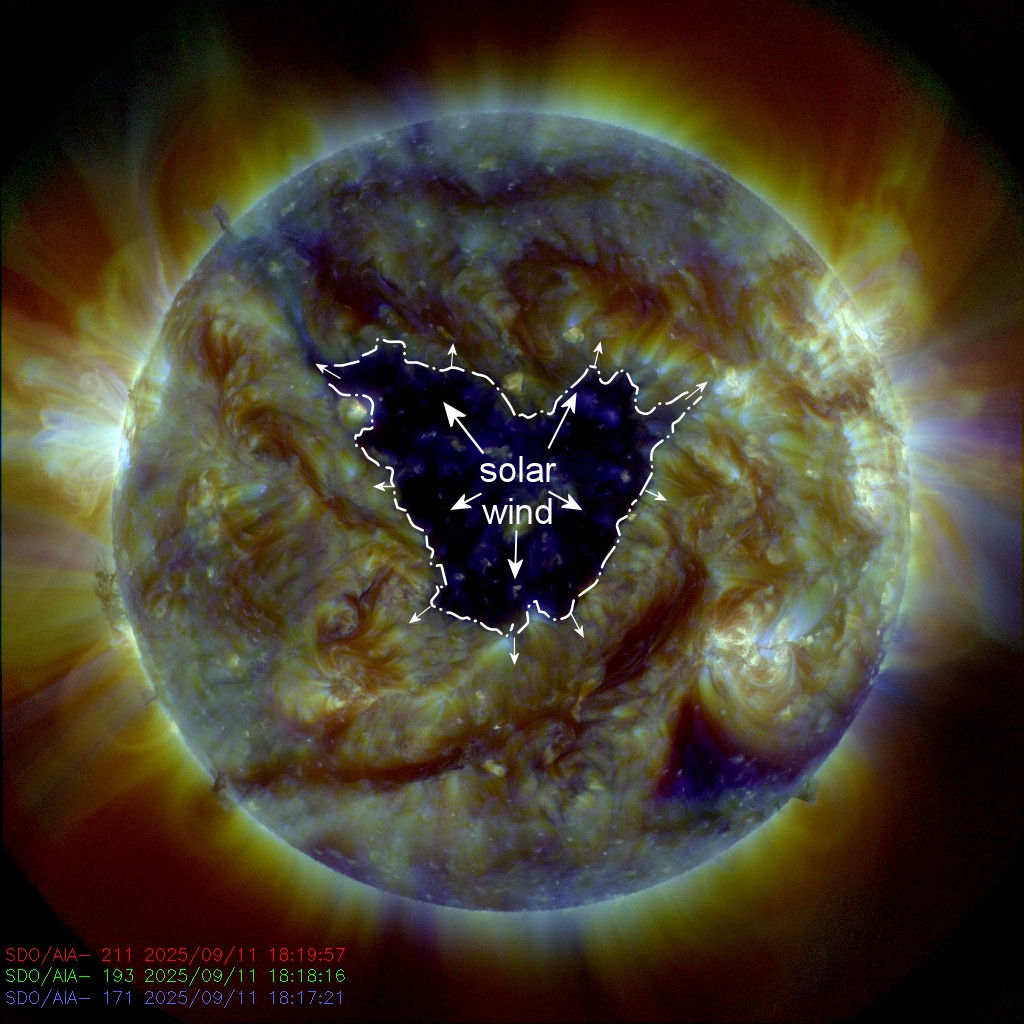
THE SUN IS BLOWING A GALE: Earth is inside a stream of solar wind blowing faster than 700 km/s (1.6 million mph). The gale is blowing from a large butterfly-shaped hole in the sun's atmosphere--and it's potent. First contact with the stream on Sept. 14th sparked auroras in more than a dozen US states from Alaska to Arizona. (Here's a nice video from Colorado.)
"Let's talk about last night," says Ray Majoran of London, Ontario. "I certainly wasn't expecting that!" Here is what he saw in the countryside 20 minutes north of London:
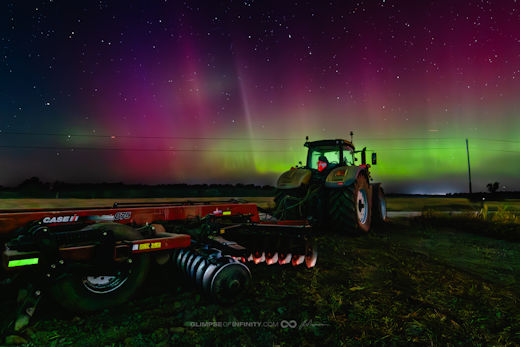
"My friend Ken and I traipsed through dirt and ditches to find some interesting foregrounds," he says. "I only face-planted in the dark twice -- once in a field, and another when I underestimated the depth of a ditch. All worth it though!"
Normally, a solar wind stream like this might cause no more than a minor G1-class storm. In this case, the storm was amplified to category G3 by the "Russell-McPherron effect," which links the magnetic field of the sun to the magnetic field of Earth during weeks around equinoxes. We can expect more of these "equinox storms" from now through mid-October. Aurora alerts: SMS Text.
Realtime Aurora Photo Gallery
Free: Spaceweather.com Newsletter
THE ORBIT OF COMET SWAN25B: Yesterday, the Minor Planet Center gave Comet SWAN25B its official name: C/2025 R2 (SWAN). This means we can now search for its orbit in the JPL Horizons system. Here's a snapshot of the comet's upcoming close approach to Earth:
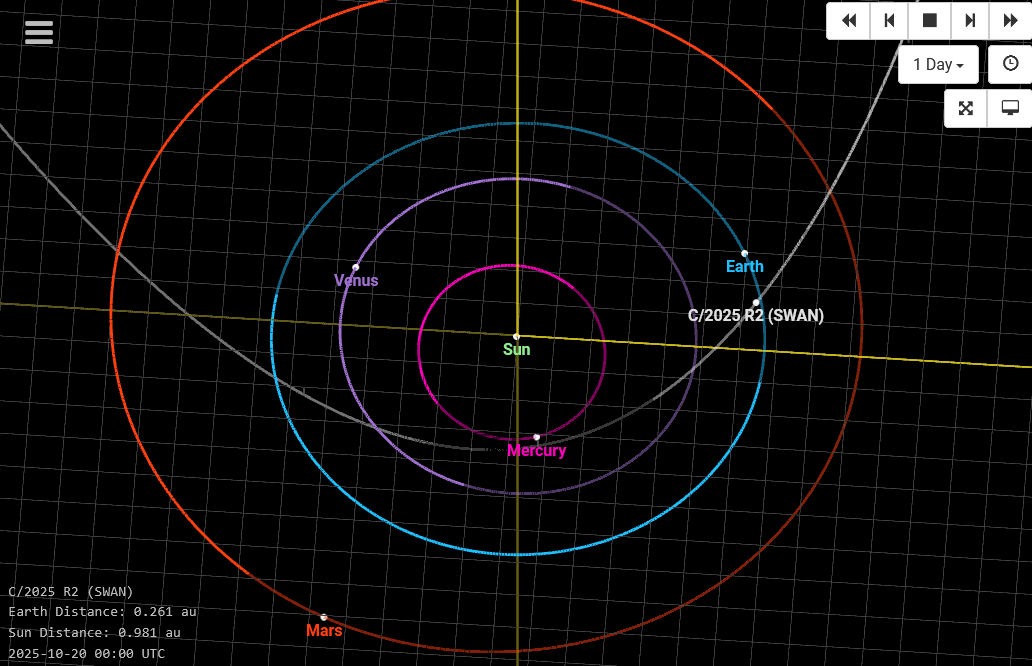
On Oct. 18-21, Comet SWAN will be only 0.26 AU from our planet. If it doesn't fall apart between now and then, it could become a beautiful target for photographers and backyard astronomers. Another date of interest is Oct. 4-6 when Earth might cross the comet's debris stream. If so, we could have a meteor shower. Stay tuned for updates.
Realtime Comet SWAN Photo Gallery
Free: Spaceweather.com Newsletter
LASER-ETCHED CRYSTAL SPACE ROSE: This rose will last forever, and it comes from space. On Jan. 19th, the students of Earth to Sky Calculus launched the Crystal Space Rose to the stratosphere onboard a cosmic ray research balloon:
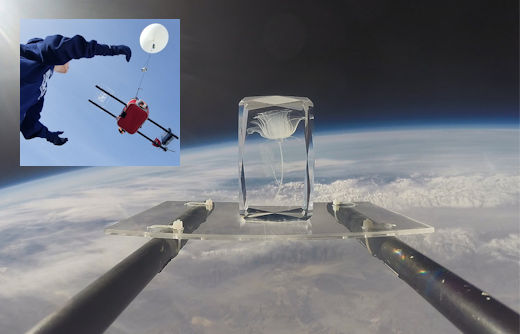
You can have it for $127.95. The bloom is laser-etched into a block of optical-quality borosilicate crystal with the words "I Love You" curving below the stem. It comes with an LED base that transforms the rose into a romantic night light.

The students are selling space roses to support their cosmic ray monitoring program. Each one comes with a greeting card showing the rose in flight and telling the story of its trip to the stratosphere and back again.
Far Out Gifts: Earth to Sky Store
All sales support hands-on STEM education
Realtime Space Weather Photo Gallery
Free: Spaceweather.com Newsletter