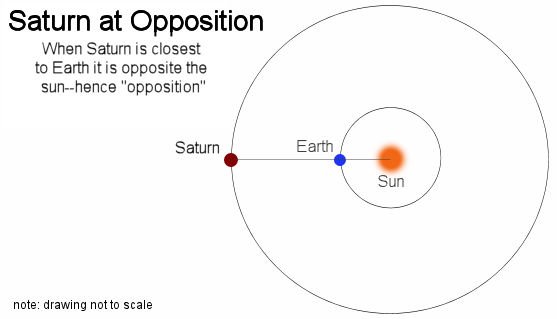
SATURN'S RINGS AT OPPOSITION: If you have a telescope, point it at Saturn tonight. The ringed planet is at opposition, which makes the rings extra bright. Why? Saturn's rings are made of ice. Sunlight directly backscattered from ice particles causes the ring system to shine more than usual for a few days around opposition. It's called the Seeliger effect, and you can see it in Phil Smith's Saturn photo, below. Look for Saturn rising in the east after sunset and soaring almost overhead at midnight.
THE EQUINOX SHADOW OF TITAN: Earth is having an equinox, and so is Saturn. Saturn's causes dark shadows to glide across the planet's cloudtops. Philip Smith photographed the phenomenon on Sept. 20th from his backyard observatory in Manorville, New York:
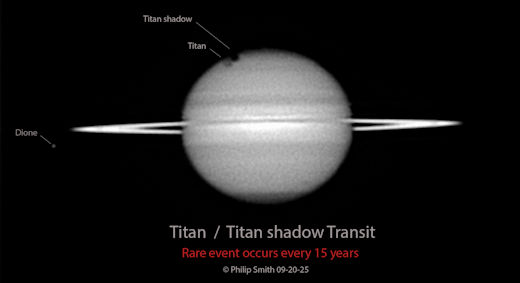
"I am happy I had the opportunity to image this rare historical event," says Smith. "Titan's shadow was strikingly visible even with relatively poor seeing conditions."
Shadow transits like this occur only during Saturn's equinoxes when sunlight strikes the planet’s rings and moons almost edge-on. Among Saturn's menagerie of 274 known satellites, Titan’s shadow stands out. Titan itself is larger than the planet Mercury, and the shadow it casts is immense.
"Tethys and Tethys' shadow transited over Saturn at the same time, but the smaller moon did not show up in my image after processing it," notes Smith.
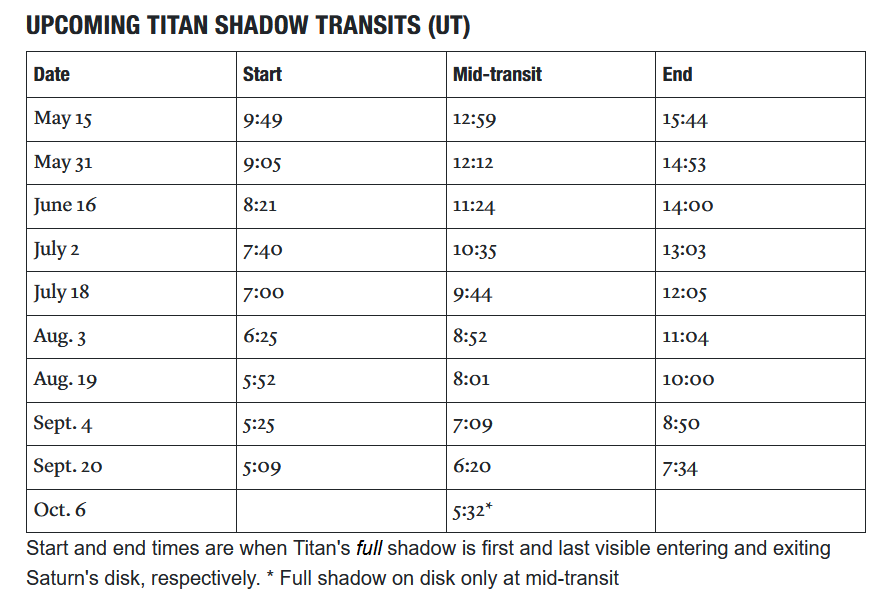
During Saturn's equinoxes, Titan shadow appears every two weeks. The next (and final) transit of the current equinox comes on Oct. 6th. After that, observers will have to wait until the 2040s for another chance to see the shadow play.
more images: from Robert Lunsford of Southern California; from Thomas Eby of Red Rock, Arizona; from Thomas Williamson of Albuquerque,, New Mexico; from Gregg Ruppel of Oro Valley AZ
Realtime Space Weather Photo Gallery
Free: Spaceweather.com Newsletter
AMBER SPACE DRGONFLY: This dragonfly has touched space. On Sep. 15, 2025, the students of Earth to Sky Calculus launched it to the stratosphere onboard a cosmic ray research balloon, 101,148 feet above California's Sierra Nevada mountains:
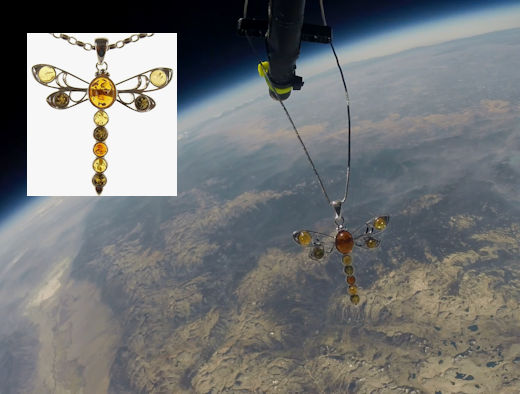
You can have it for $169.95. Made of genuine Baltic Amber with a sterling silver exoskeleton, the rich Cognac-colored pendant measures 3/4 inch and comes with a matching 18-inch sterling silver chain.
The students are selling space pendants to pay the helium bill for their cosmic ray ballooning program. Each one comes with a greeting card showing the ornament in flight and telling the story of its trip to the stratosphere and back again.
Far Out Gifts: Earth to Sky Store
All sales support hands-on STEM education
Realtime Aurora Photo Gallery
Free: Spaceweather.com Newsletter
Realtime Comet ATLAS Photo Gallery
Free: Spaceweather.com Newsletter