THE SUN IS BLOWING A GALE: Earth has entered a stream of solar wind blowing faster than 700 km/s (1.6 million mph). This is extending geomagnetic unrest for the third day in a row. NOAA forecasters say G2-class geomagnetic storms are likely on Oct. 1st with continued auroras at high latitudes. Aurora alerts: SMS Text.
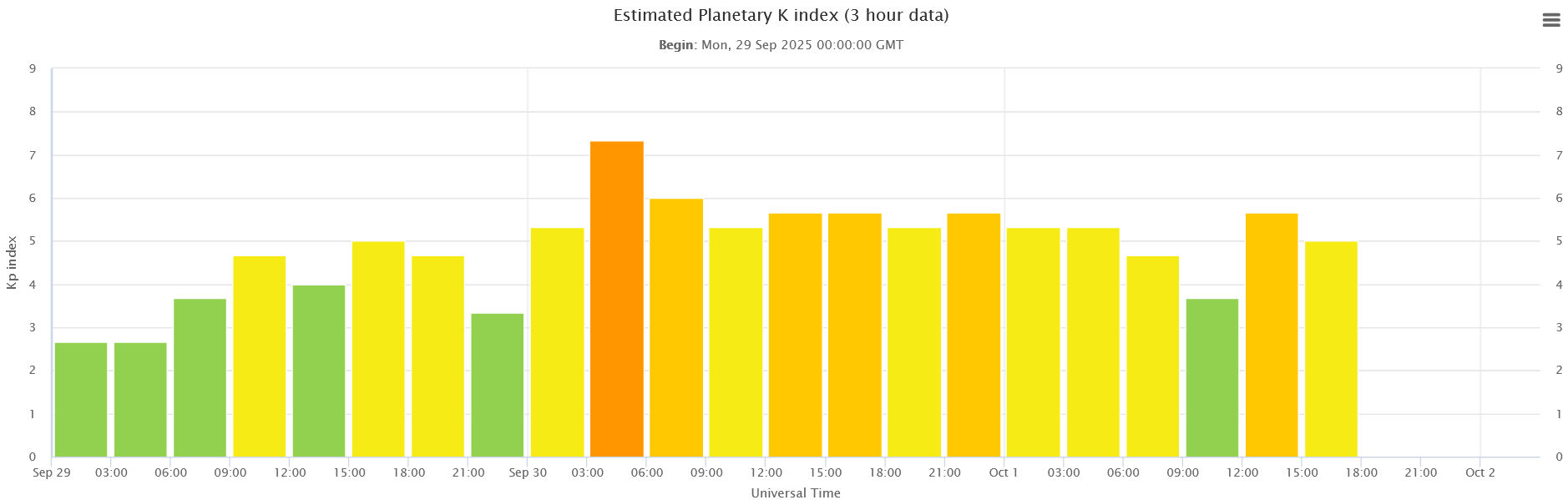

NOT ALL THOSE LIGHTS WERE AURORAS: A strong G3-class geomagnetic storm erupted on Sept. 29th, sparking intense auroras around the Arctic Circle. Vacationing from Florida, Bill Williams photographed the spray of color from the Gullfoss Waterfall in Iceland:

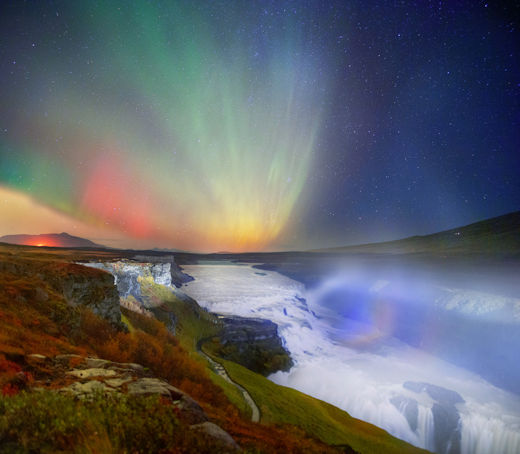
"The auroras were visible as soon as it got dark, but we were fighting misty moisture coming off the waterfall soaking us and our cameras!" says Williams. "Fortunately, the wind switched direction and provided us with drier conditions to photograph the light show."
Not all the lights in the sky were auroras. Many observers also witnessed STEVE -- a bright mauve ribbon of light caused by hot plasma currents in the upper atmosphere. Daryl Pederson saw STEVE making a majestic 'X' with the Milky Way over Sterling, Alaska:
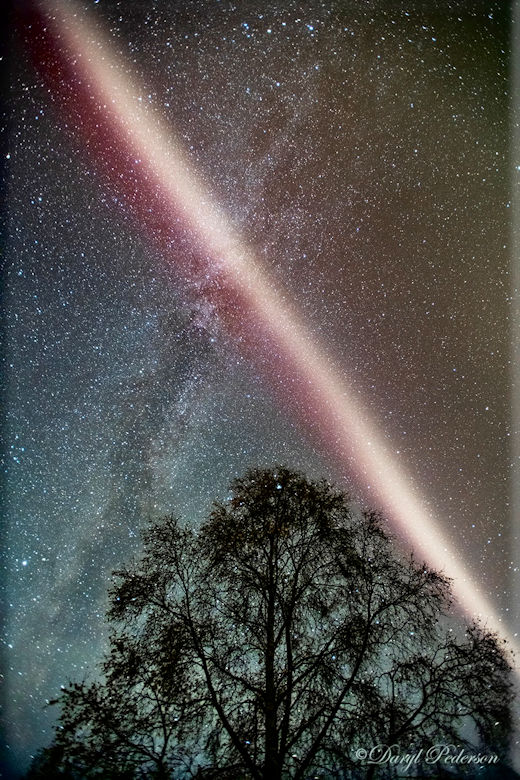
"After shooting the northern lights for 40 years, it's fairly rare to come up with something new, but last night STEVE showed up and did the trick. Score!" says Pederson.
STEVE (Strong Thermal Emission Velocity Enhancement) was discovered by sky watchers in Alberta only about 10 years ago, although the phenomenon was surely active long before it was documented in scientific literature. STEVE is tricky, because it looks so much like an aurora. However, studies show that STEVE is not lit up by the same downward rain of electrons that causes ordinary Northern Lights. STEVE is its own thing.
This was a complicated storm. In addition to auroras and STEVE, some sky watchers also saw SAR arcs. These are deep red arcs caused by heat energy leaking into Earth's upper atmosphere from our planet's Saturn-like ring current system. In Michigan, Quinn Keon photographed a beautiful example of an SAR arc. In Finland, Matti Helin saw all three phenomena at the same time.
Realtime Aurora Photo Gallery
Free: Spaceweather.com Newsletter
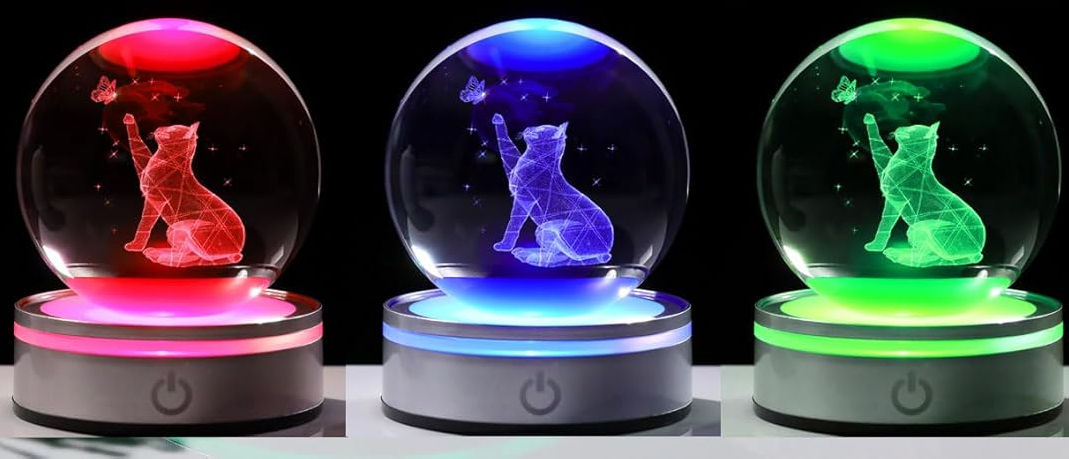
CONSTELLATION CAT NIGHT LIGHT: It's the most far-out feline night light ever--the Constellation Cat Crystal Ball. On April 23, 2025, the students of Earth to Sky Calculus launched it to the stratosphere onboard a giant helium balloon.
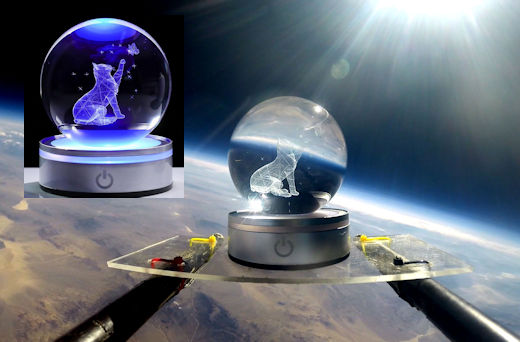
You can have it for $139.95. Outlined by stars in the style of an astronomical constellation, the laser-etched cat comes with an LED stand that produces a soothing glow for your bedside table. Also included: A unique greeting card shows the crystal ball in flight and tells the story of its journey to the edge of space.
Far Out Gifts: Earth to Sky Store
All sales support hands-on STEM education
Realtime Space Weather Photo Gallery
Free: Spaceweather.com Newsletter
Realtime Aurora Photo Gallery
Free: Spaceweather.com Newsletter