EXPECT MINOR STORMS TODAY: Minor G1-class geomagnetic storms are likely today as Earth continues its transit through a high-speed stream of solar wind. These are the last gasps of an occasionally strong 5-day geomagnetic storm that produced magnificent auroras around the Arctic Circle and about a dozen US states between Sept. 28th and Oct. 2nd. Aurora alerts: SMS Text.


COMET 3I/ATLAS HAS REACHED MARS: Interstellar Comet 3I/ATLAS is flying past Mars today--and the Mars Fleet is watching. "We're about to get our best-ever look at an interstellar comet," says physicist T. Marshall Eubanks from Space Initiatives Inc, who is helping coordinate international spacecraft teams as they train their instruments on 3I/ATLAS.

As many as 6 spacecraft could get a close-up view: NASA’s MAVEN and Mars Reconnaissance Orbiter, ESA's Mars Express and ExoMars Trace Gas Orbiter, the UAE's Hope probe, and China's Tianwen-1.
Because 3I/ATLAS is now practically invisible from Earth as it swings behind the sun (a blackout that will last until December) Martian spacecraft may provide the only high-quality spectra and images of the comet at its brightest. "The fleet at Mars could deliver the definitive dataset," write Eubanks and colleagues, who authored a new study urging space agencies to seize this opportunity.
When the comet passes Mars on Oct. 3rd, it will be almost bright enough to see with human eyes--about magnitude +6.7, according to Eubanks. If only humans were there to see it. Spacecraft will have to do all the work. The comet will be 0.195 AU (29 million km) from the Red Planet, giving the orbiting fleet a ringside seat.
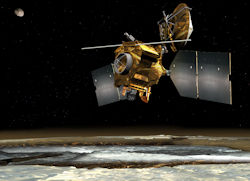 Of all the cameras involved, Mars Reconnaissance Orbiter's HiRISE will deliver the sharpest images: 29 km per pixel. HiRISE should resolve the comet's atmosphere (coma) with more than 850 pixels. Researchers will be on the edge of their seats to see if the camera can also glimpse the nucleus hidden within the gas cloud. Photographing the core could put to rest internet rumors that it is "alien tech."
For Eubanks, getting the maximum amount of data is a labor of love. "I have worked on this very intensively since July," he says. "As my wife would tell you, we have no funding source for this."
Mars is looking big in the window. Let the observing begin!
Realtime Space Weather Photo Gallery
Free: Spaceweather.com Newsletter
CONSTELLATION CAT NIGHT LIGHT: It's the most far-out feline night light ever--the Constellation Cat Crystal Ball. On April 23, 2025, the students of Earth to Sky Calculus launched it to the stratosphere onboard a giant helium balloon.
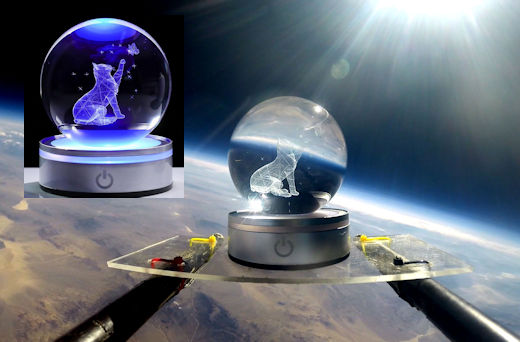
You can have it for $139.95. Outlined by stars in the style of an astronomical constellation, the laser-etched cat comes with an LED stand that produces a soothing glow for your bedside table. Also included: A unique greeting card shows the crystal ball in flight and tells the story of its journey to the edge of space.
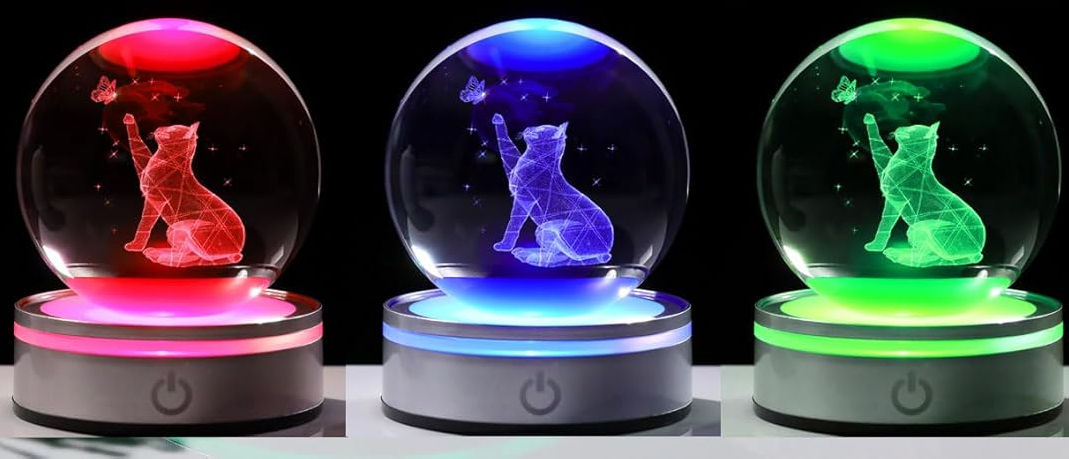
Far Out Gifts: Earth to Sky Store
All sales support hands-on STEM education
Realtime Space Weather Photo Gallery
Free: Spaceweather.com Newsletter
Realtime Aurora Photo Gallery
Free: Spaceweather.com Newsletter