INCOMING: 2 SLOW-MOVING CMES Updated models from NOAA suggest that *two* CMEs are approaching Earth. Both are relatively slow moving, and normally their impact would barely be felt. However, because of the equinox Russell-McPherron effect, their combined impact on Oct. 7-8 could spark a G1-class geomagnetic storm. Aurora alerts: SMS Text.

DON'T FORGET COMET LEMMON: With so much attention on interstellar Comet 3I/ATLAS, it is easy to forget a local comet brightening so rapidly that ordinary sky watchers will soon be able to see it with their own eyes: Comet Lemmon (C/2025 A6). It is falling toward the sun for a close encounter near the orbit of Mercury on Nov. 8th.
"This comet is developing very nicely and it is already an impressive object, well-placed for observation in the morning sky," says Nick James of the British Astronomical Association. "It is definitely worth getting up for!"
The light curve of Comet Lemmon shows that it is about to cross the threshold (m=+6) of naked-eye visibility:
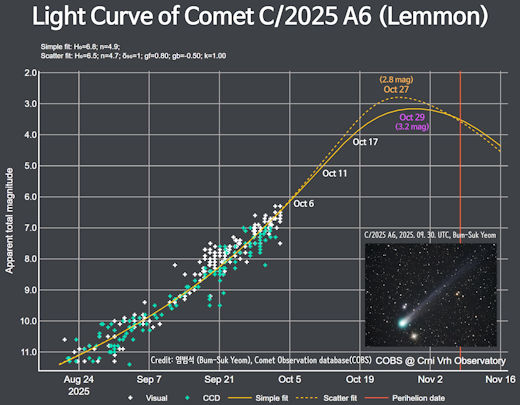
"I think we can now be reasonably confident that this will be a very nice evening object when it is at its brightest around New Moon in late October," says James.
Not only is this comet bright, but also it is remarkably active. In recent nights, amateur astronomers have watched dozens of gaseous knots and filaments billowing down Lemmon's tail. Here's a freeze-frame on Oct. 5th from Italian astronomer Rolando Ligustri:
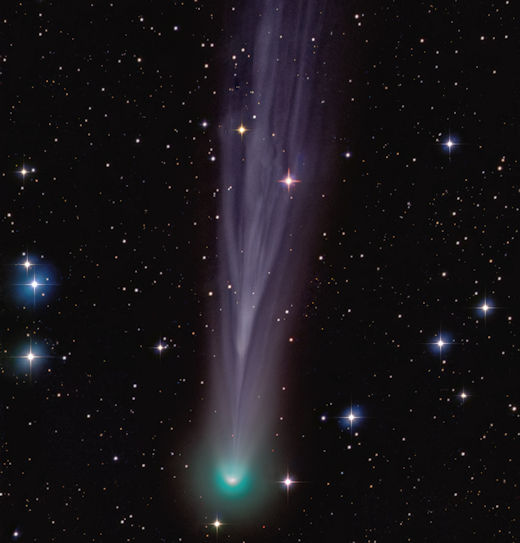
The ever-changing structure in the comet's tail is a likely result of two factors: Buffeting by the solar wind and dynamic jets in the comet's core. They're combining to make this a very satisfying target for astrophotographers.
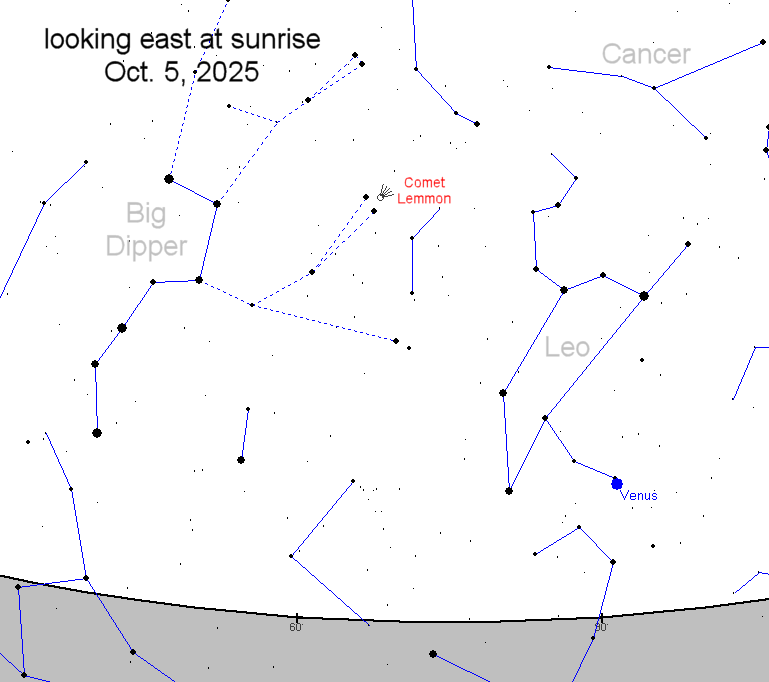
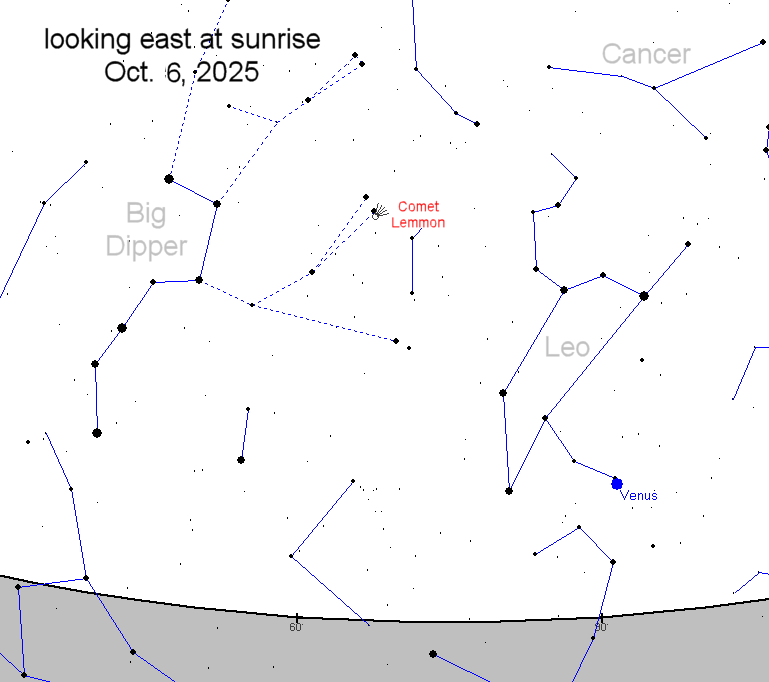
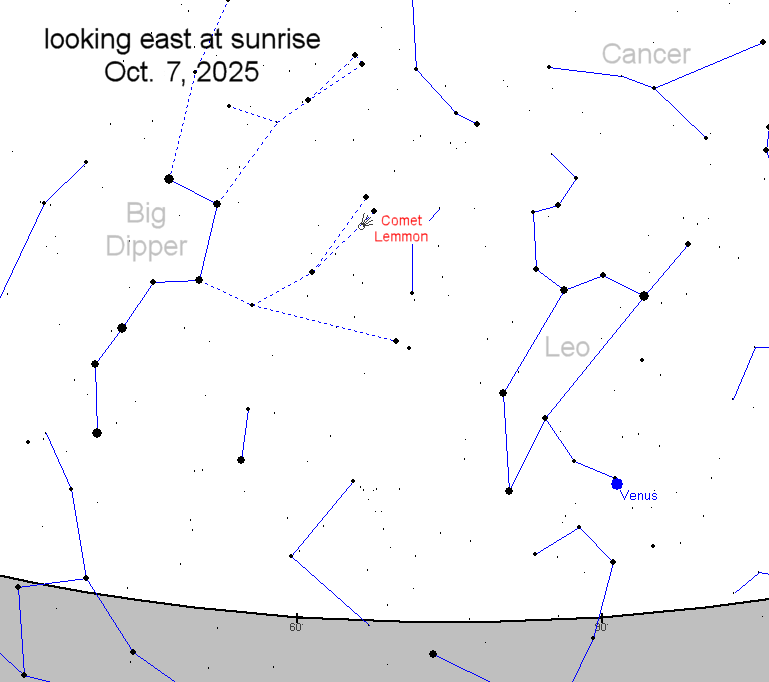
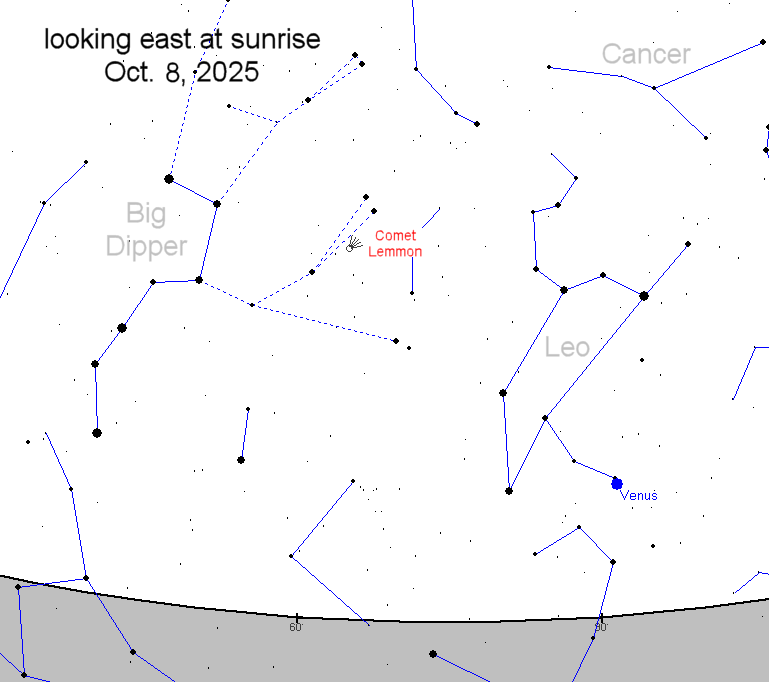
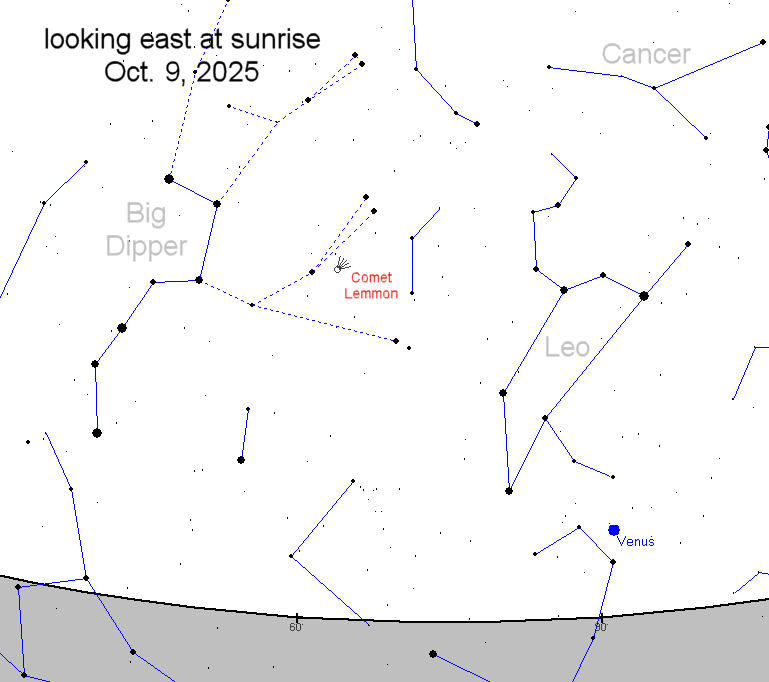
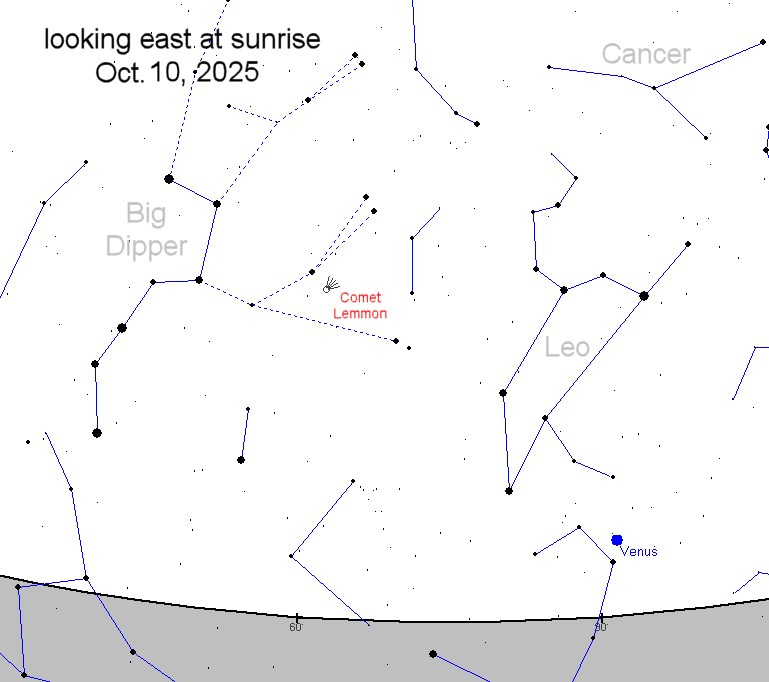
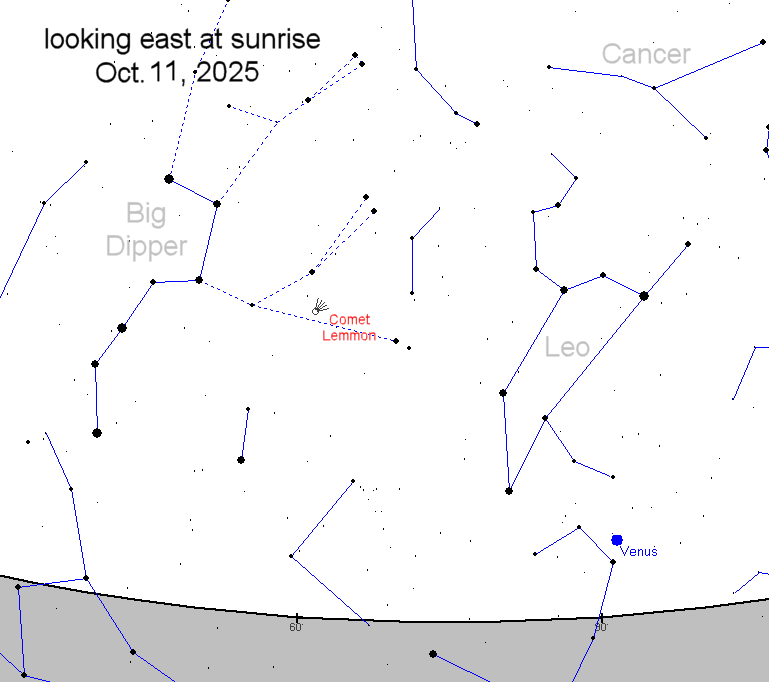
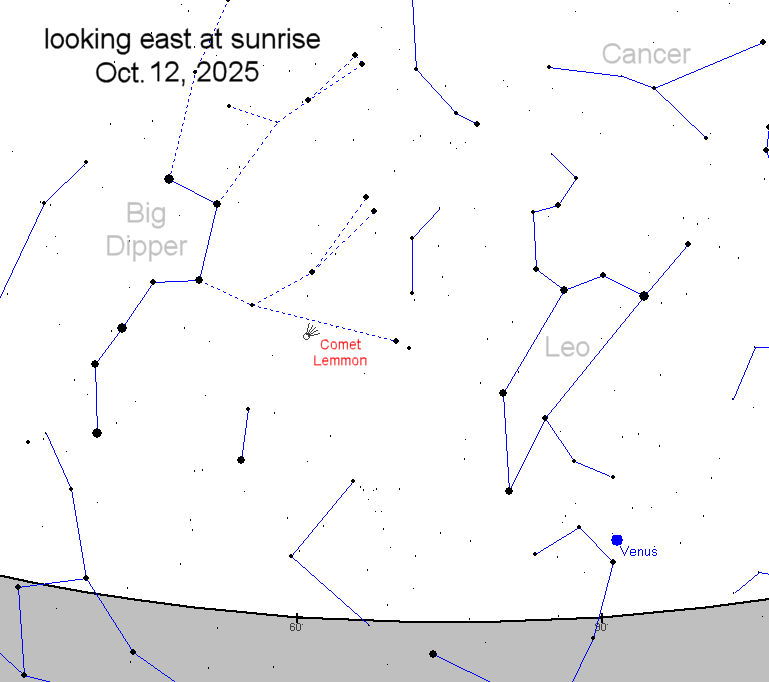
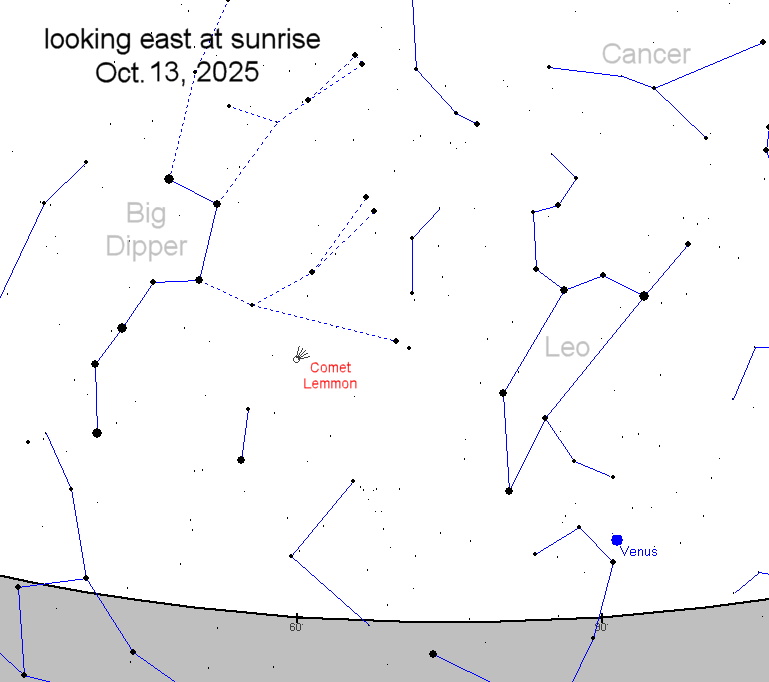
Finding Comet Lemmon is easy. It's in the constellation Ursa Major (the Big Dipper) near the 3rd magnitude star mu Ursa Majoris. For most observers in the northern hemisphere, it is located well above the eastern horizon before sunrise. Sky maps: Oct. 5, 6, 7, 8, 9, 10, 11, 12, 13.
Realtime Comet Lemmon Photo Gallery
Free: Spaceweather.com Newsletter
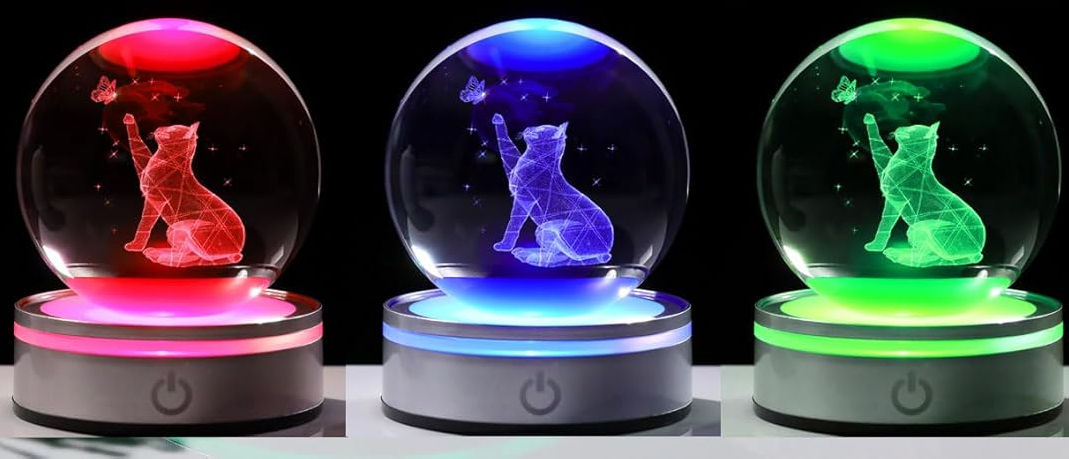
CONSTELLATION CAT NIGHT LIGHT: It's the most far-out feline night light ever--the Constellation Cat Crystal Ball. On April 23, 2025, the students of Earth to Sky Calculus launched it to the stratosphere onboard a giant helium balloon.
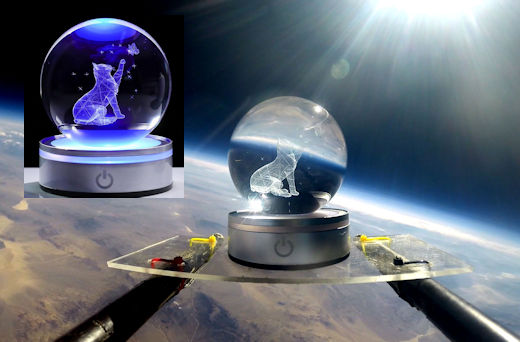
You can have it for $139.95. Outlined by stars in the style of an astronomical constellation, the laser-etched cat comes with an LED stand that produces a soothing glow for your bedside table. Also included: A unique greeting card shows the crystal ball in flight and tells the story of its journey to the edge of space.
Far Out Gifts: Earth to Sky Store
All sales support hands-on STEM education
Realtime Space Weather Photo Gallery
Free: Spaceweather.com Newsletter
Realtime Aurora Photo Gallery
Free: Spaceweather.com Newsletter