CHANCE OF STORMS TODAY: NOAA forecasters say that minor G1-class geomagnetic storms are likely on Oct. 8th when a slow-moving CME is expected to hit Earth's magnetic field. If the storm does occur, however, it might be invisible, with auroras overwhelmed by the glare of the Harvest Moon. CME impact alerts: SMS Text.

OCTOBER NOCTILUCENT CLOUDS: The correct season for noctilucent clouds (NLCs) is summer, when sunwarmed plumes of water vapor rise to the edge of space and crystallize around disintegrated meteoroids. October is not the correct time. Yet just before sunrise on Oct. 7th, Jay Michaels looked up from Springfield, Virginia (39N) and saw them anyway:
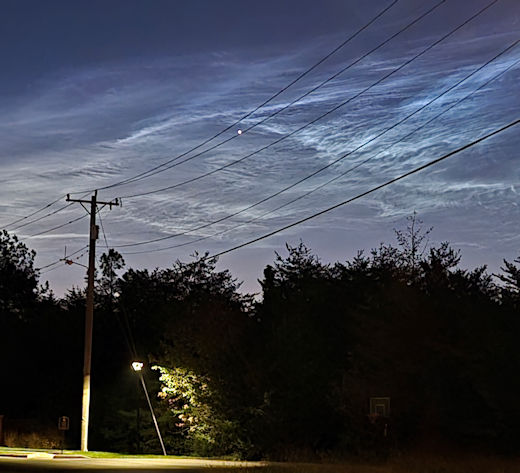
"I watched the clouds for more than an hour on my way to work," says Michaels. "They did not move or dissipate throughout my commute. I'd never seen anything like them, except in photos on this website!"
Why October? Because these NLCs are not natural. They were made by SpaceX.
A few hours before Michaels left for work, a Falcon 9 rocket blasted off from Cape Canaveral carrying 28 Starlink satellites. As the engines climbed through the atmosphere, they emitted a spray of watery exhaust that mixed with meteor dust to produce the NLCs.
This is not new. Space shuttle launches in the 1990s produced some of the first widely-noticed "rocket NLCs." The phenomenon has intensified in recent years with the exponential increase in SpaceX launch rates. A 2022 study led by Michael Stevens of the Naval Research Lab confirms the strong correlation between modern rocket launches and the abundance of NLCs.
Noctilucent clouds aren't just a summertime phenomenon anymore. Check the SpaceX launch schedule, and be alert for NLCs.
Realtime Noctilucent Cloud Photo Gallery
Free: Spaceweather.com Newsletter
NASA SPACEWALKER DOLLAR COINS: They're back by popular demand: NASA Spacewalker $1 Coins (D Mint). On Sept. 6, 2025, the students of Earth to Sky Calculus launched more rolls to the edge of space onboard a cosmic ray research balloon:
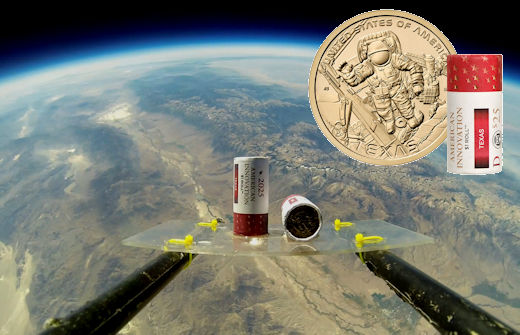
You can have a single coin for $49.95 or an entire unbroken roll for $299.95. No longer available from the US Mint, these rare coins flew 101,944 feet above the Sierra Nevada. One side shows an American astronaut conducting a spacewalk outside the International Space Station; the other side features the Statue of Liberty in profile.
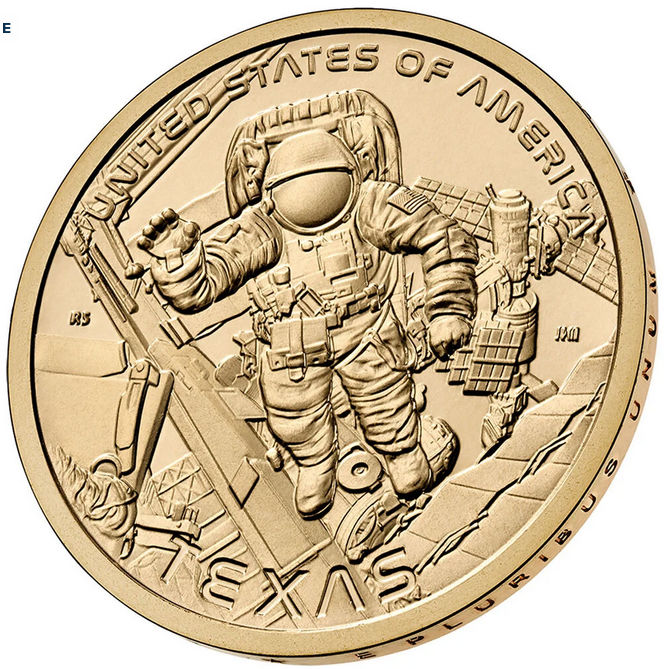
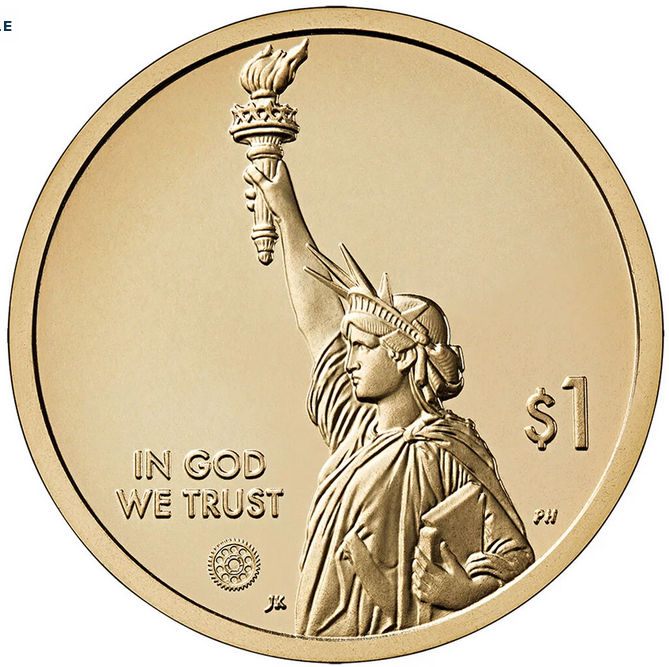
In July, we flew the P Mints. If you purchased them, these D Mints will complete your set.
The students are selling space coins to support to support their cosmic ray research program. (Helium is expensive!) Each order comes with a greeting card showing the coins in flight and telling the story of their journey to the stratosphere and back again.
Far Out Gifts: Earth to Sky Store
All sales support hands-on STEM education
Realtime Space Weather Photo Gallery
Free: Spaceweather.com Newsletter
Realtime Aurora Photo Gallery
Free: Spaceweather.com Newsletter