MULTIPLE CMEs COULD SPARK AURORAS TONIGHT: All week long, active sunspot 4246 has been puffing CMEs toward Earth--at least three of them. Although the CMEs are individually faint and relatively slow, they could combine to cause a G2-class geomagnetic storm when they arrive on Oct. 16th. If such a storm materializes, auroras could descend into a dozen or more northern-tier US states. CME impact alerts: SMS Text.

COMET LEMMON IS APPROACHING EARTH: On Oct. 21st, Comet Lemmon (C/2025 A6) will make its closest approach to Earth. The brightening comet has reached magnitude +4.5, making it an easy target for off-the-shelf cameras. "Here’s a quick shot with my old 135mm Pentax Takumar," says P-M Hedén of Vallentuna, Sweden:
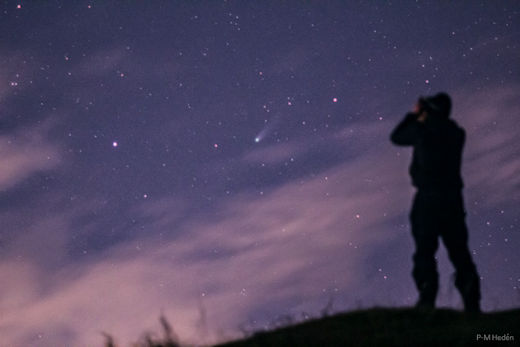
"I managed to see the comet through binoculars and it was a beautiful sight," says Hedén. "I could see part of the tail, too, beside the classic green ball."
At closest approach, the comet will be 0.6 AU away--not super close, but near enough to vault the comet to naked-eye visibility at 3rd or 4th magnitude. Even cell phones with night-sky photo settings should be able to catch it.
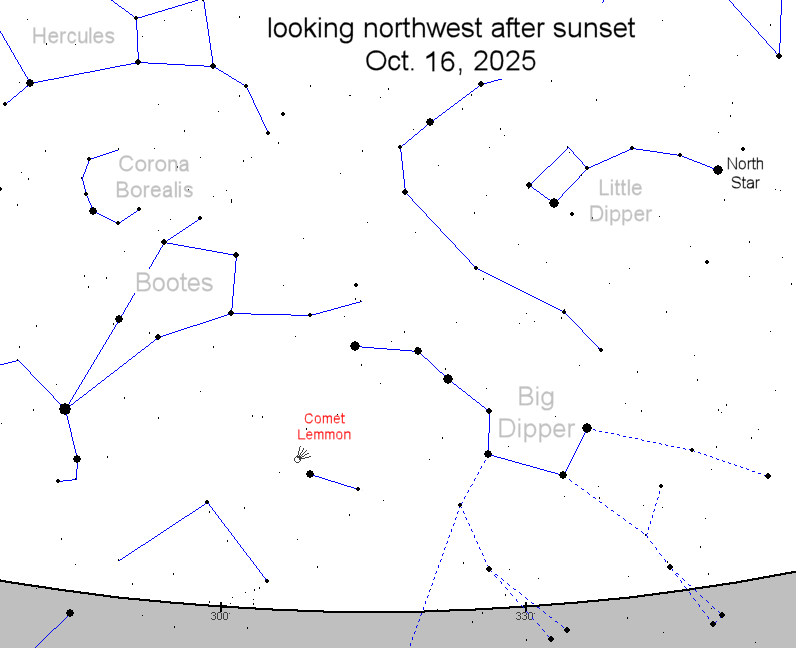
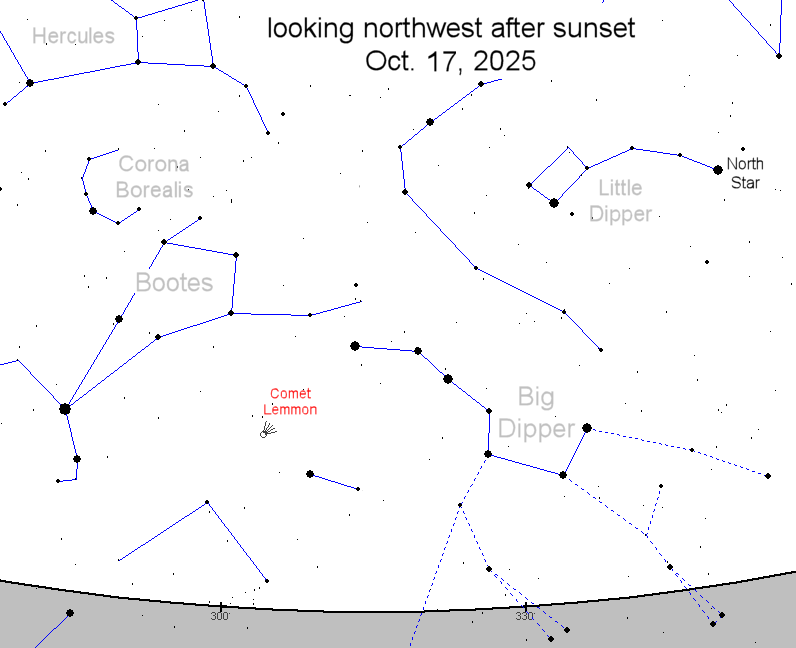
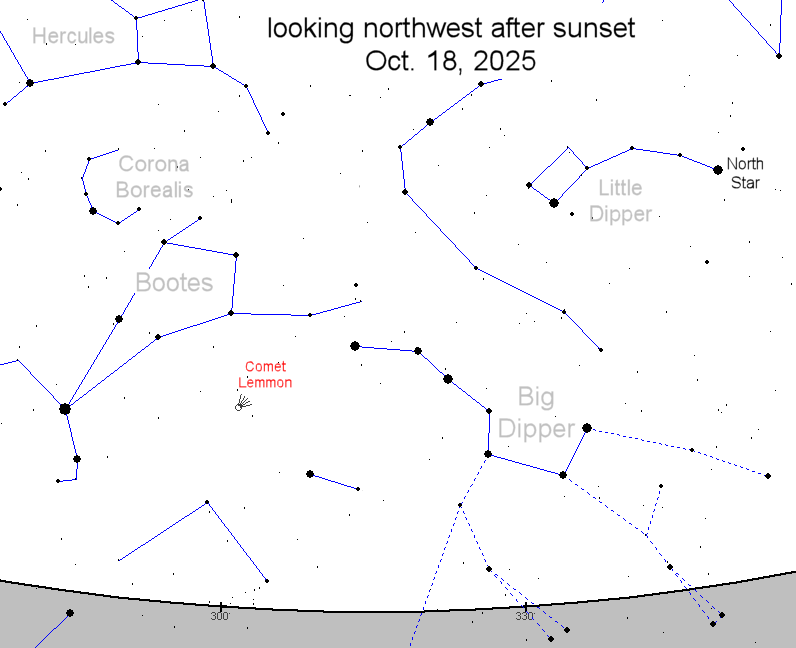
Look for Comet Lemmon low in the northwestern sky after sunset. Its relatively low altitude in a dark sky will provide excellent opportunities to frame it with a scenic foreground. Sky maps: Oct. 16, 17, 18, 19, 20, 21.
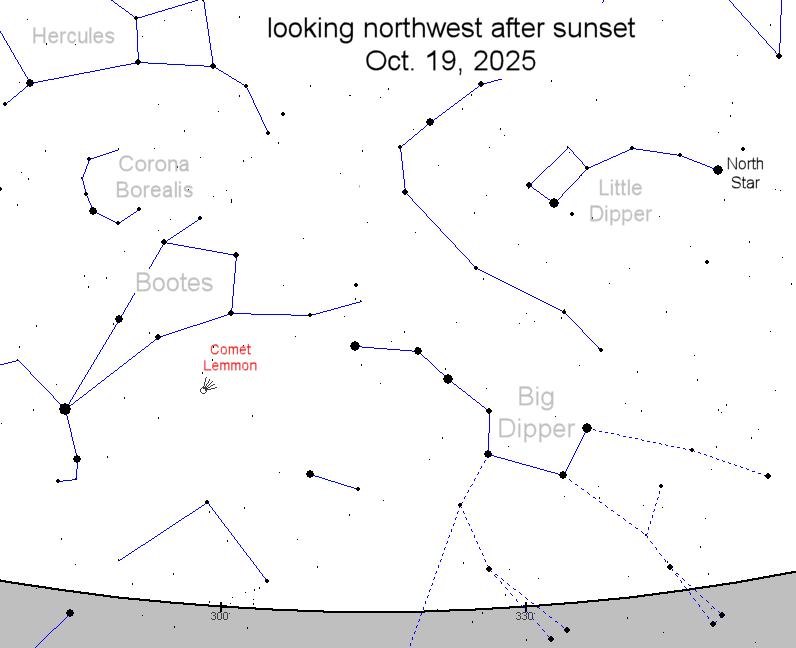
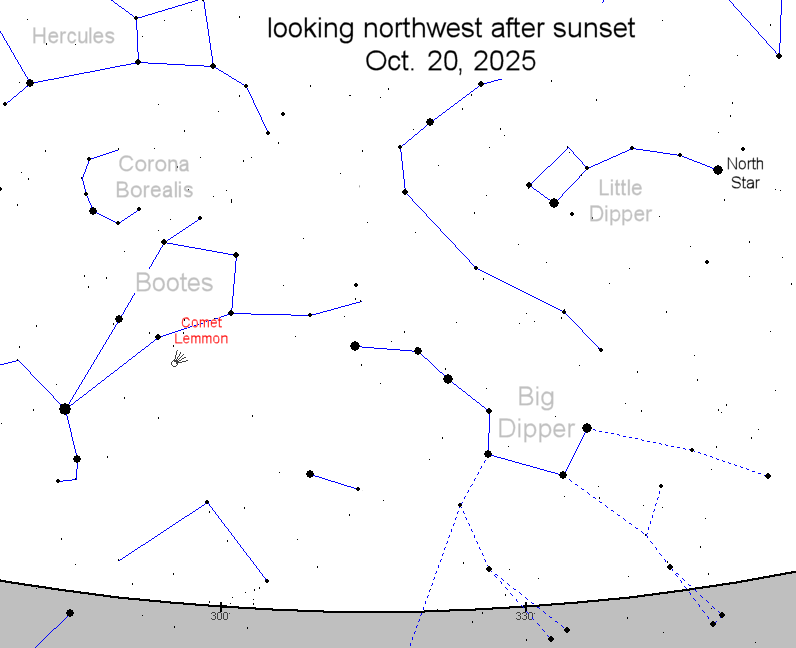
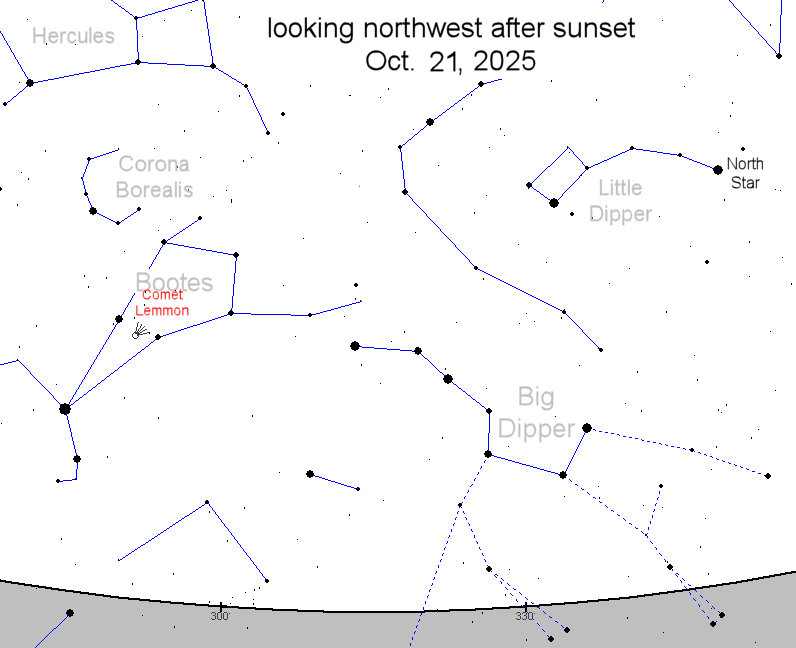
Realtime Space Weather Photo Gallery
Free: Spaceweather.com Newsletter
THE THOLIAN WEB: Readers of a certain age will remember The Tholian Web. It appeared in a 1968 episode of Star Trek (The Original Series). Captain Kirk was caught between dimensions while Spock and crew rushed to rescue him. At the same time, the Tholians weaved a destructive energy web around the Enterprise.
Fast forward to 2025, and the Tholian Web is real:

The checkerboard streaks in this image were photographed by Lorenzo Comolli of Saint Barthelemy, Italy. He was trying to take a picture of Comet Lemmon in September, but as the exposure time increased, more and more Starlink satellites crossed the field of view.
"It seems that the promise of Musk of dark satellites is completely void. They are really bright (2nd and 3rd magnitude)," says Comolli. "This makes me worry for the future quality of the sky."
He's right to worry. Right now, Earth is surrounded by about 8000 Starlinks with future plans calling for 42,000. Amazon’s Project Kuiper has begun launching its own planned 3,200-satellite broadband fleet, while China is building two more megaconstellations: Guowang (13,000 satellites) and "Qianfan" ("Thousand Sails", 15,000-plus). Together, they could eventually rival or surpass Starlink.
Who are the Tholians? You decide.
FOREVER ROSE FROM SPACE: This bloom will never wilt. The Forever Rose flew to the edge of space on Oct. 4, 2025, floating 101,875 feet above the Sierra Nevada Mountains of central California.
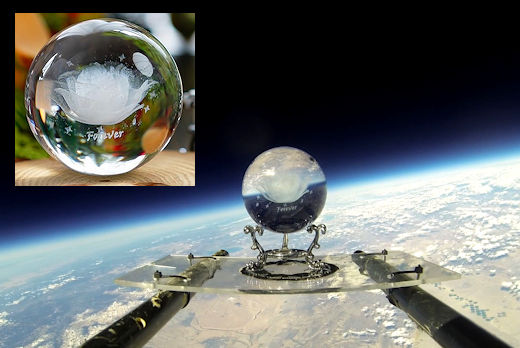
You can have it for $98.95. The 3-dimensional rose is laser etched inside a 2.3-inch diameter premium K9 crystal ball. The word "forever" is inscribed beneath the rose to denote eternal love. The stand is included, and it comes with a unique gift card showing the crystal ball at the top of Earth’s atmosphere.
Far Out Gifts: Earth to Sky Store
All sales support hands-on STEM education
Realtime Aurora Photo Gallery
Free: Spaceweather.com Newsletter