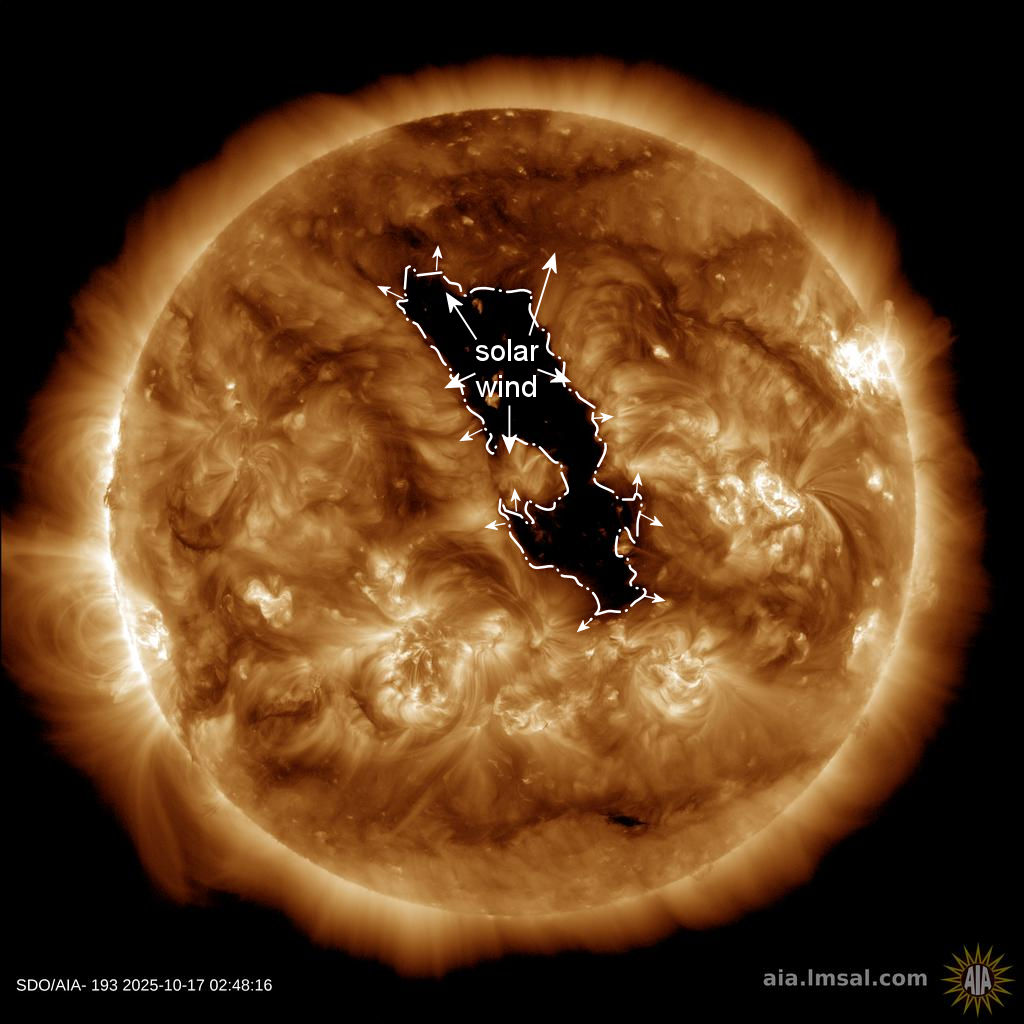
A HOLE IN THE SUN'S ATMOSPHERE: A high-speed stream of solar wind is approaching Earth. The gaseous material is flowing from a large equatorial hole in the sun's atmosphere, and it could spark a G1-class geomagnetic storm when it arrives on Oct. 21st. Aurora alerts: SMS Text.

LATE-ARRIVING CME SPARKS GEOMAGNETIC STORM: Better late than never? An overdue CME passed near Earth during the late hours of Oct. 17th, sparking a G1-class geomagnetic storm. "Here in Alaska, bright auroras blew the roof off!" reports aurora hunter Todd Salat from just outside Cantwell, AK:

"I could even see the reds with my naked eye," he adds. "I'm not sure if this display was from a bonified CME impact being fashionably late, or perhaps just a good chunk of negative Bz… but it sure was dramatic!"
For a few hours on Oct. 18th, the storm intensified to category G2. In the USA, northern lights descended as far south as Utah. The storm is subsiding now, although intermittent periods of G1 activity remain possible during the early hours of Oct. 19th.

Did you see the show? Submit your photos here.
Realtime Aurora Photo Gallery
Free: Spaceweather.com Newsletter
THE CRAZY DYNAMIC TAIL OF COMET LEMMON: One thing astronomers have consistently noted about Comet Lemmon (C/2025 A6) is the unusually high level of activity in its tail. Chunks, knots and whirls of gas are almost-constantly tumbling or rippling away from the nucleus. Here's an example captured on Oct. 14th by Rick Albrecht of Cumming, Georgia:
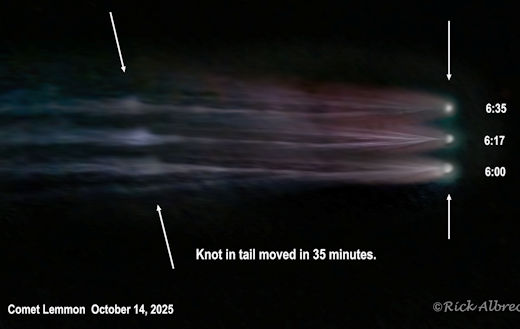
"I could see one prominent knot moving noticably in only 35 minutes," he marvels. "Even though I was taking brief 30 second exposures, features in the tail were changing too much to stack!"
This extreme degree of activity is probably a sign of two things: (1) Unstable jets and "hot spots" in the comet's core, and, (2) buffeting by the solar wind and CMEs. Whatever it is, it shows no signs of abating.
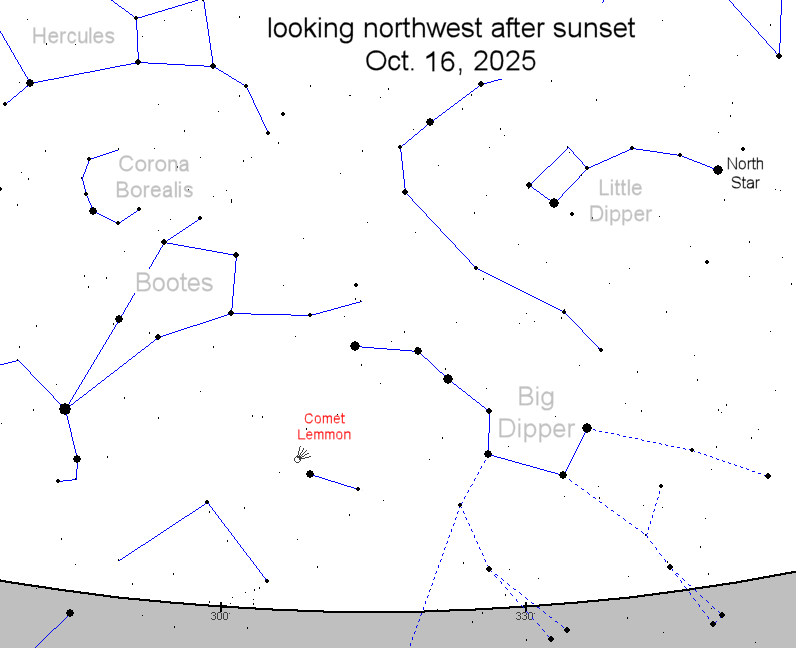
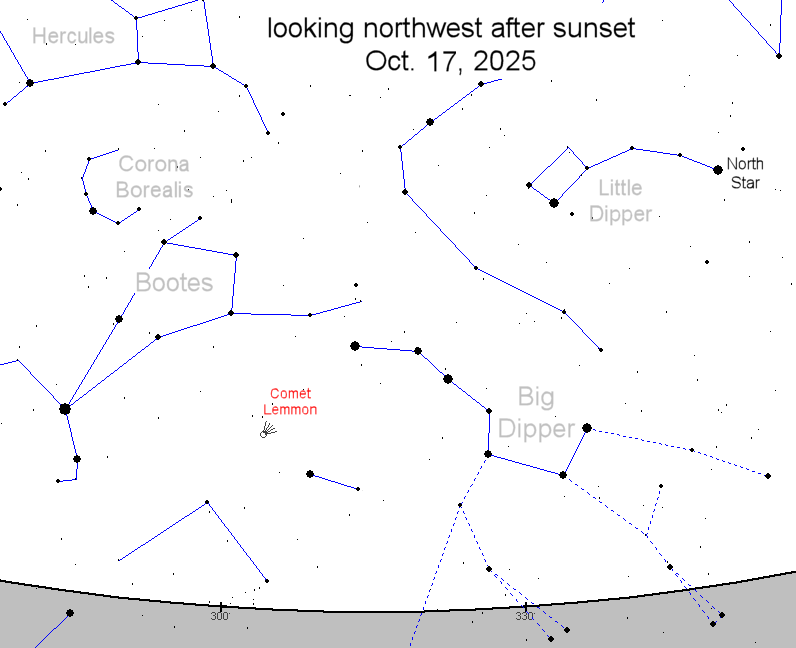
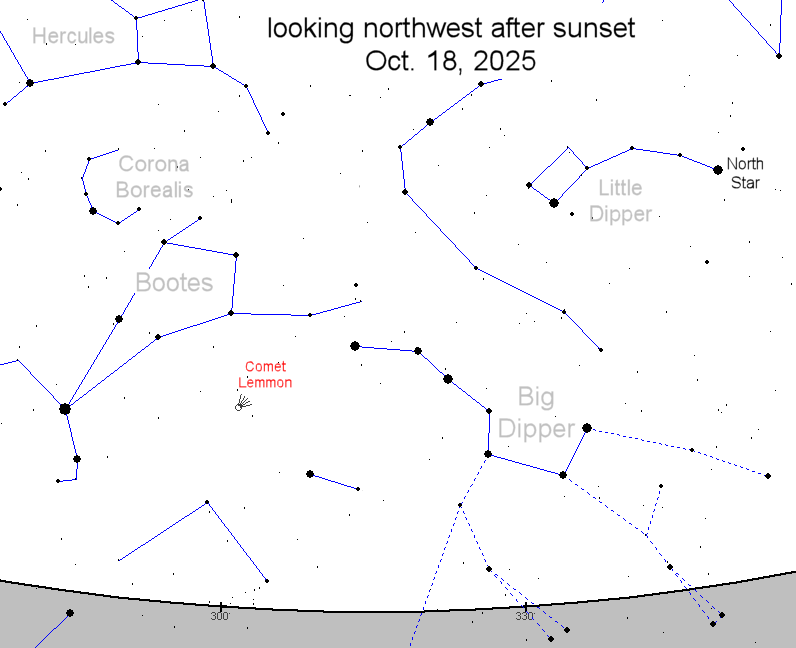
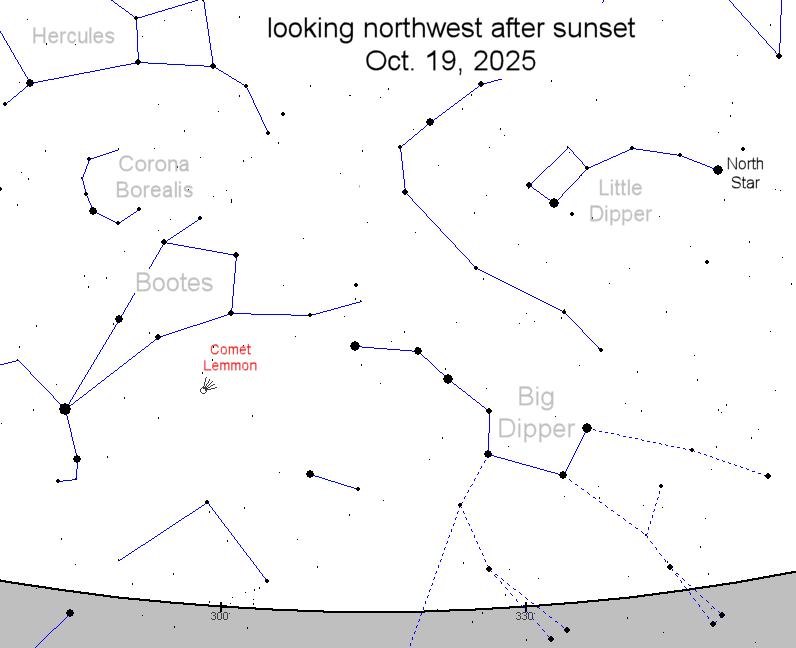
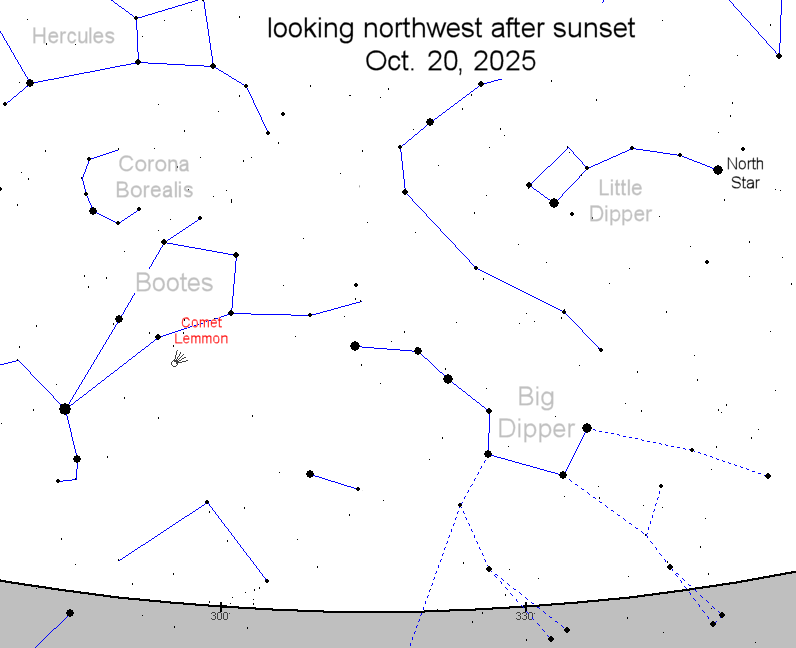
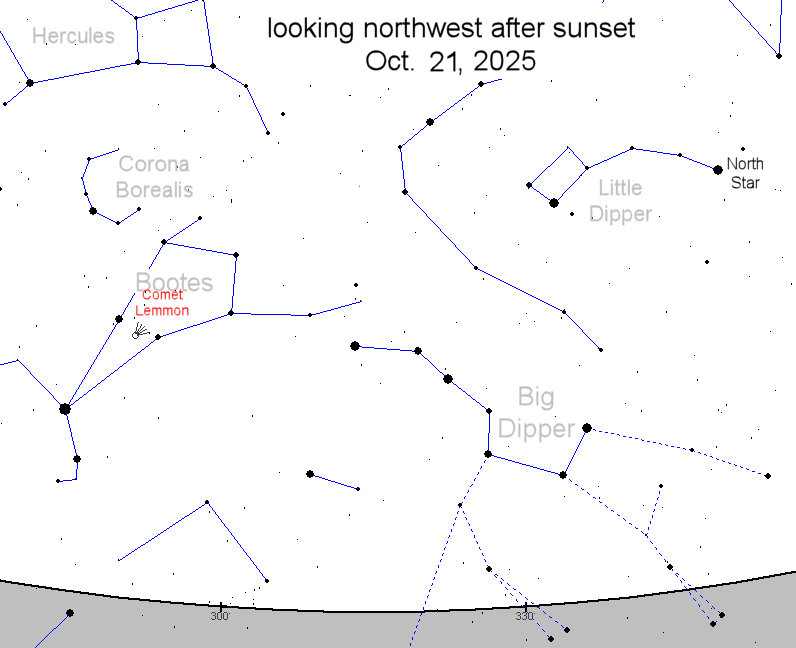
On Oct. 21st, Comet Lemmon will make its closest approach to Earth, approximately 0.6 AU away. At that time, it could become a naked-eye object at 4th magnitude. Even cell phones with night-sky photo settings should be able to catch the comet's green core with a fraction of the tail. Point your optics low in the northwestern sky after sunset. Sky maps: Oct. 16, 17, 18, 19, 20, 21.
Realtime Space Weather Photo Gallery
Free: Spaceweather.com Newsletter
FOREVER ROSE FROM SPACE: This bloom will never wilt. The Forever Rose flew to the edge of space on Oct. 4, 2025, floating 101,875 feet above the Sierra Nevada Mountains of central California.
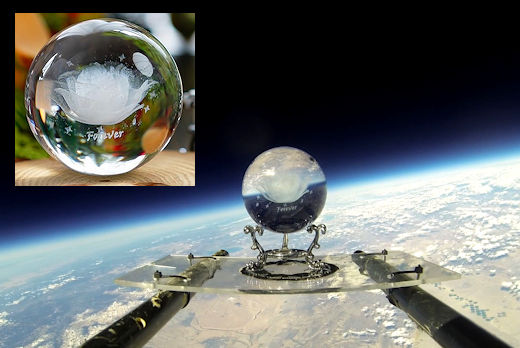
You can have it for $98.95. The 3-dimensional rose is laser etched inside a 2.3-inch diameter premium K9 crystal ball. The word "forever" is inscribed beneath the rose to denote eternal love. The stand is included, and it comes with a unique gift card showing the crystal ball at the top of Earth’s atmosphere.
Far Out Gifts: Earth to Sky Store
All sales support hands-on STEM education
Realtime Aurora Photo Gallery
Free: Spaceweather.com Newsletter