GEOMAGNETIC STORMS POSSIBLE THIS WEEK: A minor CME is heading for Earth, followed close behind by a high-speed stream of solar wind. Their combined impact could cause G1/G2-class geomagnetc storms on Oct. 28/29. High-latitude sky watchers should be alert for auroras. Aurora alerts: SMS Text.


COMET LEMMON VS. STARLINK: At a satellite conference in 2020, Elon Musk was asked about Starlink interfering with astronomy. "I’m confident that we will not cause any impact whatsoever in astronomical discoveries, zero," he replied. Fast forward 5 years. On Oct. 25, 2025, astronomer Michael Jaeger recorded this video of Comet Lemmon (C/2025 A6) over Stixendorf, Austria:
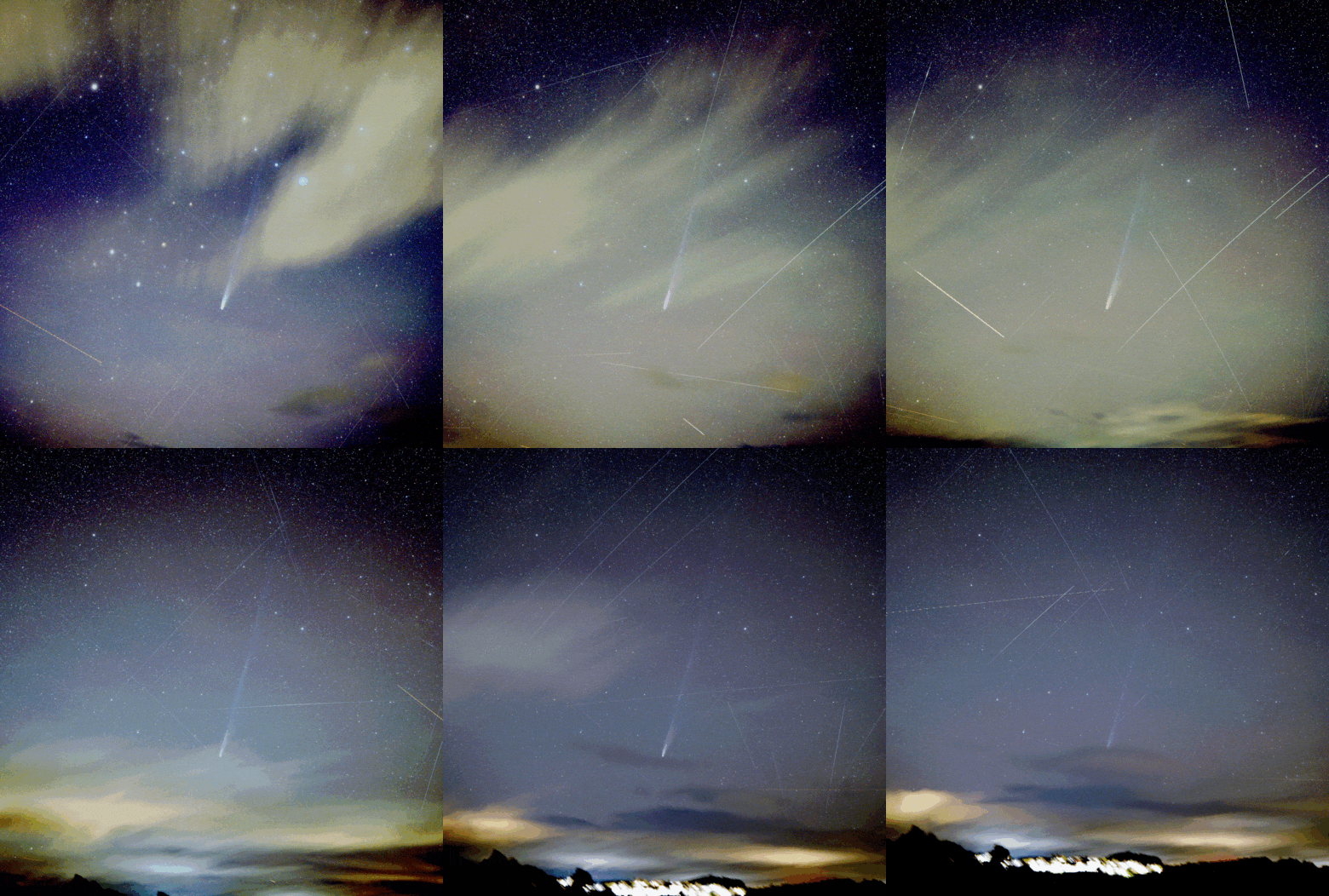
This first thing you noticed? It probably wasn't the comet. During the 43 minute video, Comet Lemmon is criss-crossed by dozens of bright streaks--mostly Starlink satellites. Since 2020, SpaceX has launched more than 9,000 of them--and they are definitely having an impact on astronomy.
Astronomers are finding ways to avoid the clutter. For instance, shorter exposures can capture the comet between satellite flybys, and some photographers are simply throwing away frames that include streaks. The current satellite population is still small enough for such measures to work, but the problem is growing.
SpaceX's future plans call for as many as 42,000 Starlinks. Amazon’s Project Kuiper has begun launching its own planned 3,200-satellite broadband fleet, while China is building two more megaconstellations: Guowang (13,000 satellites) and "Qianfan" ("Thousand Sails", 15,000-plus). Together, they could eventually rival or surpass Starlink.
Enjoy Comet Lemmon ... while you can.
more Starlink vs. Comet images: from Oscar Blanco of Guitiriz, Galicia, Spain; from Michael Jaeger of Stixendorf, Austria
Realtime Space Weather Photo Gallery
Free: Spaceweather.com Newsletter
VOYAGER GOLDEN RECORD: This is a must-have Christmas ornament for space fans: The Voyager Golden Record. On Oct. 31, 2023, the students of Earth to Sky Calculus launched it to the stratosphere onboard a cosmic ray research balloon:
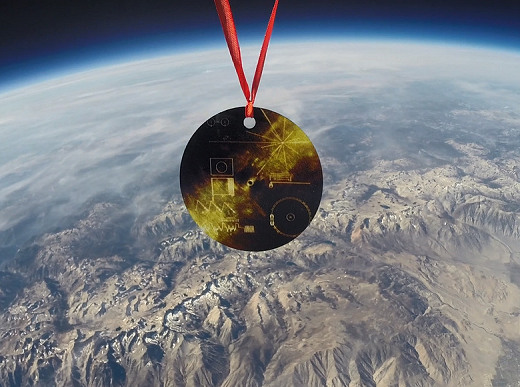
You can have it for $99.95. The 3-inch aluminum disk is imprinted with instructions for extraterrestrials, telling them how to play the sounds of Earth, which are sailing through interstellar space onboard NASA's Voyager probes. Having touched the edge of space, this is the closest thing on Earth to an actual Golden Record.
The students are selling these unique ornaments to support their cosmic ray ballooning program. Each one comes with a greeting card showing the ornament in flight and extra materials decoding the markings on the disk.
Far Out Gifts: Earth to Sky Store
All sales support hands-on STEM education
Realtime Aurora Photo Gallery
Free: Spaceweather.com Newsletter