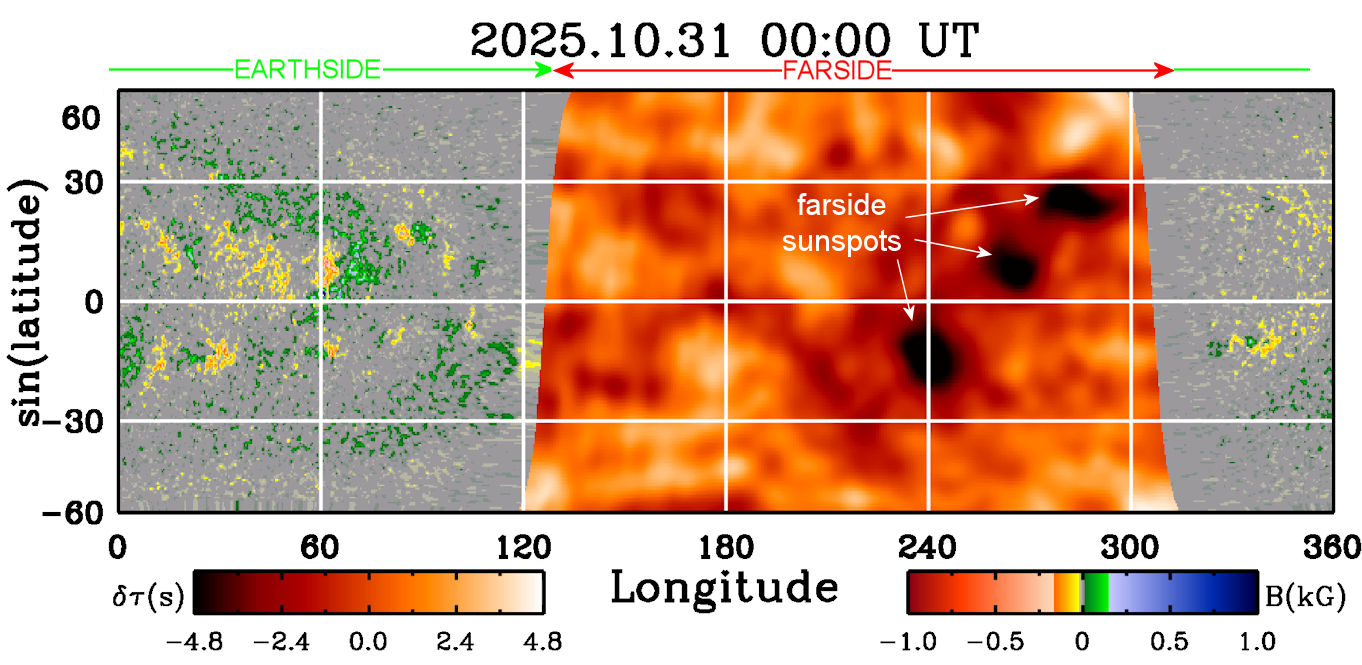
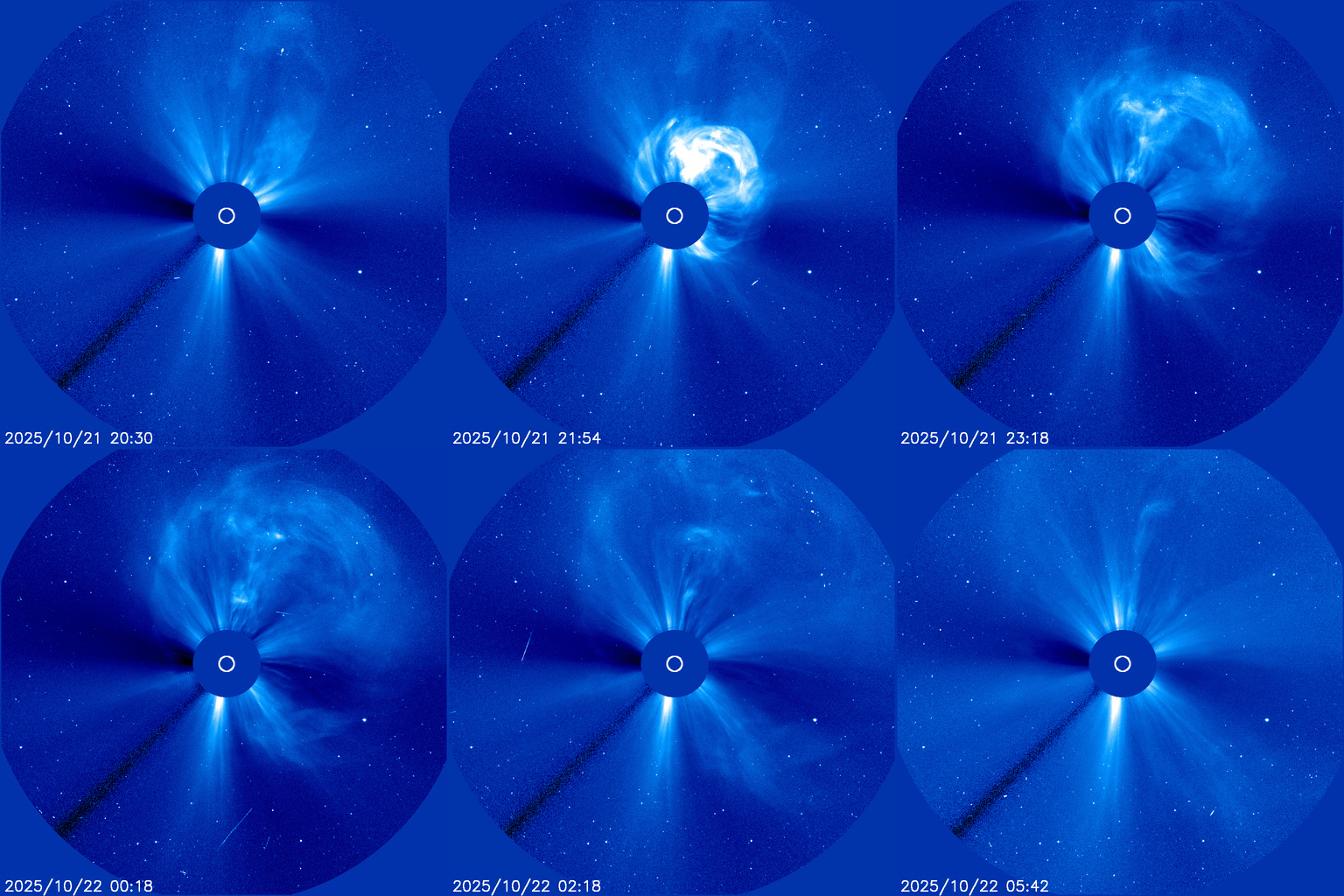
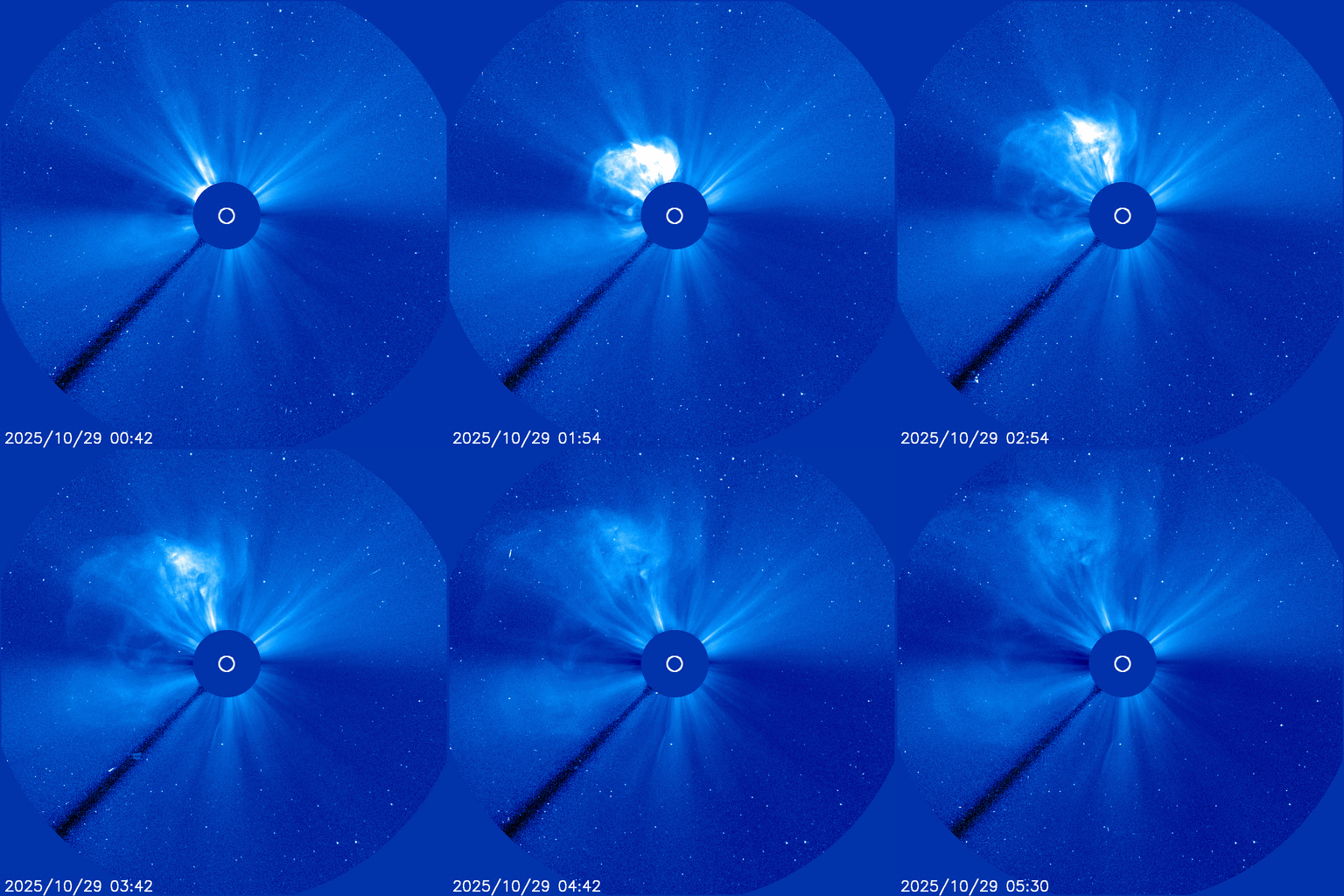
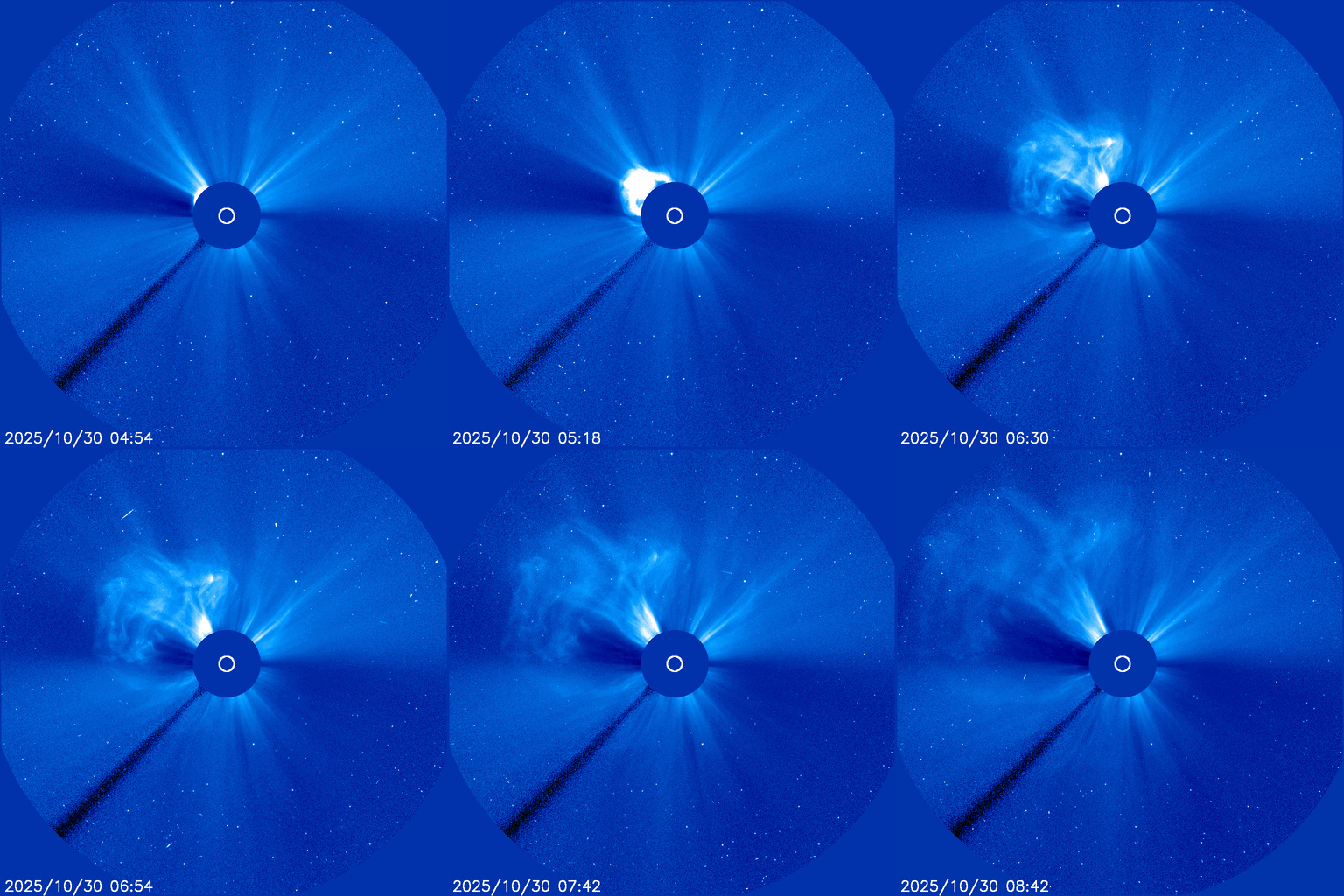
FARSIDE SUNSPOTS ARE COMING: Helioseismic maps of the sun's farside reveal three sunspots only days away from turning toward Earth. One of them has been busy hurling CMEs into space ( #1, #2, #3). If this activity continues apace, Earth could soon be in the line of fire. CME impact alerts: SMS Text.
A RARE GOLDEN COMET: Most comets are green, and sometimes blue. In June Lake, California, amateur astronomer Dan Bartlett is tracking a rare golden comet. Introducing, Comet ATLAS (C/2025 K1):
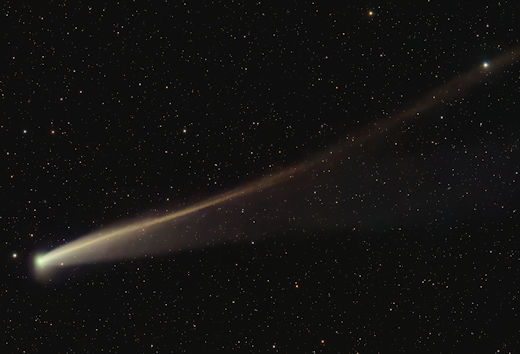
"This comet was not supposed to survive its Oct 8th perihelion (0.33 AU)," says Bartlett. "But it did survive, and now it is displaying a red/brown/golden color rarely seen in comets."
What's going on? The chemistry of this Oort Cloud comet is strange. It lacks the carbon compounds normally found in comets, according to spectroscopy by David Schleicher of the Lowell Observatory. "All of the carbon-bearing species, including CN, are unusually low," he wrote in Astronomer's Telegram #17362.
In sunlight, cometary gases turn green because of diatomic carbon (C2), and blue because of ionized carbon monoxide (CO+). Subtracting these colors apparently leaves gold. We don't know exactly why--or if it may have something to do with its recent close encounter with the sun.
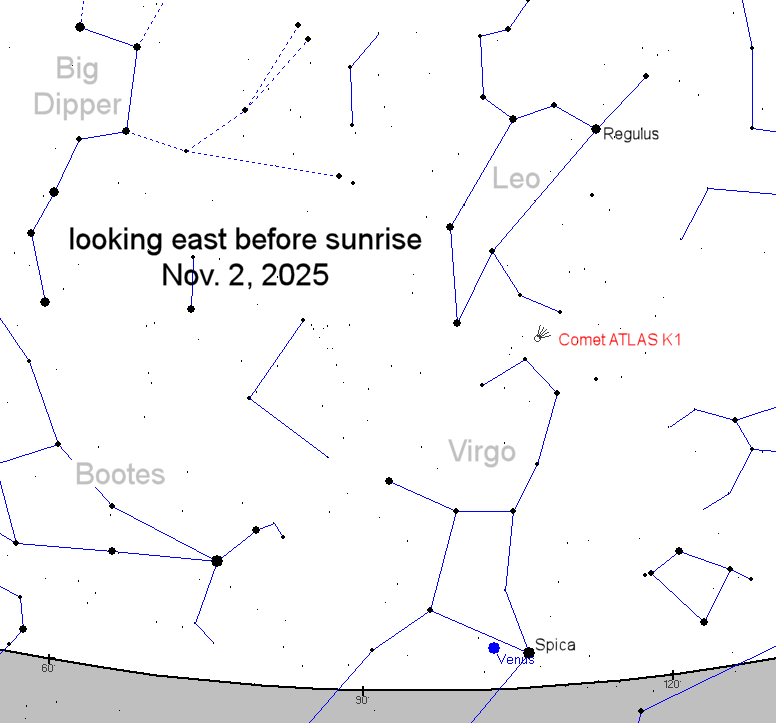
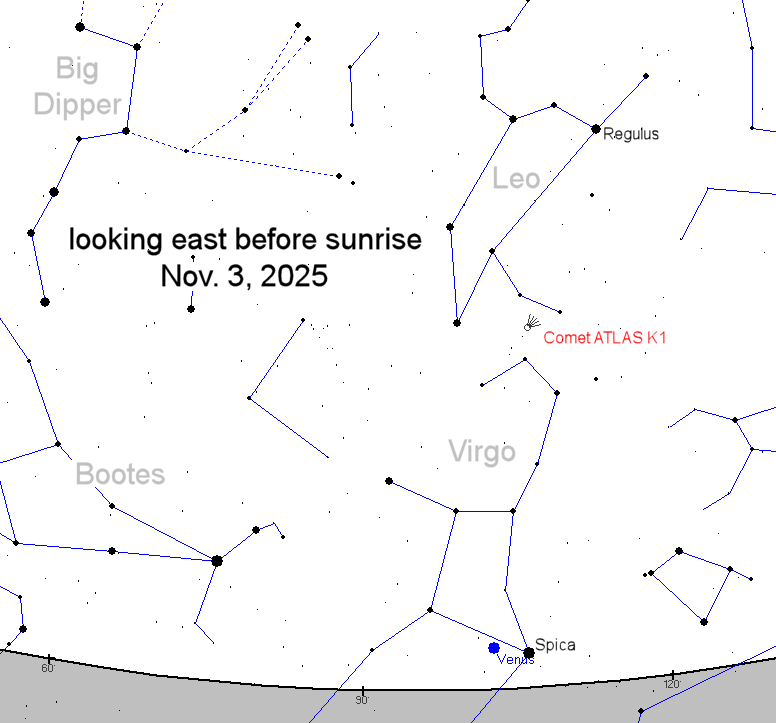
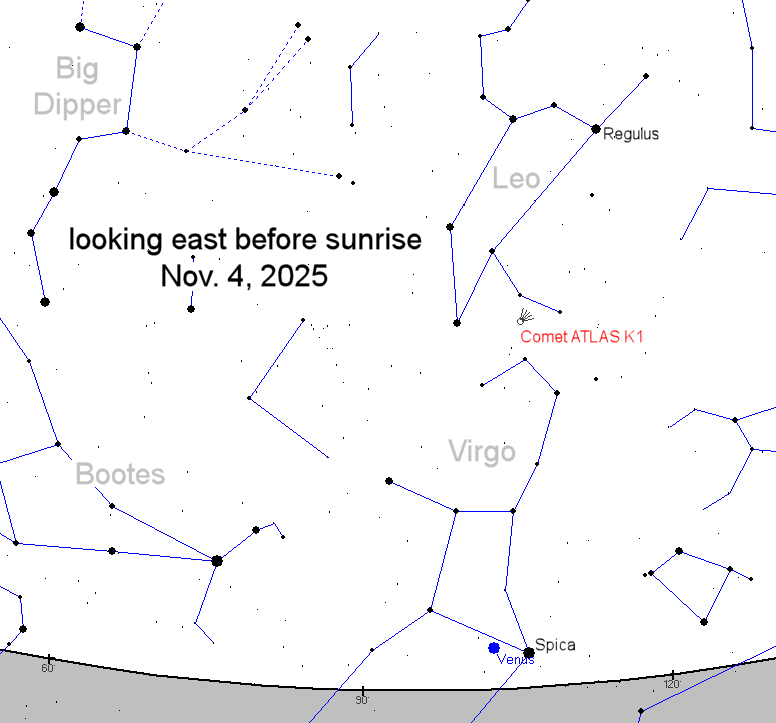
"The comet is fairly impressive at 9th magnitude," says Bartlett. That makes it a relatively easy target for backyard telescopes. Point your optics to the boundary between Virgo and Leo in the eastern sky shortly before sunrise. Sky maps: Nov. 2, 3, 4, 5, 6, 7.
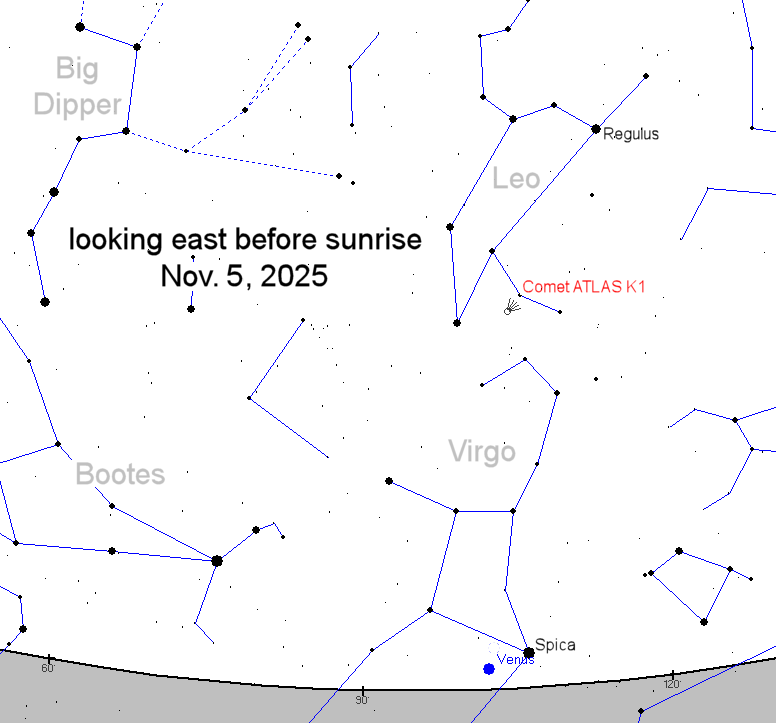
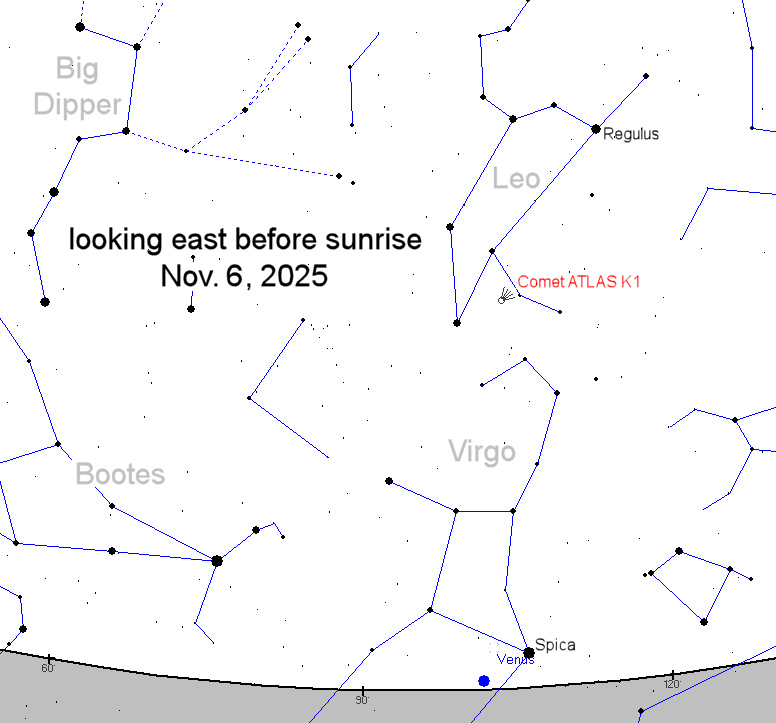
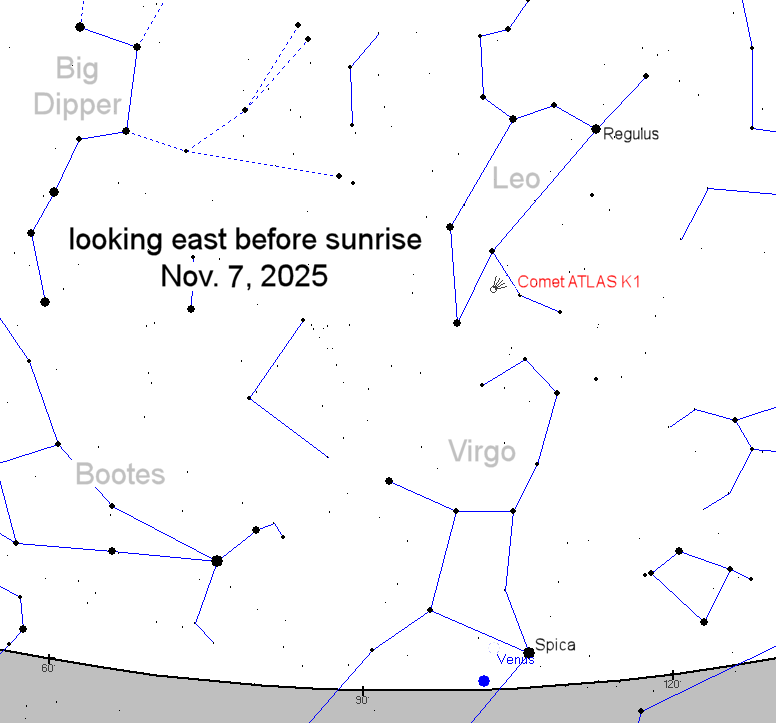
more images: from Chris Schur of Payson, Arizona; from Richard Sears of Ballico, California
Realtime Space Weather Photo Gallery
Free: Spaceweather.com Newsletter
DODGERS SPACE BASEBALL: Move over, Shohei Ohtani. The students of Earth to Sky Calculus have just set a new home run record. This Dodger ball launched by the students sailed 123 kilometers, and touched the edge of space:

You can have it for $99.95. (The price might increase if the Dodgers win the World Series tonight :)
The baseball traveled to the stratosphere onboard a cosmic ray balloon, alongside X-ray and gamma-ray sensors that the students use to study atmospheric radiation. After the data were collected, the payload parachuted back to Earth, landing in the desert near Gemfield, Nevada, more than 123 km from the California launch site. At the apex of the flight, the baseball was 35.4 km above the ground, experiencing temperatures as low as -62 C and air pressures only 0.2% of sea level. Now that's a homer.
Far Out Gifts: Earth to Sky Store
All sales support hands-on STEM education
Realtime Aurora Photo Gallery
Free: Spaceweather.com Newsletter