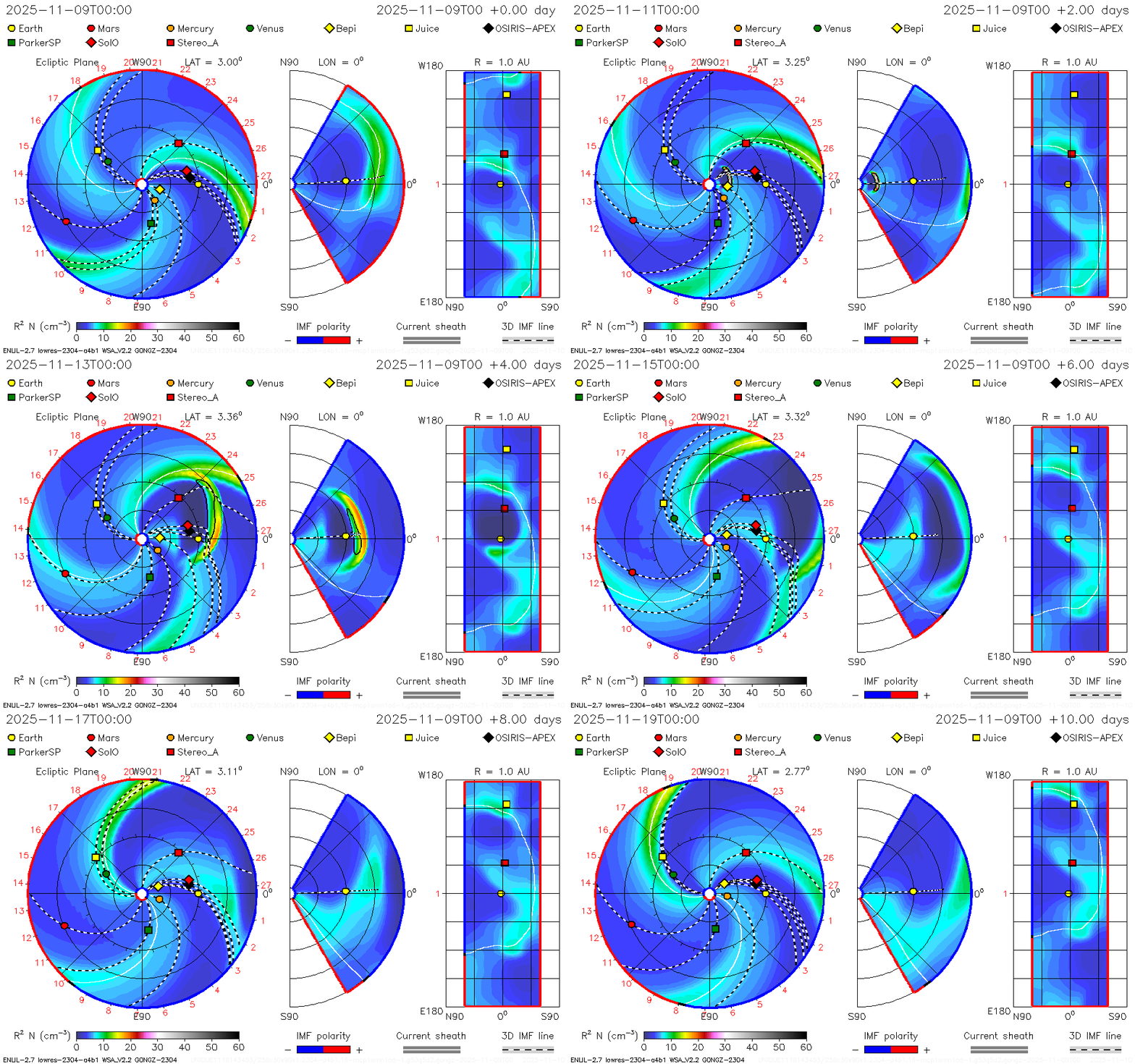
TWO CMEs ARE COMING: A new forecast model from NOAA shows two CMEs hitting Earth--one on Nov. 10th and another on Nov. 11th. The one-two punch could spark G1 to G3-class geomagnetic storms this week. The second CME is of particlar interest because it came from yesterday's powerful X1.8-class solar flare. Its arrival could bring episodes of strong storming. CME impact alerts: SMS Text.

MAKE THAT *THREE* CMEs... Big sunspot 4274 erupted again this morning (X1.2 @ 0919 UTC), adding another CME to the train of storm clouds approaching Earth. NOAA's CCOR-1 coronagraph recorded the full halo event:
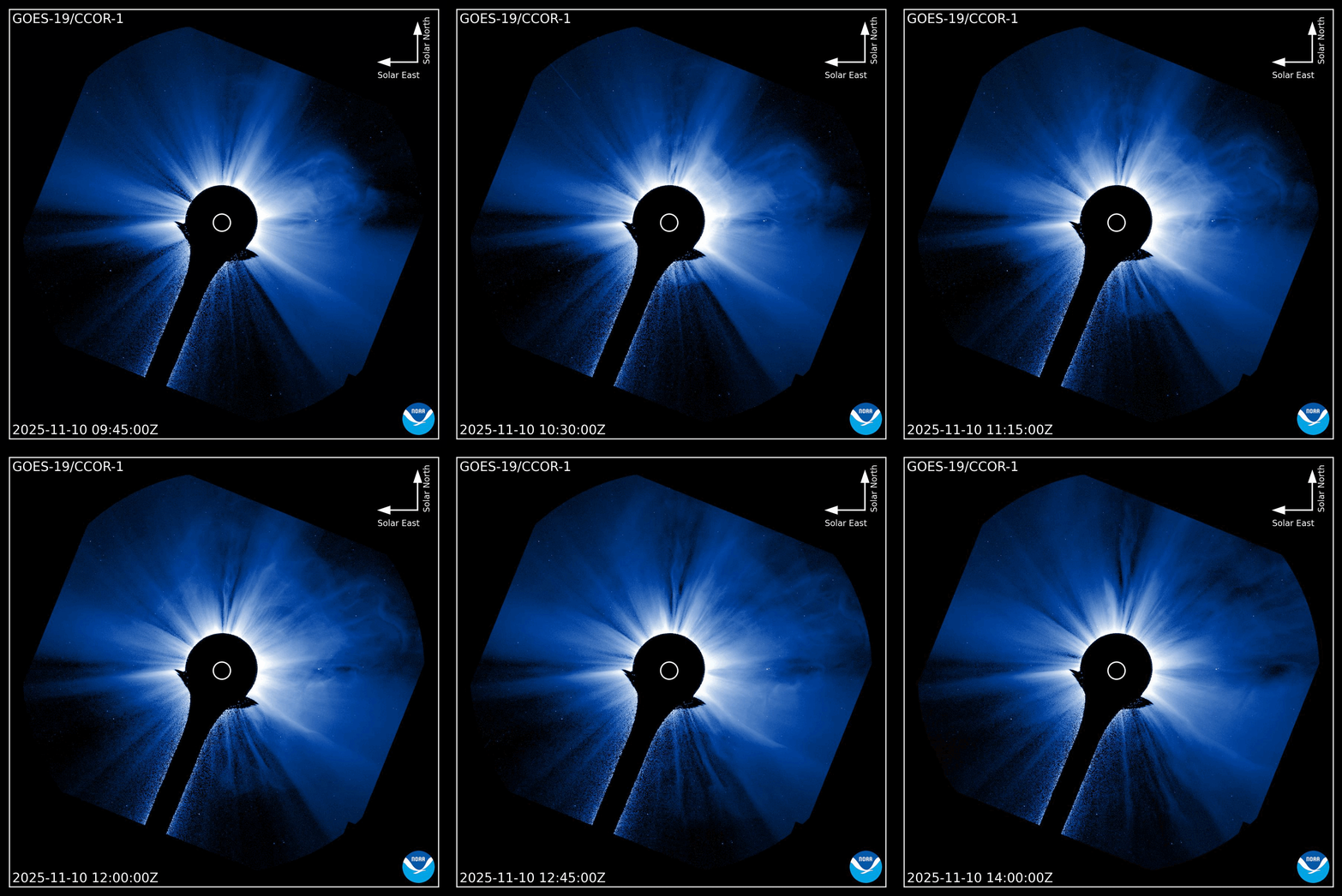
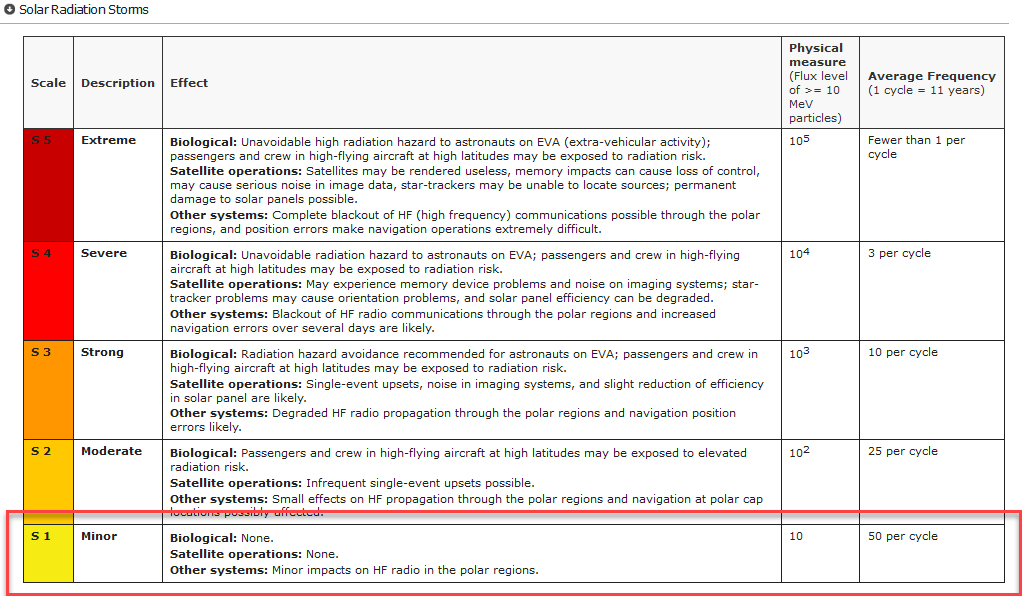
This is a potent CME. High-energy protons accelerated by shock waves within its leading edge are now peppering Earth's atmosphere with an S1-class radiation storm. The CME itself will reach Earth early on Nov. 12th, bringing a chance of strong geomagnetic storms. Stay tuned! CME impact alerts: SMS Text.
THE 'SMOKING TAIL' OF INTERSTELLAR COMET 3I/ATLAS: NASA's not releasing its images of Comet 3I/ATLAS. No problem. We have our own. On Nov. 9th, Frank Niebling and Michael Buechner used a telescope in Spain to take this picture of the comet in the pre-dawn sky:
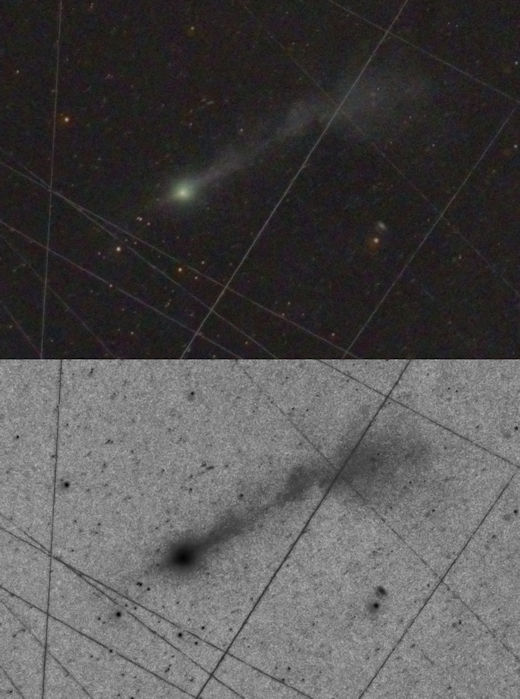
"Despite the comet's low altitude (9o to 12o) and interference from bright moonlight (82 % illuminated), we were able to capture this image with nice details," says Niebling. "The picture is heavily processed to show the antitail on one side and the 'smoking' tail on the other."
Other amateur astronomers have photographed 3I/ATLAS as well. All recent images show signs of a comet-like tail. Michael Jaeger's photo on Nov. 8th revealed a spray of 4 or 5 plumes, confirmed in part by Alberto Quijano Vodniza's photo on the same morning. The tail's structure may be changing from day to day.
Monitoring is encouraged. Astronomers, please photograph 3I/ATLAS in the mornings ahead and submit your images here.
One more thing: What are all the streaks in Niebling's photo? Starlink satellites. Earth is surrounded by more than 8000 of them, so it is almost impossible to take photos of this low-hanging morning comet without Starlink interference.
Realtime Space Weather Photo Gallery
Free: Spaceweather.com Newsletter
NATURAL MOONSTONE CELTIC LOVE KNOT PENDANT: Are you looking for a far-out gift? Nothing says "I love you" like a natural moonstone from the edge of space. On June 12th, the students of Earth to Sky Calculus flew this one 111,877 feet above Earth's surface onboard a cosmic ray research balloon:
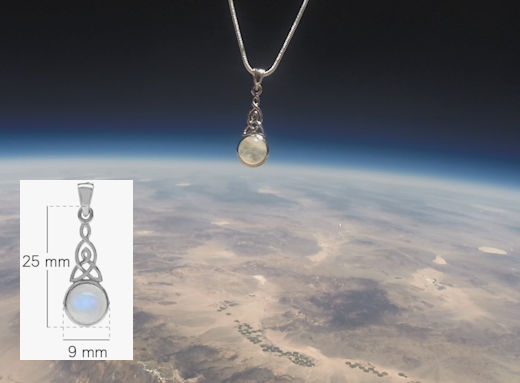
You can have it for $139.95. The moonstone is wrapped in a sterling silver Celtic love knot and suspended from a matching 18-inch sterling silver chain. It spend more than two hours at the top of Earth's atmosphere before parachuting to a landing site in Death Valley National Park.
The students are selling space pendants to support their cosmic ray ballooning program. Each one comes with a greeting card showing the item in flight and telling the story of its journey to the edge of space.
Far Out Gifts: Earth to Sky Store
All sales support hands-on STEM education
Realtime Aurora Photo Gallery
Free: Spaceweather.com Newsletter