NASA TO RELEASE IMAGES OF 3I/ATLAS: Today, Nov. 19th, NASA will release images of 3I/ATLAS taken during the comet's close encounter with Mars on Oct. 2nd. Although the images are more than a month old, they may have much to tell us--especially those from the HiRISE camera onboard Mars Reconnaissance Orbiter. With a spatial resolution of only 30 km per pixel and a side view of the comet's anti-tail and jets, HiRISE got a view of the comet so far impossible from Earth. Tune into the live event at 3pm EST.
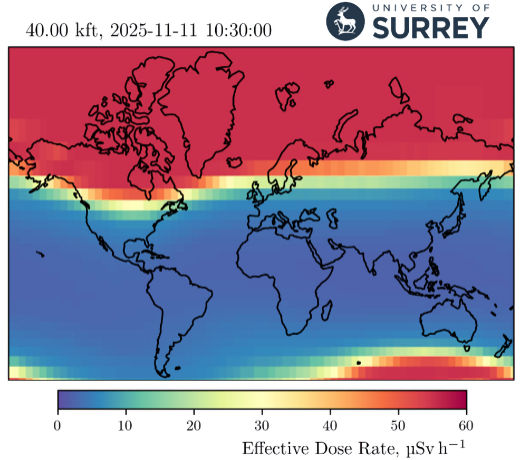
AN INTENSE GROUND LEVEL EVENT--FIRST RESULTS: A week after the Veteran's Day solar storm, researchers in the UK are releasing their first measurements of the storm's intense radiation. According to an analysis from the Surrey Space Centre and the UK Met Office, radiation at aviation altitudes jumped to its highest level in two decades..
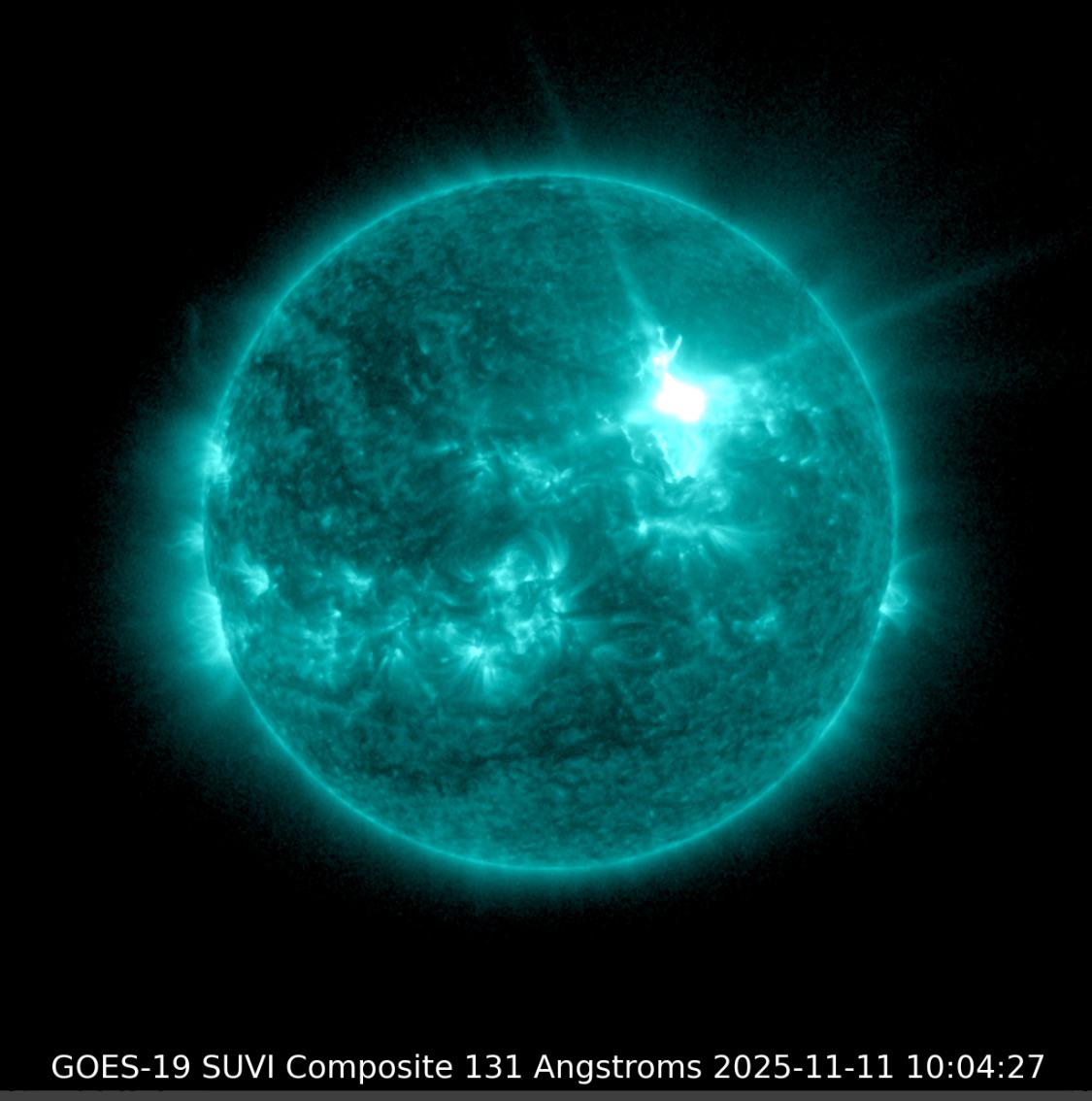
Above: The X5-class solar flare on Nov. 11, 2025, which caused the GLE
"This was the strongest Ground Level Event (GLE) since Dec. 13, 2006," says Professor Clive Dyer of the Surrey Space Centre. "Neutron monitors around the world detected it."
The event began with an X5-class solar flare on Nov. 11th. Dyer and colleagues rapidly organized balloon launches with radiation sensors over the UK. They found effective dose rates at 40,000 feet exceeding 55 μSv per hour, with some flight paths possibly reaching 80 μSv per hour. Certain high-latitude transatlantic flights may have received twice the normal cosmic-ray dose.
That's not enough radiation to cause a health emergency for passengers, but it was a concern for avionics. During the storm's peak, the researchers estimate that single-event upsets (bit-flips in computer memory) could have occurred at rates of ~60 errors per hour per gigabyte.
Significant GLEs occur once or twice every solar cycle. The largest of the modern era happened on Feb. 23, 1956. During that GLE, air travelers would have absorbed doses more than 100 times normal--potentially enough to ground flights. Researchers are still unsure what caused it because space-based solar observatories didn't exist at the time.
Last week's GLE was only 2% as large as the 1956 behemoth. This means much bigger events are possible. Indeed, tree rings and ice cores reveal that GLEs thousands of times more intense have happened in recent millennia. These are known as Miyake Events. Modern society simply hasn't experienced one yet.
"Bigger events are coming," says Dyer. "And we need to be ready."
Realtime Aurora Photo Gallery
Free: Spaceweather.com Newsletter
SASQUATCH SANTA CHRISTMAS ORNAMENT: No Christmas tree is complete without one: The Sasquatch Santa Ornament. The students of Earth to Sky Calculus flew it to the stratosphere on Nov. 16th.
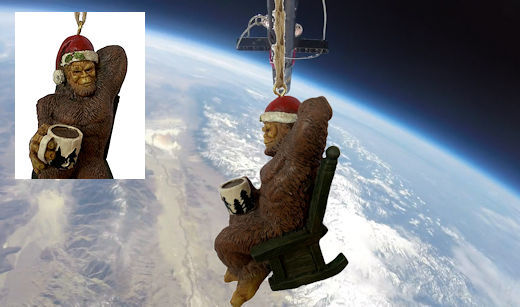
You can have it for $98.95. Hand-sculpted in the USA, this humorous ornament shows the hairy elf relaxing with a mug of hot chocolate after a busy night of Christmas deliveries. Its durable polyresin construction makes it lightweight enough to hang on any tree but sturdy enough to last for many Christmases to come.
The students of Earth to Sky Calculus are selling space ornaments to support their cosmic ray balloning program. Each one comes with a greeting card showing the ornament in flight and telling the story of its journey to the edge of space.
Far Out Gifts: Earth to Sky Store
All sales support hands-on STEM education
Realtime Space Weather Photo Gallery
Free: Spaceweather.com Newsletter