CO-ROTATING INTERACTION REGION: Minor G1-class geomagnetic storms are possible on Nov. 25-26 when a co-rotating interaction region (CIR) is expected to hit Earth's magnetic field. CIRs are transition zones between fast and slow-moving streams of solar wind. They're like mini-CMEs. CIRs contain shock waves and enhanced magnetic fields that do a good job sparking Arctic auroras. Aurora alerts: SMS Text.

THE *OTHER* COMET ATLAS: Interstellar Comet 3I/ATLAS is getting all the headlines, but there's another, local, Comet ATLAS that's just as interesting. Comet ATLAS (C/2025 K1) is dramatically falling apart:
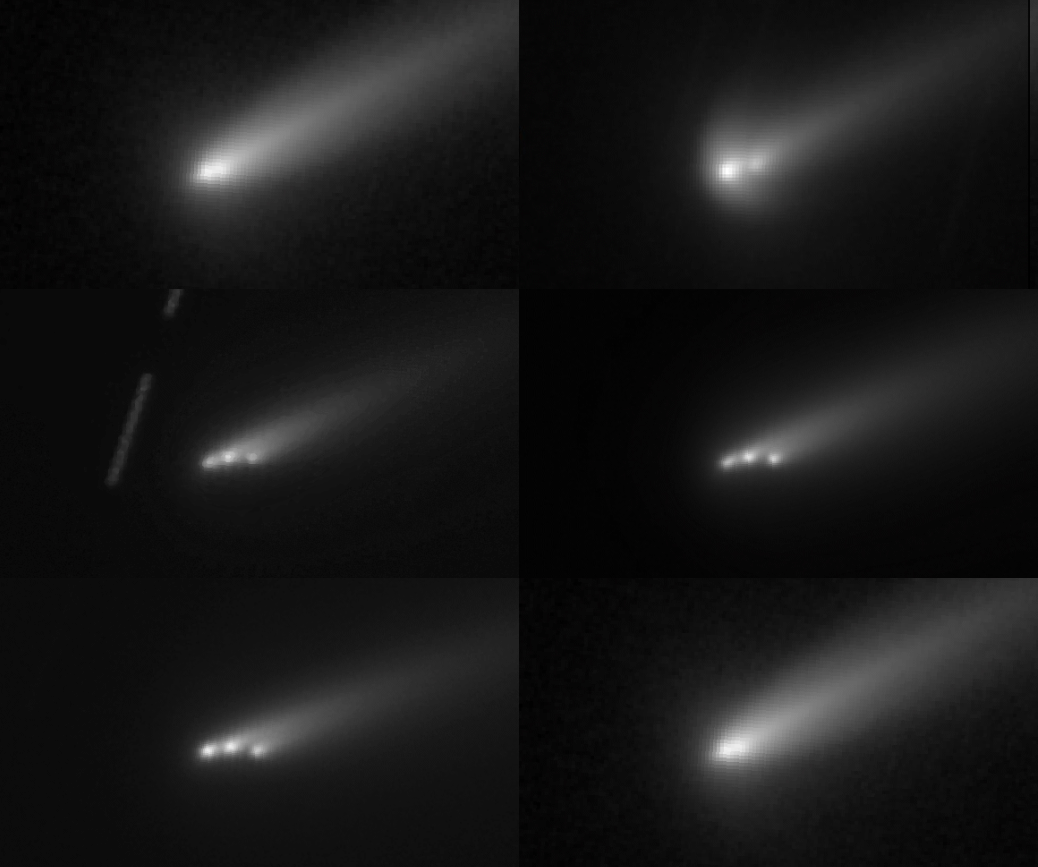
"Following brightness surges in early November, we have been able to observe this comet splitting into three brighter fragments for the past two weeks," says photographer Michael Jäger. "The animation shows it on November 12, 14, 18, 19, and 20th."
This is no ordinary comet. Earlier this month, amateur astronomer Dan Bartlett of June Lake, California, noticed that it had a golden color--completely unlike the greens and blues we see in most comets. Even 3I/ATLAS is green and blue!
The golden color is probably linked to the comet's strange chemistry. Carbon compounds, which give comets their usual green and blue colors, are severely depleted in C/2025 K1. No one knows why.
Perhaps the lack of carbon has made Comet ATLAS fragile. In the short time since Michael Jäger made his Nov. 20th animation, a fourth fragment has appeared, shown here in a Nov. 23rd image from the 2-meter Foulkes Telescope North:
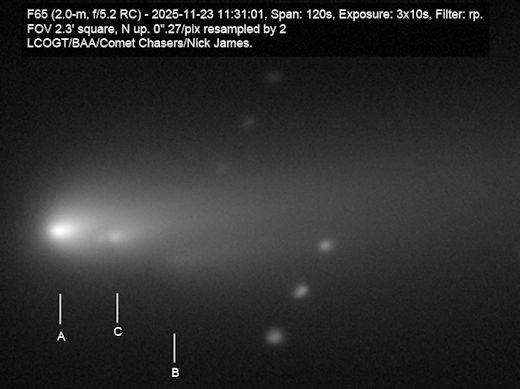
Nick James of the British Astronomical Association created the image using data gathered by Helen Usher's Comet Chasers group. "The new fragment is just in front of fragment C," he points out. "Also, component A has brightened significantly over the past few days." This could herald the birth of yet another fragment in the nights ahead.
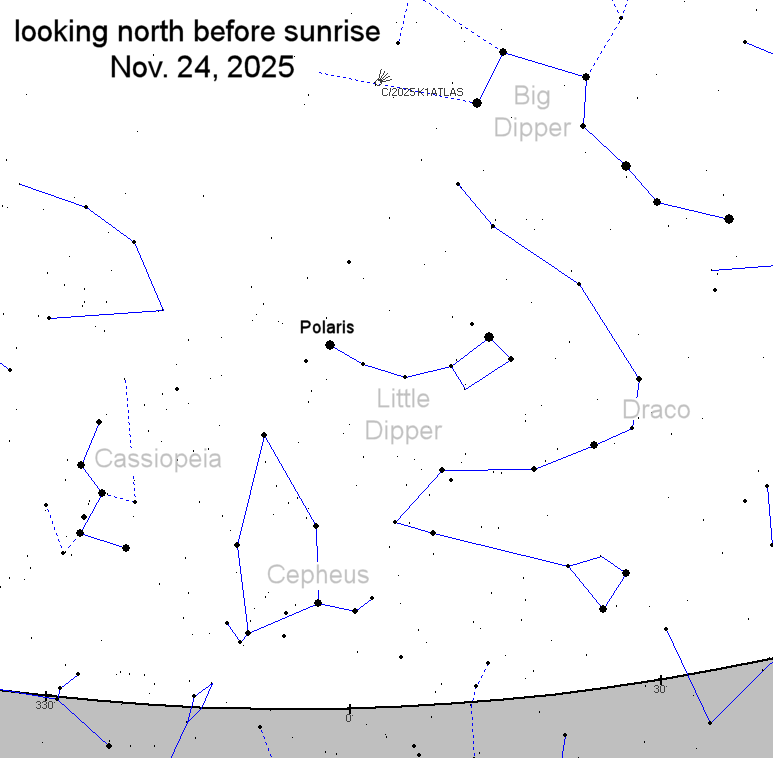
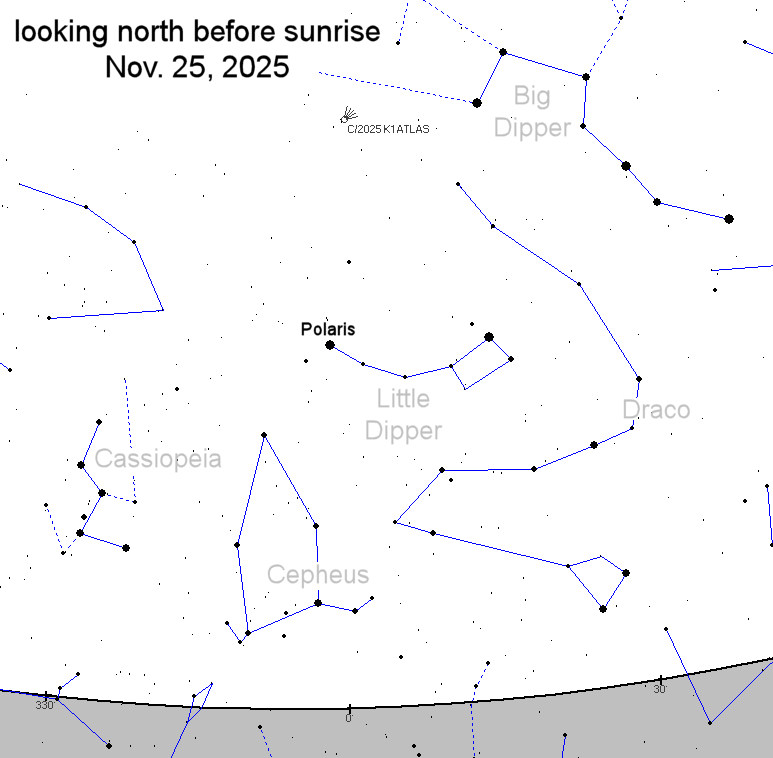
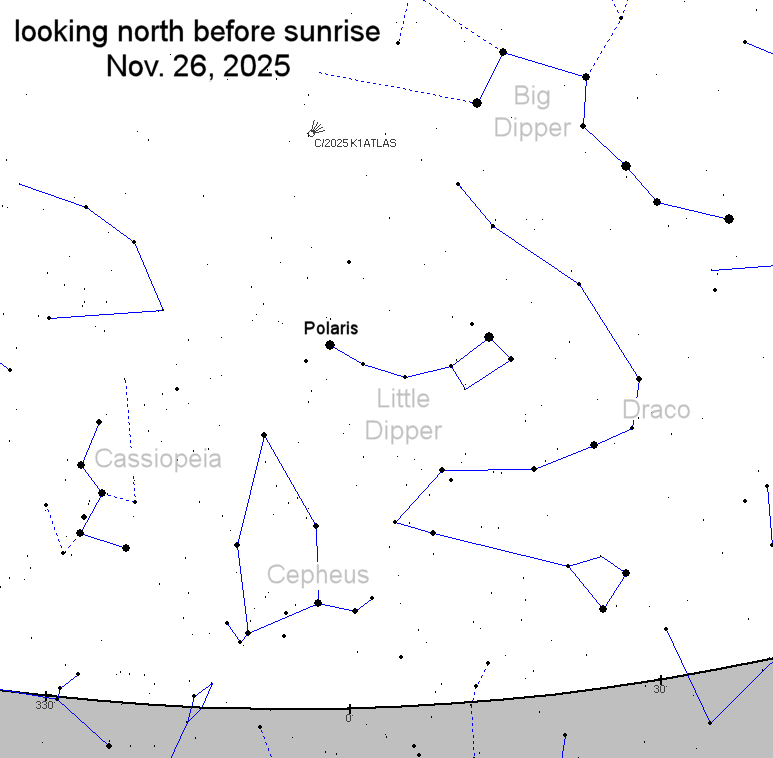
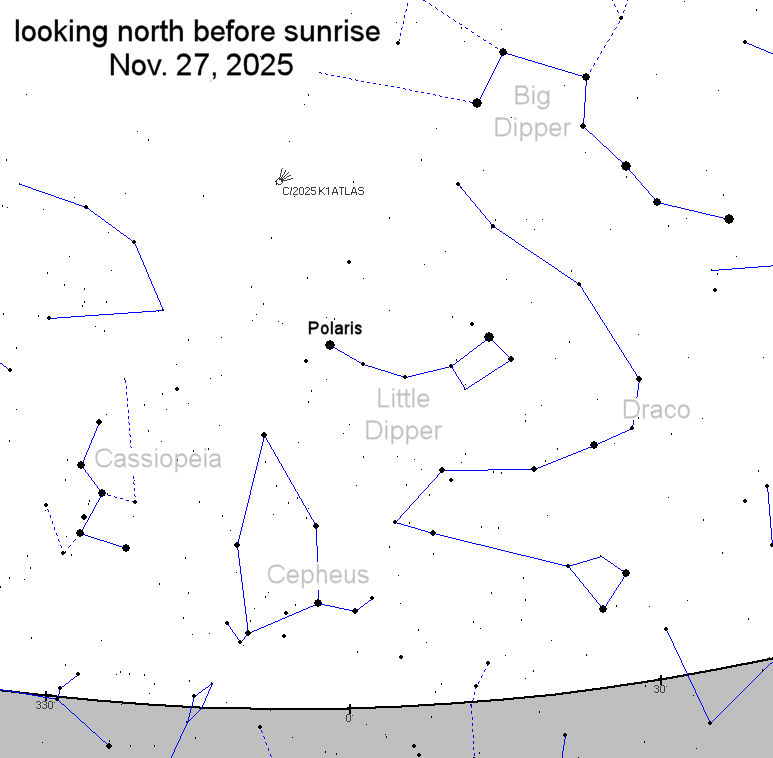
Monitoring is encouraged. Comet ATLAS is 10th magnitude, which makes it a easy target for capable backyard telescopes. Look for it in the morning sky halfway between the Big Dippera and the North Star. Sky maps: Nov. 24, 25, 26, 27.
Realtime Comet Photo Gallery
Free: Spaceweather.com Newsletter
THE HYDROGEN-ALPHA RING FOR MEN: The Earth to Sky Store sells a lot of gifts for women. This one is for men. It's the Hydrogen Alpha Ring, returning from a trip to the stratosphere on Nov. 16th.
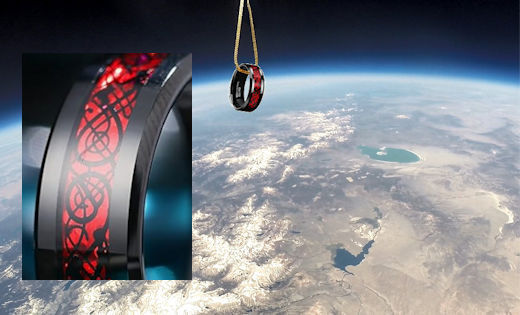
You can have it for $126.95. The Hydrogen-Alpha Ring is the same color that hydrogen atoms emit in the sun's hot atmosphere: Red at a wavelength of 656 nanometers. Space-black edges of beveled tungsten carbide frame the deep-red band.
Multiple sizes were flown. If you're not sure, select size "11" during the checkout process; that fits most fingers. Your purchase comes with a greeting card showing the ring in flight, and telling the story of its journey to the edge of space.
Far Out Gifts: Earth to Sky Store
All sales support hands-on STEM education
Realtime Space Weather Photo Gallery
Free: Spaceweather.com Newsletter
Realtime Aurora Photo Gallery
Free: Spaceweather.com Newsletter