A SOLAR WIND STREAM IS BUFFETING EARTH: Minor G1-class geomagnetic storms are underway on Nov. 24th in response to a high-speed stream of solar wind. The stream arrived today, and it contains gaseous material moving faster than 700 km/s (1.6 million mph). High-latitude sky watchers should be alert for auroras. Aurora alerts: SMS Text.

THE *OTHER* COMET ATLAS IS EXPLODING: Interstellar Comet 3I/ATLAS is getting all the headlines, but there's another, local, Comet ATLAS that's just as interesting. Comet ATLAS (C/2025 K1) is exploding not far from the North Star:
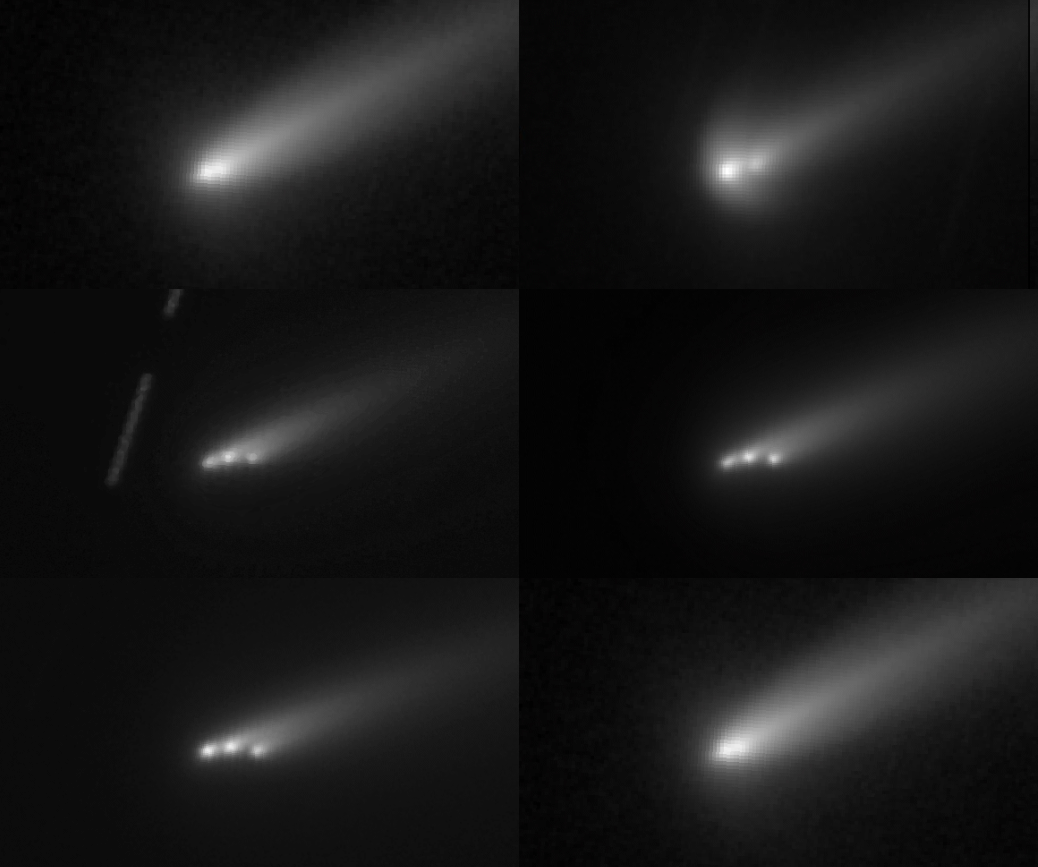
"Following brightness surges in early November, we have been able to observe this comet splitting into three brighter fragments for the past two weeks," says photographer Michael Jäger. "The animation shows it on November 12, 14, 18, 19, and 20th."
This is no ordinary comet. Earlier this month, amateur astronomer Dan Bartlett of June Lake, California, noticed that it had a golden color--completely unlike the greens and blues we see in most comets. (Even interstellar comet 3I/ATLAS is green and blue.) The golden color is probably linked to the comet's unusual chemistry. Carbon compounds are severely depleted in C/2025 K1. No one knows why.
Perhaps the lack of carbon has made this Comet ATLAS fragile. In the short time since Michael Jäger made his Nov. 20th animation, a fourth fragment has appeared, shown here in a Nov. 23rd image from the 2-meter Foulkes Telescope North:
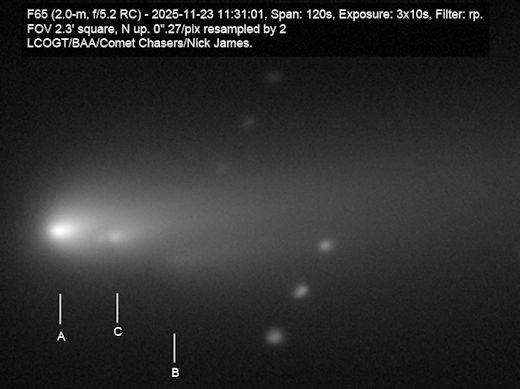
Nick James of the British Astronomical Association created the image using data gathered by Helen Usher's Comet Chasers group. "The new fragment is just in front of fragment C," he points out. "Also, component A has brightened significantly over the past few days." This could herald the birth of yet another fragment in the nights ahead.
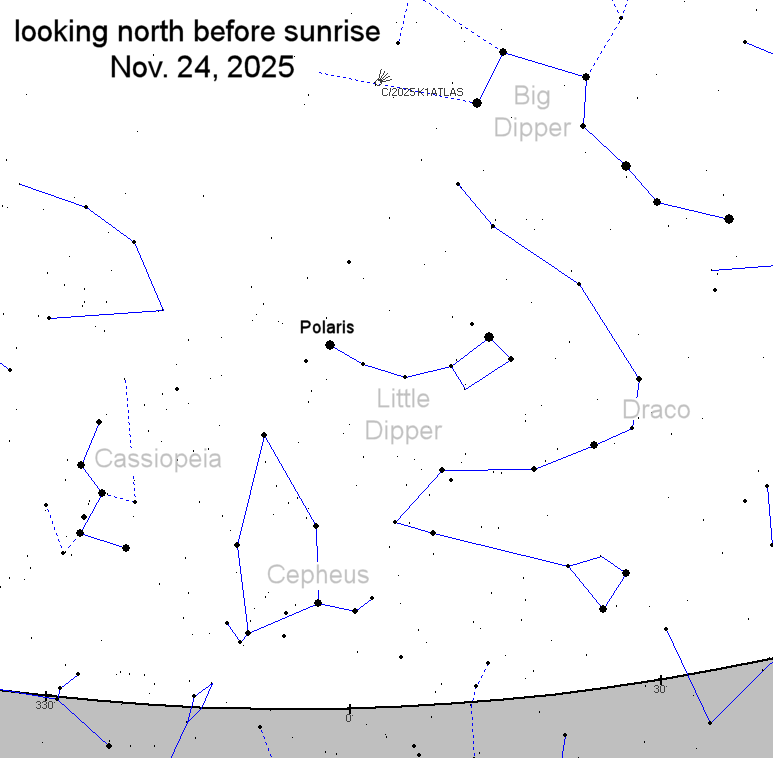
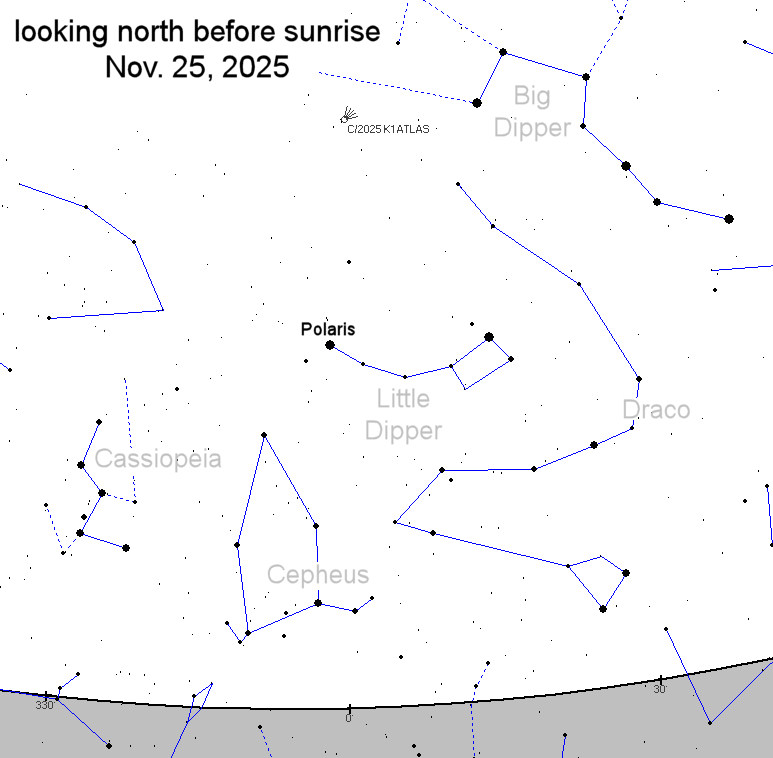
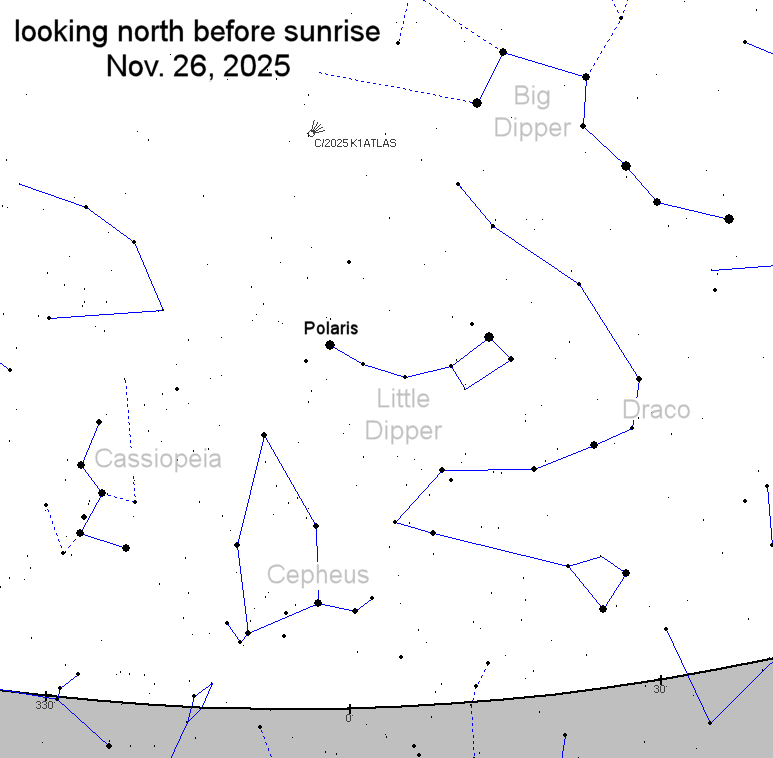
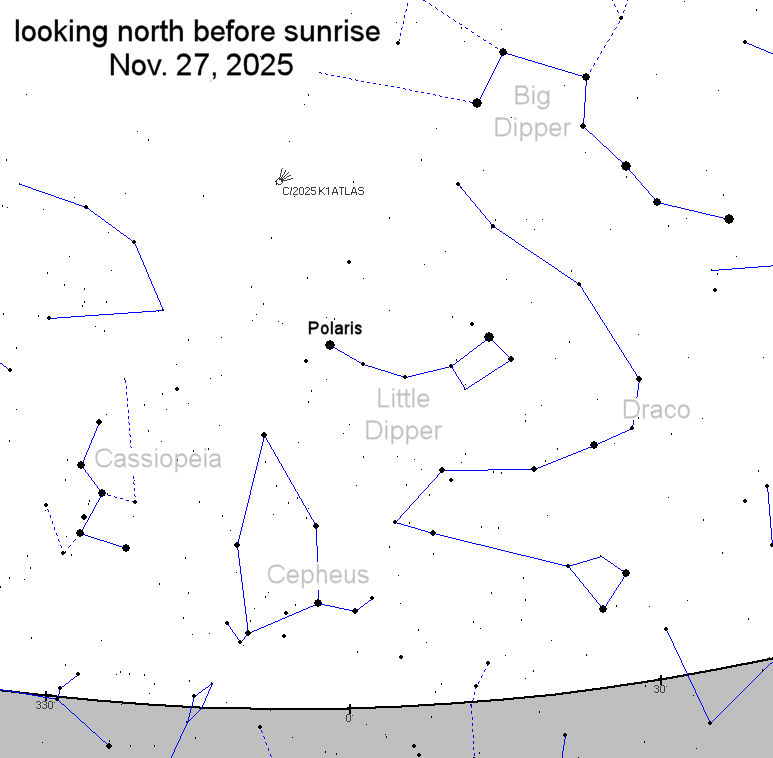
Monitoring is encouraged. Comet ATLAS is 10th magnitude, which makes it a easy target for capable backyard telescopes. Look for it in the pre-dawn sky halfway between the Big Dipper and the North Star. Sky maps: Nov. 24, 25, 26, 27.
Fun fact: There are more than 40 comets named ATLAS. The NASA-funded Asteroid Terrestrial-impact Last Alert System (ATLAS) is a planetary defense program to provide early warning of asteroid impacts. Its continuous, all-sky scanning leads to the frequent discovery of comets.
Realtime Comet Photo Gallery
Free: Spaceweather.com Newsletter
GIFTS FROM THE EDGE OF SPACE--BLACK FRIDAY SALE! Christmas is coming. Are you looking for a far-out gift? Check out the Earth to Sky Store. It's filled with unique items that have flown to the edge of space onboard cosmic ray research balloons.

Carried aloft by giant helium balloons, these unique gifts have flown above 99.7% of Earth's atmosphere, experiencing space-like blasts of cosmic rays, extreme cold, and a wild ride parachuting back to Earth after the balloon explodes. Even Amazon doesn't carry items this far out.
Don't forget to enter coupon code "ALIENABDUCTION" at checkout for a 15% holiday discount.
Far Out Gifts: Earth to Sky Store
All sales support hands-on STEM education
Realtime Space Weather Photo Gallery
Free: Spaceweather.com Newsletter
Realtime Aurora Photo Gallery
Free: Spaceweather.com Newsletter